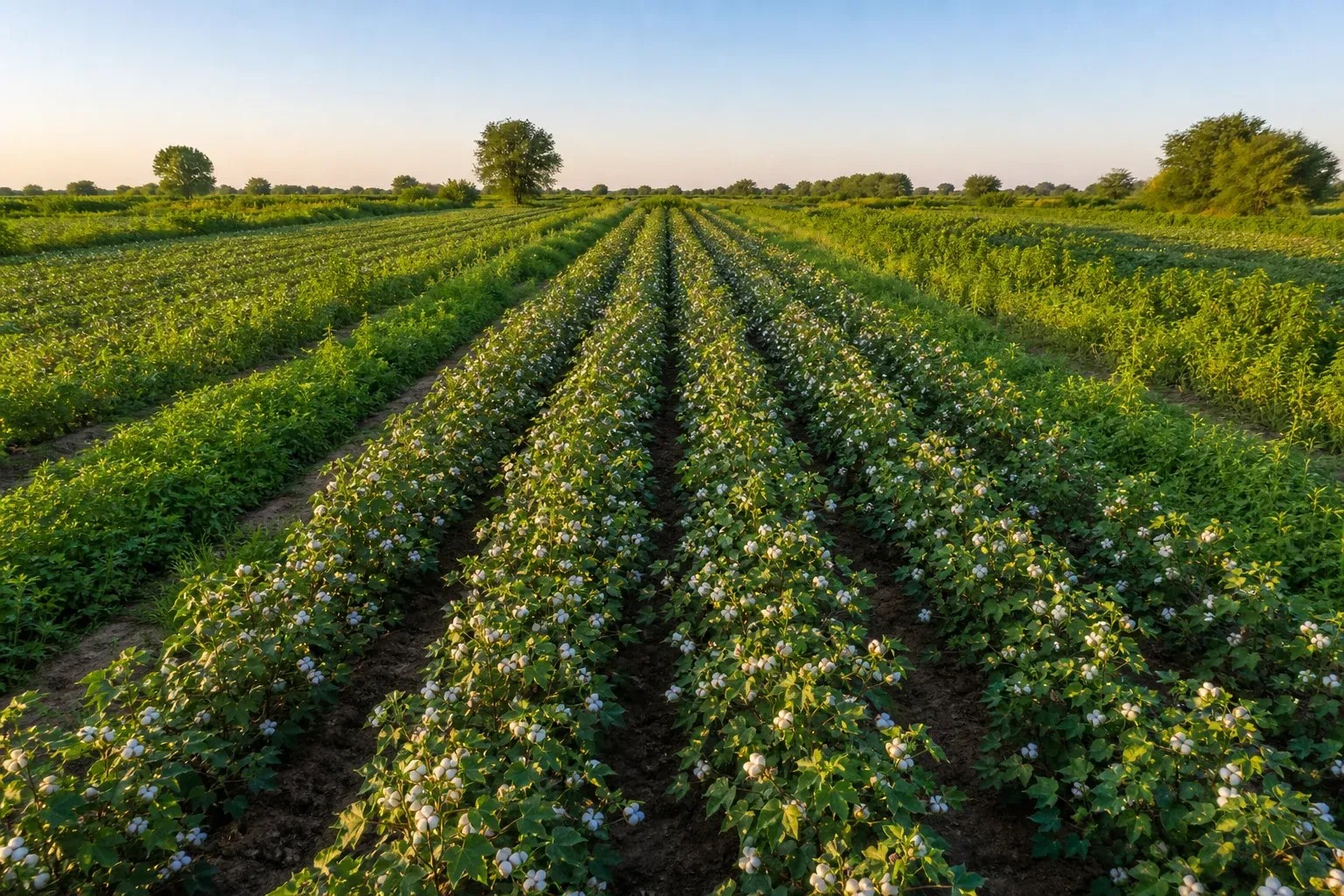
What is regenerative cotton?!
Cotton farming has a reputation problem — and it is largely deserved. Conventional cotton production consumes enormous volumes of water, relies heavily on synthetic pesticides, and leaves behind soils that grow less productive with every passing season. But a different model is gaining serious traction across India's cotton belts, and it is changing what brands can credibly claim about the fiber in their products.
Regenerative cotton is not a marketing label. It is a production system built on measurable outcomes: healthier soils, sequestered carbon, stronger farmer livelihoods, and supply chains that can withstand regulatory scrutiny. For textile and fashion brands navigating the EU Green Claims Directive, CSRD reporting obligations, and rising consumer expectations in 2026, understanding what regenerative cotton is — and how it is actually produced, has moved from optional to essential.
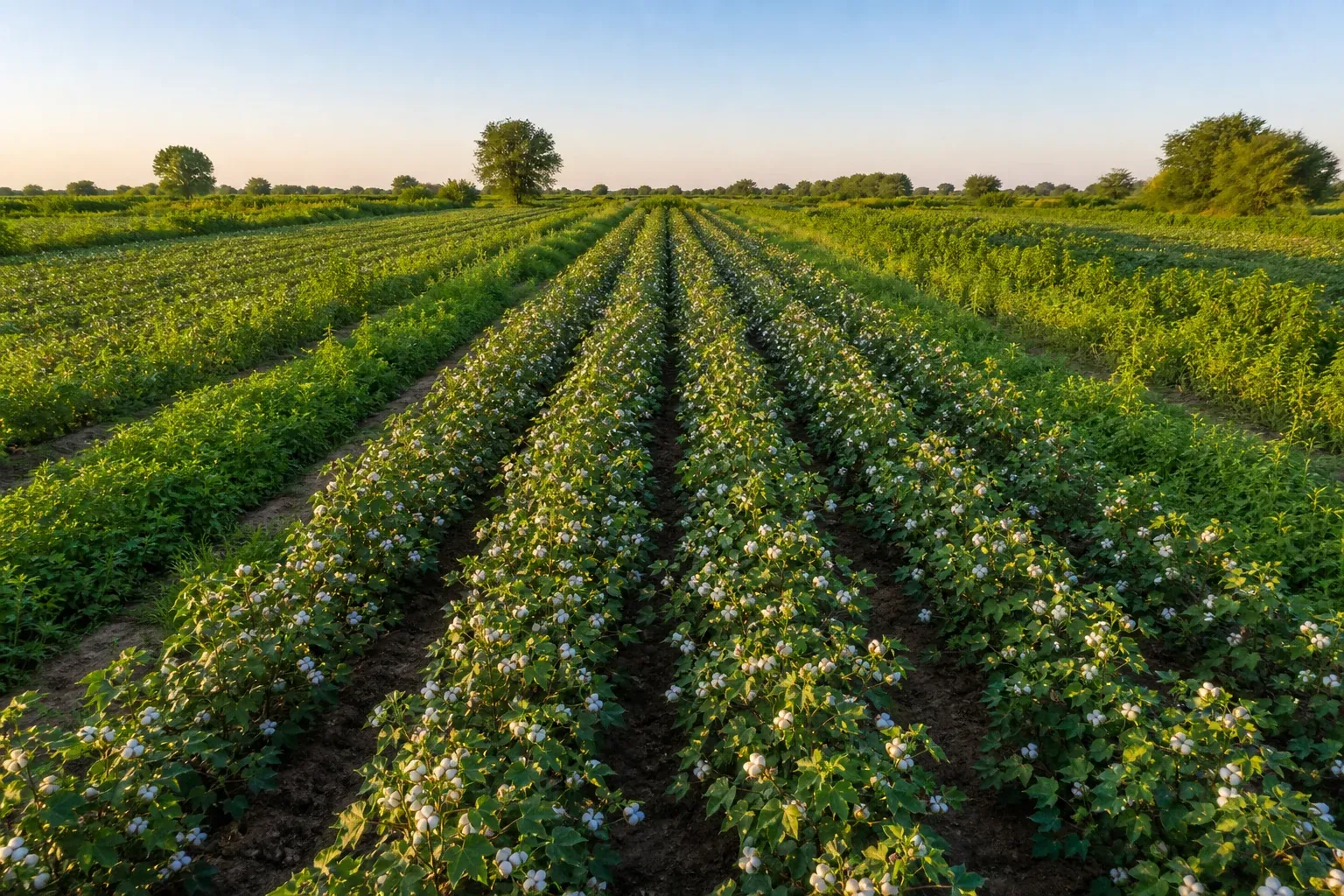
What Is Regenerative Cotton? A Working Definition for Brands
Regenerative cotton is cotton grown using farming practices that actively restore and improve the agricultural ecosystems in which it is produced. The word "regenerative" is doing real work here. This is not about maintaining the status quo or simply avoiding the worst practices of conventional farming. It is about leaving the land, and the farming community, in a measurably better state than before.
The Regenerative Cotton Standard® (RCS), developed by the Aid by Trade Foundation, provides a voluntary framework that defines what qualifies as regenerative cotton production. The RCS sets outcome-based requirements across soil health, biodiversity, water management, social equity, and supply chain traceability, making it one of the most comprehensive standards available for brands seeking verifiable claims.
At its core, regenerative cotton production rests on five interconnected principles:
- Soil health restoration, building organic matter, improving water retention, and reducing dependence on synthetic inputs
- Biodiversity enhancement, supporting diverse ecosystems through crop rotation, intercropping, and habitat preservation
- Carbon sequestration, drawing down atmospheric carbon into the soil and biomass, contributing to climate mitigation
- Farmer livelihood and community resilience, ensuring fair compensation, capacity building, and long-term economic stability for smallholder farmers
- Full-system traceability, maintaining chain of custody from field to finished product so brands can make specific, defensible claims
For brands, this definition matters because it shifts the conversation from inputs (what chemicals were avoided?) to outcomes (what did the land and community gain?). That shift has direct implications for ESG reporting, greenwashing risk, and the credibility of sustainability claims. To understand the broader agricultural context, this complete guide to regenerative agriculture covers the foundational principles in depth.
How Regenerative Cotton Is Produced: The Farming Practices Behind the Fiber
The production of regenerative cotton looks different from conventional cotton farming at almost every stage. The differences are not cosmetic. They reflect a fundamentally different relationship between the farmer, the land, and the broader ecosystem.

Soil Health: The Foundation of Regenerative Cotton Production
Healthy soil is the starting point for everything else in a regenerative system. Conventional cotton farming often depletes soil organic matter over time, leaving behind compacted, nutrient-poor ground that requires ever-increasing inputs to maintain yields. Regenerative cotton farming reverses this trajectory.
Key soil-building practices include:
- Cover cropping, planting legumes or grasses between cotton seasons to fix nitrogen, prevent erosion, and add organic matter. Cover crops play a central role in rebuilding soil structure across regenerative programs in India.
- Reduced or minimum tillage, limiting soil disturbance to preserve microbial communities and prevent carbon loss from the soil profile
- Compost and organic matter application, returning nutrients to the soil through farm-generated inputs rather than synthetic fertilizers
- Biochar integration, applying biochar to cotton fields improves water retention, increases cation exchange capacity, and locks carbon into the soil for centuries. Beetle Regen's biochar programs in Maharashtra and Madhya Pradesh are demonstrating measurable soil carbon gains at scale.
Brands sourcing regenerative cotton should ask suppliers for soil health data, specifically organic carbon percentage, bulk density, and water infiltration rates, as these are the measurable indicators that distinguish genuine regenerative practice from greenwashing. Regenerative practices also consistently improve crop yields, which matters for long-term supply security.
Biodiversity and Water: The Ecosystem Benefits of Regenerative Cotton
Monoculture cotton farming strips ecosystems of diversity. Regenerative systems deliberately reintroduce it. Crop rotation, alternating cotton with pulses, cereals, or vegetables, breaks pest and disease cycles, reduces the need for pesticides, and improves soil structure. Intercropping, where compatible crops are grown alongside cotton in the same field, provides additional income for farmers while supporting beneficial insect populations.
Water management is another area where regenerative cotton production diverges sharply from conventional practice. Conventional cotton's water footprint is well-documented: roughly 10,000 litres per kilogram of lint under flood irrigation. Regenerative programs reduce this through:
- Drip irrigation adoption and precision water scheduling
- Improved soil organic matter, which increases water-holding capacity and reduces irrigation frequency
- Alternative Wetting and Drying (AWD) techniques adapted from rice farming, which are being piloted in cotton-adjacent farming systems
- Preservation of natural water bodies and riparian vegetation around farm boundaries
These practices collectively reduce input costs for farmers, lower the environmental footprint of the fiber, and create a more resilient production system in the face of increasingly erratic monsoon patterns across India's cotton-growing states.
Regenerative Cotton vs. Organic Cotton: What Brands Need to Know
The comparison between regenerative and organic cotton comes up in almost every sourcing conversation, and it deserves a precise answer. Both approaches reject synthetic pesticides and fertilizers. Both prioritize farmer welfare to varying degrees. But the differences in scope, measurement, and outcome are significant enough to affect how brands use each in their sustainability communications.
Organic cotton certification, whether through GOTS, OCS, or national organic standards, is primarily input-based. It verifies that certain chemicals were not used and that certain processes were followed. It does not require that the soil improved, that carbon was sequestered, or that biodiversity increased. A farm can be certified organic while still having degraded soil and declining yields.
Regenerative cotton certification is outcome-based. The Regenerative Cotton Standard® requires evidence of measurable improvement across soil health, biodiversity, and social indicators. This distinction matters enormously for brands making ESG claims:
| Aspect | Organic Cotton | Regenerative Cotton |
|---|---|---|
| Primary focus | Avoids synthetic inputs | Restores and improves ecosystems |
| Measurement approach | Compliance-based (inputs and processes) | Outcome-based (soil health, carbon, biodiversity) |
| Carbon sequestration | Not required or measured | Central requirement with MRV |
| Social dimension | Included but not central | Strong emphasis on smallholder livelihoods |
| Brand claim potential | "Sustainably sourced" | "Net-positive impact on soil and climate" |
For brands already sourcing organic cotton, regenerative cotton is not a replacement, it is an upgrade. The two can coexist in a sourcing portfolio, with regenerative cotton positioned as the premium, impact-verified tier. Understanding the cost and value difference between regenerative and conventional cotton helps procurement teams build the business case internally.
Why Regenerative Cotton Matters for Textile Brands in 2026
The regulatory environment for textile brands has shifted decisively. The EU Green Claims Directive, now moving toward enforcement, requires that environmental claims be substantiated with verifiable evidence. The Corporate Sustainability Reporting Directive (CSRD) mandates detailed disclosure of Scope 3 emissions, which, for most fashion brands, means the cotton fields where their fiber originates.
Regenerative cotton addresses both pressures simultaneously. Here is why it has become a strategic priority for sourcing and sustainability teams:
- Regulatory alignment: Regenerative cotton programs with robust MRV (Measurement, Reporting, and Verification) systems generate the farm-level data that CSRD and Green Claims compliance requires. Vague supplier declarations are no longer sufficient.
- Scope 3 emissions reduction: Cotton cultivation is a significant source of Scope 3 Category 1 emissions for apparel brands. Regenerative practices, particularly soil carbon sequestration and reduced synthetic fertilizer use, directly reduce the emissions intensity of the fiber. This supports carbon insetting strategies that count toward net zero targets.
- Greenwashing risk mitigation: Claims about "sustainable cotton" that cannot be verified at farm level are increasingly exposed to regulatory challenge and media scrutiny. Regenerative cotton with chain-of-custody certification provides the evidence layer that protects brands.
- Long-term supply security: Degraded soils produce declining yields. Regenerative farming rebuilds the productive capacity of agricultural land, creating a more stable and resilient supply base over a 10-to-20-year horizon.
- Brand differentiation: "Net positive" is a more compelling and defensible position than "less harmful." Brands that can demonstrate measurable improvement in soil health, farmer income, and carbon sequestration have a stronger story to tell, to consumers, investors, and regulators alike.
For brands working toward verified climate targets, a structured net zero roadmap shows how regenerative cotton sourcing fits into a broader decarbonisation strategy.
Traceability and Certification: How Brands Verify Regenerative Cotton Claims
Claiming regenerative cotton without traceability is a liability, not an asset. The credibility of any regenerative sourcing program depends entirely on the chain of custody between the farm and the finished product.
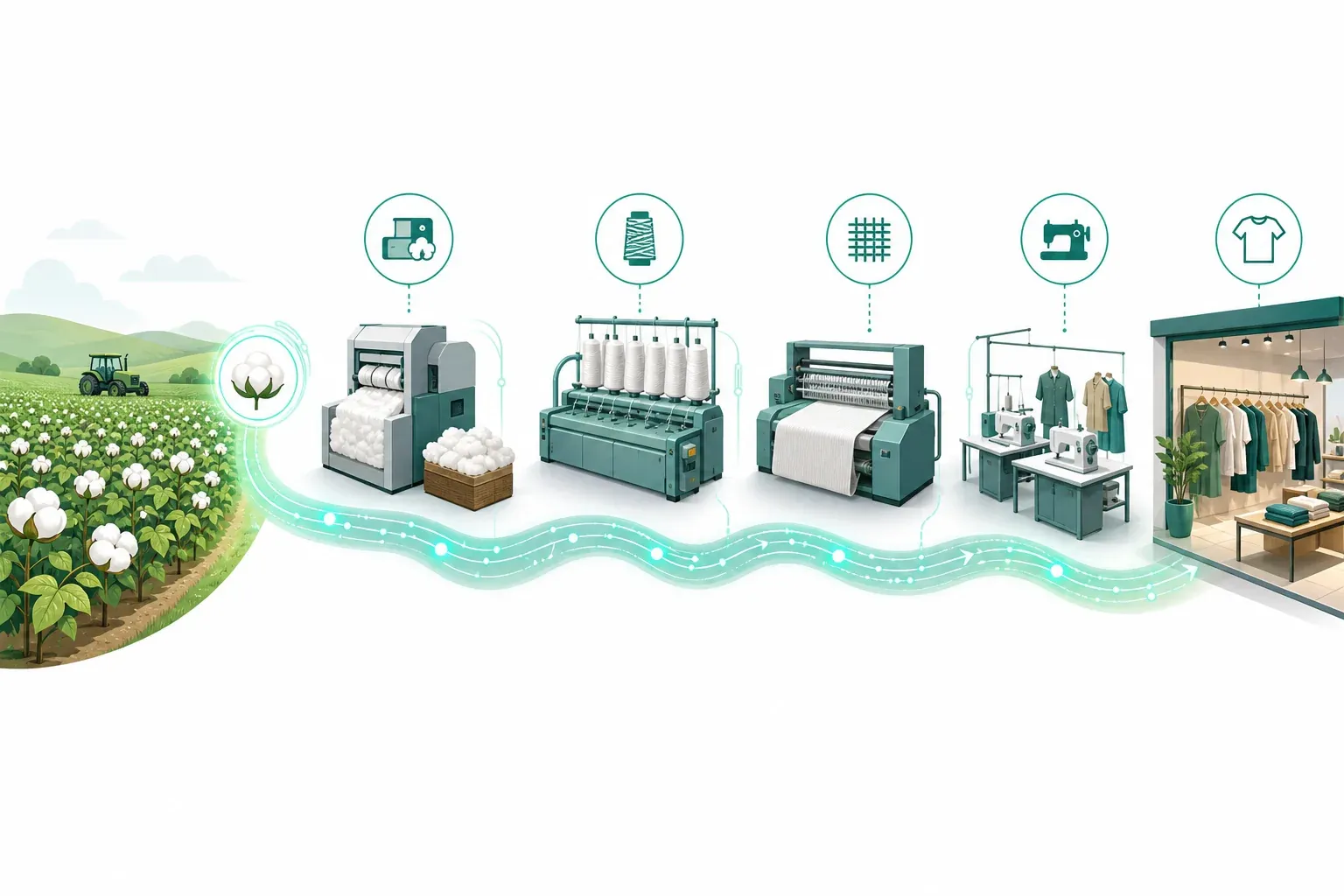
The Regenerative Cotton Standard® uses the Hard Identity Preserved (HIP) Chain of Custody model. This means that RCS-verified cotton is physically separated from non-verified cotton at every stage of the supply chain, from ginning through spinning, weaving, and cut-and-sew. The fiber can be traced back to the specific farm or farmer group where it was grown.
For brands, this level of traceability enables:
- Specific, verifiable claims in sustainability reports and on product labels
- Farm-level data for Scope 3 emissions calculations under CSRD
- Evidence for EU Green Claims compliance, including soil health and biodiversity metrics
- Audit-ready documentation for ESG due diligence processes
Beyond certification, effective traceability requires MRV systems that collect data at the farm level, soil carbon measurements, yield records, input logs, and farmer income data. MRV and traceability systems for cotton are now a non-negotiable component of any credible regenerative sourcing program.
Beetle Regen's programs in India connect brands directly to verified regenerative cotton supply, with traceability infrastructure built into the program from the outset. Farmer training, soil testing, and data collection happen at the field level, and that data flows through the supply chain to the brand's ESG reporting systems. A detailed brand guide to supply chain traceability for regenerative cotton covers the practical steps involved.
Integrating Regenerative Cotton Into Your ESG and Supply Chain Strategy
Sourcing regenerative cotton is one decision. Integrating it meaningfully into your ESG strategy, supply chain reporting, and carbon accounting is a different, and more complex, undertaking. Here is how brands are doing it effectively in 2026.

Mapping Regenerative Cotton to Scope 3 Emissions
Cotton cultivation sits in Scope 3 Category 1 (purchased goods and services) for most apparel brands. The emissions associated with synthetic fertilizer production, soil carbon loss, and irrigation energy are significant, and largely invisible in conventional supply chains.
Regenerative cotton programs generate the farm-level activity data needed to calculate an accurate emissions factor for the fiber. When soil carbon is sequestered and synthetic inputs are reduced, the emissions intensity of the cotton drops. That reduction can be counted as an insetting contribution toward the brand's Scope 3 target, provided the MRV system meets the requirements of recognized protocols such as Verra or Gold Standard.
Using Regenerative Cotton Data in CSRD Reporting
CSRD requires disclosure under the European Sustainability Reporting Standards (ESRS), including ESRS E1 (climate), E4 (biodiversity), and S2 (workers in the value chain). Regenerative cotton programs generate data that is directly relevant to all three:
- ESRS E1: Soil carbon sequestration data, emissions reduction from reduced fertilizer use, and carbon insetting contributions
- ESRS E4: Biodiversity indicators from crop rotation, intercropping, and habitat preservation practices
- ESRS S2: Farmer income data, training participation rates, and fair compensation records
Brands that have already integrated regenerative cotton data into their reporting systems are finding that it provides a level of supply chain specificity that generic sustainability claims cannot match. Integrating regenerative agriculture data across supply chains requires both technical infrastructure and supplier relationships built on transparency.
Carbon Insetting Through Regenerative Cotton Programs
Carbon insetting, reducing or sequestering carbon within your own supply chain rather than purchasing external offsets, is increasingly preferred by brands, investors, and regulators. Regenerative cotton programs are one of the most direct pathways to supply chain insetting for textile brands.
When a brand sources from a regenerative cotton program that includes verified soil carbon sequestration, it can claim those carbon reductions as part of its own climate action, not as an offset, but as a genuine reduction in the emissions intensity of its purchased goods. Carbon insetting solutions for textile supply chains explain how this accounting works in practice.
Steps to Begin Sourcing Regenerative Cotton
For brands at the beginning of this journey, the path forward is more structured than it might appear:
- Map your current cotton supply: Identify which suppliers, ginners, and spinning mills are already in your supply chain and where they source raw cotton. India's cotton belts, Maharashtra, Gujarat, Telangana, Andhra Pradesh, are the primary sourcing regions for regenerative programs.
- Define your impact requirements: Decide which outcomes matter most for your ESG strategy, soil carbon, biodiversity, farmer income, or all three. This shapes which program or standard is the right fit.
- Engage a program partner with farm-level reach: Sourcing regenerative cotton requires a partner with direct farmer relationships, training capacity, and MRV infrastructure. Beetle Regen works directly with smallholder farmer networks across India, providing the on-the-ground capacity that brands cannot build independently.
- Establish traceability from the outset: Chain of custody must be built into the sourcing arrangement from day one. Retrofitting traceability onto an existing supply chain is significantly harder and more expensive.
- Integrate data into reporting systems: Farm-level data needs to flow into your carbon accounting, ESG reporting, and supplier disclosure systems. This is where technology infrastructure and program design intersect.
Beetle Regen's regenerative cotton sourcing programs in India and Bangladesh are designed to support brands at each of these stages, from initial supply chain mapping through to verified impact reporting.
Frequently Asked Questions About Regenerative Cotton
Is regenerative cotton more expensive than conventional cotton?
Regenerative cotton typically carries a premium over conventional cotton, reflecting the additional investment in farmer training, soil health practices, certification, and traceability infrastructure. The premium varies by program, volume, and supply chain configuration. For brands, the relevant comparison is not just fiber price but total cost of ownership, including compliance risk, carbon liability, and the cost of greenwashing exposure. A detailed breakdown of what brands actually pay for helps frame this comparison accurately.
Can regenerative cotton be certified?
Yes. The Regenerative Cotton Standard® (RCS) by the Aid by Trade Foundation is the primary certification framework for regenerative cotton. It covers farming practices, social standards, and chain of custody requirements. Other frameworks, including those developed by Textile Exchange, are also developing regenerative agriculture standards that may apply to cotton sourcing programs.
How does regenerative cotton reduce Scope 3 emissions?
Regenerative cotton reduces Scope 3 emissions through three main pathways: soil carbon sequestration (drawing atmospheric CO₂ into the soil), reduced synthetic fertilizer use (which has a high embedded carbon cost), and improved land management that reduces nitrous oxide emissions from agricultural soils. When these reductions are measured and verified through an MRV system, they can be counted as insetting contributions toward a brand's Scope 3 target.
What is the difference between regenerative cotton and Better Cotton (BCI)?
Better Cotton Initiative (BCI) is a mass balance program focused on improving conventional cotton farming practices at scale. It does not guarantee physical traceability to specific farms, and its standards are primarily improvement-oriented rather than outcome-based. Regenerative cotton programs, by contrast, require measurable outcomes (soil health improvement, carbon sequestration) and physical chain of custody. For brands making specific ESG claims, the distinction is material.
How do I start sourcing regenerative cotton for my brand?
The most practical starting point is engaging a program partner with existing farmer networks, training capacity, and MRV infrastructure in India or Bangladesh. Beetle Regen works with textile brands to design sourcing programs that match their volume requirements, ESG reporting needs, and supply chain configuration. Reach out to discuss your sourcing requirements and get a clear picture of what a regenerative cotton program would look like for your brand.
The Strategic Case for Regenerative Cotton in 2026
Regenerative cotton is not a niche material for sustainability-forward brands alone. It is becoming the baseline expectation for any brand that needs to make credible, verifiable claims about its supply chain's environmental and social impact. The regulatory pressure is real, the consumer scrutiny is intensifying, and the window for building genuine supply chain relationships, rather than scrambling for last-minute compliance, is narrowing.
The brands that will lead on sustainability in the next decade are not those that bought the most offsets. They are the ones that changed what happens in their supply chains, at the farm level, with verified data to prove it.
Beetle Regen works with textile brands, retailers, and supply chain manufacturers to design and implement regenerative cotton programs that deliver measurable outcomes, from soil health and carbon sequestration to farmer income and CSRD-ready data. If your sourcing strategy needs to move from "less harmful" to "net positive," the conversation starts at the farm gate.
Ready to explore what a regenerative cotton program looks like for your brand? Connect with the Beetle Regen team to discuss your sourcing volumes, ESG reporting requirements, and the specific outcomes you need to demonstrate to your stakeholders.