Beetle Regen Solutions: Who We Are and How We Work
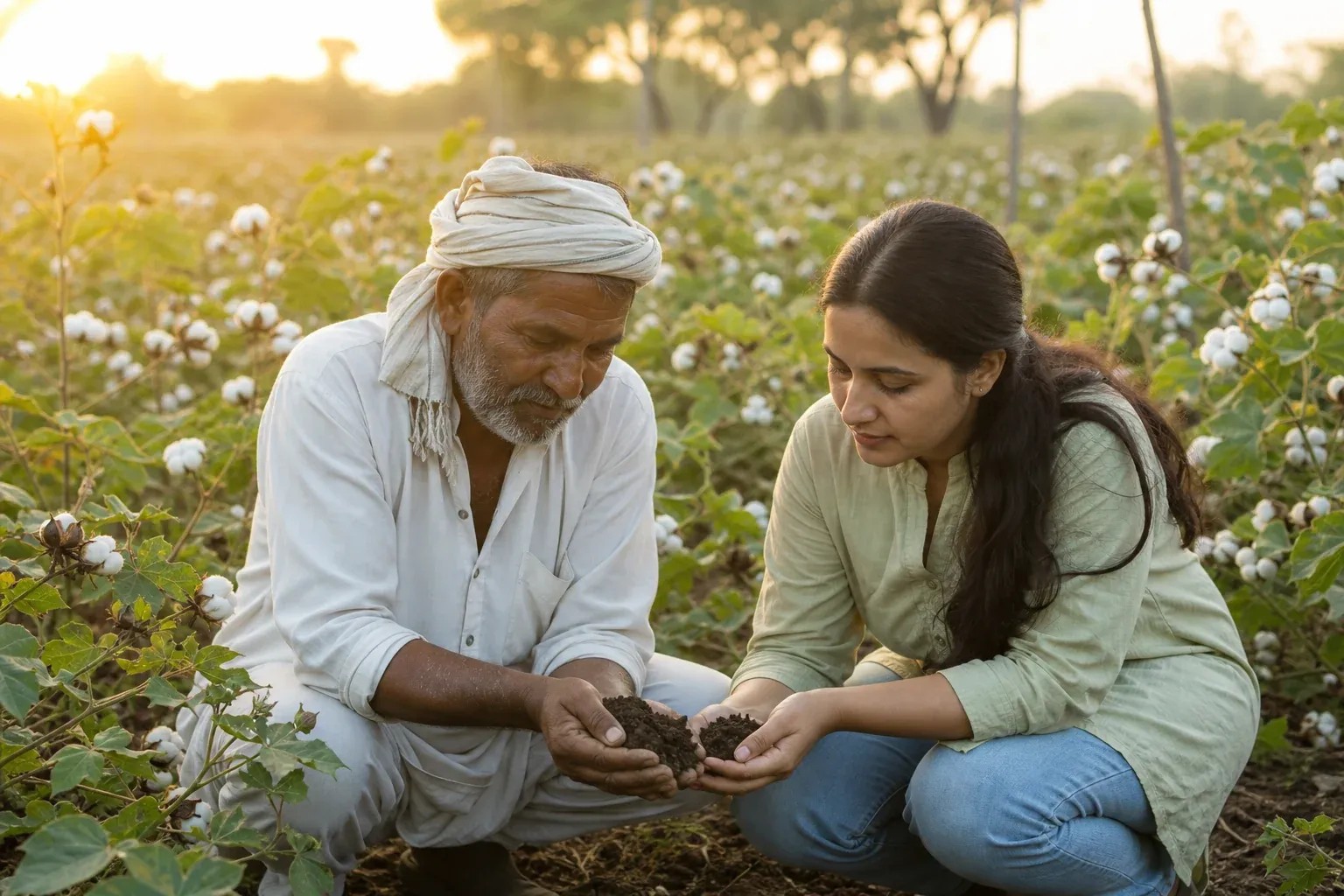
A cotton field in Khargone district and a boardroom in Amsterdam rarely speak the same language. One deals in soil moisture, seed spacing, and rupees per quintal. The other deals in Scope 3 inventories, CSRD disclosures, and net zero timelines. Beetle Regen Solutions exists to translate between the two, and to make sure the value created in that translation flows back to the people actually growing the fiber.
This post is an inside look at how the company works: the services it runs across India and Bangladesh, the delivery model that connects a smallholder farm to a European retailer's compliance report, and what has actually come out of its collaborations through the Climate Action Textile Forum. If you are a brand evaluating a regenerative sourcing partner, a manufacturer under pressure to prove supply chain compliance, or a farmer cooperative wondering what a program like this really involves, this is meant to answer the practical questions directly.
Why Beetle Regen Solutions Exists
Most sustainability failures in the textile industry do not happen because brands lack ambition. They happen at the seam between good intentions and operational reality. A brand commits to net zero. Its sourcing team signs contracts with ginners and spinning mills. But nobody in that chain can answer a basic question: which farm did this cotton come from, and was it grown in a way that improved the soil or degraded it further?
Beetle Regen Solutions was built to sit inside that gap. The company works directly with farmers to change how cotton and other crops are grown, and it works directly with brands and manufacturers to prove, measure, and report what changed. That dual focus, agronomy on one end and corporate carbon accounting on the other, is what separates it from consultancies that only advise brands from a distance or NGOs that only train farmers without a commercial link back to buyers.
The mission is deliberately farmer-first. Soil regeneration only scales if the people doing the work, smallholder farmers across Maharashtra, Gujarat, Telangana, and Madhya Pradesh, see a tangible return in yield, income, or carbon revenue. Beetle Regen Solutions treats that economic case as a prerequisite, not an afterthought. For a deeper grounding in the agronomic principles behind this approach, see this complete guide to regenerative agriculture.
The Beetle Regen Solutions Service Portfolio
The company's offerings break into five interconnected service lines. None of them work particularly well in isolation, which is part of the point: a brand that only wants carbon credits without traceability data, or a farmer program without a market link, tends to stall out after a year or two.
Regenerative Cotton Programs
Farmer training covers practices like reduced tillage, cover cropping, compost application, and crop rotation, all adapted to local soil and rainfall conditions rather than imported wholesale from other geographies. Programs also include High-Density Planting Systems (HDPS) to optimize land use and yield, and Alternative Wetting and Drying (AWD) for paddy rotations, which cuts methane emissions from rice grown in the same crop cycle as cotton.
Biochar Production and Carbon Insetting
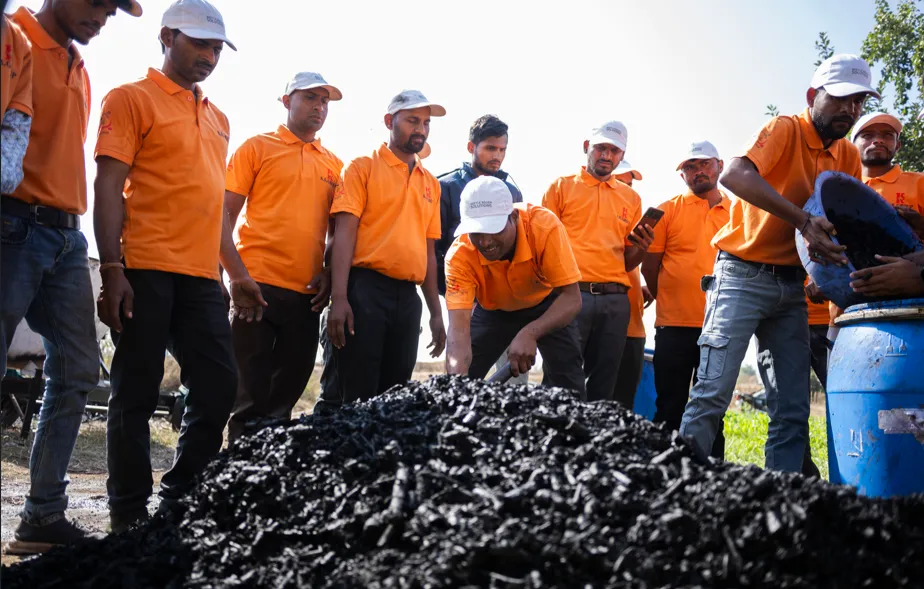
Crop residue that would otherwise be burned, a major source of regional air pollution across northern and central India, is instead converted into biochar through controlled pyrolysis. The biochar is applied back to the soil, where it improves water retention and microbial activity while locking carbon in a stable form for decades. Because this happens inside the brand's own supply chain rather than through a disconnected offset purchase, it counts as carbon insetting rather than offsetting. Readers wanting the mechanics of that distinction can review this breakdown of carbon insetting solutions.
Sustainable Sourcing and Traceability
Beetle Regen Solutions supplies regenerative and recycled fiber with farm-level traceability built in from day one, not bolted on after harvest. Every bale can be traced back through the ginning process to the specific farmer group and season it came from, which matters enormously once a brand's compliance team starts asking for documentation.
Sustainability as a Service (SaaS)
For brands and manufacturers that need strategy rather than raw material, the SaaS model offers custom carbon footprinting, traceability implementation, and compliance tracking without requiring the buyer to build an in-house sustainability team from scratch. A full breakdown of how this model is structured is available in this beginner's guide to Sustainability as a Service.
Carbon Credit Monetization
Verified carbon sequestration from regenerative practices and biochar application gets structured into credits that farmers and brands can both benefit from. Farmers gain an additional income stream beyond crop sales, and brands gain a defensible, farm-linked climate claim instead of a generic offset purchase.
How the Delivery Model Works, Step by Step
Prospective partners, whether a brand's sourcing director or a farmer cooperative lead, usually want to know what actually happens after a contract is signed. The delivery model runs in five stages, each building the data and trust needed for the next.
1. Farmer Onboarding and Baseline Assessment
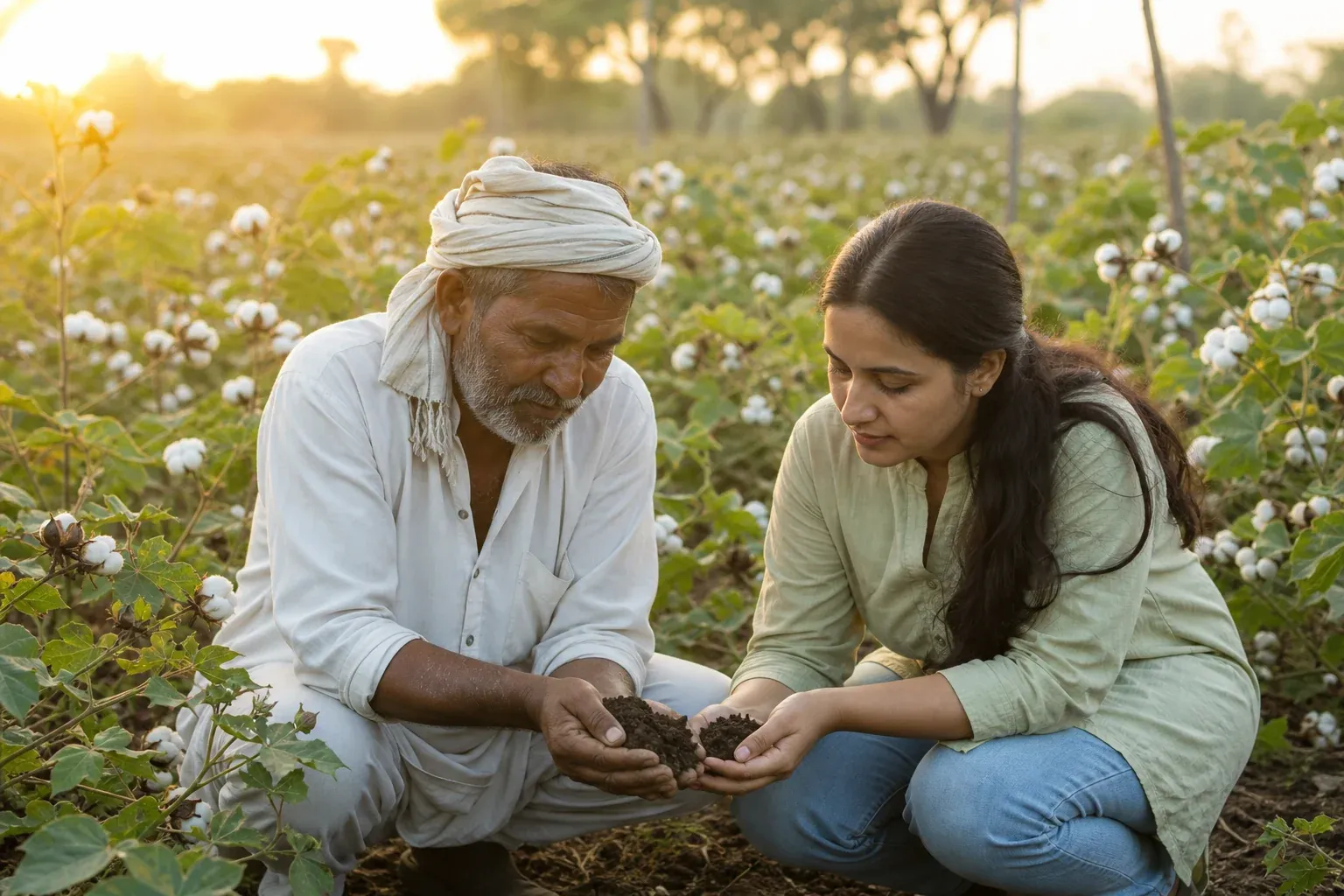
Every program starts with a soil health baseline: organic carbon content, texture, and moisture retention are measured before any practice change happens. This baseline is what later proves improvement, and it protects against unverifiable claims. this guide to cover crops in regenerative agriculture.
3. Digital Traceability and MRV Data Capture
As practices change, field agents and farmers log data through simple mobile tools: what was planted, when, with what inputs, and what the soil results show. This becomes the measurement, reporting, and verification (MRV) backbone that both carbon credit buyers and brand compliance teams eventually rely on. The full traceability architecture is covered in this guide to MRV and traceability systems for cotton.
4. Biochar and Carbon Insetting Integration
Where crop residue is available, biochar production gets layered into the same farm network already collecting soil and yield data. This lets Beetle Regen Solutions quantify sequestration at the farm level and link it directly to a specific brand's supply chain, rather than sourcing generic offset credits from an unrelated project.
5. Brand-Side Reporting, Compliance, and Monetization
The data collected across stages one through four feeds into brand-facing dashboards and reports that map to Scope 3 emissions accounting, EU CSRD disclosure requirements, and voluntary carbon credit registries. Brands get a defensible paper trail from farm to finished product, and farmers see the financial upside of their practice changes, whether through premium pricing, cooperative payments, or direct carbon credit revenue.
Where Beetle Regen Solutions Operates: India and Bangladesh
Geography matters more than most sustainability reports acknowledge. Cotton grown in rain-fed Vidarbha faces different soil and water constraints than cotton grown under irrigation in Gujarat, and a biochar program built around crop residue in Madhya Pradesh looks different from one built around rice husk in Bangladesh's paddy belt.
Beetle Regen Solutions runs active farmer programs across Maharashtra, Gujarat, Telangana, and Madhya Pradesh, working through existing farmer cooperatives and networks rather than trying to build parallel structures from scratch. In Bangladesh, the focus shifts toward linkages with the country's large ready-made garment manufacturing base, connecting regenerative and traceable fiber sourcing directly to spinning and knitting operations that supply major global brands.
This regional specificity is not incidental. India's Ministry of Textiles has been actively promoting sustainable cotton initiatives as part of broader efforts to modernize the sector, and brands sourcing from the region increasingly need documentation that reflects state-level and even district-level practices, not a national average. For a closer look at where adoption is concentrated, this brand guide to regenerative cotton sourcing in India and Bangladesh maps the landscape in more detail.
Inside the Climate Action Textile Forum
One of the more distinctive parts of how Beetle Regen Solutions works is the Climate Action Textile Forum, a recurring collaboration space that brings farmers, brand sustainability teams, manufacturers, and policy stakeholders into the same conversation. Most industry events segregate these groups: farmer conferences rarely include corporate buyers, and brand sustainability summits rarely include the farmers whose practices determine whether a climate claim is real.
The forum's stated purpose is to close that gap directly. Farmer representatives share what is and is not working on the ground. Brand teams explain what their compliance and reporting obligations actually require, which often clarifies misunderstandings about what data farmers need to collect and why. Manufacturers describe where regenerative fiber gets bottlenecked in ginning, spinning, and dyeing. Policymakers get a direct line into the operational realities that shape whether a proposed regulation is workable at the farm level.
Outcomes attributed to forum collaborations include measurable gains in on-farm yield through HDPS adoption, expanding biochar tonnage produced and applied across partner farms, and growing uptake of digital traceability tools among cooperatives that had previously kept only paper records. The forum also functions as a feedback loop into policy discussions, since agriculture remains central to India's rural economy and food security strategy according to the UN Food and Agriculture Organization, and textile-linked farming decisions carry weight well beyond any single brand's supply chain.
For brands specifically trying to convert this kind of collaboration into a defensible climate roadmap, this five-step net zero roadmap outlines how forum-level engagement fits into a verified target-setting process.
Who Beetle Regen Solutions Works With
The client and partner base spans several distinct groups, each with different needs from the same underlying infrastructure.
- Textile and fashion brands such as international apparel retailers working toward net zero commitments need traceable regenerative fiber, credible carbon accounting, and support navigating disclosure frameworks like the EU Corporate Sustainability Reporting Directive.
- Textile supply chain manufacturers, including yarn producers and fabric mills, need to integrate regenerative material into existing production lines without disrupting quality or throughput.
- Agricultural cooperatives and farmer networks in India and Bangladesh need training, market access, and a credible path to carbon credit income alongside their existing crop sales.
- Corporate sustainability teams outside the textile sector look to regenerative agriculture partnerships as a route to Net Zero goals when direct operational decarbonisation has already been maximized.
- Climate think tanks, ministries, and policymakers engage with the company's farmer-level data and capacity-building work as an input into agricultural and textile policy design.
Understanding which of these categories a partner falls into matters early, because the engagement model differs. A brand typically starts with sourcing volume or a SaaS compliance engagement; a cooperative typically starts with training and baseline assessment. Brands wanting to understand supplier evaluation criteria before committing to a sourcing relationship can review this comparison of what brands actually pay for with regenerative versus conventional cotton.
What Makes the Beetle Regen Solutions Approach Different
The regenerative agriculture and carbon insetting space is crowded, and the differences between providers are not always obvious from the outside. A few things distinguish how Beetle Regen Solutions operates.
Full-stack delivery instead of single-point vendors. Many organizations in this space specialize narrowly, some focus purely on carbon credit financing, others purely on certification standards, others purely on blockchain-based carbon marketplaces. Beetle Regen Solutions runs farmer training, biochar production, traceability infrastructure, and brand-side compliance reporting as one connected system, which reduces the handoff failures that happen when a brand has to stitch together three or four separate vendors.
Commercial scale with hands-on delivery. The company operates across India and Bangladesh with direct corporate partnerships rather than staying limited to a single region or community-based model. That scale is paired with in-person farmer training rather than remote-only advisory, which matters because practice adoption in agriculture depends heavily on trust built through repeated field presence.
Farmer economics built into the model from the start. Rather than treating farmer income as a secondary benefit of a carbon program, Beetle Regen Solutions structures monetization, whether through carbon credits, premium pricing, or yield gains, as a core design requirement. Programs that skip this step tend to see practice adoption fall off once training funding ends.
For a broader look at how regenerative practices translate into on-farm productivity gains, see how regenerative agriculture increases crop yield, and for the traceability side of supplier evaluation, this brand guide to supply chain traceability for regenerative cotton covers what documentation buyers should expect to see.
Frequently Asked Questions
What does Beetle Regen Solutions actually deliver to a textile brand?
A brand engagement typically includes some combination of traceable regenerative cotton sourcing, carbon footprint measurement, biochar-based carbon insetting, and Sustainability as a Service support for compliance reporting and target-setting. The exact mix depends on whether the brand needs raw material, data infrastructure, or strategic advisory, and engagements are scoped individually.
How does biochar carbon insetting fit into a textile supply chain?
Crop residue from partner farms is converted into biochar and applied to the same soil that grows the brand's cotton, creating a carbon reduction that happens inside the brand's own supply chain rather than through an external, unrelated offset project. This is why it counts as insetting. Brands considering cost implications can review this analysis of biochar carbon removal durability and who should care before budgeting a program.
Can smallholder farmers really monetize carbon credits through this model?
Yes, though the process requires verified baseline data, ongoing MRV, and aggregation across many farmers to reach a viable credit volume. Beetle Regen Solutions builds this aggregation into its cooperative-based delivery model so individual smallholders, who typically cannot access carbon markets alone, can participate collectively.
How does this help with EU CSRD or Scope 3 reporting?
Because traceability and carbon data are captured at the farm level from the start of a program, brands get documentation that maps directly to Scope 3 Category 1 emissions and to the granular disclosure requirements under the EU Corporate Sustainability Reporting Directive. This is generally far harder to produce retroactively than to build in from the outset of a sourcing relationship.
Does Beetle Regen Solutions work only in cotton, or across other crops too?
Cotton is the primary textile fiber focus, but programs also incorporate rice through Alternative Wetting and Drying methods where farmers rotate paddy with cotton, since methane reduction in rice cultivation contributes meaningfully to a farm's overall emissions profile.
The through-line across every service Beetle Regen Solutions runs is traceability: a brand cannot claim a climate benefit it cannot trace back to a specific farm, and a farmer cannot get paid for a practice change no one is measuring.
If your organization is trying to close the gap between a sustainability commitment and what is actually happening in your cotton supply chain, whether you are a brand facing CSRD deadlines, a manufacturer looking to integrate regenerative fiber, or a farmer cooperative exploring carbon credit income, the next step is a direct conversation about your specific supply chain and goals. Contact Beetle Regen Solutions to discuss which combination of regenerative cotton sourcing, biochar carbon insetting, or Sustainability as a Service fits where your organization stands today.