Reviving Soil, Restoring Hope
How two friends are bringing dignity back to farming. As featured in The Better India.
Amol Mishra, Hemant Rajput, and a farmer in Yenikoni
Hemraj used to wait through harvest in Yenikoni with a knot in his stomach. He put money into fertilisers and pesticides for cotton and fruit, then watched the crop fail to cover the bill. Water ran short. Farming felt like a gamble he kept losing.
In 2023, Amol Mishra and Hemant Rajput, two friends walking fields in Khargone, Madhya Pradesh, started Beetle Regen Solutions with one rule: farmers come first. Amol said the worry that stuck with him was watching sustainability programmes roll on while farmers were worse off than before. A press team would usually sand that line down. He left it in.
Hemraj joined a small group trying reduced tillage, cover crops, and compost made at home. He was sceptical. After a season, fertiliser and pesticide use dropped, yields rose by 15 to 20 percent, and the cotton, oranges, and vegetables sold more easily. He now plants cotton on a High Density Planting System and calls neighbours over to see the plants.
The Better India reports this across nearly 70,000 smallholders on more than 100,000 hectares, from cotton in Maharashtra to paddy in Andhra Pradesh. Field managers like Deepak start early, walking from plot to plot, talking through crop stage, pests, and soil. Trust is slow. Regenerative work often takes a full season before anyone believes it.
On one hot afternoon, Amol stood with cotton farmers turning crop residue into biochar instead of burning it. Hemant puts the model in two parts: regenerative farming, and carbon removal. The soil improves, residue stays out of the fire, and stored carbon is treated like money in a bank.
Women in Regenerative Cotton has trained 700 women in field practices, money skills, and running a small enterprise. Hemraj still walks his fields with neighbours at his side, pointing at cotton that stands taller than last year.
Read More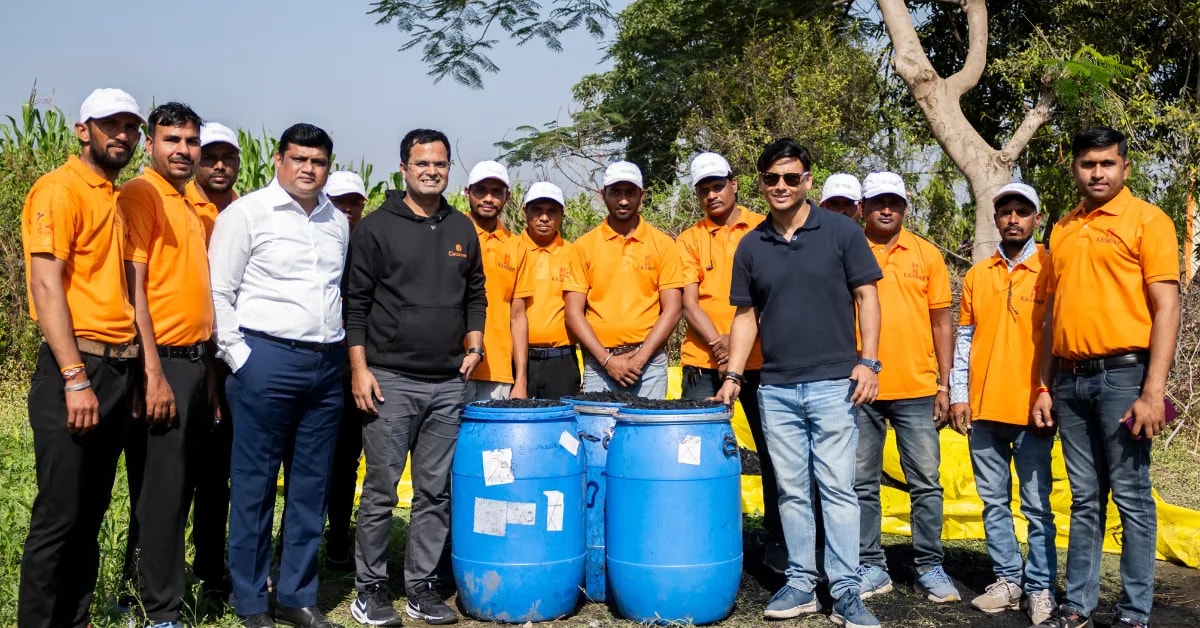
Photo: Beetle Regen. Full story on The Better India.