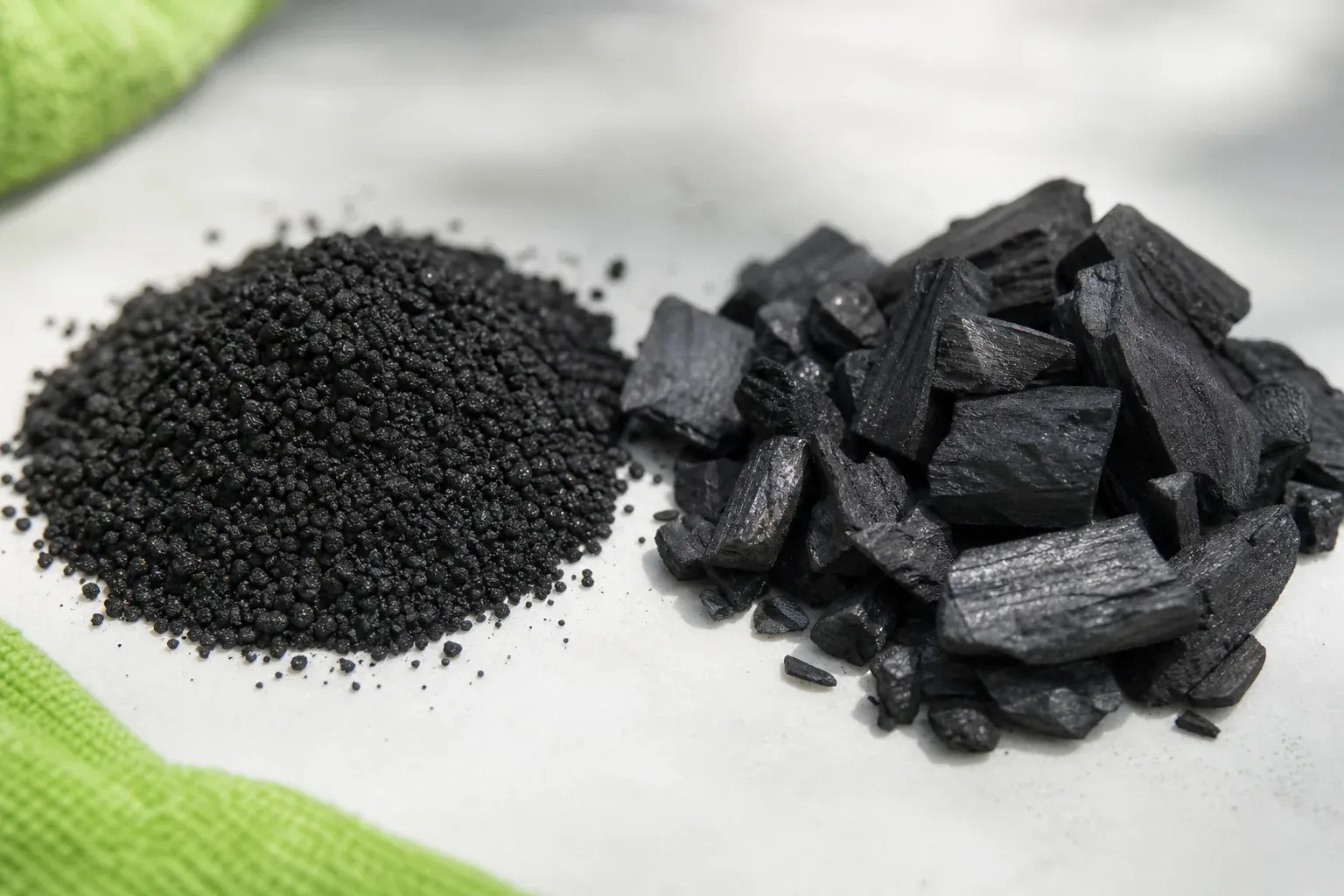
Biochar - How it actually Sequesters Carbon?
Biochar sequesters carbon in soil for decades to centuries, while regular charcoal does not, because biochar is produced under controlled pyrolysis for soil carbon storage and charcoal is made for burning as fuel. If you're evaluating a supplier for carbon insetting, this difference decides whether your Scope 3 claims survive an audit or fall apart under scrutiny.
Key Takeaways
- Molecular stability differs sharply: Biochar's low H:Corg ratio (below 0.4) signals carbon that resists microbial breakdown for 100+ years; charcoal made for fuel often carries a higher ratio and burns off within years.
- Production intent changes the outcome: Charcoal kilns optimize for combustible energy density; biochar kilns optimize for stable carbon structure and soil porosity, using controlled temperature and residence time.
- Soil benefits aren't interchangeable: Biochar's porous structure holds water and hosts microbes; unactivated charcoal lacks that structure and can even spike soil pH if applied without testing.
- Only biochar passes MRV audits: Verra, Gold Standard, and the European Biochar Certificate require lab-tested feedstock, pyrolysis records, and farm-level traceability that charcoal suppliers rarely provide.
- Mislabeling costs brands credibility: Buying "charcoal" marketed as biochar without verification data puts your carbon insetting claims at risk of being flagged as greenwashing.
Biochar vs Charcoal at a Glance
| Factor | Biochar | Charcoal |
|---|---|---|
| Primary purpose | Soil carbon storage, soil health | Fuel for cooking or heating |
| Production control | Controlled temperature (350-700°C), monitored residence time | Often variable, optimized for burn quality not carbon stability |
| H:Corg ratio (stability marker) | Typically below 0.4 | Often above 0.4, less stable |
| Carbon permanence in soil | Decades to centuries | Weeks to a few years if applied to soil at all |
| Soil structure benefit | High porosity, water retention, microbial habitat | Minimal, can alter pH unpredictably |
| MRV / carbon credit eligibility | Verra, Gold Standard, EBC methodologies apply | No standardized soil carbon protocol |
| Traceability to farm source | Feedstock and batch records tied to specific plots | Rarely documented at farm level |
What Sets Biochar Apart From Regular Charcoal
Both biochar and charcoal start the same way: biomass heated without much oxygen. That's where the similarity ends. Charcoal makers care about one thing, how well the material burns. Biochar producers care about something different: how long the carbon inside that material stays locked away once it goes into the ground.
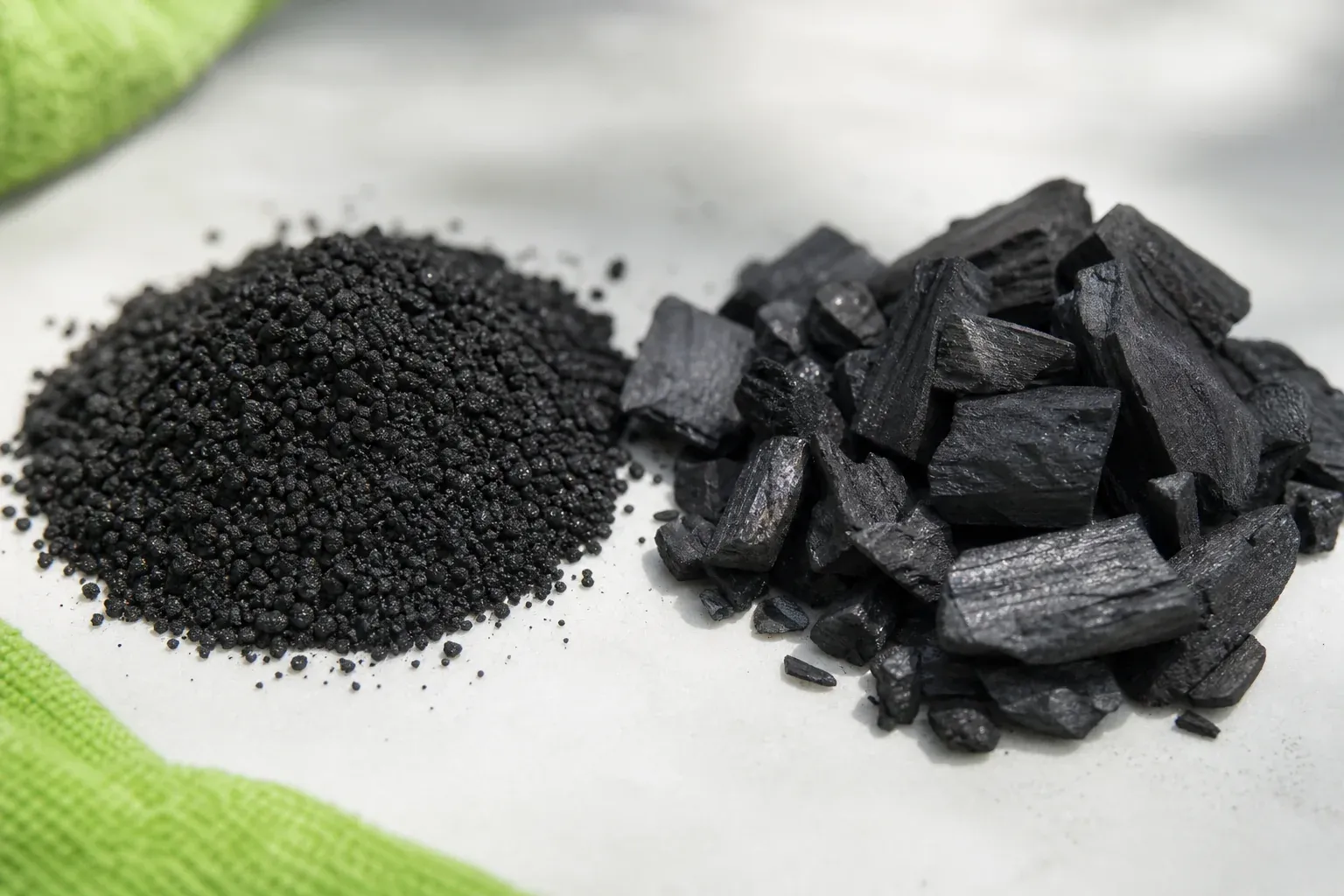
Feedstock choice matters too. Cotton stalks, rice husks, and other crop residues each behave differently under heat. Beetle Regen selects feedstock and pyrolysis conditions specifically to raise stable carbon content, not to maximize burn time. That single design choice is why we describe our process as biochar production for farming rather than charcoal manufacturing, even though the raw inputs look similar to an outsider.
Temperature control is the other lever. Charcoal kilns often run hot and fast to produce a dense, energy-rich fuel. Biochar kilns hold a steadier range and longer residence time, which builds the aromatic carbon structures that resist decay. Get the temperature wrong, and you end up with something closer to charcoal: usable as fuel, but not stable enough to count as sequestered carbon in a soil program.
Carbon Stability: Why Biochar Locks Carbon In and Charcoal Often Doesn't
Scientists measure carbon stability with a simple ratio: hydrogen to organic carbon, or H:Corg. A lower ratio means more of the carbon has formed stable aromatic rings that microbes can't easily break down. Biochar destined for soil carbon credits typically needs an H:Corg ratio under 0.4, the threshold used by the European Biochar Certificate and referenced in IPCC guidance on biomass carbon removal.
Charcoal made for cooking fuel rarely gets tested against that threshold, because nobody expects it to sit in soil for a century. It's meant to burn, releasing its carbon back into the atmosphere as CO2 within days of use. Even when leftover charcoal fragments end up scattered on farmland, informally or by accident, their carbon isn't as chemically stable as engineered biochar, and their contribution to long-term soil carbon storage is inconsistent at best.
This is the crux of the biochar vs charcoal for soil carbon question. A tonne of biochar applied correctly can represent a verifiable, multi-decade carbon removal. A tonne of charcoal applied the same way offers no such guarantee, because it was never engineered or tested for that outcome. For a deeper look at how long that stored carbon actually lasts and how ratings agencies score it, see our breakdown in Biochar Carbon Removal: Durability, Ratings & Who Should Care.
Soil Health Impact: Biochar's Structure vs Charcoal's Limitations
Biochar's real value in a field goes beyond stored carbon. Its porous structure acts like a sponge and a shelter at once. Water clings to the internal surfaces during dry spells, and beneficial microbes colonize the tiny pores, building a healthier root zone over time.
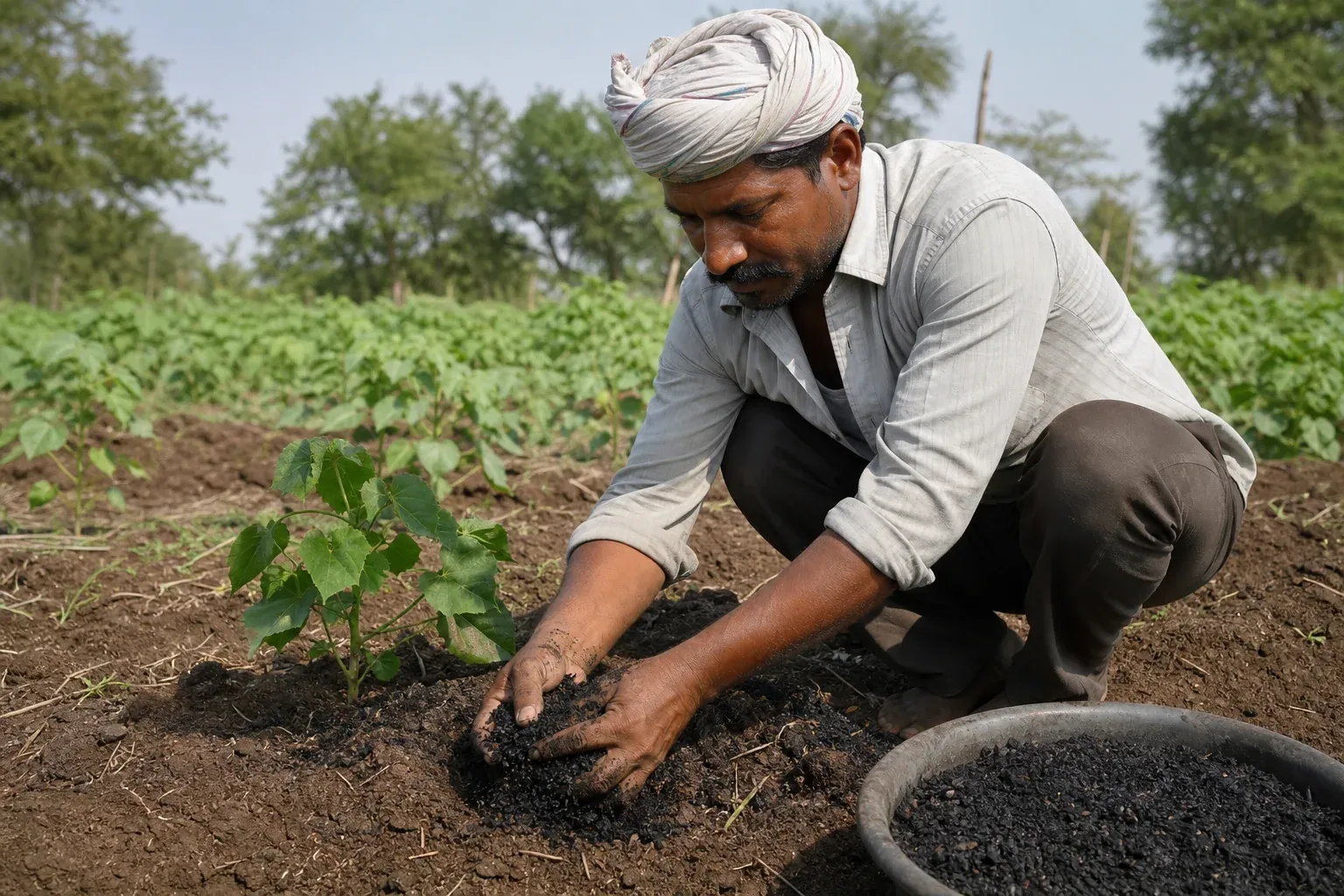
Charcoal without activation or testing doesn't offer the same structural benefit. It may even work against you: uncontrolled application can shift soil pH upward sharply, especially in already alkaline soils common across parts of Madhya Pradesh and Maharashtra. That's a real risk for farmers experimenting with charcoal they've made themselves for fuel, then repurposing leftovers for the field without lab guidance.
We've seen the difference play out on the ground. A cotton farmer we work with in Yavatmal district raised his soil organic carbon from 0.31% to 0.62% across two growing seasons by switching from burning crop residue to converting it into properly produced biochar. Read the full account in How One Cotton Farmer Doubled His Soil Organic Carbon in Two Seasons. That kind of measurable jump comes from biochar engineered for soil, not charcoal repurposed as an afterthought.
Farmers considering this shift also gain a second income stream. Instead of burning residue and losing it entirely, converting it into biochar creates material that can qualify for carbon credit payments. We cover the practical side of that transition in What Is Biochar and What Are Its Uses in Farming?
MRV Verification: Why Charcoal Fails Carbon Insetting Audits
Brands buying carbon insetting need more than a good story. They need measurement, reporting, and verification (MRV) data that stands up to an external auditor. That means lab-tested feedstock composition, documented pyrolysis temperature and time, batch-level yield records, and a clear chain of custody from farm plot to final application site.
Charcoal supply chains almost never carry this documentation, because nobody built them for that purpose. A charcoal seller can tell you the fuel burns well. They usually cannot tell you the H:Corg ratio, the exact feedstock source, or how much of that material's carbon will still be in the ground in fifty years. Without that data, no credible registry, not Verra, not Gold Standard, not a corporate ESG audit, will accept the material as a carbon insetting input.
This gap explains a pattern we see often: brands approached by low-cost "biochar" suppliers who are, in practice, reselling charcoal byproducts with no lab testing behind them. According to the UN Food and Agriculture Organization, roughly a third of the world's soils are already degraded, which raises the stakes for getting soil carbon interventions right rather than settling for cheap substitutes that don't hold up.
Comparing Biochar and Charcoal for Carbon Insetting Suppliers
Before signing with any biochar supplier, run through this checklist:
- Ask for lab results: Request H:Corg ratio, fixed carbon content, and ash content from an independent lab, not just a production data sheet.
- Confirm feedstock traceability: Can the supplier name the specific farms and crop residues used in each batch?
- Check pyrolysis records: Temperature logs and residence time should be documented per batch, not estimated after the fact.
- Verify registry alignment: Does the supplier's methodology map to Verra, Gold Standard, or the European Biochar Certificate?
- Watch for vague terminology: If a supplier uses "biochar" and "charcoal" interchangeably in their marketing, that's a red flag worth pressing on directly.
How Beetle Regen Verifies Biochar for Carbon Insetting
We built our biochar program around the gap this comparison exposes. Every batch we produce ties back to a named farm and plot, with pyrolysis conditions logged and feedstock sourced from crop residue that would otherwise be burned in the field, a practice that pollutes rural air and wastes organic material that could rebuild soil instead.
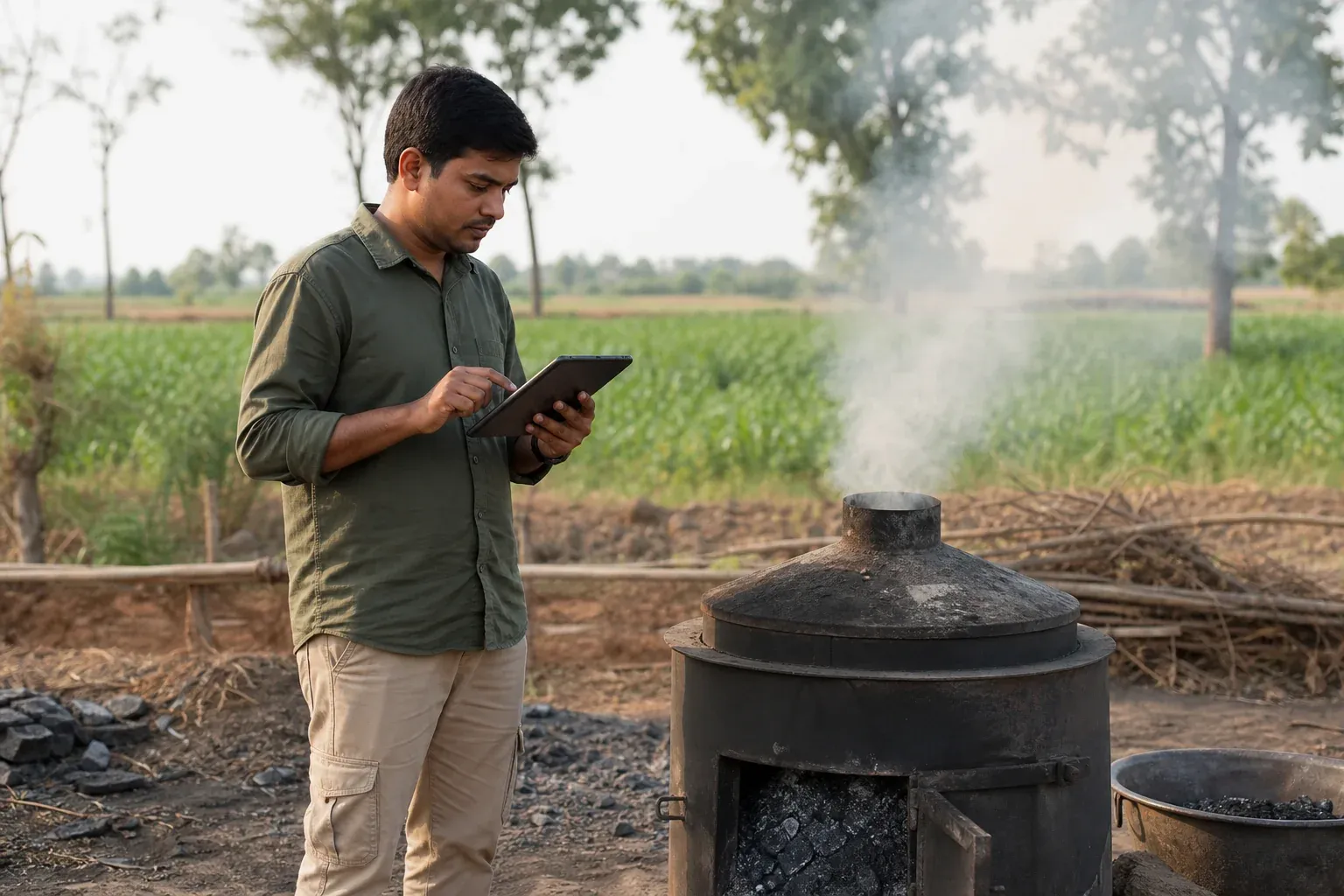
Farmers in our network receive hands-on training before they operate a kiln, covering safe fire management and feedstock handling so production stays consistent from batch to batch. That consistency is what makes lab testing meaningful; you can't verify carbon stability if every batch comes out differently. Our full production and verification process is explained in How Biochar Carbon Insetting Works for Textile Brands, and our current project footprint is mapped out in Biochar Projects in India: Scaling Carbon Insetting for Textile Supply Chains.
For textile brands weighing carbon insetting against generic offsets, the traceability difference compounds fast. A generic carbon offset often comes from an anonymous project you can't inspect. Biochar tied to a named farm, a tested batch, and a documented application record gives your sustainability team something real to point to when regulators or auditors ask for evidence behind a net zero or Scope 3 claim.
Common Questions on Biochar vs Charcoal for Soil Carbon
Can you use regular charcoal instead of biochar in soil?
You can physically add charcoal to soil, but you shouldn't expect the same carbon storage or soil health outcome. Charcoal made for fuel lacks the lab testing and stability profile required to count as verified soil carbon, and it may alter pH unpredictably without prior soil testing.
Is activated charcoal the same as biochar?
No. Activated charcoal goes through a chemical or high-heat activation step designed to maximize surface area for filtration or medical use, not for long-term soil carbon storage. Biochar is engineered specifically for agricultural application and carbon stability, following different temperature and feedstock protocols.
How long does biochar carbon actually stay in soil?
Properly produced biochar with a low H:Corg ratio typically remains stable in soil for decades, and studies referenced by the European Biochar Certificate point to timeframes stretching into centuries for well-made batches. Charcoal without that same molecular structure breaks down far faster, if it was even designed to be applied to soil at all.
Why does this distinction matter for regenerative farming programs in India?
Regenerative farming programs in India increasingly rely on biochar as a verified carbon insetting tool, not just a soil amendment. Brands sourcing regenerative cotton need documentation that satisfies Scope 3 and CSRD reporting requirements, something charcoal supply chains generally cannot provide. You can review how these programs measure success in What KPIs Should You Track in a Regenerative Cotton Program?
If your team is evaluating a carbon insetting supplier and wants to see verified, farm-level biochar data rather than a generic offset pitch, contact us to walk through our MRV documentation and current project sites. Getting the biochar vs charcoal distinction right at the sourcing stage protects your net zero claims long before an auditor ever asks the question.