
Digital Product Passport Cotton Traceability: EU Rules Explained
The EU's digital product passport cotton traceability requirement will force every garment sold in the bloc to carry farm-to-fashion data, and cotton is one of the first fibers in line under the Ecodesign for Sustainable Products Regulation (ESPR). Brands sourcing from India and Bangladesh that still rely on certificate-based claims, rather than farm-level records, will not have the underlying data ready when delegated acts for textiles land.
Key Takeaways
- Textiles are a named priority category: the European Commission listed textiles among the first product groups for ESPR delegated acts, putting cotton garments ahead of most other sectors in the rollout queue.
- Certificates alone will not satisfy a passport: a digital product passport needs a traceable chain of custody data, not just a scheme logo, so brands relying only on BCI or organic certificates still have a data gap to close.
- Farm and plot-level identifiers become the anchor: without a named farmer, plot, and harvest date behind each batch, mills cannot populate the passport fields regulators will require.
- Mass balance sourcing gets harder to defend: a passport tied to a specific product needs a defensible link to specific fiber, which segregated and identity-preserved supply chains handle far better than blended mass balance.
- The prep window is now, not after the delegated act publishes: data systems, farmer onboarding, and mill handoffs take 12-18 months to build properly, and that clock should already be running.
Digital Product Passport Cotton Traceability at a Glance
| Factor | What It Means for Cotton Sourcing |
|---|---|
| Legal basis | EU Ecodesign for Sustainable Products Regulation (ESPR), in force since July 2024 |
| First product categories | Textiles and apparel named among the Commission's priority groups for delegated acts |
| Expected data fields | Fiber origin, farm/plot identifiers, processing stages, chemical and durability data |
| Who holds the data | Brand is legally accountable; ginners, spinners, and farm groups must feed verified records upstream |
| Sourcing model most affected | Mass balance cotton faces the biggest gap; segregated and identity-preserved cotton is closer to ready |
| Practical prep window | 12-18 months to build farm-to-mill data systems before enforcement dates bind |
| Non-compliance risk | Market access restriction in the EU for products lacking a valid passport once the category's act applies |
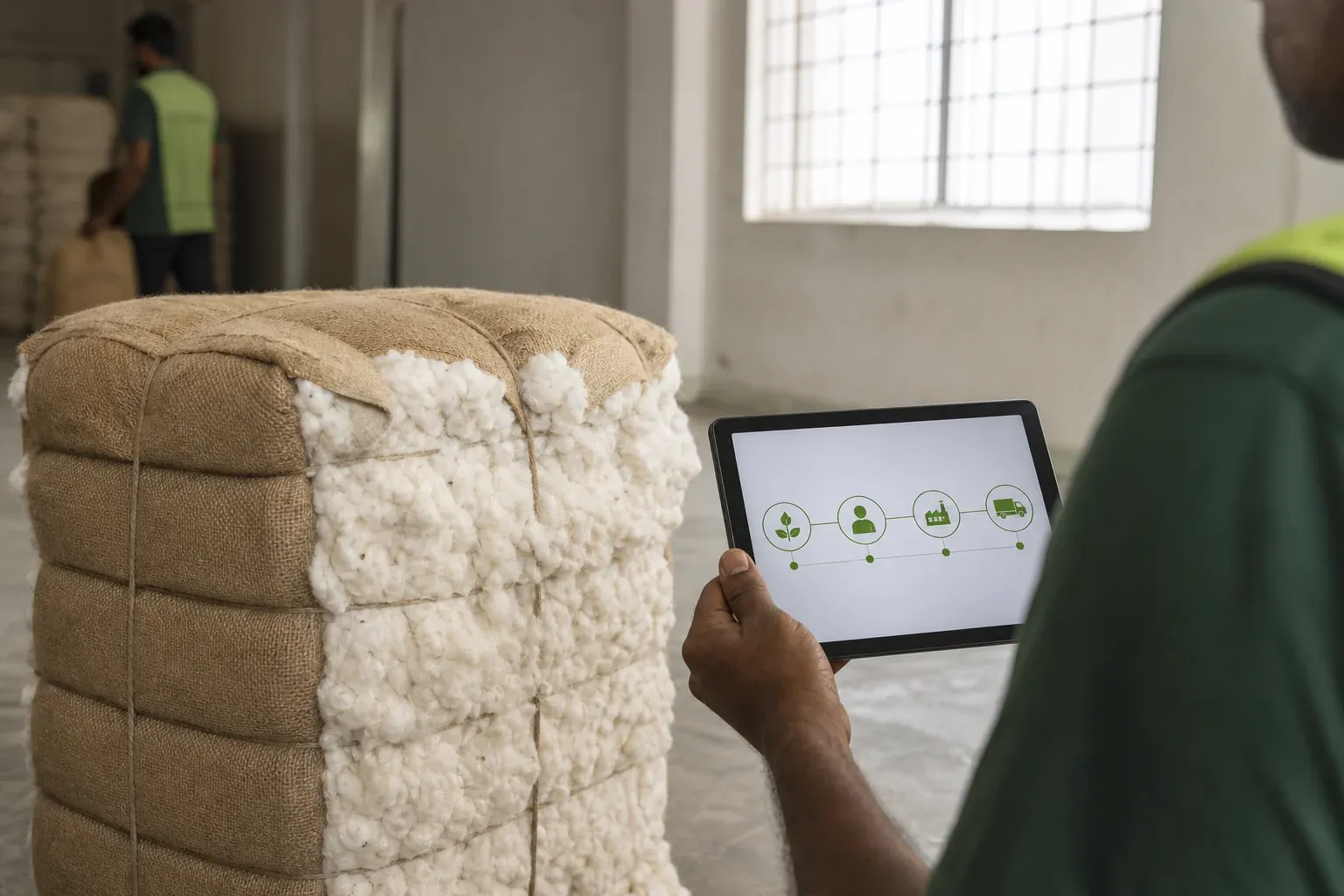
What Is a Digital Product Passport, and Why Does Cotton Trigger It First?
A digital product passport is a required, machine-readable record attached to a product that discloses where its materials came from and how it was made. For cotton garments sold in the EU, that record must reach back past the sewing floor to the fiber itself.
Cotton and textiles sit near the front of the ESPR queue because the European Commission flagged apparel as one of the highest-impact consumer categories, alongside furniture and electronics. The regulation itself, Regulation (EU) 2024/1781, entered into force in July 2024 and gives the Commission power to issue delegated acts setting sector-specific requirements. Textiles were named in the Commission's working plan as an early category, which is why brands sourcing cotton from India and Bangladesh are moving now rather than waiting.
This is a different obligation from the EU's Corporate Sustainability Reporting Directive. CSRD asks a company to disclose its Scope 3 emissions and risks at the corporate level. A digital product passport attaches to the individual product itself and travels with it through resale, repair, and recycling. You can read a full account of how brands are approaching the reporting side in why traceability in cotton matters for brand compliance.
How Do EU Digital Product Passport Rules Change Cotton Sourcing From India and Bangladesh?
They change the sourcing model, not just the paperwork. A passport needs a record that can be traced to a specific batch of fiber, which means brands need farm identifiers, gin-floor batch codes, and spinner handoff records that link together without gaps.
India supplies roughly a quarter of the world's raw cotton and Bangladesh converts a large share of it into finished garments for EU retailers, so the two countries sit on opposite ends of the same passport data chain. A cotton boll picked in Madhya Pradesh or Maharashtra has to carry an identity through ginning, spinning, and cutting that eventually reaches a Dhaka or Chittagong factory floor.
Right now, most of that chain runs on paper delivery notes and verbal trust between intermediaries. A ginner buys mixed lots from dozens of small farmers, blends them, and sells onward with no record of which plot contributed which kilogram. That works for a certificate scheme. It breaks under a passport that has to point to a specific, defensible source.
Brands that already run regenerative cotton programs with named farmer cohorts have a head start, because the plot-level record already exists for carbon insetting purposes. Brands buying on price through anonymous mass balance pools do not, and that gap is exactly where passport compliance will bite first.
What Timeline Are Brands Actually Working Against?
Brands are working against a rollout that starts with delegated acts for textiles expected within the ESPR's early wave, followed by a transition period before enforcement, giving most sourcing teams a realistic 12 to 18 month window to build farm-to-mill data systems before compliance dates start to bind.
The Commission has not published a fixed enforcement date for cotton textiles at the time of writing, and that uncertainty is itself a planning risk. Delegated acts typically include a grace period after publication, but the data infrastructure behind a passport, farmer IDs, plot mapping, gin-floor digitization, cannot be assembled in the weeks after a rule drops. It takes seasons, not sprints.

Waiting for the final legal text before starting is the single most common mistake we see among brands sourcing from South Asia. The data collection work, farmer consent, plot registration, mill-level batch tracking, is the long pole, not the reporting template.
Expert Perspectives: What Implementation Actually Looks Like on the Ground
Sourcing directors, compliance leads, and farm-data specialists we work with across India and Bangladesh generally agree on one point: the EU text describes an outcome, and the gap to reach it sits entirely at the farm and gin level, not at the brand's head office.
A sourcing lead at a mid-size European retailer put it plainly in an internal review shared with us: brands can write a compliance policy in a week, but building a farmer ID system across a district takes a full cotton season, sometimes two, to get right without disrupting harvest.
Compliance specialists focused on CSRD and ESPR overlap point to a second friction: many brands are trying to reuse their Scope 3 carbon data infrastructure for passport data, and the two do not map cleanly. Carbon data is aggregated at a program level; passport data needs to resolve to a specific batch tied to a specific finished product.
Farm-data specialists working directly with cooperatives in Madhya Pradesh and Maharashtra flag a third, more human issue: farmers need a clear reason to participate in ongoing data collection beyond a one-time survey. Programs that pair data capture with training, yield support, and carbon credit access see far higher retention than programs that only ask farmers to fill in forms.
That is the same lesson behind how to create a net zero cotton supply chain: traceability systems that survive an audit are the ones built on a relationship with the farmer, not just a database schema.
Cotton Supply Chain Traceability vs Digital Product Passport: What's the Difference?
Supply chain traceability is the underlying data infrastructure: farm records, batch codes, and chain-of-custody documentation. A digital product passport is the regulatory output format that packages some of that data for public and regulator access, attached to the individual product.
| Attribute | Cotton Supply Chain Traceability | Digital Product Passport |
|---|---|---|
| Purpose | Internal chain-of-custody and verification for brands and auditors | Legal disclosure requirement tied to a specific product for EU market access |
| Legal status | Voluntary today, though many brands treat it as a baseline requirement | Mandatory under ESPR once the delegated act for textiles applies |
| Data granularity | Can range from program-level to farm-level depending on the system | Must resolve to the specific product batch, not an aggregated program |
| Who sees it | Brand, auditor, and sometimes the retailer | Public-facing via a QR code or digital link, accessible to any consumer or regulator |
| Relationship | Prerequisite: without this data, a passport cannot be populated accurately | Output: the passport is only as accurate as the traceability system behind it |
Brands sometimes assume a traceability platform and a passport are the same purchase. They are not. A platform without farm-level granularity will produce a passport with gaps that regulators or NGOs can challenge, which is why the readiness question always starts one level below the passport itself, at the traceability system feeding it.
5 Steps to Prepare Your Cotton Supply Chain for Digital Product Passport Requirements
Preparing for a digital product passport comes down to closing the data gap between the farm and the finished garment before the delegated act sets a hard deadline. Five steps cover most of that work.
- Map your current data gaps. Pull your existing sourcing records and mark exactly where the chain breaks, usually at the gin, where lots from many small farms get blended without individual tracking.
- Assign farm and plot IDs before the next planting season. A passport needs a name and a location behind every batch. Retrofitting IDs after cotton is picked and blended is far harder than assigning them at enrollment.
- Digitize the ginner and spinner handoff. Paper delivery notes cannot feed a passport. A simple mobile-based batch log at the gin floor, tied to farmer IDs, closes the biggest gap in the chain.
- Choose a data schema built for interoperability. A system that only exports a PDF certificate will not connect to a passport platform. Look for a schema that can export structured data through an API or standard file format.
- Pilot with one mill before scaling across your supply base. Test the full farm-to-fabric data flow on one relationship first, fix the handoff points that break, then expand. Our guide on how to set up cotton supply chain traceability or the related walkthrough at Cotton Special Project covers this pilot approach in more detail.
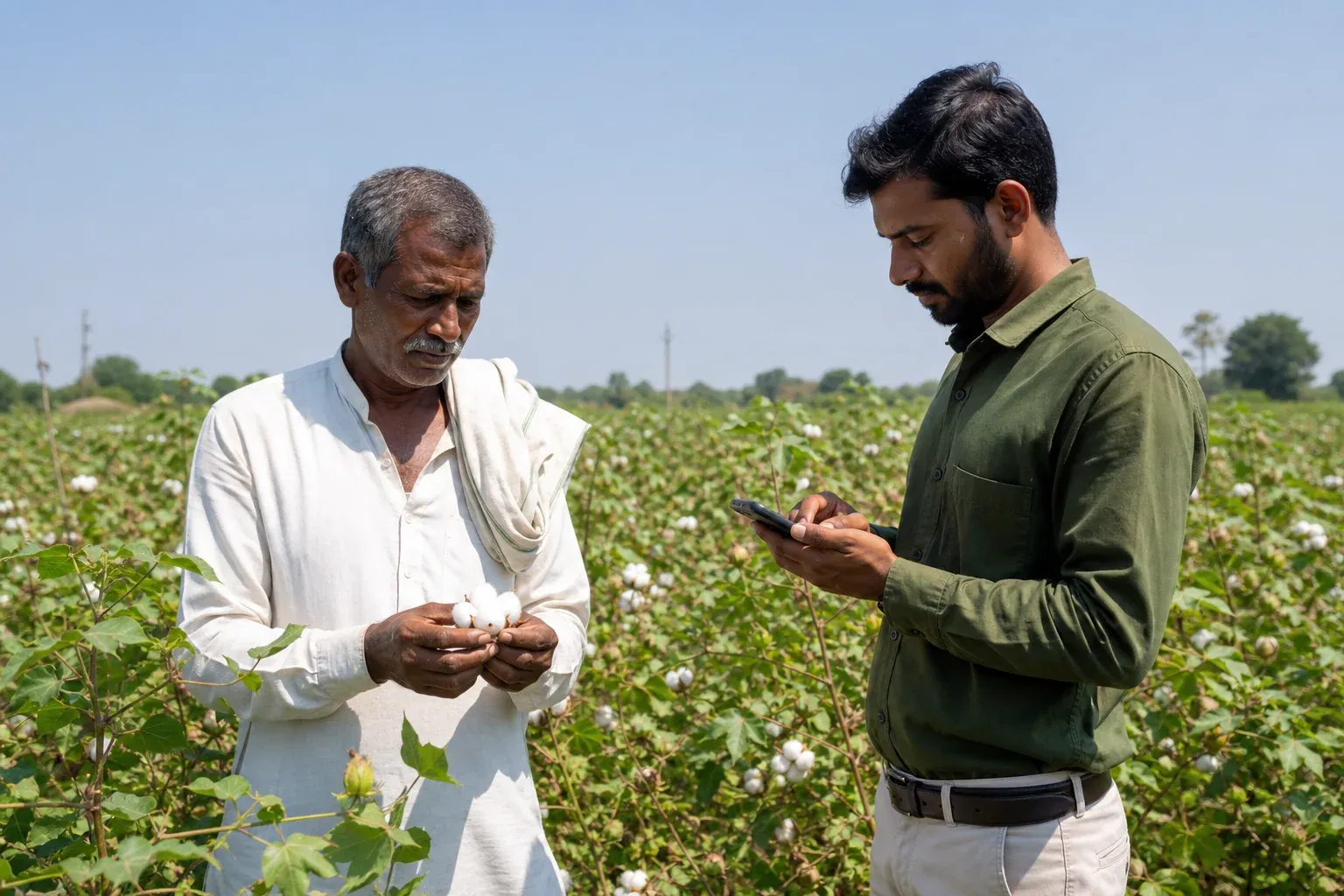
Red Flags When Choosing a Traceability Partner for DPP Readiness
Choosing a traceability partner for digital product passport readiness means checking whether they can produce farm-level, batch-linked data on demand, not whether they hold a certification logo. Several warning signs show up repeatedly when brands evaluate vendors.
- Vague data ownership. If a vendor cannot clearly state who owns the farmer-level data and how it moves to your systems, that gap becomes your compliance risk later.
- No farm-level granularity. A vendor offering only regional or program-level averages cannot populate a batch-specific passport field.
- No API or structured export. A PDF report is not integration-ready. Ask for a live data sample in a structured format before signing anything.
- Certification-only claims. A scheme logo tells you inputs were controlled at some point in the process. It does not tell you which farm, which plot, or which harvest date sits behind a specific garment.
- No farmer engagement model. Data systems that ask farmers to participate without offering training, yield support, or income benefits tend to see data quality collapse after the first season.
These same checks apply almost identically when evaluating a broader sourcing partner, which we cover in depth in regenerative vs conventional cotton: what brands pay for.
FAQ
Which factory or manufacturer can give complete supply chain visibility from cotton farm to garment?
No single factory can do this alone. Complete visibility from farm to garment requires a traceability system layered across the farmer group, ginner, spinner, and cutting facility, with each stage recording a linked batch ID rather than one factory reporting on its own.
Is traceable cotton the same as certified cotton?
No. Certified cotton confirms that farming inputs met a scheme's standards at one point in the process. Traceable cotton means the data chain, including farm identity and batch movement, can be followed end to end, which a certificate alone does not guarantee.
Does the digital product passport apply to garments made in Bangladesh but sold in the EU?
Yes. The passport requirement attaches to the product sold into the EU market, regardless of where it was manufactured. A garment cut and sewn in Bangladesh from Indian cotton still needs a passport once the textile delegated act applies to that product category.
India and Bangladesh sourcing teams that start building farm-level traceability now, rather than waiting for the final delegated act text, will have working data systems by the time enforcement dates bind. Beetle Regen Solutions runs farmer-first traceability and MRV systems across cotton belts in both countries, built on the same plot-level data that regenerative and carbon insetting programs already require. If your sourcing team needs to close the gap between certificate-based claims and passport-ready data, contact us to walk through your current supply chain and identify where the data chain breaks first.