
Due Diligence Checklist for Sustainable Cotton Sourcing: 10 Non-Negotiables
A procurement director at a major European apparel brand recently shared a telling detail: her team had received a 47-page sustainability report from a cotton supplier in Gujarat. It included satellite imagery, farmer testimonials, and a carbon sequestration figure cited to two decimal places. When her team asked for the underlying soil test data and the MRV methodology behind the carbon number, the supplier went quiet for three weeks — and then sent a PDF of a certification that had expired eight months earlier.
That story is not unusual. As the EU Corporate Sustainability Reporting Directive (CSRD), the German Supply Chain Act (LkSG), and the forthcoming EU Supply Chain Due Diligence Directive raise the evidentiary bar for sustainability claims, procurement teams are discovering that the gap between a supplier's ESG narrative and verifiable documentation can be enormous. This ESG due diligence checklist for sustainable cotton sourcing is designed to close that gap — checkpoint by checkpoint.
Each of the 10 non-negotiables below is mapped to the compliance standards most commonly demanded by major textile retailers and brands, including CSRD, GHG Protocol Scope 3, Textile Exchange frameworks, and the EU Deforestation Regulation. Whether you source from India, Bangladesh, or both, this checklist gives your procurement team a structured process for evaluating whether a supplier's sustainability claims hold up to scrutiny.

Why Standard Supplier Audits Miss the Mark on Cotton ESG
A conventional supplier audit checks for factory compliance: fire exits, wage records, working hours, chemical storage. Those checks matter. But they were designed for manufacturing facilities, not for agricultural supply chains that begin 500 kilometers upstream at a smallholder farm in Vidarbha or Telangana.
Cotton's ESG risk profile is fundamentally different from a garment factory's. The most material issues — soil degradation, water depletion, pesticide runoff, farmer income, and carbon emissions, happen at the farm gate, not on the factory floor. Standard audits rarely reach that far. And when they do, they typically rely on farmer self-reporting rather than third-party measurement.
The regulatory environment is changing this fast. Under the EU CSRD, brands must report on Scope 3 Category 1 emissions from purchased goods, which means farm-level carbon data is no longer optional. The EU Supply Chain Due Diligence Directive requires brands to identify, prevent, and remediate adverse human rights and environmental impacts across their entire value chain, including Tier 4 farm suppliers. The EU Deforestation Regulation adds land-use verification requirements that extend to cotton-growing regions.
A structured ESG due diligence checklist for sustainable cotton sourcing addresses all of these dimensions. The 10 checkpoints below cover soil health evidence, traceability documentation, farmer welfare indicators, carbon methodology validation, and governance safeguards, the full spectrum of what major retailers and brands now expect from credible sustainable cotton programs.
1. Verified Soil Health Baseline Data
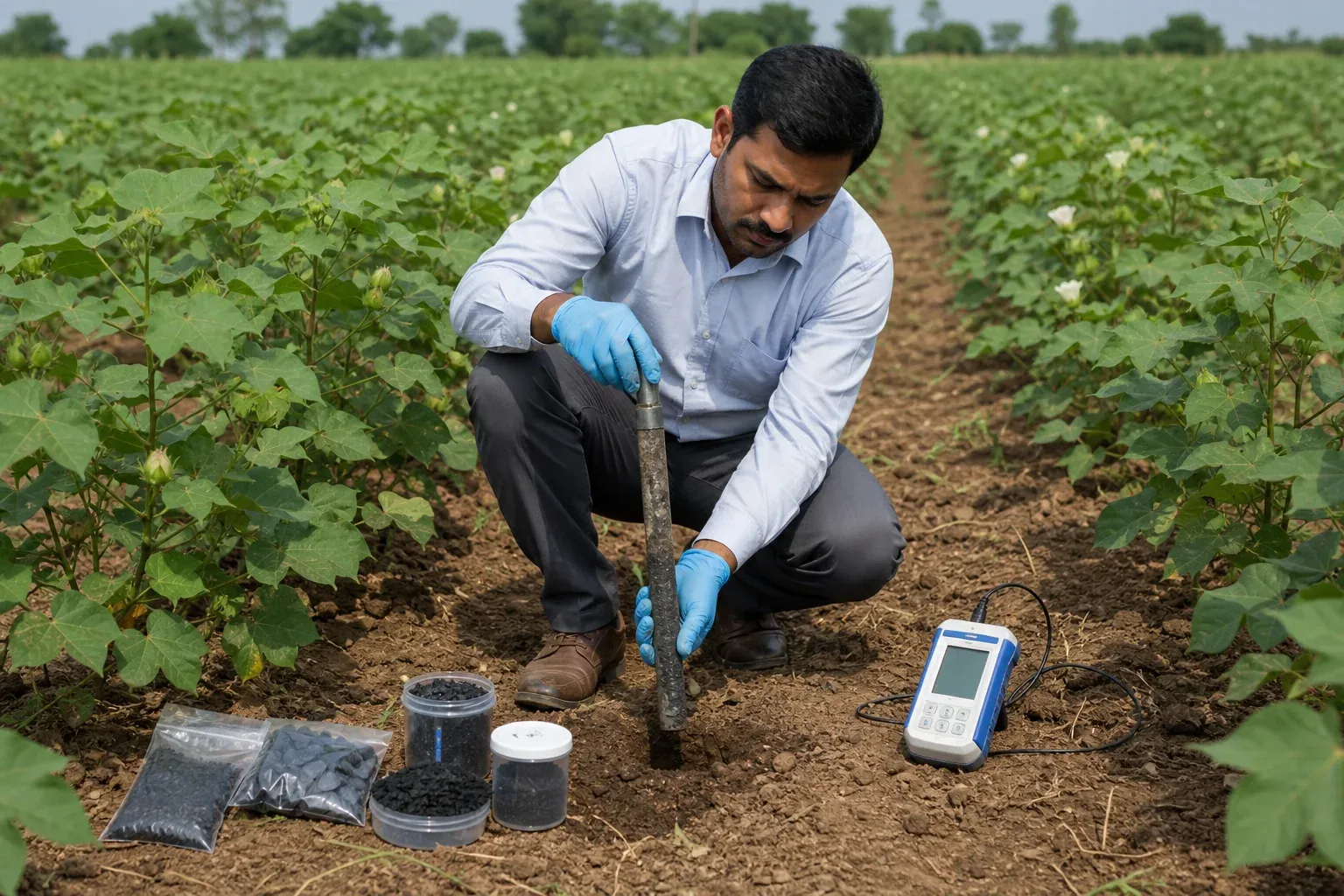
Soil health is the foundation of any regenerative cotton claim. Without a documented baseline, there is no way to verify improvement, and no way to substantiate carbon sequestration figures. Yet most suppliers provide narrative descriptions of their farming practices rather than quantitative soil data.
What to Request
- Soil organic carbon (SOC) percentage measured at 0, 30 cm depth, with GPS-referenced sampling points
- Bulk density readings to contextualize SOC stock calculations
- Microbial biomass carbon or PLFA analysis as a proxy for soil biological activity
- Baseline year and re-measurement frequency, annual re-testing is the minimum credible standard
- Laboratory accreditation, samples should be analyzed by an ISO 17025-accredited lab or equivalent
Suppliers operating genuine regenerative agriculture programs will have this data. Those relying on marketing language rather than measurement will not. The absence of baseline soil data is one of the clearest red flags in cotton ESG due diligence.
For brands mapping this checkpoint to compliance frameworks: CSRD's ESRS E3 (water) and ESRS E4 (biodiversity) both require disclosure of land-use impacts, and soil health data is increasingly expected as supporting evidence. The GHG Protocol's Land Sector and Removals Guidance also requires soil carbon stock data for any land-based carbon removal claim.
2. Traceability Documentation from Farm to Mill
Traceability is the connective tissue of a credible sustainable cotton program. Without it, a brand cannot demonstrate that the cotton in its product actually came from the farms described in its ESG report, a gap that regulators and investors are increasingly unwilling to accept.
Minimum Documentation Requirements
- Farm-level GPS coordinates and land area records for all participating farmers
- Gin records linking seed cotton volumes to specific farm clusters
- Transaction certificates (TCs) at each custody transfer point (farm → gin → spinner → mill)
- Fiber identity verification, isotope testing or physical tagging where chain of custody is complex
- Digital traceability system documentation, platform name, data governance policy, and audit trail access
Paper-based systems are not inherently disqualifying, but they require more rigorous third-party verification. Digital systems that provide immutable audit trails, whether blockchain-based or otherwise, reduce verification burden significantly. For a deeper look at what credible traceability infrastructure looks like in practice, the guide on supply chain traceability for regenerative cotton covers the technical architecture in detail.
Standards alignment to check: Textile Exchange's Organic Content Standard (OCS) and Recycled Claim Standard (RCS) both require transaction certificates. The EU's forthcoming Digital Product Passport (DPP) will require machine-readable traceability data at the product level, suppliers who cannot provide structured digital records today will struggle to comply by 2027.
3. Credible Regenerative or Organic Certification (or a Documented Pathway)
Certification is not the only proof of sustainable practice, but its absence, combined with the absence of any credible pathway, is a significant due diligence concern. The key is distinguishing between suppliers who are genuinely on a certification journey and those who are using sustainability language as a marketing tool.
Accepted Certification Frameworks
- Regenerative Organic Certified (ROC), the most rigorous standard, covering soil health, animal welfare, and farmer fairness
- GOTS (Global Organic Textile Standard), covers organic fiber processing through to finished product
- OCS (Organic Content Standard), verifies organic fiber content without full processing chain requirements
- Better Cotton (BCI), a widely adopted baseline standard; note that BCI does not verify organic or regenerative claims
- Fairtrade Cotton, strong on farmer welfare; limited on soil health and carbon metrics
India-Specific Context
India's cotton sector is dominated by smallholder farmers with holdings of 2, 5 acres. Individual farm certification is often economically unviable at this scale. Group certification models, where an internal control system (ICS) manages compliance across a farmer cluster, are the accepted approach for smallholder programs. When evaluating Indian suppliers, ask specifically whether their certification covers individual farms or a group ICS, and request the most recent ICS audit report.
For suppliers on a certification pathway rather than fully certified, request a written improvement plan with milestones, a timeline to certification, and evidence of third-party oversight of the transition process. Self-declared "regenerative" labels without any third-party verification are a red flag that warrants deeper scrutiny, a topic covered in detail in the brand audit guide on regenerative cotton sourcing in India and Bangladesh.
4. Carbon Methodology Validation
Carbon sequestration claims are among the most frequently misrepresented figures in sustainable cotton marketing. A supplier claiming to sequester 1.2 tonnes of CO₂e per hectare per year may be citing a peer-reviewed study from a different soil type, a different climate zone, or a different farming system entirely. Credible carbon claims require a documented methodology, not a borrowed number.
What Credible Carbon Documentation Looks Like
- Named methodology, Verra VM0042 (Improved Agricultural Land Management), Gold Standard's Soil Organic Carbon framework, or an equivalent peer-reviewed protocol
- MRV documentation, Measurement, Reporting, and Verification records showing how carbon stocks were measured, by whom, and when. For a comprehensive breakdown of MRV requirements, see the guide on MRV and traceability systems for cotton.
- Third-party verification, carbon claims should be verified by an accredited validation and verification body (VVB), not self-reported
- Additionality evidence, documentation showing that the carbon sequestration would not have occurred without the program
- Permanence risk assessment, particularly relevant for soil carbon, which can be reversed by tillage or drought
Biochar Carbon Insetting: Additional Criteria
Suppliers incorporating biochar production into their carbon programs face additional validation requirements. Biochar carbon removal claims must document feedstock sourcing, pyrolysis temperature and residence time, biochar stability class (per the European Biochar Certificate or equivalent), and application rates per hectare. The durability and rating criteria for biochar carbon removal are distinct from soil organic carbon claims and should be evaluated separately.
For brands using carbon insetting to address Scope 3 emissions, the distinction between insetting and offsetting matters enormously for CSRD reporting. Insetting credits must be generated within the brand's own value chain to count toward Scope 3 reduction claims, a purchased offset from an unrelated project does not qualify.
5. Farmer Welfare and Social Compliance Indicators
The social dimension of ESG due diligence is where cotton sourcing most directly intersects with human rights law. The EU Supply Chain Due Diligence Directive, the UK Modern Slavery Act, and Germany's LkSG all require brands to identify and address adverse human rights impacts in their supply chains, and cotton farming in South Asia carries well-documented risks.
Key Indicators to Verify
- Living income benchmarks, farmer income data compared against the Anker Living Income Reference Value for the relevant region. Ask for disaggregated data by farm size and crop type.
- Child labor and forced labor, third-party audit evidence, not self-declaration. For programs involving seasonal labor, request records of worker age verification and freedom of movement.
- Gender equity indicators, women's participation in training programs, land ownership records, and access to program benefits
- Grievance mechanism, evidence of a functioning, accessible grievance redress system for farmers and workers
- Farmer training program documentation, training curricula, attendance records, and outcome assessments. Capacity building programs that document knowledge transfer are a positive indicator of program quality.
One practical test: ask the supplier how many farmers in their program have exited in the past 12 months and why. High attrition rates often signal that the program's economic benefits are not reaching farmers as promised.
6. Water Use and Pesticide Management Records
Cotton is one of the most water-intensive crops in conventional agriculture. Regenerative and sustainable cotton programs should demonstrate measurable reductions in water consumption and synthetic pesticide use, not just commitments to reduce them.
Documentation to Request
- Water consumption per kg of seed cotton, baseline and current figures, with measurement methodology
- Irrigation method records, drip irrigation, rainfed, or Alternative Wetting and Drying (AWD) adoption rates across the farmer base
- Pesticide input logs, active ingredients used, application rates, and year-on-year trend data
- IPM (Integrated Pest Management) adoption evidence, training records, field observation reports, and input substitution data
- ZDHC MRSL compliance, for programs that extend into processing, chemical compliance with the Zero Discharge of Hazardous Chemicals Manufacturing Restricted Substances List
Alignment with the Higg Index's Farm Module (Higg FEM) or the SAC's Sustainable Apparel Coalition benchmarks provides a useful reference point for water and chemical performance. Suppliers who cannot provide input logs, only narrative descriptions of their practices, should be treated with caution.
7. Scope 3 Emissions Footprint at Farm Level
Farm-level emissions data has moved from a nice-to-have to a near-mandatory requirement for brands reporting under CSRD. Scope 3 Category 1 (purchased goods and services) is typically the largest single source of emissions for a textile brand, and cotton farming is a significant contributor within that category.
What a Credible Farm-Level Carbon Footprint Report Should Contain
- System boundary definition, which activities are included (land preparation, fertilizer application, irrigation, harvesting, ginning)
- Emission factors used, source of emission factors (IPCC, national inventory, or supplier-specific measurement)
- Functional unit, emissions expressed per kg of lint cotton, not per hectare (which obscures yield differences)
- Nitrous oxide (N₂O) accounting, synthetic nitrogen fertilizer is the largest single source of farm-level emissions in cotton; its treatment in the footprint calculation is critical
- Third-party review, at minimum, a peer review of the methodology; ideally, third-party verification
For brands building a comprehensive Scope 3 reduction strategy, the framework for carbon sequestration in agriculture provides the methodological context needed to evaluate supplier claims against accepted standards. Insetting programs that reduce farm-level emissions at source are significantly more credible for Scope 3 reporting than offset purchases.
8. Governance and Anti-Corruption Safeguards
The governance dimension of ESG due diligence is often the least developed in cotton supply chain assessments, and the most consequential when things go wrong. Cooperative structures, aggregator models, and multi-tier supply chains all create opportunities for misrepresentation that governance safeguards are designed to prevent.
Key Governance Checks
- Supplier governance structure, legal entity documentation, ownership structure, and any related-party relationships between the supplier and its farmer base
- Whistleblower and grievance mechanisms, evidence that farmers and workers can report concerns without retaliation, aligned with OECD Guidelines for Multinational Enterprises
- Anti-bribery and anti-corruption policy, written policy, training records, and evidence of enforcement
- Cooperative governance documentation, for farmer cooperative models, minutes of general body meetings, election records, and financial audit reports
- Conflict of interest disclosures, particularly relevant where the supplier also acts as the carbon program developer and the verification body
The last point deserves emphasis. In carbon insetting programs, a supplier who designs the methodology, trains the farmers, measures the carbon, and sells the credits to the brand is operating with a significant conflict of interest. Independent third-party verification is not optional in this structure, it is the only safeguard against systematic overstatement.
9. Biodiversity and Land Use Impact Assessment
Biodiversity due diligence has accelerated sharply since the adoption of the Kunming-Montreal Global Biodiversity Framework in 2022 and the publication of the TNFD (Taskforce on Nature-related Financial Disclosures) framework. For cotton sourcing, the most material biodiversity risks are deforestation, habitat conversion, and the loss of soil biodiversity from synthetic pesticide use.
Documentation Requirements
- Deforestation-free verification, GPS farm boundaries cross-referenced against Global Forest Watch or equivalent deforestation monitoring data, aligned with the EU Deforestation Regulation (EUDR)
- Land rights documentation, title deeds, lease agreements, or community land use records for all participating farms. Disputed land tenure is a material human rights and environmental risk.
- Biodiversity indicators, species count surveys, habitat corridor documentation, or agroforestry integration records. For programs incorporating cover crops or agroforestry, ask for species diversity data from field assessments.
- TNFD alignment, for brands with nature-related disclosure commitments, ask whether the supplier has conducted a LEAP (Locate, Evaluate, Assess, Prepare) assessment for their farming operations
India's cotton belt spans several biodiversity-sensitive regions, including parts of Maharashtra, Telangana, and Gujarat that border protected areas. Suppliers operating in or near these zones face heightened scrutiny under both Indian environmental law and EU import regulations.
10. Continuous Improvement Commitments and Reporting Cadence
A one-time audit is a snapshot. ESG due diligence for sustainable cotton sourcing is a process. The final non-negotiable is evidence that the supplier has a structured system for tracking performance over time and a commitment to transparent, regular reporting.

What to Look For
- Annual re-verification, soil carbon, traceability, and social compliance data should be re-verified at least annually, not just at program inception
- KPI dashboard access, brands should have direct access to performance data, not just summary reports prepared by the supplier
- Corrective action plans, evidence that non-conformances identified in previous audits have been addressed, with documented timelines and outcomes
- Supplier improvement roadmap, a written plan showing how the supplier intends to improve on key ESG metrics over the next 1, 3 years
- Contract-embedded ESG KPIs, sustainability performance metrics written into the supply agreement, with consequences for non-performance
Embedding ESG KPIs into supplier contracts is the single most effective way to ensure that due diligence translates into on-the-ground change. Brands that treat ESG due diligence as a procurement gate, rather than an ongoing relationship management tool, consistently report better supplier performance over time.
How to Use This Checklist in Your Procurement Process
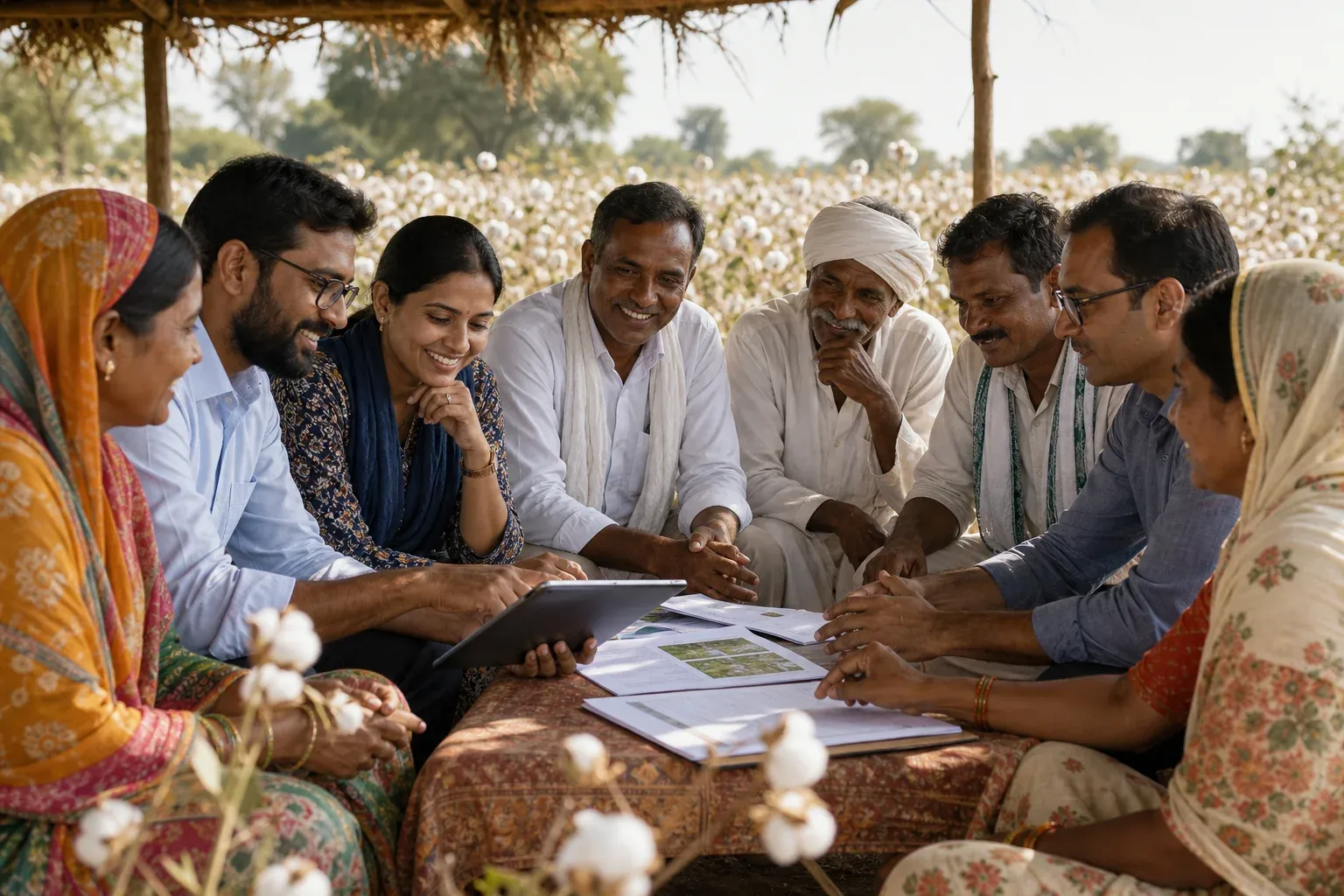
The 10 checkpoints above are most effective when integrated into your procurement workflow at three specific stages: supplier pre-qualification, contract negotiation, and annual performance review.
Stage 1: Pre-Qualification (RFP Stage)
Use checkpoints 1, 4 (soil health, traceability, certification, and carbon methodology) as minimum threshold requirements in your RFP. Suppliers who cannot provide documentation for these four checkpoints at the RFP stage are unlikely to meet your compliance requirements at scale. This is not about penalizing suppliers who are early in their sustainability journey, it is about identifying where documentation gaps exist before you commit to a sourcing relationship.
Stage 2: Contract Negotiation
Checkpoints 5, 9 (farmer welfare, water and pesticide management, Scope 3 footprint, governance, and biodiversity) should be addressed in contract terms. Specify the documentation format, reporting frequency, and verification standard for each. Include a right-to-audit clause that gives your team, or a nominated third party, access to farm-level data on reasonable notice.
Stage 3: Annual Performance Review
Checkpoint 10 (continuous improvement) is the framework for your annual supplier review. Set improvement targets at the start of each contract year, review performance against those targets at year-end, and use the results to inform sourcing decisions for the following year. Suppliers who consistently improve their ESG performance deserve preferential sourcing volumes. Those who stagnate or regress need a corrective action plan, or a sourcing exit strategy.
Closing Documentation Gaps with On-Ground Partners
Many of the documentation gaps procurement teams encounter with Indian and Bangladeshi cotton suppliers are not the result of bad faith, they reflect the genuine capacity constraints of smallholder farming programs. A farmer cooperative managing 500 smallholders across three districts does not have the administrative infrastructure of a multinational supplier. This is where working with an on-ground partner who combines agronomic expertise, MRV capability, and supply chain traceability infrastructure makes a material difference.
Beetle Regen's Sustainability as a Service model is specifically designed for procurement teams navigating this challenge. Rather than leaving brands to manage documentation gaps through supplier correspondence alone, Beetle Regen embeds the verification infrastructure, soil testing, MRV, traceability systems, farmer welfare monitoring, directly into the supply chain program. The result is a supplier relationship that generates audit-ready ESG data as a byproduct of the farming program itself, rather than as a retrospective documentation exercise.
For brands sourcing from India specifically, Beetle Regen's regenerative cotton programs cover the full checklist: verified soil health baselines, digital traceability from farm to mill, group certification support for smallholder clusters, validated carbon insetting methodology, and farmer welfare monitoring aligned with EU supply chain due diligence requirements.
Frequently Asked Questions
What is the difference between ESG due diligence and a standard supplier audit?
A standard supplier audit typically focuses on factory-level compliance: labor conditions, health and safety, and environmental management systems at the manufacturing facility. ESG due diligence for cotton sourcing goes further upstream, to the farm level, and covers environmental impacts (soil health, water use, carbon emissions, biodiversity), social impacts (farmer welfare, land rights, community benefit), and governance safeguards (anti-corruption, grievance mechanisms, data integrity). It is a broader, more evidence-intensive process that requires different expertise and different documentation than a factory audit.
Which EU regulations require ESG due diligence for cotton sourcing?
Several EU regulations are directly relevant. The Corporate Sustainability Reporting Directive (CSRD) requires large companies and listed SMEs to report on material sustainability impacts across their value chain, including Scope 3 emissions from purchased goods. The EU Corporate Sustainability Due Diligence Directive (CS3D) requires companies to identify, prevent, and remediate adverse human rights and environmental impacts in their supply chains. The EU Deforestation Regulation (EUDR) requires due diligence to ensure that products placed on the EU market have not contributed to deforestation or forest degradation. Together, these regulations create a comprehensive due diligence obligation that extends to cotton farming operations. For a detailed look at how these regulations interact with textile supply chains, the guide on regenerative agriculture and climate policy alignment provides useful context.
How do I verify regenerative cotton claims from Indian smallholder suppliers?
Start with the soil data. A credible regenerative cotton program will have GPS-referenced soil organic carbon measurements from an accredited laboratory, taken at baseline and re-measured annually. If a supplier cannot provide this data, their regenerative claim is not verifiable. Beyond soil data, look for third-party verification of the farming practices (not just the outputs), a documented MRV methodology for any carbon claims, and evidence that the practices described, cover cropping, reduced tillage, compost application, biochar integration, are actually being implemented at scale across the farmer base, not just on demonstration plots.
What documentation should I request before signing a sustainable cotton contract?
At minimum, request: (1) soil health baseline data with laboratory accreditation details; (2) farm-level GPS coordinates and land area records; (3) the most recent transaction certificates or chain of custody documentation; (4) current certification status or a written certification pathway plan; (5) carbon methodology documentation if carbon claims are being made; (6) the most recent social compliance audit report; (7) water consumption and pesticide input data for the previous growing season; and (8) the supplier's governance structure and grievance mechanism documentation. This documentation set gives your legal and sustainability teams the evidence base needed to assess compliance risk before contract execution.
The procurement teams that navigate cotton ESG due diligence most effectively are not the ones with the longest checklists, they are the ones who know which questions to ask, which documentation to trust, and which gaps require on-ground verification rather than supplier assurance. If your team is working through this process for the first time, or if you are scaling a sustainable cotton program and need verified supply chain infrastructure in India or Bangladesh, connect with Beetle Regen's sourcing team to discuss how our regenerative cotton programs and Sustainability as a Service model can provide the audit-ready documentation your compliance requirements demand.