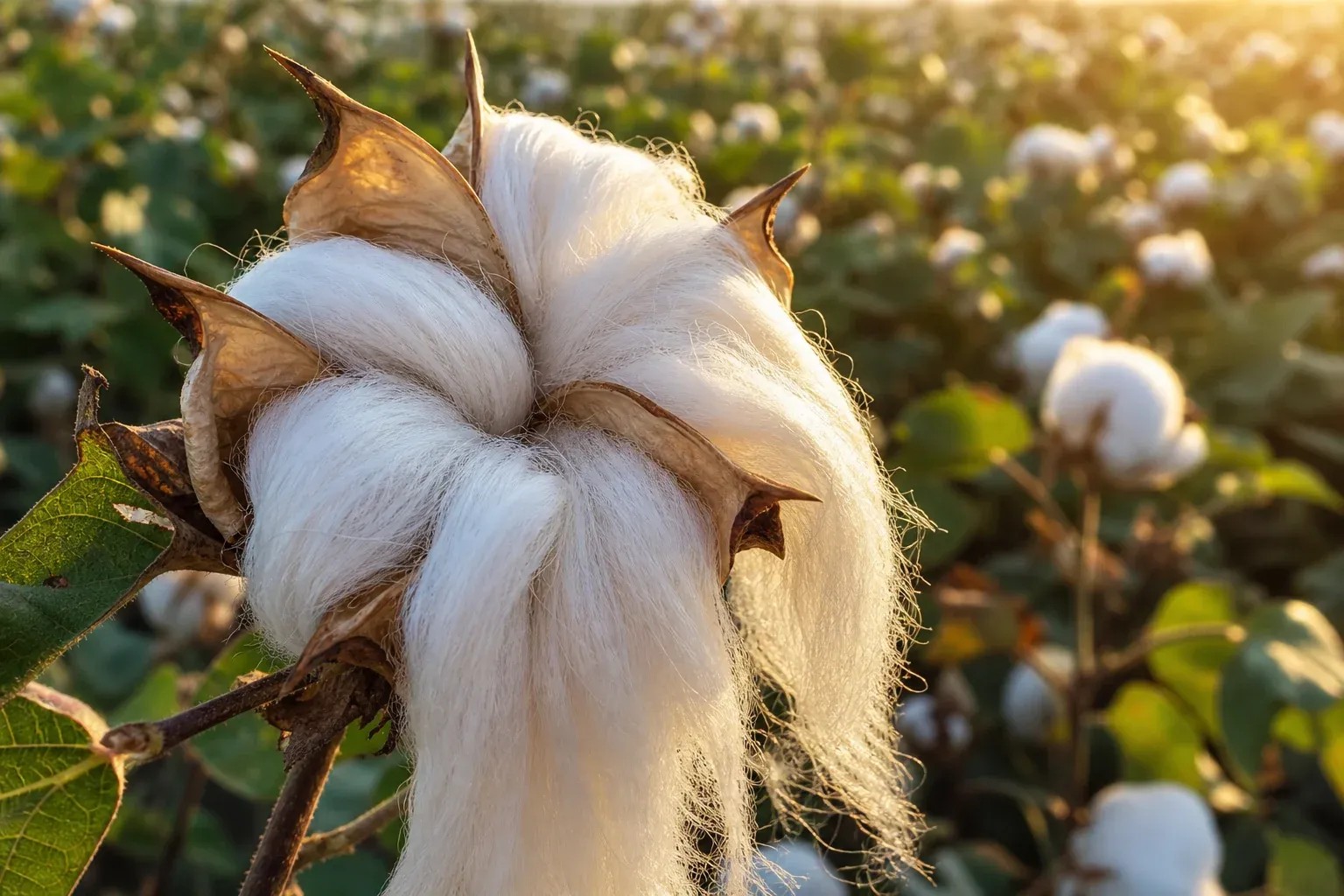
ELS Cotton: The Complete Guide to Extra Long Staple Fiber
Not all cotton is created equal. A single fiber pulled from a boll of extra long staple (ELS) cotton can be more than twice the length of a fiber from standard commercial cotton — and that difference, measured in fractions of a millimeter, determines whether a shirt feels rough or silky, whether a fabric pills after three washes or lasts a decade. For textile brands, sustainability teams, and supply chain professionals, understanding ELS cotton is not just a quality conversation. It is increasingly a climate, traceability, and sourcing strategy conversation too.
This post is the first in a series exploring ELS cotton from every angle: what it is, where it comes from, why it matters for sustainable supply chains, and what the future of regenerative ELS cotton farming looks like. If you are new to the topic, this is the right place to start.
What Is ELS Cotton? A Definition Worth Understanding
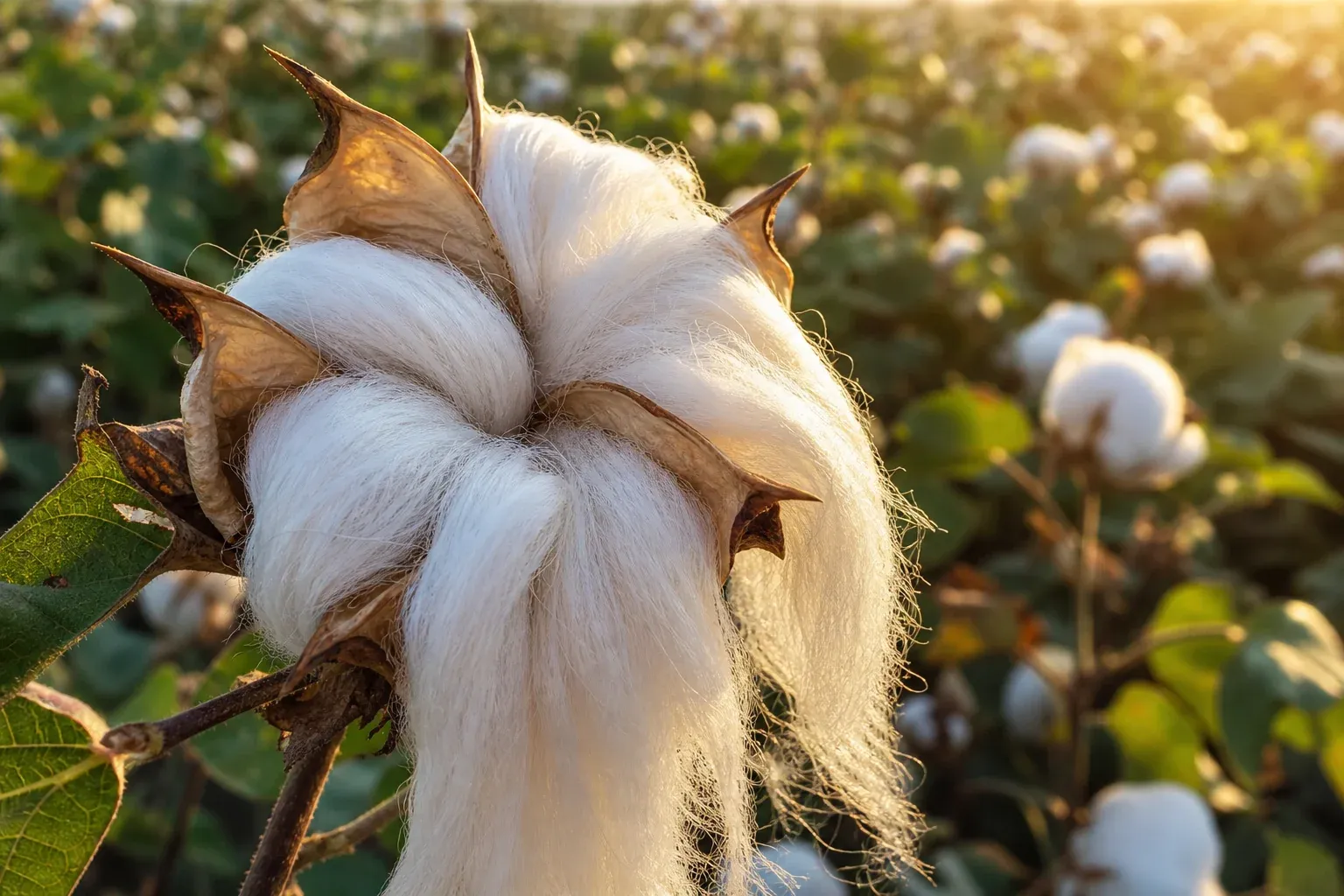
Cotton fiber quality is measured primarily by staple length — the average length of individual fibers in a harvested sample. The longer the fiber, the finer the yarn that can be spun from it, and the stronger and smoother the resulting fabric. The industry classifies cotton into three broad categories based on staple length:
- Short staple cotton: Under 25mm. Used in coarser textiles, industrial applications, and blended fabrics.
- Long staple (LS) cotton: 25mm to 34mm. The most widely grown category globally, used in mainstream apparel and home textiles.
- Extra long staple (ELS) cotton: 34mm and above, with premium varieties reaching 38mm to 45mm. Used in luxury apparel, fine shirting, premium bedding, and medical textiles.
ELS cotton is defined by the Cotton Incorporated fiber quality framework as cotton with an upper half mean length (UHML) of 1-3/8 inches (approximately 34.9mm) or longer. In practice, the most prized ELS varieties sit well above this threshold.
The Major ELS Cotton Varieties
Three varieties dominate the global ELS cotton market, each with a distinct geographic origin and quality profile:
- Pima (American ELS): Grown primarily in the southwestern United States, Peru, and Australia. Developed from Egyptian cotton genetics, Pima is the most commercially available ELS variety globally. Supima® is a trademarked designation for US-grown Pima that meets specific quality standards.
- Giza (Egyptian ELS): Grown in the Nile Delta region of Egypt. Varieties like Giza 45 and Giza 87 are considered among the finest natural fibers in the world, with staple lengths exceeding 40mm and exceptional luster.
- Suvin (Indian ELS): A hybrid variety developed in India, combining the genetics of Sudanese Acala and St. Vincent Sea Island cotton. Suvin is India's flagship ELS variety and one of the finest cottons produced anywhere in the world — a fact that remains underappreciated outside specialist textile circles.
Understanding these distinctions matters because each variety carries different agronomic requirements, different environmental footprints, and different supply chain dynamics. As this series unfolds, India's Suvin cotton will receive dedicated attention, it deserves it.
India's Role in the ELS Cotton Story
India is the world's largest cotton producer by volume, accounting for roughly 23, 25% of global cotton output in recent years. But raw volume tells only part of the story. India's cotton heritage spans millennia, the subcontinent was producing fine muslin and woven cotton textiles long before industrialisation made cotton a global commodity.
Within India's cotton landscape, ELS cotton occupies a small but strategically significant niche. According to data from the Central Institute for Cotton Research (CICR), ELS varieties account for a relatively small share of India's total cotton acreage, but they command disproportionate value in export markets and premium domestic supply chains.
Suvin: India's Crown Jewel ELS Variety
Suvin cotton was developed by CICR in the 1970s through a deliberate hybridisation program. The goal was to combine the long staple length of Sea Island cotton (historically grown in the Caribbean) with the adaptability of Sudanese Acala varieties suited to Indian growing conditions. The result was a fiber with staple lengths of 38mm to 44mm, micronaire values indicating exceptional fineness, and a natural luster that rivals Egyptian Giza varieties.
Suvin is grown primarily in three Indian states:
- Karnataka: The Dharwad and Haveri districts are the heartland of Suvin cultivation, with well-drained black cotton soils and a climate suited to the variety's long growing season.
- Tamil Nadu: The Coimbatore region has a long history of ELS cotton cultivation, supported by proximity to India's spinning industry hub.
- Andhra Pradesh: Selected districts contribute to Suvin production, though volumes are smaller than Karnataka and Tamil Nadu.
The irony of Suvin cotton is that it is better known among luxury textile buyers in Europe and Japan than among Indian consumers. Fine shirting mills in Italy and Switzerland have sourced Suvin for decades. Yet the farmers growing it often receive prices that do not reflect the fiber's true market value, a structural problem that regenerative supply chain models are beginning to address.
India's ELS Cotton in Historical Context
Long before Suvin was developed, India's Sea Island and Cambodian cotton varieties were prized by colonial-era traders precisely because of their fiber length and fineness. The British East India Company's interest in Indian cotton was not incidental, it was driven by the quality of specific regional varieties that could not be replicated elsewhere. That historical context matters today because it reminds us that India's ELS cotton capability is not a recent development. It is a deep agricultural heritage that modern regenerative programs can build upon.
Why ELS Cotton Commands a Premium
The price premium for ELS cotton, which can be 30% to 100% above standard long staple cotton depending on variety and market conditions, is not marketing. It is a direct function of what longer fibers enable in the spinning and weaving process.
Finer Yarn Counts
Yarn count (measured in the Ne or Nm system) describes how fine a yarn is. The higher the count, the finer the yarn. Standard cotton can reliably produce yarns up to around 60s Ne. ELS cotton enables yarn counts of 100s, 120s, and in exceptional cases 200s Ne, the kind of yarn used in luxury shirting that feels almost weightless against the skin. Achieving these counts requires fiber length and uniformity that only ELS varieties can provide.
Tensile Strength and Spinning Efficiency
Longer fibers create more contact points between individual strands in a twisted yarn. This translates directly into greater tensile strength and fewer fiber breaks during high-speed spinning. For spinning mills, fewer breaks mean less downtime, less waste, and better production efficiency. The economics of ELS cotton's premium are partly justified by these downstream manufacturing benefits.
Softness, Luster, and Longevity
ELS cotton fabrics are noticeably softer to the touch than standard cotton equivalents. The longer fibers lie flatter in the yarn structure, reducing the surface fuzz that causes pilling. This means ELS cotton garments and home textiles maintain their appearance and feel through many more wash cycles than standard cotton products, a quality dimension that connects directly to the circular economy principle of extending product lifespan. A shirt that lasts ten years instead of three is, by definition, a more sustainable shirt.
For brands building net zero roadmaps that include product longevity as a lever, ELS cotton is a material choice with measurable sustainability implications, not just a luxury positioning decision.
The Environmental Footprint of ELS Cotton
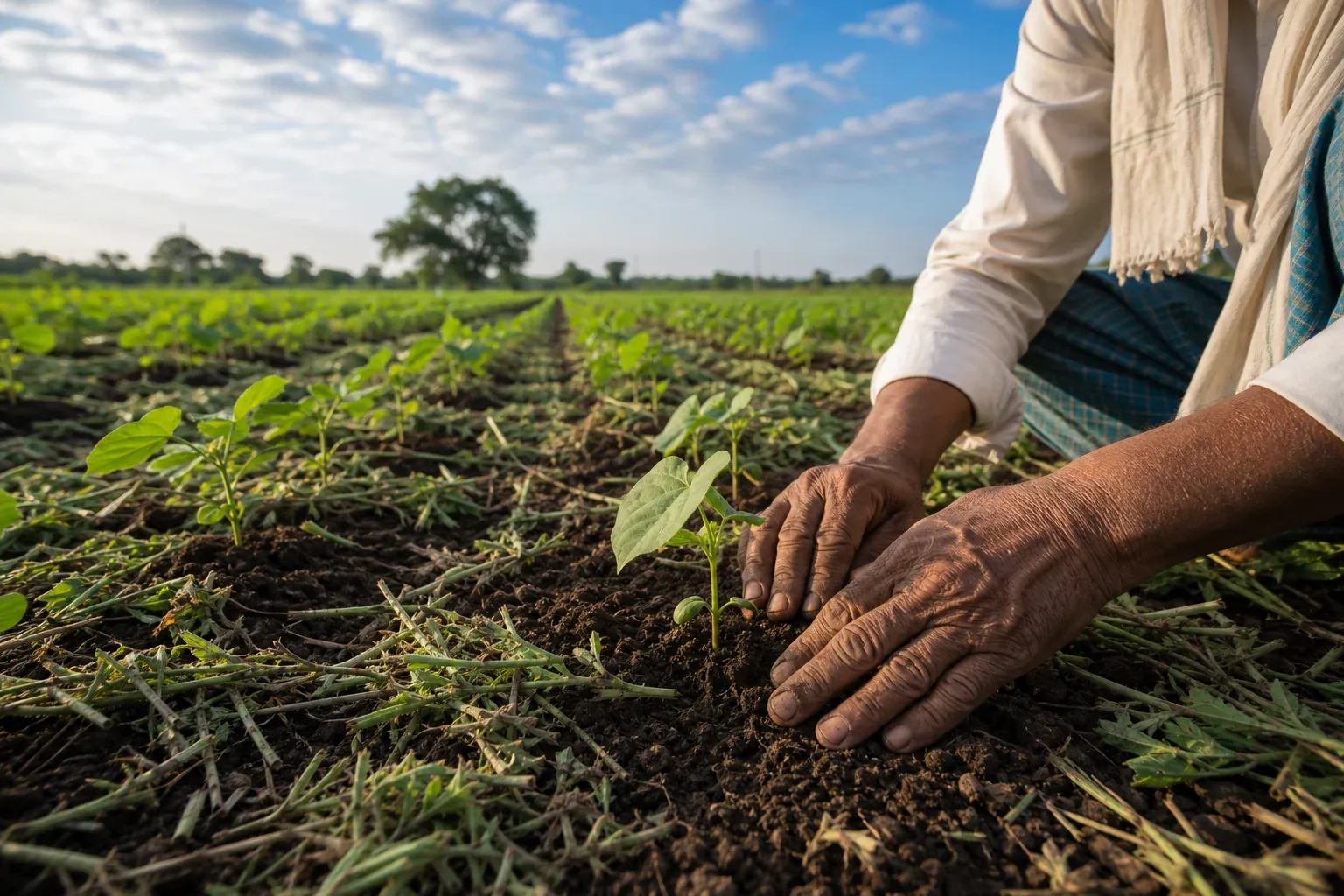
ELS cotton's quality advantages come with agronomic demands that have real environmental implications. Understanding these trade-offs is essential for any brand or buyer approaching ELS cotton from a sustainability perspective.
Water and Land Intensity
Cotton is already one of the most water-intensive crops globally. ELS varieties, with their longer growing seasons (typically 180, 210 days compared to 150, 160 days for standard varieties), require sustained water availability over a longer period. In rain-fed systems, this means ELS cultivation is more vulnerable to seasonal variability and drought. In irrigated systems, water consumption per kilogram of fiber can be higher than for standard cotton.
Land use is also a consideration. ELS varieties generally have lower yields per hectare than high-yielding hybrid cotton varieties. Farmers choosing to grow Suvin or other ELS types are accepting a yield trade-off in exchange for a price premium, a trade-off that only works when market linkages are strong and the premium actually reaches the farm gate.
Soil Health: The Hidden Prerequisite
Here is something that rarely appears in ELS cotton marketing materials: fiber quality is directly linked to soil health. Long staple length, fine micronaire, and high fiber uniformity are not just genetic traits, they are expressions of how well the plant was nourished throughout its growing season. Nutrient-deficient soils, compacted soils, or soils with poor water retention produce shorter, coarser fibers even from ELS varieties.
This creates a direct connection between the global soil degradation crisis and the future of ELS cotton supply. When soils are depleted, through excessive tillage, synthetic fertiliser dependency, or monoculture cropping, ELS fiber quality degrades. The UN FAO has documented that a significant proportion of agricultural soils globally are in a state of degradation, and India's cotton-growing regions are not immune to this trend. For a deeper look at how regenerative practices address this, see our guide on regenerative agriculture fundamentals.
The Carbon Dimension
Conventional ELS cotton farming, like conventional cotton farming generally, relies on synthetic inputs, fertilisers, pesticides, and defoliants, that carry significant embodied carbon and contribute to soil carbon loss over time. The carbon footprint of a kilogram of conventionally grown ELS cotton is substantial, even before it reaches a spinning mill.
However, ELS cotton farming systems also present genuine carbon sequestration opportunities. The longer growing season means more time for root biomass development and organic matter accumulation. When combined with regenerative practices, cover cropping, reduced tillage, biochar application, and composting, ELS cotton fields can become net carbon sinks rather than net emitters. This is not theoretical. It is the basis of the regenerative cotton programs that Beetle Regen is building across India's ELS cotton-growing regions.
For brands wanting to understand the carbon accounting implications, our post on carbon sequestration in agriculture provides a useful framework.
ELS Cotton in the Global Textile Supply Chain
Follow a bale of Suvin cotton from a farm in Karnataka's Dharwad district and you will encounter a supply chain that is simultaneously ancient and modern, local and global, transparent in some places and opaque in others.
The Journey from Farm to Fabric
After harvest, ELS cotton goes through ginning (separating fiber from seed), baling, and grading. At this stage, fiber quality testing, measuring UHML, micronaire, strength, and uniformity, determines whether a bale qualifies as ELS and at what price tier. Bales then move to spinning mills, where the long fibers are processed on ring-spinning or compact-spinning systems capable of handling fine counts. From spinning, yarn moves to weaving or knitting mills, then to dyeing and finishing, and finally to cut-and-sew operations before reaching brands and retailers.
Each step in this chain adds value, and adds complexity to traceability. By the time a finished garment reaches a retail shelf, the original farm origin of the cotton fiber is typically invisible. This is a problem for brands making ELS cotton claims, because without robust supply chain traceability, those claims cannot be verified.
Who Buys ELS Cotton?
The primary end markets for ELS cotton include:
- Luxury and premium apparel brands: Fine shirting, luxury knitwear, and high-end casualwear brands in Europe, Japan, and North America.
- Premium home textiles: High thread-count bedding, luxury towels, and fine table linens.
- Medical and technical textiles: Applications requiring high fiber purity, strength, and consistency.
- Specialty yarn producers: Mills producing fine-count yarns for niche markets.
Increasingly, sustainability-focused brands are adding ELS cotton to their sourcing mix not just for quality reasons but because the longer product lifespan of ELS cotton goods aligns with circular economy commitments. A garment that lasts longer generates less waste, and that is a measurable sustainability outcome.
The Adulteration Problem
One of the most persistent challenges in the ELS cotton market is fiber adulteration, the blending of standard long staple cotton into bales or yarns sold as ELS. Because ELS commands a significant price premium, the economic incentive to adulterate is real. Without fiber testing at multiple points in the supply chain, brands cannot be certain they are receiving what they are paying for.
This is why traceability systems designed specifically for cotton, covering fiber testing, chain of custody documentation, and digital verification, are not optional for serious ELS buyers. Our detailed guide on supply chain traceability for regenerative cotton covers the practical steps brands can take to protect the integrity of their sourcing claims.
Regenerative ELS Cotton: The Next Frontier
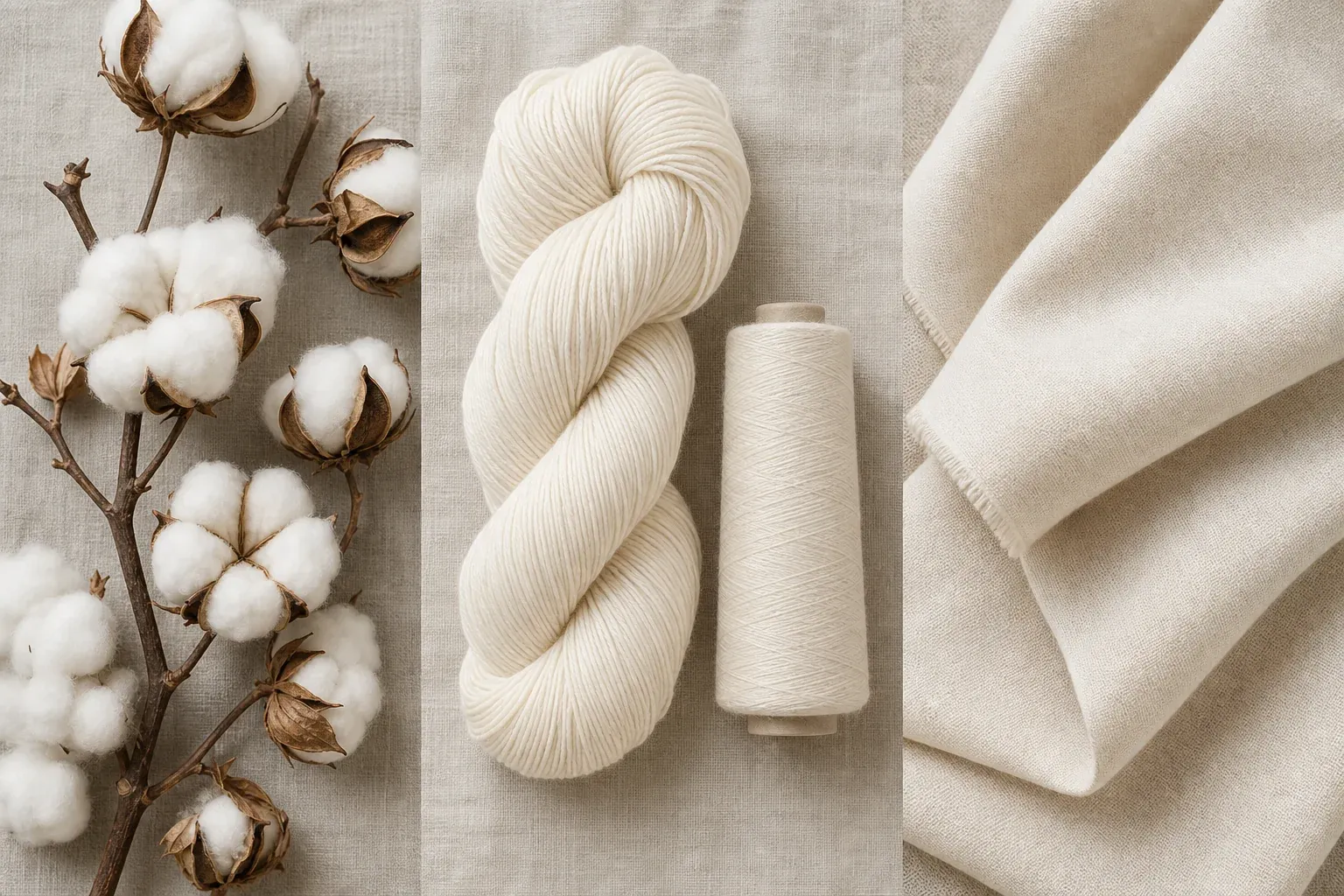
The convergence of ELS cotton's quality premium with regenerative agriculture's environmental and social benefits creates one of the most compelling opportunities in sustainable textile sourcing today. But it requires understanding what regenerative agriculture actually means in the context of ELS cotton farming, not as a certification label, but as a set of practices that directly improve fiber quality while restoring the ecosystems that make ELS cotton possible.
Soil Health as a Quality Input
Regenerative agriculture's core focus on soil health is not incidental to ELS cotton quality, it is foundational to it. Practices that increase soil organic matter, improve water retention, and enhance microbial activity create the growing conditions in which ELS varieties express their full genetic potential. Farmers who have transitioned to regenerative practices in India's ELS cotton regions report not just environmental benefits but measurable improvements in fiber length and uniformity.
Cover cropping between cotton seasons builds organic matter and suppresses weeds without herbicides. Reduced tillage preserves soil structure and the fungal networks that support nutrient uptake. Biochar application improves water retention in the black cotton soils of Karnataka, soils that can crack severely during dry spells, stressing plants at critical fiber development stages. Each of these practices, explored in depth in our guide to cover crops in regenerative agriculture, contributes directly to the conditions that produce premium ELS fiber.
Carbon Insetting in ELS Cotton Supply Chains
For brands sourcing ELS cotton, regenerative farming programs offer something beyond fiber quality: verified carbon sequestration that can be counted against Scope 3 emissions targets. When a brand sources ELS cotton from farms operating under a certified regenerative program, the carbon sequestered in those farm soils can be measured, verified, and credited against the brand's supply chain emissions, a process known as carbon insetting.
This is distinct from buying carbon offsets from unrelated projects. Insetting means the climate action happens inside your own supply chain, at the source of your emissions. For brands with net zero commitments, this is a far more credible and durable approach to Scope 3 reduction than offset purchasing. The economics of regenerative ELS cotton sourcing, combining fiber quality premiums with carbon credit value, create a business case that is increasingly compelling for procurement teams.
Beetle Regen's Approach to ELS Cotton
Beetle Regen's regenerative cotton programs in India are designed with ELS cotton farming communities in mind. The programs combine agronomic training in regenerative practices, soil health monitoring, carbon measurement and verification (MRV), and direct market linkages that ensure the ELS quality premium reaches farmers rather than being absorbed by intermediaries.
The farmer-first model matters here. ELS cotton's quality depends on farmer skill and attention, the variety requires careful management of irrigation timing, nutrient application, and harvest scheduling that standard hybrid cotton does not. Farmers who understand why these practices matter, and who are rewarded fairly for the quality they produce, are the foundation of a reliable ELS supply chain. Capacity building is not a peripheral activity in this model; it is the core of it.
For brands interested in how regenerative agriculture programs translate into measurable yield and income improvements for farmers, our analysis of how regenerative agriculture increases crop yield provides relevant data from Indian cotton farming contexts.
What Brands and Buyers Should Know Before Sourcing ELS Cotton
If you are a procurement lead, sustainability director, or supply chain manager considering ELS cotton as part of your sourcing strategy, here are the practical considerations that should shape your approach.
Verifying ELS Claims
Not all cotton sold as "ELS" or "extra long staple" meets the technical definition. Before committing to a supplier, request fiber test reports from an accredited testing laboratory showing UHML measurements for each lot. Reputable suppliers will provide High Volume Instrument (HVI) test data as standard. If a supplier cannot provide this, that is a significant red flag.
For Suvin cotton specifically, look for documentation of variety identity, ideally supported by DNA testing or certified seed sourcing records. The CICR in Nagpur maintains variety registration records that can be used to verify Suvin identity claims.
ESG and Sustainability Due Diligence
Sourcing ELS cotton from India involves navigating a supply chain that includes smallholder farmers, ginners, traders, and spinning mills, each with different levels of ESG documentation capability. A robust due diligence process should cover:
- Farm-level practices: water use, pesticide management, soil health indicators
- Labor standards: fair wages, no child labor, safe working conditions
- Environmental certifications: organic, regenerative, or equivalent third-party verification
- Carbon footprint data: Scope 3 emissions from fiber production
- Traceability documentation: chain of custody from farm to mill
Brands that have invested in MRV and traceability systems for cotton are significantly better positioned to make credible ELS sourcing claims to investors and regulators.
The Business Case for Regenerative ELS Cotton
The financial case for sourcing regenerative ELS cotton rests on three value streams that, taken together, justify the premium over conventional sourcing:
- Fiber quality premium: ELS cotton enables finer yarns, better fabric performance, and longer product lifespan, all of which support premium pricing and reduced returns.
- Carbon credit value: Verified carbon sequestration from regenerative farming can be monetised as carbon credits or counted against Scope 3 targets, reducing the net cost of climate compliance.
- Brand and regulatory risk reduction: As ESG disclosure requirements tighten globally, brands with verified, traceable, regenerative supply chains face lower regulatory risk and stronger investor confidence.
This is the direction the premium textile market is moving. Brands that build regenerative ELS cotton sourcing capabilities now will be better positioned as these market dynamics accelerate.
Frequently Asked Questions About ELS Cotton
What staple length qualifies as ELS cotton?
Extra long staple (ELS) cotton is generally defined as cotton with an upper half mean length (UHML) of 1-3/8 inches (approximately 34.9mm) or longer. Premium ELS varieties like Suvin and Giza 45 typically measure 38mm to 44mm.
Is Pima cotton the same as ELS cotton?
Pima is a variety of ELS cotton, not a synonym for the category. All Pima cotton is ELS cotton, but not all ELS cotton is Pima. Other ELS varieties include Egyptian Giza, Indian Suvin, and Sea Island cotton. Supima® is a trademarked designation for US-grown Pima that meets specific quality and origin standards.
Does India produce ELS cotton commercially?
Yes. India produces Suvin cotton commercially, primarily in Karnataka, Tamil Nadu, and Andhra Pradesh. Suvin is one of the finest ELS varieties in the world, with staple lengths and fineness values comparable to the best Egyptian Giza varieties. Production volumes are relatively small compared to India's total cotton output, but the quality is exceptional.
How does ELS cotton relate to sustainability goals?
ELS cotton connects to sustainability in several ways: its longer product lifespan reduces textile waste; its soil health requirements create incentives for regenerative farming; and its supply chain, when managed transparently, can support carbon insetting programs that reduce Scope 3 emissions. However, ELS cotton is not inherently sustainable, the farming practices, water management, and supply chain transparency all determine the actual environmental outcome.
What is Suvin cotton?
Suvin is an Indian ELS cotton variety developed by the Central Institute for Cotton Research (CICR) through hybridisation of Sudanese Acala and St. Vincent Sea Island cotton. It produces fibers of 38, 44mm staple length with exceptional fineness and luster. It is grown primarily in Karnataka and Tamil Nadu and is used in luxury shirting and fine textile applications globally.
What comes next in this series?
This post is the first in a dedicated series on ELS cotton. Upcoming posts will cover: the agronomy of Suvin cotton in depth; the economics of ELS cotton farming for smallholder farmers in India; how brands can build verified ELS cotton sourcing programs; and the intersection of ELS cotton with carbon insetting and regenerative supply chain certification. Each post will build on the foundation laid here.
Start Your ELS Cotton Sourcing Journey with Beetle Regen
Understanding ELS cotton is the first step. Building a sourcing program that delivers verified fiber quality, traceable farm origin, and measurable climate impact is the work that follows, and it requires partners who understand both the agronomy and the supply chain dynamics from the ground up.
Beetle Regen works directly with ELS cotton farming communities in India's key growing regions, combining regenerative agriculture capacity building with carbon measurement, supply chain traceability, and direct brand linkages. If your brand is exploring premium regenerative cotton sourcing, or if you are a supply chain professional building out an ELS cotton program with genuine ESG credentials, we would welcome the conversation.
Reach out to the Beetle Regen team to discuss how a regenerative ELS cotton program could fit your sourcing strategy and sustainability commitments. This series is just beginning, and so is the opportunity.