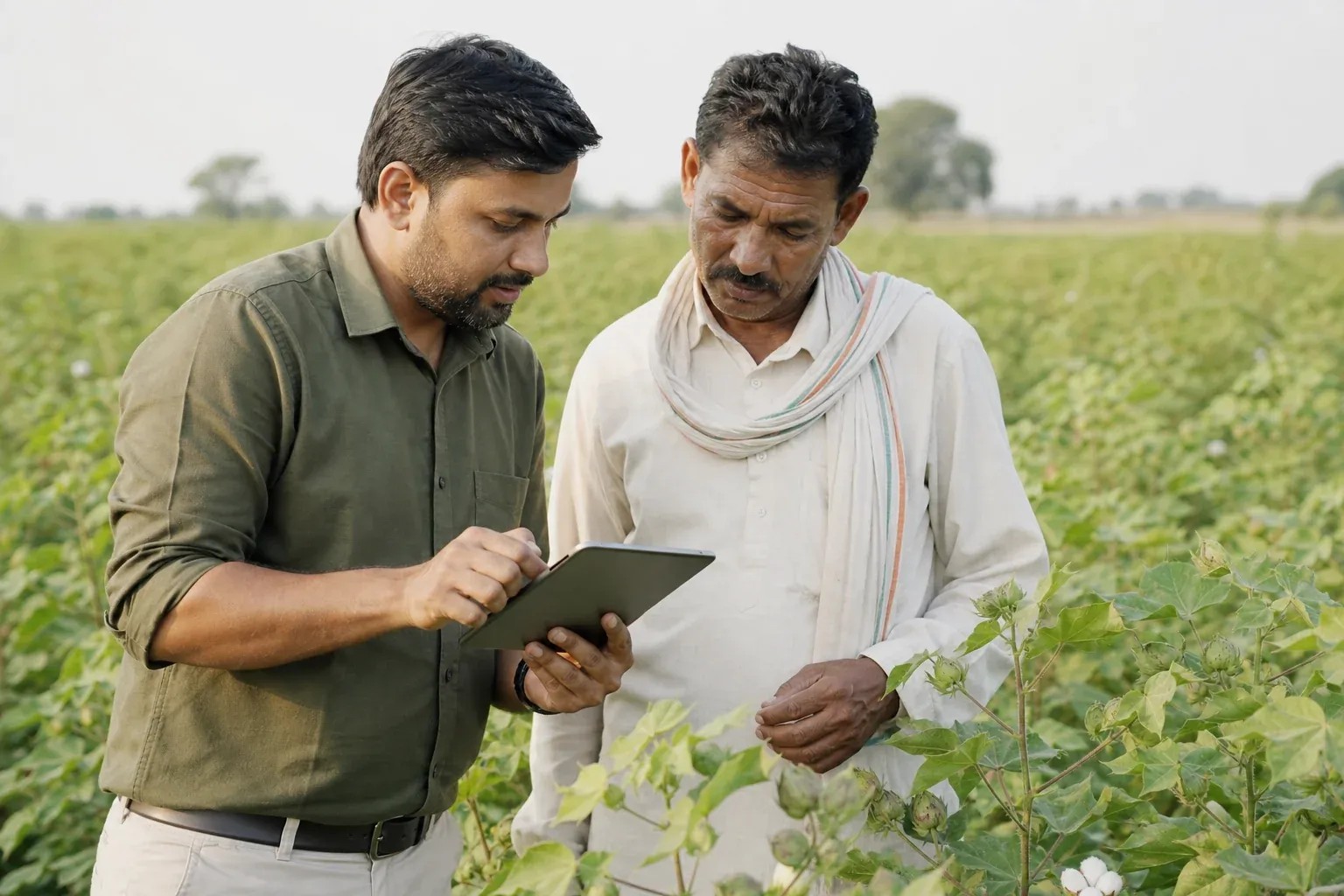
ESG & Supply Chain Compliance: Regulatory Readiness
Regulatory readiness for global supply chains now depends on three things working together: verified ESG data, documented social compliance, and end-to-end traceability. Brands that can trace a product back to a named farm and a dated record clear audits faster than those relying on certificates alone. Without that chain, even a well-intentioned sustainability claim collapses under regulatory scrutiny.
Key Takeaways
- Farm-level traceability is now the baseline, not a bonus: Regulations like the EU CSRD ask for Scope 3 emissions tied to actual suppliers, not industry averages.
- Social compliance risk sits highest at the farm and gin, not the brand office: Labor conditions, wages, and child-safety checks need direct oversight at these tiers.
- Certification alone doesn't satisfy most 2026 disclosure rules: Auditors increasingly want raw, farm-level data behind any label.
- Supplier oversight needs a fixed cadence: Annual audits are too slow; quarterly or seasonal data refreshes catch risk earlier.
- Cooperative-based programs scale compliance faster than farm-by-farm audits across regions like Madhya Pradesh, Maharashtra, and Bangladesh's cotton belt.
Regulatory Readiness at a Glance
| Regulation/Framework | Who it applies to | Core data requirement | Typical timeline to comply |
|---|---|---|---|
| EU CSRD | Large EU-listed and EU-operating companies | Scope 1-3 emissions, supplier-level detail | 12-24 months for first report |
| EU Deforestation Regulation (EUDR) | Companies placing covered commodities in EU market | Geolocated plot data, due diligence statements | Ongoing per shipment |
| US Uyghur Forced Labor Prevention Act (UFLPA) | Importers to the US | Proof of origin, forced-labor-free supply chain | Per shipment, rebuttable presumption applies |
| Germany's LkSG (Supply Chain Due Diligence Act) | Large companies operating in Germany | Human rights and environmental risk mapping | Annual risk analysis cycle |
| India BRSR (Business Responsibility & Sustainability Reporting) | Top listed companies in India | ESG disclosures across value chain | Annual filing with SEBI |
| Farm-level MRV (voluntary but increasingly required) | Any brand claiming carbon insetting or regenerative sourcing | Verified soil, yield, and farmer-level records | Seasonal data collection cycles |
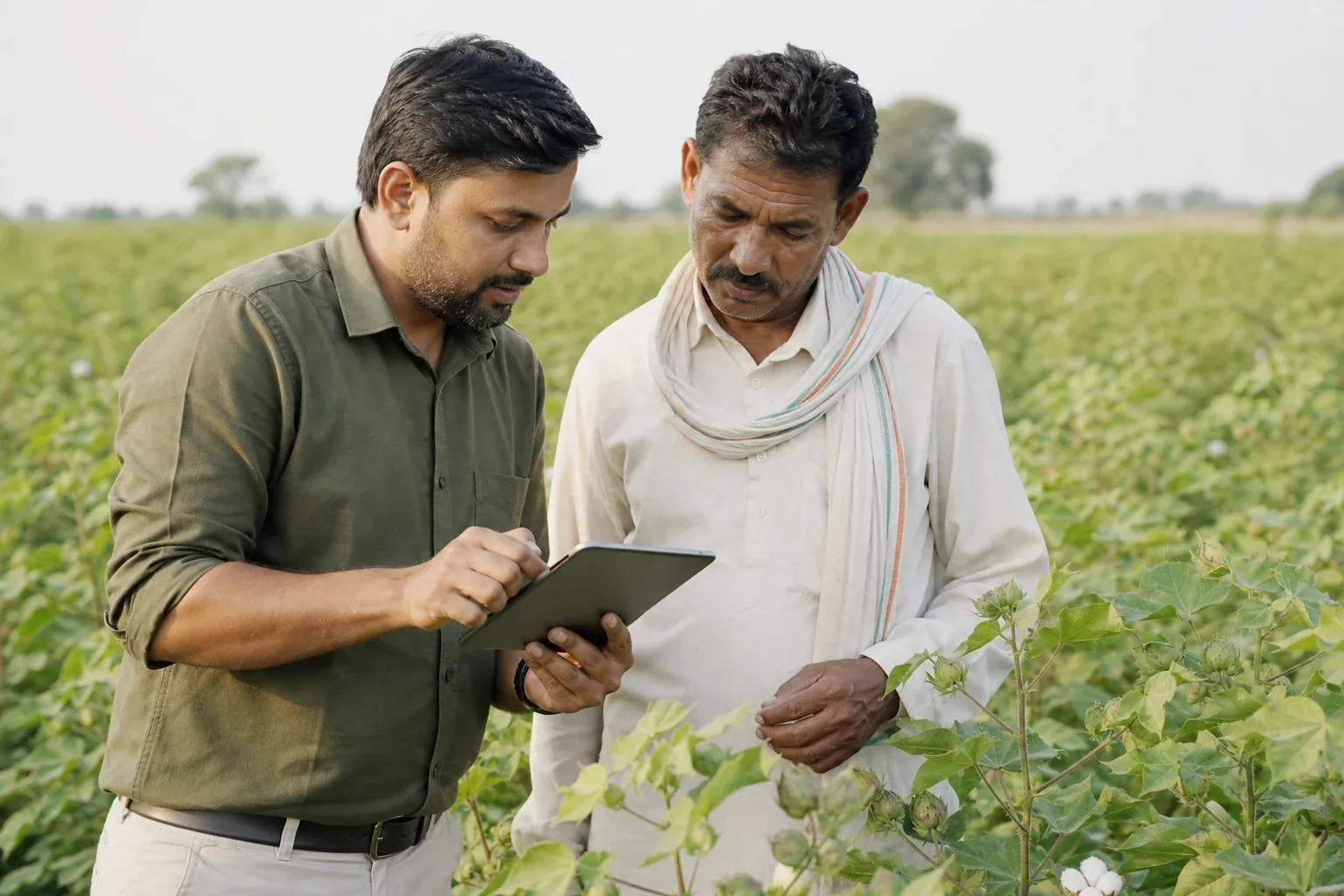
Supply chains stretching from Indian cotton fields to European retail shelves face a stacking set of rules. A brand sourcing cotton from Madhya Pradesh and selling shirts in Germany can face CSRD, LkSG, and its own internal net-zero commitments at once. None of these frameworks accept a generic sustainability statement anymore. Each one asks a version of the same question: can you prove it, farm by farm?
1. Map Every Regulation Touching Your Supply Chain
Start by listing every market where you sell, manufacture, or list shares, because each one triggers different disclosure rules. A brand selling into the EU and listed in India often carries CSRD, EUDR, and BRSR obligations simultaneously, and treating them as one generic "ESG project" causes gaps.
Assign one internal owner per regulation. That person tracks the specific data fields their regulator needs and flags where your current supplier data falls short. Skipping this step means discovering the gap during an actual audit, which is far more expensive than finding it now.
India's textile and cotton exporters face a double bind here. They must satisfy BRSR requirements domestically while meeting CSRD-driven data requests from European buyers. Building one traceability system that answers both, rather than running parallel spreadsheets, saves months of rework. Our guide on traceability and brand compliance breaks down how these overlapping requirements connect at the cotton level.
2. Build Farm-Level and Tier-Level Traceability First
Traceability means tracking a raw material from a specific plot to the finished product, with a documented record at every handoff. It is the foundation every ESG disclosure sits on, because without it, emissions figures and social compliance claims have no verifiable source.
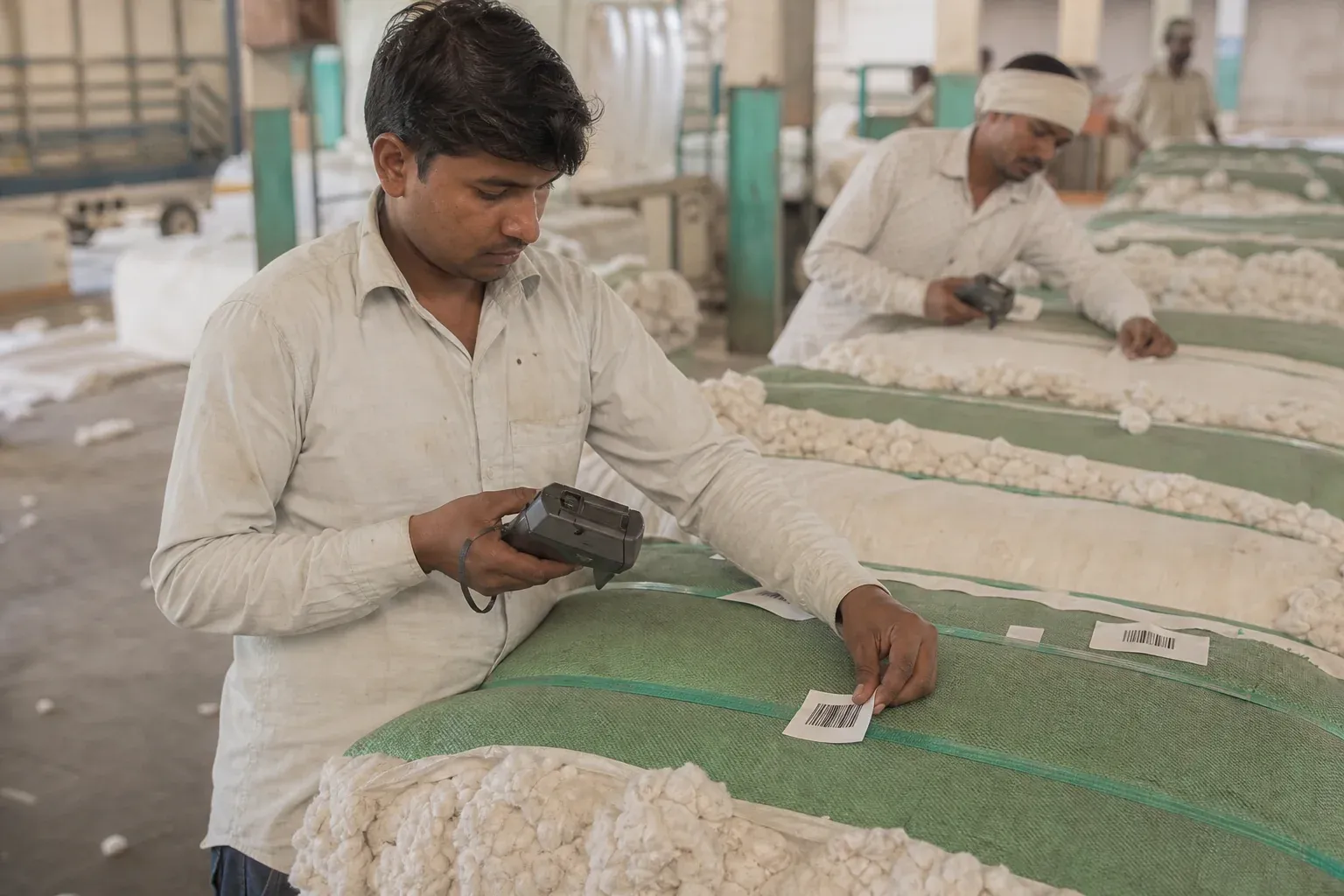
Consider a cotton shirt sold by a European retailer. The fiber may have passed through a farmer in Maharashtra, a ginning unit, a spinning mill, and a garment factory before reaching the shelf. Each of those four tiers needs a linked record: farmer ID, plot geolocation, gin lot number, and mill batch code. Miss one link and the entire chain becomes unverifiable to an auditor.
Measurement, Reporting, and Verification (MRV) systems exist to close that gap. They record soil health data, yield figures, and farmer identity at the source, then carry that record forward through processing. Beetle Regen builds these systems directly with cotton cooperatives across India and Bangladesh, which is why our farm-to-fashion programs can answer a Scope 3 audit question with an actual plot record instead of an estimate. Read more about how biochar carbon insetting works for textile brands to see how insetting claims get tied to specific farms rather than generic offset pools.
Why Regulators Reject Estimated Data
Regulators increasingly reject industry-average emissions factors because they hide the actual risk sitting inside a specific supplier. An auditor comparing two brands with identical average Scope 3 figures will still ask which one has farm-level backup. The brand with real plot data passes faster and faces fewer follow-up requests.
3. Put Social Compliance Checks Where the Risk Actually Sits
Social compliance in a cotton supply chain covers fair wages, safe working conditions, no child labor, and access to grievance channels, and the highest risk usually sits at the farm and gin, not the brand's own office. Checks placed only at the finished-goods factory miss where labor conditions are weakest.
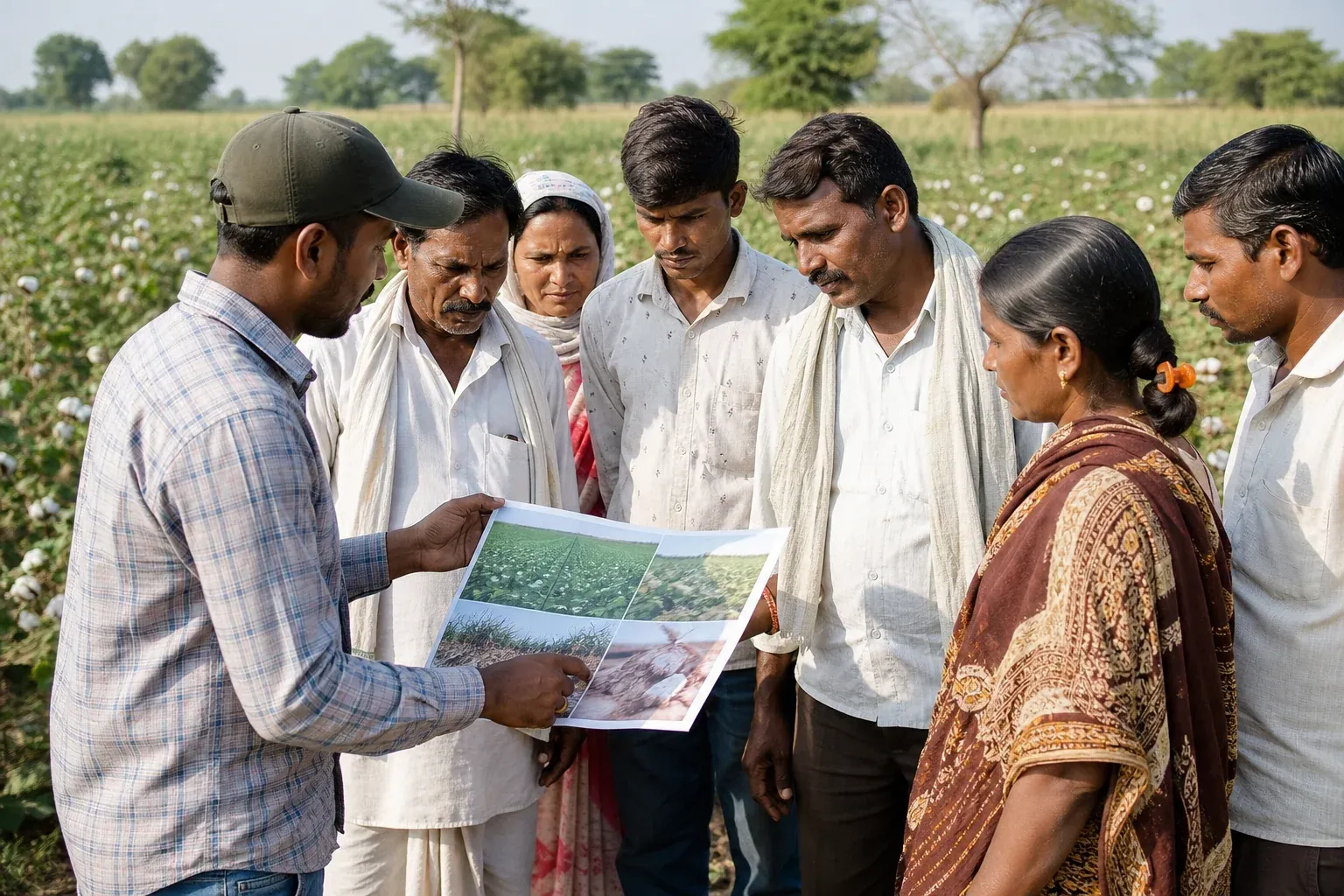
Cooperative-based oversight works better than farm-by-farm audits at scale. When farmers organize into a cooperative of 50 to 200 members, a single verification visit can confirm labor practices, wage records, and training attendance across the whole group instead of one plot at a time. This also gives smallholders, many farming just 2 to 6 acres in Madhya Pradesh and Maharashtra, a structured way to prove compliance without bearing individual audit costs.
Gender inclusion belongs in this same compliance lens, not as a separate initiative. Women make up a large share of cotton field labor across India and Bangladesh, and programs that track their participation, pay parity, and decision-making role produce stronger, more auditable social data. Our piece on women farmers' participation in regenerative cotton programs covers why this strengthens both compliance outcomes and program resilience.
Where Do Social Compliance Failures Usually Get Found?
Social compliance failures usually surface at the farm and ginning stages, where oversight is thinnest and labor is seasonal or informal. Brands that only audit their tier-1 garment factories miss wage, safety, and child-labor risks sitting further upstream in raw material sourcing.
4. Compare Compliance Approaches: Certification vs Direct Traceability vs Generic Offsetting
Brands typically choose between three paths to prove sustainability claims, and each carries different regulatory weight. Understanding the gap between them prevents wasted spend on an approach a regulator won't accept.
| Approach | Data granularity | Regulatory acceptance (CSRD/EUDR-level) | Cost profile | Best fit |
|---|---|---|---|---|
| Third-party certification (e.g., BCI, organic) | Aggregate or program-level | Partial; often needs supplementary data | Lower per-unit cost | Entry-level volume sourcing |
| Direct farm-level traceability with MRV | Plot and farmer-level | High; matches Scope 3 and EUDR expectations | Higher upfront setup, lower audit cost over time | Brands with net-zero or insetting claims |
| Generic carbon offsetting | Project-level, not linked to your own supply chain | Low; increasingly flagged as greenwashing risk | Variable, often cheapest short-term | Not recommended as sole compliance strategy |
Certification schemes remain useful as a starting filter, but auditors reviewing CSRD or EUDR disclosures increasingly ask for the underlying farm data behind the label. Generic offsetting, disconnected from your own sourcing regions, draws the most scrutiny because it cannot answer where the carbon reduction actually happened. Our comparison of regenerative vs conventional cotton looks at this same gap from a purchasing angle.
5. Set Up Supplier Oversight That Regulators Will Actually Accept
Supplier oversight means tiered risk scoring, documented audit cadence, and a data trail that regulators can request at any point without a scramble. Treat it as an ongoing system, not an annual paperwork exercise.

Score suppliers by risk category first. A cooperative with existing MRV integration and a documented training program sits in a lower-risk tier than a new ginning partner with no traceability history. Put your audit hours where the risk actually concentrates, rather than spreading them evenly.
Set a data refresh cadence that matches your reporting calendar, not the supplier's convenience. Cotton is seasonal, so a single annual snapshot misses labor conditions during peak harvest, when risk is highest. Quarterly or per-season check-ins catch problems while they're still fixable. Our guide on KPIs to track in a regenerative cotton program outlines the specific metrics worth monitoring on that cadence.
How Often Should Supplier Oversight Happen?
Supplier oversight should happen at least quarterly for high-risk tiers like farms and gins, and align with the crop or production season rather than a fixed calendar date. Annual-only audits miss peak-season labor and environmental risks that regulators now expect brands to catch.
6. Turn Compliance Data Into Reporting You Can Defend
Compliance data only matters if it survives an external review. Build your reporting so every emissions figure or social compliance claim links back to a specific record, not a rounded estimate.
CSRD's Scope 3 requirements push brands to report emissions from purchased goods, which for textile brands usually means raw cotton and yarn. A brand that has already connected farm-level carbon insetting data to its ESG dashboard answers this section of the disclosure with actual figures instead of industry defaults.
Avoid claims your data can't back up. A brand stating "net zero cotton" without a traceable farm record behind every tonne claimed risks a greenwashing challenge under EU and UK advertising rules. Building the data trail first, then making the claim, protects the brand's credibility with regulators, NGOs, and buyers alike. See how this connects end to end in our net zero cotton supply chain roadmap.
Common Questions on ESG Supply Chain Compliance
What Counts as Social Compliance in a Supply Chain?
Social compliance covers fair wages, safe working conditions, freedom from child and forced labor, and access to a grievance mechanism at every tier of the supply chain. It applies from the farm and ginning stage through to the finished-goods factory, not just the final manufacturer.
How Is Traceability Different From Certification?
Traceability tracks a specific unit of raw material through named farms, plots, and processing stages with linked records, while certification confirms a program or facility met a standard at a point in time. Traceability gives auditors a verifiable path; certification gives them a label that may or may not include that path.
Does Working With International Standards Bodies Help?
Yes, aligning your traceability data structure with recognized frameworks from bodies like the OECD's due diligence guidance or reporting standards tracked by the ISO sustainability committee makes your data easier for auditors across different regulatory regimes to accept.
Global supply chains are being asked to prove, not just promise, where materials come from and how people were treated along the way. Cotton sourced in India and Bangladesh sits at the front line of this shift, feeding into ESG frameworks in the EU, the US, and India's own BRSR filings at the same time. Building farm-level traceability and structured social compliance now costs less than retrofitting it under audit pressure later.
Beetle Regen works directly with cotton cooperatives, ginners, and textile brands across India and Bangladesh to build the MRV and traceability systems that regulatory readiness actually requires. Explore our impact across farming communities or contact us to map your supply chain's current compliance gaps and build a data trail your next audit can stand on.