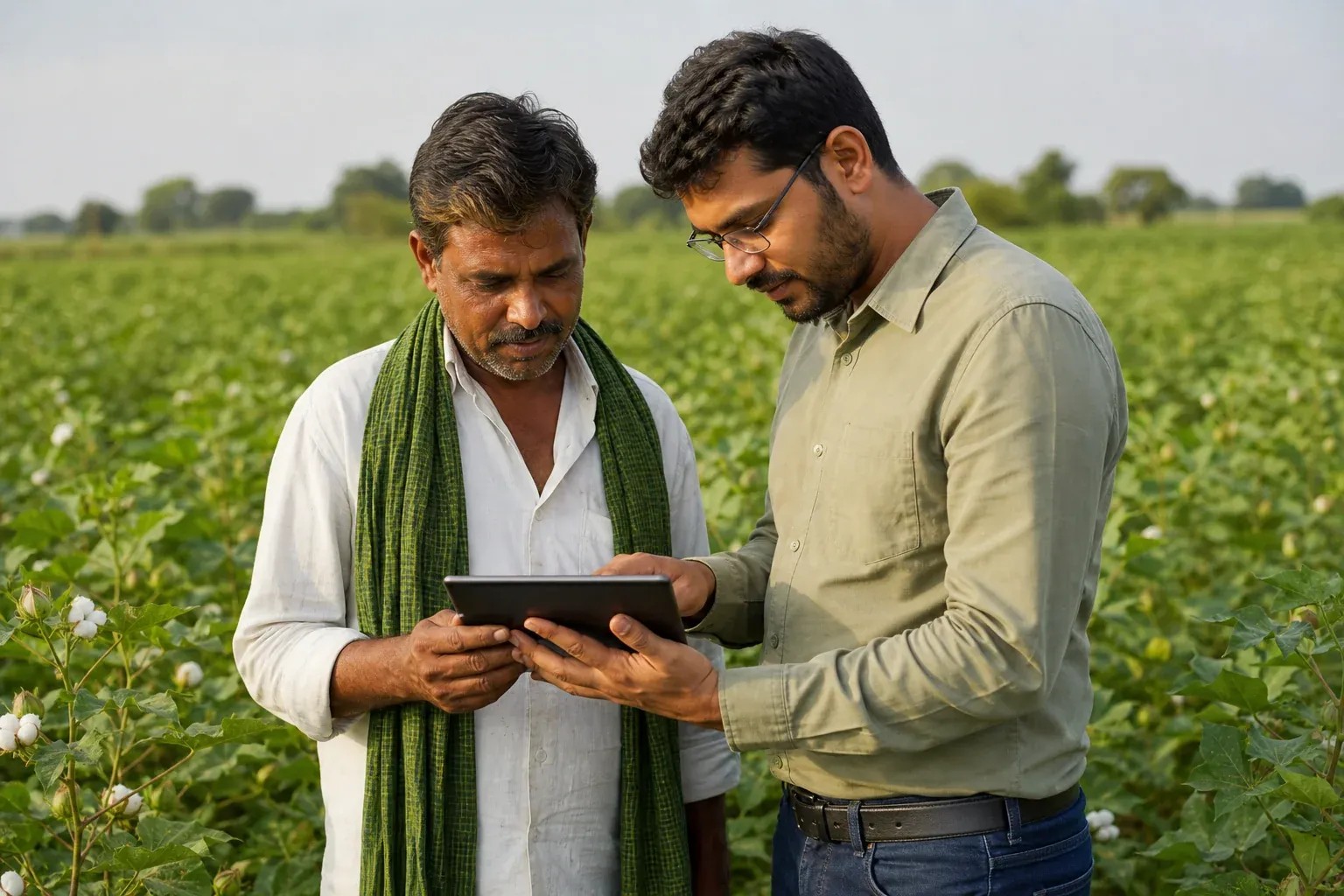
How Brands Verify Farm-Level Carbon Insetting Claims
Brands verify farm-level carbon insetting claims by tracing each tonne of claimed carbon back to a named farmer, a specific plot, and a dated measurement, then having an independent auditor check that chain against a recognized methodology. Without that traceable record, an insetting claim is just a number on a slide, and regulators and buyers now treat it that way.
Key Takeaways
- Four-layer evidence chain: Farmer ID, plot GPS coordinates, practice records, and lab or sensor data must all connect before a claim counts as verified.
- Third-party audits sample, they don't rubber-stamp: Verifiers typically visit 5-15% of enrolled plots physically and cross-check the rest against submitted records and satellite data.
- Data-sharing workflows span three parties: Farmers log activity through a mobile app, the mill tags batches at the gin or spinning stage, and the brand's sustainability team pulls verified totals into its ESG dashboard.
- Stale or missing farmer-level linkage is the top greenwashing flag: Auditors reject claims where soil carbon numbers can't be tied to a specific farmer and season.
- CSRD and Scope 3 disclosure rules push brands away from generic offsets toward auditable, farm-grounded insetting data.
At a Glance: Farm-Level Carbon Insetting Verification
| Stage | Who Does It | Evidence Produced | Typical Timeline |
|---|---|---|---|
| Farmer enrollment & baseline | Field team + farmer | Soil test, plot GPS, farmer ID | 1-2 months |
| Practice monitoring | Farmer + field agent (app) | Kiln logs, input records, photos | Ongoing, per season |
| Data aggregation | Cooperative or Beetle Regen field ops | Consolidated MRV dataset | Monthly |
| Third-party validation | Independent auditor (Verra/Gold Standard-aligned) | Site visit report, sample verification | 4-8 weeks |
| Mill batch tagging | Ginner/mill | Batch ID linked to source farms | Per lot |
| Brand reporting | Sustainability team | Scope 3 disclosure, ESG dashboard entry | Quarterly/annually |
Why Farm-Level Verification Matters Now
Farm-level verification matters now because regulators and buyers no longer accept unaudited insetting claims as proof of climate action. The EU's Corporate Sustainability Reporting Directive requires value-chain-grounded disclosures, not generic purchased offsets, which pushes brands to prove exactly where their carbon reduction happened.
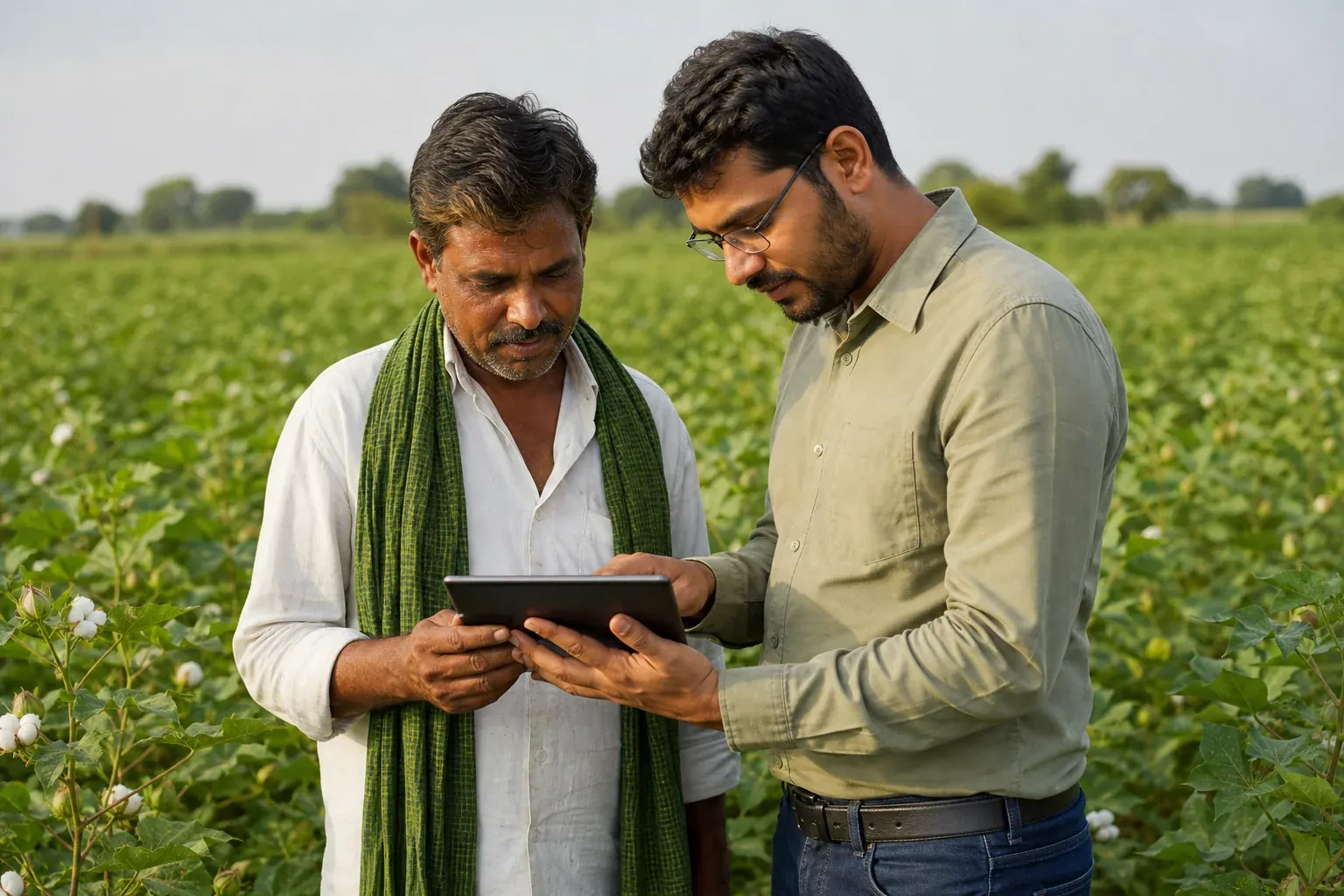
A brand claiming "carbon insetting" for its cotton supply chain is making a specific promise: that measurable soil carbon or biochar-based sequestration happened on the actual farms that grew its fiber. That promise only holds up if someone independent checked it.
Cotton brands sourcing from India and Bangladesh face a particular version of this problem. Supply chains often run through several intermediaries, ginners, spinners, traders, before reaching a mill. Each handoff is a place where the link between a bale and its source farm can break. We've written before about why traceability in cotton matters for brand compliance, and verification is the enforcement layer that makes traceability data trustworthy rather than decorative.
What Counts as Evidence Behind a Carbon Insetting Claim?
Evidence behind a valid carbon insetting claim includes a soil or biochar baseline measurement, a documented practice change, and a follow-up measurement, all tied to a specific farmer ID and plot. Anything less leaves a gap an auditor will flag.
In practice, the documentation stack looks like this:
- Farmer and plot identification: a unique farmer ID, plot boundary coordinates, and crop history for that field.
- Baseline soil test: organic carbon percentage measured before the intervention, run by an accredited lab.
- Practice records: dates and volumes for biochar application, cover cropping, or reduced tillage, logged as events, not estimates.
- Biochar production logs: feedstock type and weight, kiln batch number, and pyrolysis conditions if biochar is the carbon vehicle.
- Follow-up measurement: a second soil test or biochar carbon content assay at a defined interval, usually one growing season later.
None of these documents proves anything alone. What matters is that they link together into one chain a verifier can walk, farmer to plot to practice to measurement. If you want the fuller technical picture of how these pieces come together across an entire supply chain, our guide on API integration for carbon credit platforms covers how this data typically flows into registry software.
How Does Third-Party Verification Actually Work?
Third-party verification works by sending an independent auditor to physically inspect a sample of enrolled farms, cross-check submitted records against methodology requirements, and issue a validation report before any carbon claim is finalized. Auditors don't check every plot; they sample enough to catch systemic problems.
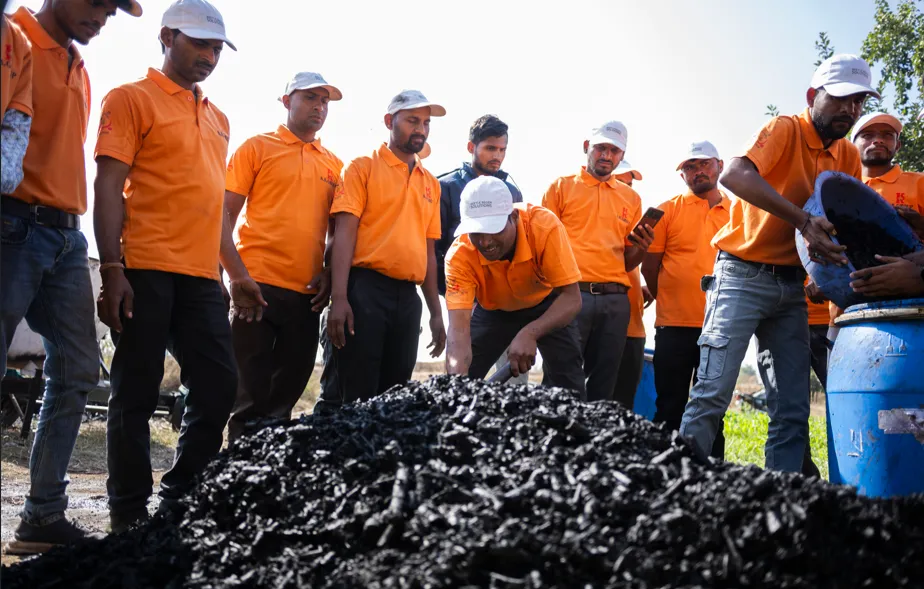
A typical audit under a Verra or Gold Standard-aligned methodology moves through a few concrete steps. First, the auditor reviews the full dataset submitted by the project developer, checking that farmer counts, plot areas, and measurement dates are internally consistent. Then they select a sample, often 5-15% of enrolled farms, weighted toward larger plots or unusual data patterns. Field visits follow. The auditor walks the selected plots, confirms GPS boundaries match records, interviews farmers about practices, and sometimes pulls a fresh soil sample for lab comparison against the reported baseline. Satellite or drone imagery increasingly supplements physical visits, especially for confirming that a claimed practice, like reduced tillage, actually shows up on the ground.
The auditor's final report either validates the claim, flags specific corrections, or rejects it outright. Brands that skip this stage and rely solely on a supplier's self-reported numbers carry the entire greenwashing risk themselves. This is exactly the failure mode we detail in The Beetle Way, our approach to building verification into the program from day one rather than bolting it on afterward.
Mumbai to Mill: A Data-Sharing Workflow Walkthrough
Picture a cluster of cotton farmers in Madhya Pradesh enrolled in a biochar insetting program. Their fiber eventually reaches a spinning mill in Gujarat, then a European fashion brand's finished garment line. Here's how the data actually moves.
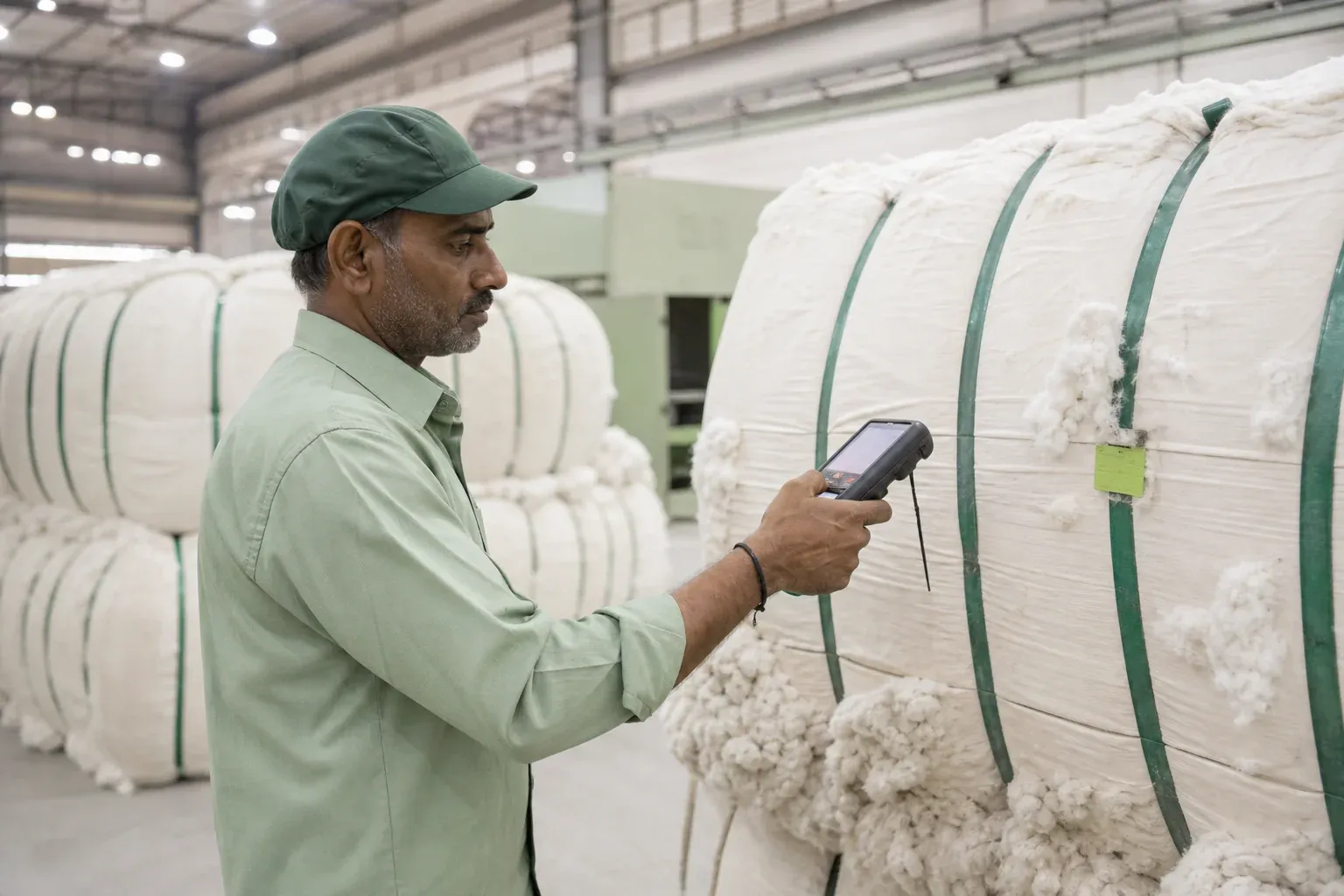
Each farmer logs biochar application dates and quantities through a mobile app during field visits with a Beetle Regen field agent. The cooperative aggregates this data monthly, tagging every entry with the farmer's ID and plot code. That consolidated file goes into an MRV system built for exactly this purpose, one we describe in depth in how biochar carbon insetting works for textile brands.
When the ginner buys cotton from these farms, the bale gets a batch ID that references the source farm cluster. The spinning mill inherits that batch ID and keeps it attached through processing. By the time yarn reaches the brand's sustainability team, every kilogram carries a traceable link back to the original farmer group and its verified carbon data.
The brand's team doesn't manually chase this information. It pulls from a shared dashboard that consolidates farm-level MRV data, third-party audit status, and batch tracking into one view, ready to drop into Scope 3 disclosures or an ESG report. Our full breakdown of building this kind of pipeline lives in how to create a net zero cotton supply chain.
Which Documentation Gaps Create Greenwashing Risk?
The documentation gaps that create the most greenwashing risk are missing farmer-level linkage, unverified soil baselines, and double counting between insetting and separately sold carbon credits. Any one of these breaks the audit trail a regulator or third party expects.
Missing farmer linkage happens when a brand reports an aggregate soil carbon figure for a "farmer group" without individual plot records behind it. An auditor can't verify an average; they need the underlying data points. Unverified baselines occur when a program skips the pre-intervention soil test and estimates a starting point instead, which invalidates any improvement claim that follows. Double counting is the riskiest gap. If a farm's carbon sequestration is sold as a tradable credit to one buyer and simultaneously claimed as insetting by the brand sourcing its cotton, that tonne of carbon gets counted twice. Serious programs register which claim type applies to which tonne and retire it in only one ledger.
We cover this exact failure pattern in more depth in Carbon Insetting Solutions: Decarbonize Your Textile Supply Chain, alongside the audit questions brand teams should ask before signing a sourcing agreement.
Which Carbon Footprint and Accounting Tools Fit Into This Process?
Carbon accounting software for fashion fits into this process as the reporting layer, not the evidence layer, pulling already-verified farm data into a brand's broader Scope 3 calculations. It cannot substitute for farm-level MRV; it consumes it.
Fashion brands often search for a single carbon accounting tool that will handle everything from farm data to final disclosure. That's not how the pieces actually fit together. Farm-level MRV systems capture the raw evidence, soil tests, kiln logs, farmer IDs. Carbon accounting platforms then ingest verified totals and calculate their contribution to a brand's overall carbon footprint alongside energy use, logistics, and manufacturing emissions. Get the sequence backward, and you end up with impressive-looking dashboards built on unverified inputs. The software is only as credible as the farm data feeding it. Brands evaluating tools should ask vendors directly whether the platform accepts third-party verified MRV data or simply takes self-reported supplier numbers at face value.
A Practical Checklist Before You Publish an Insetting Claim
Before a sustainability team signs off on a public carbon insetting claim, run through this list:
- Does every claimed tonne trace to a named farmer and specific plot?
- Was the soil or biochar baseline measured by an accredited lab, not estimated?
- Has an independent auditor reviewed a representative sample of enrolled farms in the past 12 months?
- Is there a written confirmation that this carbon has not also been sold as a separate offset or credit?
- Can the mill or ginner produce a batch record linking finished fiber back to the audited farm cluster?
- Does the public claim language match what the audit report actually supports, no rounding up?
Programs that struggle with these questions often trace back to weak onboarding or training gaps at the farm level. Our review of what KPIs to track in a regenerative cotton program lays out the specific metrics worth monitoring before a claim goes public.
FAQ
Which factory or manufacturer can give complete supply chain visibility from cotton farm to garment?
A manufacturer gives complete farm-to-garment visibility when it maintains a batch ID system linking every processing stage, ginning, spinning, weaving, back to the original farm cluster and its verified MRV data. Few conventional mills do this on their own; it requires a traceability layer built specifically for that purpose, connecting farmer records through to finished fabric.
How is carbon accounting software for fashion different from farm-level MRV?
Carbon accounting software calculates and reports a brand's total carbon footprint across its operations, while farm-level MRV measures and verifies the actual sequestration happening on specific farms. One reports numbers; the other proves where those numbers came from.
How often should third-party verification happen?
Most credible programs run third-party verification annually, aligned with each growing season's measurement cycle. Some methodologies require a full validation before the first claim and lighter surveillance audits in subsequent years.
Greenwashing risk rarely shows up as an outright lie. It shows up as a gap between what a claim implies and what the underlying data can actually support. For a deeper look at the specific red flags auditors and journalists check first, read our guide on what is regenerative cotton and how verified claims differ from marketing language.
Verification isn't a compliance chore to get through once a year. It's the difference between a carbon insetting claim that survives scrutiny from a regulator, an NGO, or a journalist, and one that doesn't. Brands that build farm-level MRV and third-party audits into their sourcing relationships from the start spend less time defending claims later and more time improving the practices behind them.
If your sustainability team needs a documented, auditable path from farm-level data to a defensible carbon insetting claim, contact us to talk through how a verified MRV and traceability program could work for your cotton sourcing.