How Does High-Density Planting Boost Cotton Yield?
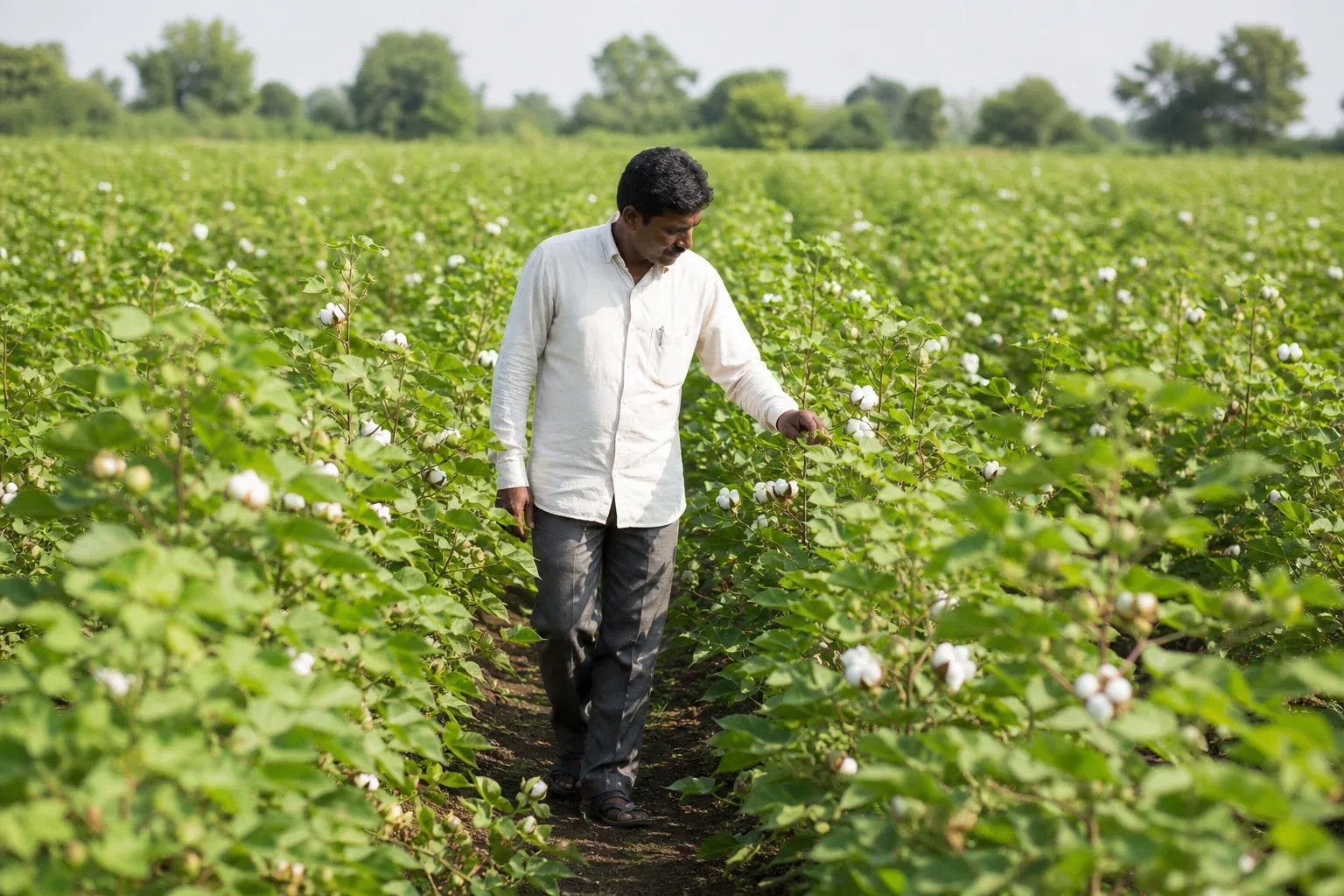
High-density planting boosts cotton yield mainly by improving light interception across the canopy. When rows sit closer together, more of the middle and upper canopy leaves catch usable sunlight instead of shading each other out, which pushes the plant to set more bolls per unit area even though each individual plant carries less.
Government field data on this exact system in India recorded average yield gains of 30.4% in shallow soils and 39.15% in medium soils where closer spacing was tested.
Key Takeaways
- Row spacing drives the gain: Narrower rows and higher plant population per hectare improve canopy light capture, not just plant count.
- Real yield numbers exist: Field trials under India's HDPS demonstrations recorded a 30.4% average yield rise in shallow soils and 39.15% in medium soils with closer spacing.
- More is not always better: Beyond an optimal density, plants compete for light and nutrients, and yield efficiency drops even as leaf area climbs.
- Seed and agronomy matter as much as spacing: A matched short-duration variety, correct nitrogen timing, and sometimes a growth regulator keep HDPS plants from overgrowing.
- It supports India's cotton push: HDPS is one lever behind the Mission for Cotton Productivity's goal of lifting national lint yield from 440 kg/ha toward 755 kg/ha by 2031.
HDPS Cotton Yield at a Glance
| Factor | Conventional Spacing | High-Density Planting (HDPS) |
|---|---|---|
| Row spacing | Wide, typically 90-120 cm | Narrower, often paired with shorter plant-to-plant gaps |
| Plant population | Lower per hectare | Higher per hectare |
| Recorded yield change (shallow soils) | Baseline | +30.4% average |
| Recorded yield change (medium soils) | Baseline | +39.15% average with closer spacing |
| Seed type needed | Standard long-duration varieties | Compact, short-duration varieties suited to dense canopies |
| Key risk if mismanaged | Underused land, lower total yield | Overcrowding, inter-plant competition, reduced yield efficiency |
| Fits national target | Below current national average | Supports move toward 755 kg/ha lint by 2031 |
What Counts as High-Density Planting in Cotton?
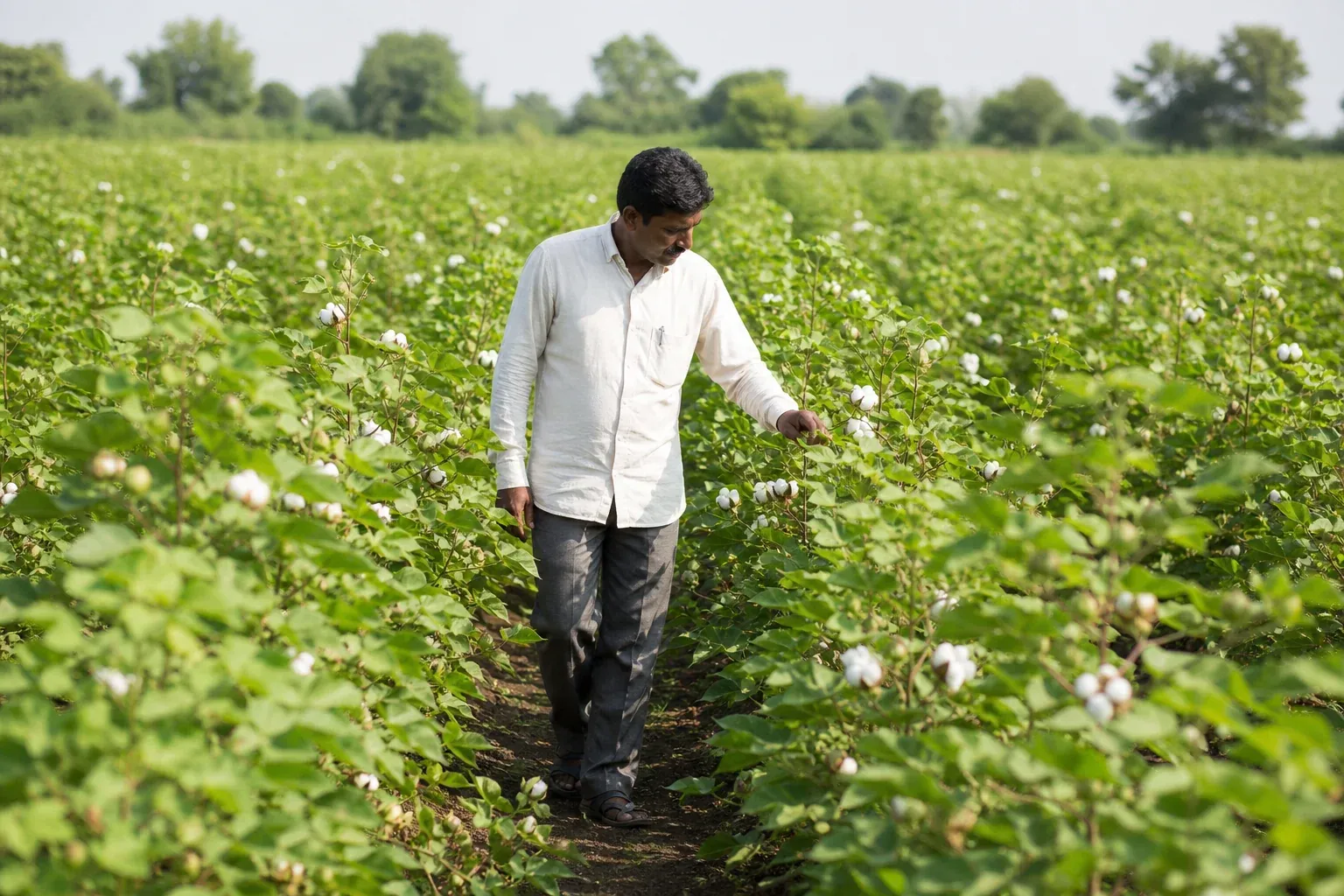
High-density planting system, or HDPS, means sowing more cotton plants per hectare by narrowing the space between rows and sometimes between plants too. Instead of the wide 90-120 cm rows common in conventional Indian cotton fields, HDPS growers pack rows tighter and choose compact varieties bred to handle the crowding without falling over or shading each other out.
This is not a new idea. Countries with mechanized cotton have used tight spacing for decades. What has changed in India is access. Getting the right seed, the right sowing calendar, and the agronomic know-how to smallholder farmers with two to six acres has always been the bottleneck, not the concept itself.
That access gap is exactly what the Mission for Cotton Productivity is meant to close. The scheme carries a financial outlay of Rs. 5,659 crore and aims to lift national lint productivity from 440 kg per hectare to 755 kg per hectare by 2031, and HDPS is one of the interventions positioned to help get there.
Programmes that pair HDPS demonstrations with measured yield tracking give farmers evidence, not just a recommendation, before they change how they sow.
How Does Closer Spacing Actually Raise Yield?
Closer spacing raises cotton yield by improving how sunlight moves through the plant canopy. Research on optimal plant density shows it lifts light use efficiency by regulating gene expression in the middle and upper canopy, which means more of the plant's leaf area contributes to boll formation instead of sitting in shade.
A cotton plant does not photosynthesize evenly from top to bottom. In a wide-spaced field, upper leaves hog the light and lower leaves do little work. Bring plants closer together within the right range, and the whole canopy shares the light load more evenly, a mechanism confirmed in the study on plant density and canopy gene regulation.
Nitrogen timing plays a supporting role here. During flowering and boll-setting, denser stands need nitrogen to move toward reproductive organs rather than vegetative growth, a balance that recent field research on carbon-nitrogen metabolism under density ties directly to yield outcomes.
Boll number per plant does fall as density rises. That is expected and not a failure. The gain comes from more plants carrying fewer bolls each, adding up to a higher total per hectare, though the relationship is not linear past a certain point, as shown in research on row spacing and boll distribution.

Why Does Density Have a Ceiling Instead of Rising Forever?
Density has a ceiling because past a certain point, plants compete for the same light and nutrients instead of sharing them. Field research on canopy dynamics found the highest planting density produced the largest leaf area, yet excessive crowding cut light interception efficiency and pulled yield back down.
This is the part HDPS programmes have to manage carefully. A study on photosynthetic efficiency at the lower canopy found that the densest treatment did not produce the best yield. The best result came from a middle density where light still reached the lower leaves.
Short-season systems add another variable. Research from the Yangtze River Basin on density paired with growth regulators shows mepiquat chloride controls vertical growth while density shapes canopy architecture, and the two work best together rather than alone. Get the seed variety wrong, or skip the growth regulator step when the variety needs it, and a dense stand can lodge or overgrow before it sets its full boll load.
Nitrogen rate needs adjusting too. A study out of the Yellow River Basin on combining planting density with nitrogen level found a specific nitrogen rate optimized root-shoot balance and nutrient use efficiency together with density, meaning a farmer switching to HDPS without changing fertilizer timing is leaving part of the gain on the table.
What Is Beetle's HDPS Programme Testing in the Field?
Beetle's HDPS work across Madhya Pradesh and Maharashtra pairs narrower spacing with the two things smallholder cotton farmers usually lack: matched seed linkages and season-long agronomic support. That combination is what turns a spacing change on paper into a yield change on the ground.
The programme reached more than 2,800 farmers across roughly 2,100 hectares, with early results showing average cotton yield gains around 25% over conventional planting for participating farmers, along with better crop uniformity and improved resilience under rainfed conditions. Field partner Niranjanlal Agrawal Foundation has supported the on-ground rollout across the intervention villages, running farmer mobilization, demonstration plot management, and continuous engagement with households that decide to try the closer spacing.
Given that acceptance, the plan is to scale HDPS from roughly 2,000 hectares to more than 20,000 hectares over the coming year, with the seed linkages and crop management support built in from the start rather than added after farmers hit trouble. That mirrors what the research on optimal density keeps pointing to: spacing alone is not the intervention, spacing plus the right support system is.
How Does HDPS Connect to Biochar and Soil Carbon Work?
HDPS raises what a hectare produces, while biochar and soil carbon practices raise what that hectare can sustain over time. Run together, they build a field that yields more this season and holds that gain into the next one instead of mining the soil to get there.
A denser cotton stand pulls more water and nutrients from the same soil volume, which is why HDPS fields benefit from the water-use efficiency gains regenerative practices bring. Cotton grown under improved water management shows measurable reductions in water demand compared to control fields, which matters more, not less, once plant population per hectare goes up.
Soil organic carbon work does something similar from the ground up. Reduced tillage, residue retention, and organic amendments keep soil structure open enough to support a denser root system, the same root system a tightly spaced cotton crop depends on to reach nutrients before neighbouring plants do. Farmers running both interventions together are effectively building the soil capacity that lets the spacing change pay off season after season, not just once.
How Should a Farmer or Cooperative Decide on HDPS?
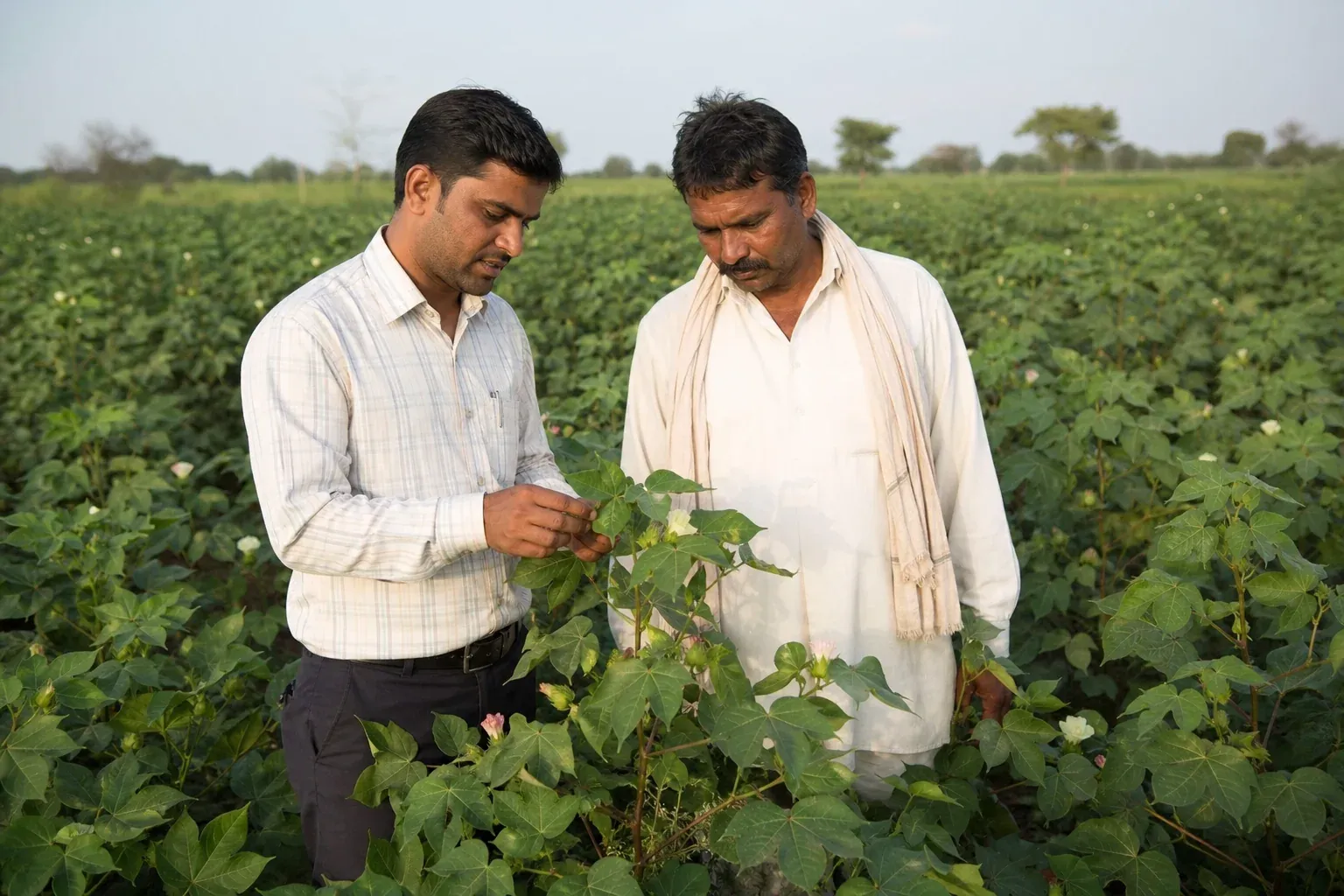
Decide on HDPS by checking three things first: whether a matched short-duration seed variety is actually available locally, whether irrigation or rainfall timing can support a denser stand through flowering, and whether field-level agronomic support exists to manage nitrogen and growth through the season. Skipping any one of these turns a yield opportunity into a crowding problem.
A soil test is the practical starting point. Nutrient status determines how much nitrogen a denser stand will need and when, and tracking the right indicators from day one makes it possible to adjust mid-season rather than discover a shortfall at harvest.
HDPS suits shallow-to-medium soils with reasonably assured water, where the government field data of 30.4% and 39.15% gains was recorded. It is a weaker fit where irrigation is unreliable and seed access to compact varieties is patchy, since a dense stand under water stress competes for moisture as hard as it competes for light.
Cooperatives weighing HDPS across many small plots should treat the first season as a demonstration, not a full rollout. Beetle's own field approach, running demo plots with season-long support before scaling to thousands of hectares, reflects that same sequencing: prove it locally, then scale with the seed and agronomic backing already worked out.
Frequently Asked Questions
What cotton variety works for HDPS?
HDPS needs a compact, short-duration variety bred to handle closer spacing without excessive vegetative growth. A standard long-duration variety sown at HDPS spacing tends to overcrowd and lodge, which is why seed access is one of the common reasons HDPS pilots underperform when it is not addressed upfront.
Does HDPS need more irrigation water?
A denser stand draws more water from the same soil volume during flowering and boll-setting, so consistent water access matters more under HDPS, not less. Farms already running water-efficient regenerative practices are better positioned to support the higher plant population without added stress.
How many plants per hectare does HDPS use?
Plant population under HDPS is higher than conventional spacing, achieved through narrower row spacing rather than a fixed universal number, since the exact population depends on soil type, variety, and local agronomic recommendations for that region.
HDPS is not a one-season fix. It is a spacing and agronomy change that, backed by the right seed and field support, has already delivered documented yield gains of 30.4% to 39.15% in Indian trials and around 25% for farmers in Beetle's own Madhya Pradesh and Maharashtra programme.
Textile brands and cooperatives looking to understand how this kind of on-farm productivity work connects to traceable, verified sourcing can contact Beetle Regen Solutions to discuss what an HDPS-backed regenerative cotton programme could look like in their own sourcing regions.