How to Build a Regenerative Supply Chain: Buyer Guide
You build a regenerative supply chain by replacing short-term purchase orders with multi-year supplier contracts, co-investing in the farms and cooperatives you source from, and measuring soil health and biodiversity alongside tonnage and cost. Brands that skip straight to a certification badge without these three moves end up with a "less bad" supply chain, not a regenerative one.
Key Takeaways
- Contracts change first: multi-year off-take agreements with shared transition risk outperform annual spot-buying because they give farmers a reason to invest in soil for the long run.
- Co-investment beats charity: funding training, water infrastructure, or biochar kilns as a shared asset builds trust faster than one-off donations or premiums alone.
- Soil and biodiversity data are non-negotiable: a baseline measured before you start is the only way to prove a claim later, whether to an auditor or your own board.
- Insetting outperforms generic offsets: carbon captured inside your own supply chain, through practices like biochar, gives you traceable Scope 3 data that a purchased offset certificate cannot.
- Resilience is the real payoff: restored soil, stable yields, and retained farmer relationships reduce your exposure to price shocks and supply disruption over a 5-10 year horizon.
At a Glance: Building a Regenerative Supply Chain
| Decision Point | Conventional Approach | Regenerative Approach |
|---|---|---|
| Contract length | Annual, spot-priced | 3-5 year off-take with shared risk clauses |
| Farmer relationship | Transactional, price-only | Co-investment in training, infrastructure, income |
| Data baseline | None or self-reported | Soil organic carbon, water use, biodiversity counts |
| Carbon strategy | Purchased offsets | In-chain insetting (e.g., biochar) with farm-level MRV |
| Traceability | Certification stamp only | Named farm and plot-level chain of custody |
| Compliance fit | Generic sustainability claims | CSRD/Scope 3-ready, auditable records |
| Cost profile | Lower upfront | 10-25% premium during transition, offset by resilience gains |
1. Redesign Supplier Contracts for Long-Term Collaboration
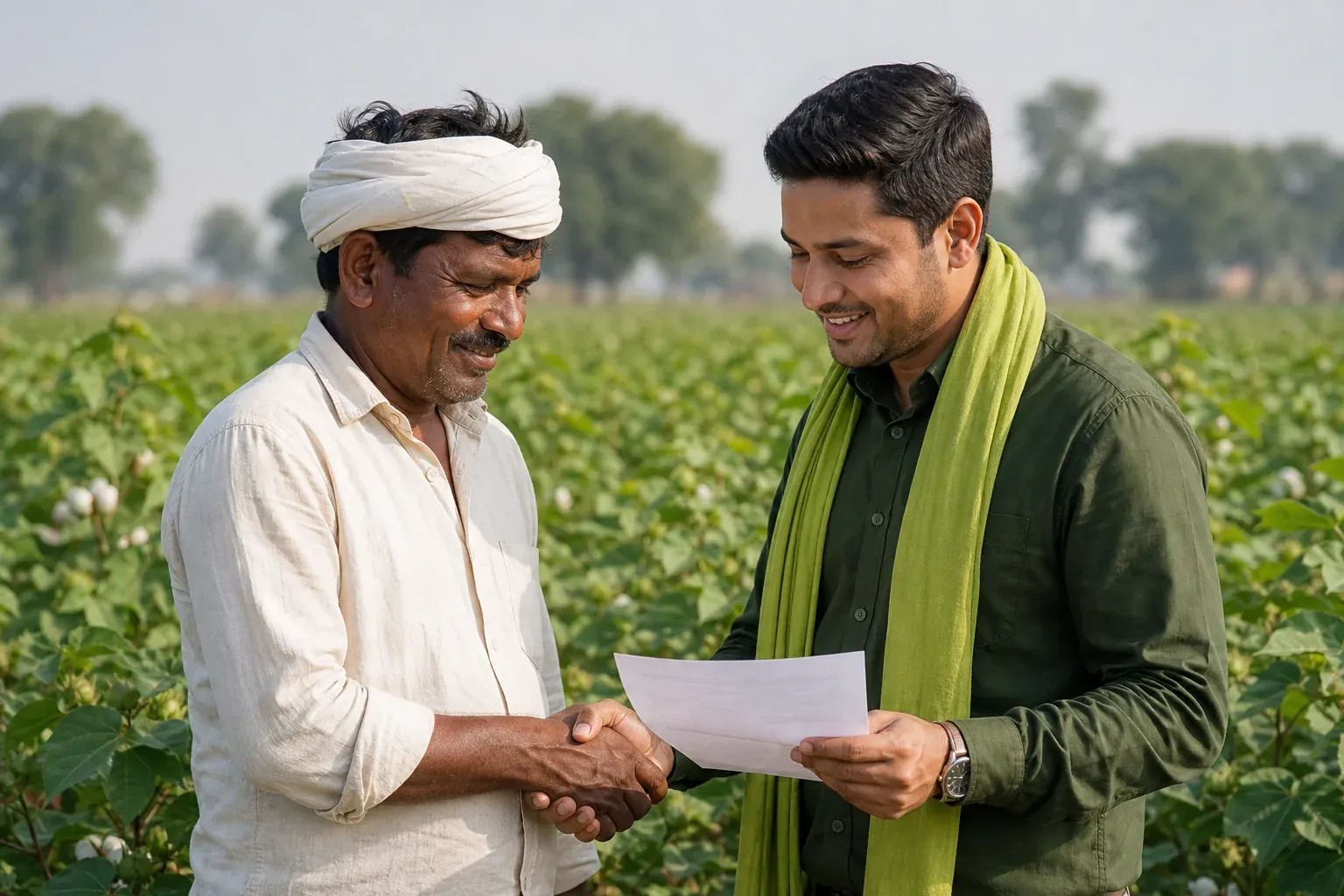
A regenerative supply chain starts with the contract, not the field. If you buy on a one-season spot basis, you're asking a farmer to bet on a transition you won't be around to see through. Multi-year off-take agreements change that math entirely.
Write contracts that lock in volume and price for three to five years, with a clause covering the transition period when yields can dip before soil recovers. Split that risk with the farmer instead of pushing it all onto their books. Tie a portion of payment to verified soil outcomes, not just delivered kilograms, so both sides are rewarded for the same goal.
This is where regenerative cotton programs differ structurally from standard sourcing deals: the contract itself becomes the mechanism that funds the transition, rather than a bolt-on premium paid after the fact.

2. Move From Transactional Sourcing to Co-Investment
Buying regenerative cotton at a premium is a start. Co-investing in the systems that make regeneration possible is what actually sticks. That means putting money into farmer training curricula, shared water infrastructure like Alternate Wetting and Drying setups for paddy rotations, or biochar kilns that a cooperative owns collectively.
When a brand funds shared infrastructure instead of a per-kilogram premium, the asset stays with the farming community after the contract term ends. That's the difference between "less bad" and truly regenerative sourcing, as several industry voices have started naming directly, including a recent piece on why "less bad" sourcing is no longer good enough.
Co-investment also opens the door to sharing upside. When a farmer's soil carbon rises enough to generate credits, structure the agreement so both the cooperative and your program benefit from that monetization, not just the carbon buyer at the end of the chain.
3. Set a Soil Health and Biodiversity Baseline Before You Start
You cannot prove regeneration happened if you never measured what existed before it. A baseline soil test, taken before the first regenerative season, is the single most important data point in the entire program.
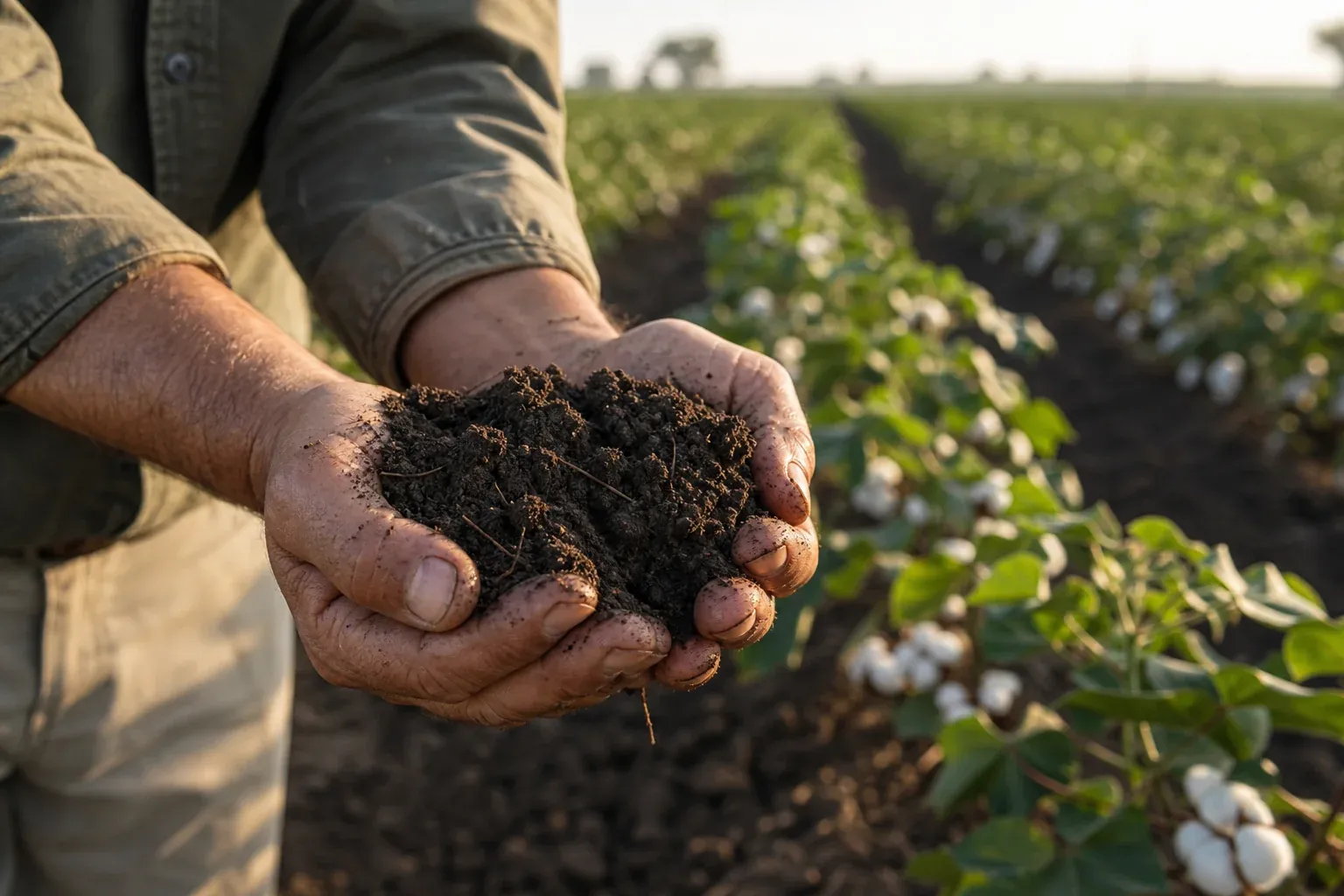
Test soil organic carbon, water infiltration rate, and simple biodiversity counts (earthworm density, pollinator sightings, cover crop diversity) at the plot level before onboarding. Repeat the same tests every season using the same methodology, so the numbers are comparable. A guide on how to increase soil carbon and fertility walks through the specific indicators worth tracking season over season.
Without this baseline, any claim your brand makes later about soil restoration or biodiversity gain is unverifiable. That gap is exactly what a regulator or an NGO auditor will look for first.
4. Choose Vendors Who Can Prove Traceability, Not Just Claim It
A regenerative supply chain is only as credible as the traceability behind it. Ask any prospective supplier for named farm IDs, plot-level records, and a documented chain of custody from field to fiber, not just a logo on the label.
Red flags to watch for: a supplier who can only produce a certification stamp with no underlying farm data, a program that reports aggregate regional numbers instead of named plots, or a partner who cannot explain how their measurement, reporting, and verification (MRV) system actually captures data in the field. These gaps matter more than they used to, now that frameworks like the EU's CSRD require value-chain-grounded disclosures rather than generic claims.
For a deeper look at what separates a verifiable claim from a marketing one, see how brands verify farm-level carbon insetting claims before signing off on supplier data.
What Should You Measure to Prove Regeneration Is Working?
Track four indicators together: soil organic carbon change season over season, water retention or reduced irrigation need, a simple biodiversity count on the plot, and farmer net income after input costs. No single metric proves regeneration on its own; the combination does.
Soil organic carbon tells you whether the ground itself is recovering. Biodiversity counts tell you whether the surrounding ecosystem is responding, not just the crop. Farmer income tells you whether the transition is financially survivable for the people doing the work, which is the metric most programs quietly skip.
5. Layer in Carbon Insetting Instead of Buying Generic Offsets
Carbon insetting means the carbon reduction happens inside your own supply chain, on the same farms that grow your fiber, rather than on a project you have no operational connection to. Biochar production is one of the most direct insetting mechanisms available to a textile buyer today.
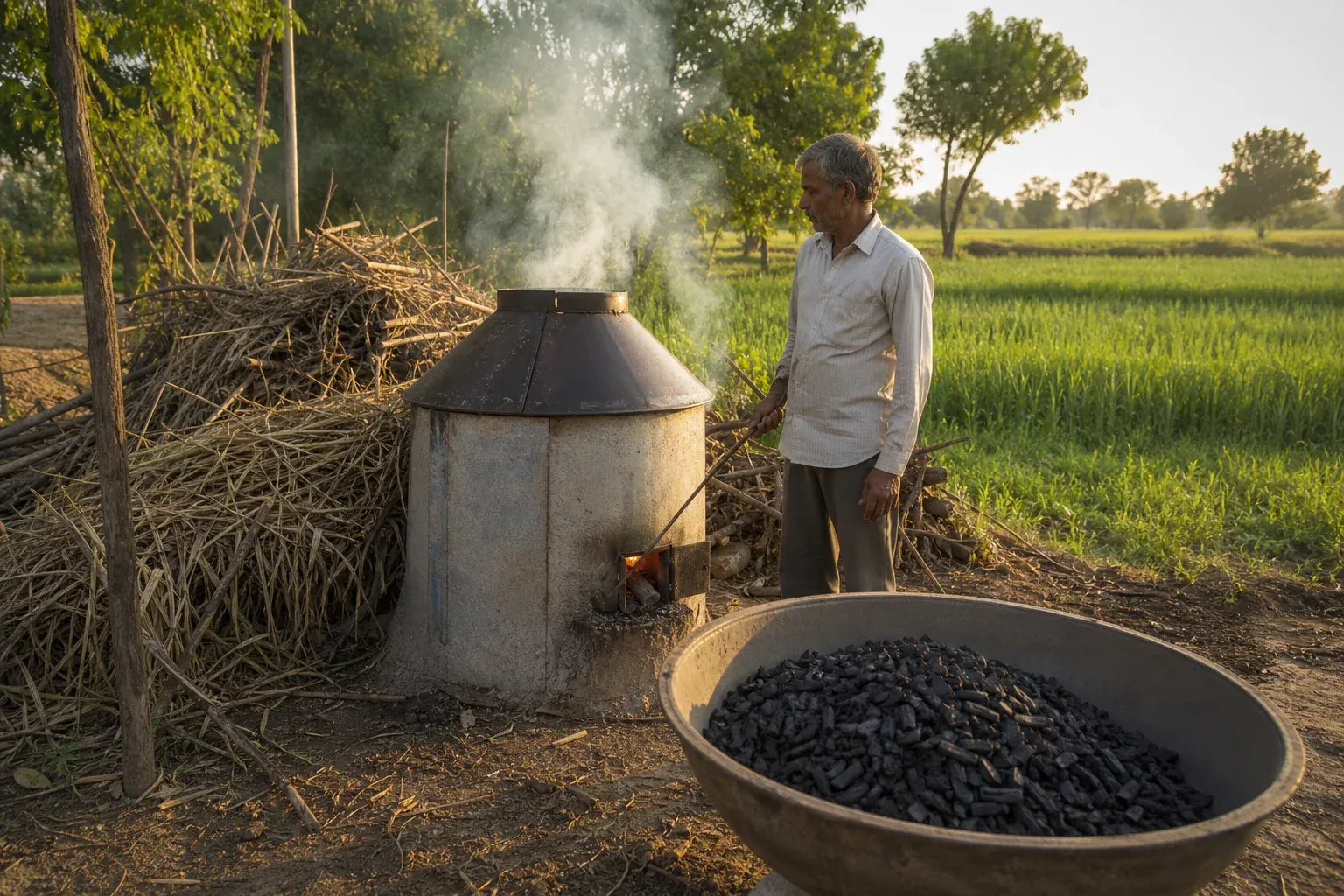
When crop residue that would otherwise be burned in the field is converted into biochar, that carbon gets locked into a stable form and worked back into the soil. You get a documented, farm-level carbon record tied directly to your Scope 3 emissions inventory, not a certificate from an unrelated forestry project on another continent. A detailed walkthrough of how biochar carbon insetting works for textile brands covers the mechanics end to end.
Insetting also answers the question buyers increasingly get asked in board meetings: not "did you buy credits," but "can you show where the reduction happened." A generic offset can't answer that. A named farm and a dated biochar batch record can.
6. Avoid the Common Pitfalls of Transition
Most failed regenerative programs share the same three mistakes. First, brands push for volume before trust is built, signing large commitments before a pilot has proven the model works on the ground with a specific cooperative.
Second, programs underfund the transition years. Yields sometimes dip in year one or two while soil biology recovers, and a farmer who loses income during that window will quietly go back to conventional practices, no matter what the contract says on paper.
Third, brands treat a certification as the finish line rather than a checkpoint. A certificate tells you a standard was met at a point in time. It does not tell you whether soil carbon is still rising three years later, or whether the same farmers are still in the program at all.
Is a Regenerative Supply Chain More Expensive Than a Conventional One?
Yes, upfront: regenerative cotton typically carries a premium in the range brands report of roughly 10-25% over conventional cotton during the transition period. That premium funds training, baseline testing, and shared risk, and it tends to shrink as yields stabilize and carbon monetization starts contributing.
Weigh that premium against the cost of a supply disruption from degraded soil, a failed audit, or a greenwashing accusation. Over a five-year horizon, the math tends to favor the buyer who paid for resilience early.
Building Toward Long-Term Operational Resilience
Restoring soil and rebuilding farmer income are not side projects to your sourcing strategy. They are your sourcing strategy, once you accept that a supply chain built on degraded land and unstable income cannot hold up under the next drought, price spike, or regulatory deadline.
India's cotton belt and Bangladesh's textile corridor are both under real pressure from erratic rainfall and rising input costs. A regenerative program built on multi-year contracts, shared infrastructure, and verified soil data gives you a supply base that can actually absorb those shocks instead of passing them straight through to your production line.
Beetle Regen works across this exact model: regenerative cotton and paddy programs, farmer training, biochar-based carbon insetting, and a Sustainability as a Service offering that helps you build the traceability and MRV systems auditors and boards now expect. You can review real program outcomes on our case studies page.
If you're ready to move past pilot commitments and start building supplier contracts, soil baselines, and carbon insetting systems that hold up under scrutiny, contact us and we'll walk you through what a program looks like for your specific sourcing region.