How to Create Net Zero Cotton Supply Chain: A Brand Roadmap
You create a net zero cotton supply chain by combining four things in sequence: farm-level traceability data, regenerative practices that measurably raise soil carbon, biochar-based carbon insetting instead of generic offsets, and a reporting system that turns all of it into CSRD-ready disclosures. Skip the data step and every claim you make later will fail an audit.
Key Takeaways
- Data comes before offsets: A net zero claim built on purchased credits alone, without farm-level Scope 3 data, won't survive CSRD or brand board scrutiny.
- Insetting beats generic offsetting: Biochar carbon insetting inside your own cotton-growing regions gives you verifiable, value-chain-grounded emissions reductions instead of unrelated offset purchases.
- Regenerative practices need 2-3 seasons: Soil organic carbon gains from biochar, reduced tillage, and cover crops compound over two to three growing seasons, not one.
- Women farmers drive the outcomes brands measure: Compost prep, seed selection, and weeding, tasks largely handled by women, directly affect the soil carbon and yield numbers you'll report.
- Five KPIs anchor a credible program: soil organic carbon, yield, water use, farmer income, and traceability coverage percentage.
Net Zero Cotton Supply Chain: The Numbers That Matter
| Milestone | Typical Timeline | What You Need |
|---|---|---|
| Farm-level sourcing map | 1-3 months | Farmer IDs, GPS plot data, ginner/spinner records |
| Baseline soil & emissions data | 1 growing season | Soil organic carbon tests, water use logs, input records |
| Regenerative practice rollout | 2-3 seasons | HDPS, reduced tillage, cover crops, biochar application |
| Carbon insetting setup | 3-6 months parallel to rollout | Biochar kilns, MRV protocol, verification partner |
| KPI tracking system | Ongoing from season 1 | Soil carbon, yield, water use, farmer income, traceability % |
| CSRD-ready disclosure | Year 2 onward | Verified Scope 3 data, insetting certificates, audit trail |
| Carbon credit monetization | Year 2-3 | Verra/Gold Standard registration, buyer agreements |
1. Map Where Your Cotton Actually Comes From
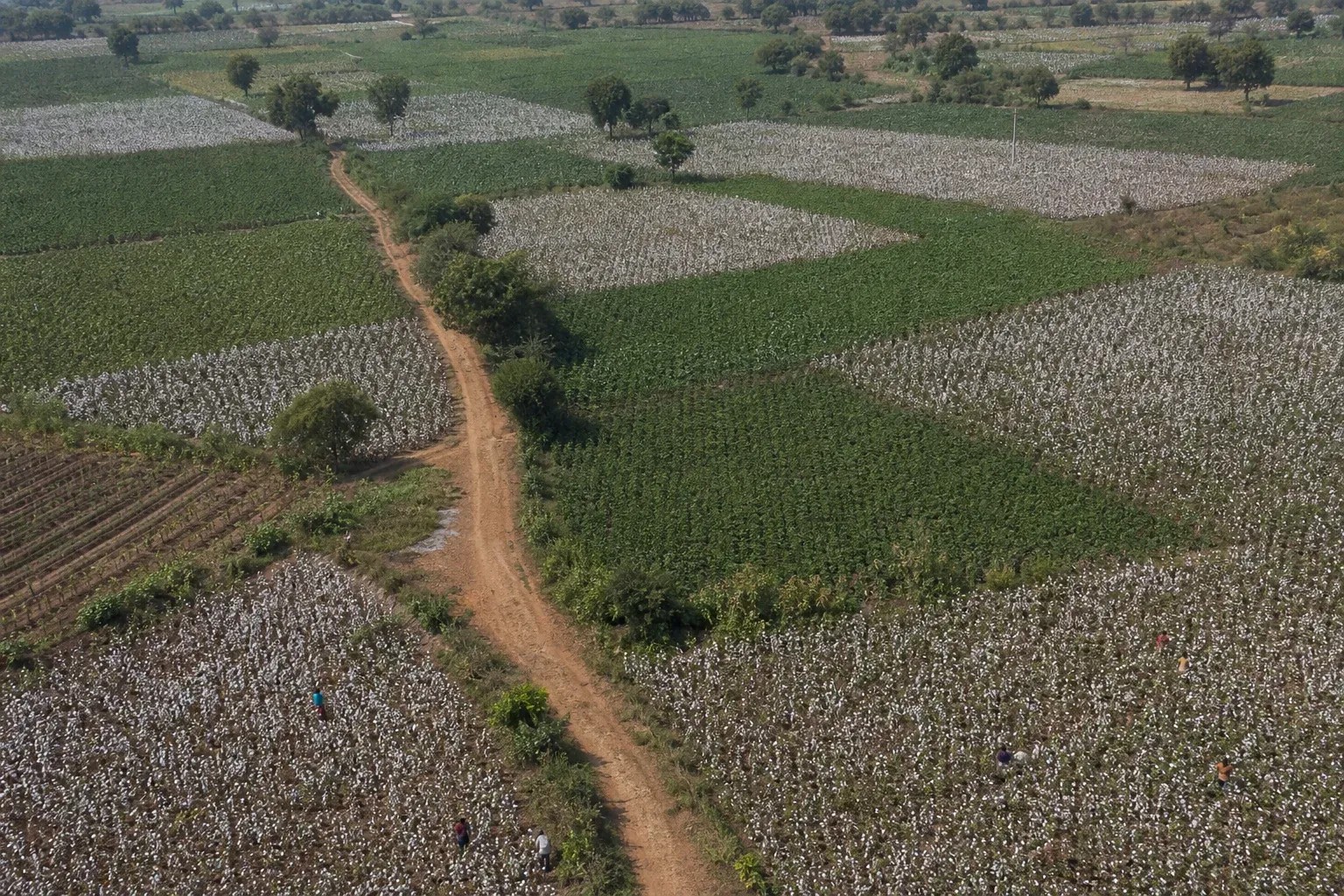
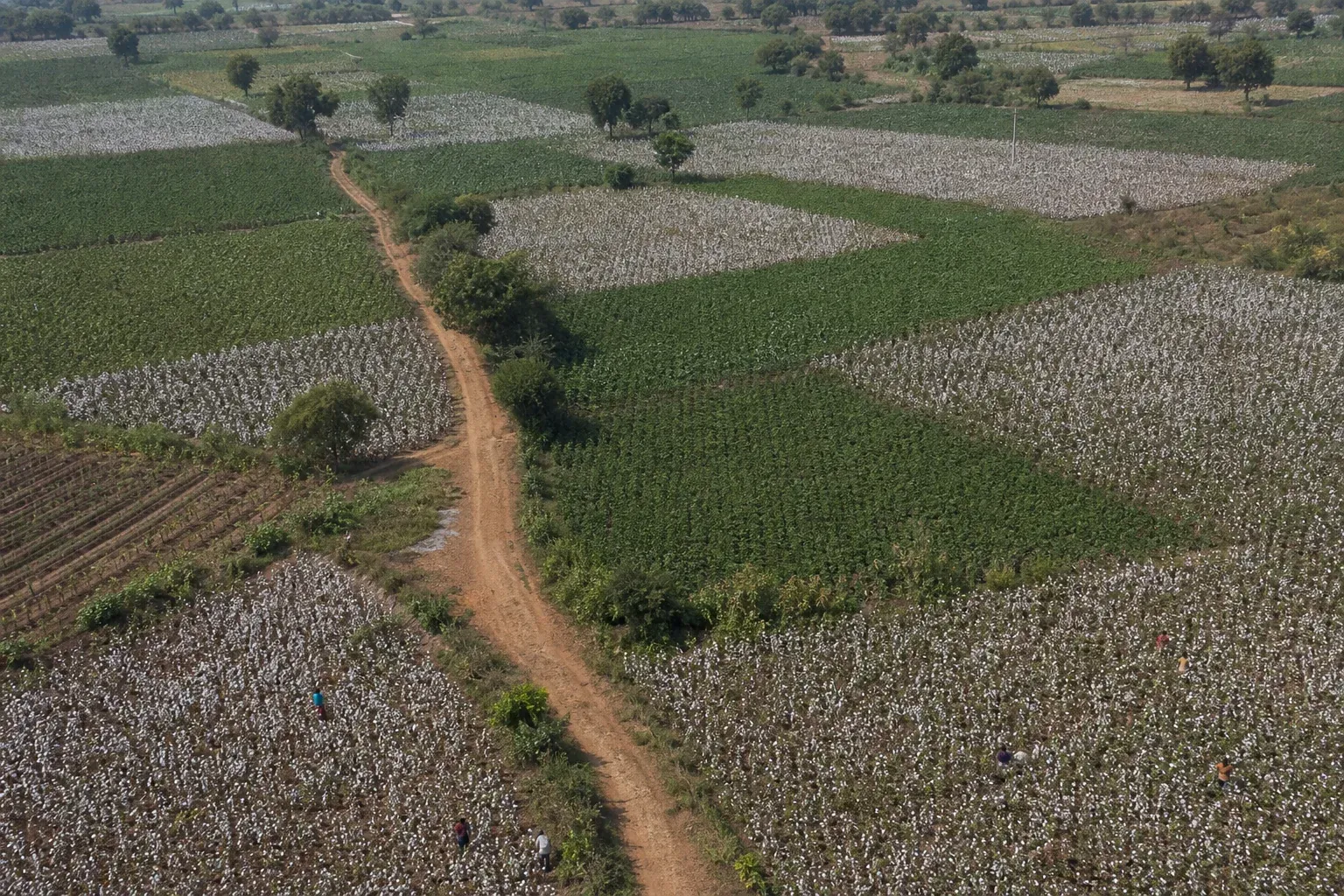
Start with a real map, not a supplier list. Madhya Pradesh, Maharashtra, and cotton belts across Bangladesh each carry different soil types, water access, and farmer income levels. You need to know which district your fiber comes from, which ginner handled it, and which mill spun it, before you can claim anything about carbon.
Most brands discover their biggest Scope 3 emissions sit at the farm and ginning stages, not in retail logistics. Sourcing maps built from farmer IDs and GPS-tagged plots let you find those hotspots instead of guessing. For a deeper look at where these hotspots typically cluster, read our guide on why traceability in cotton matters for brand compliance.
Cotton supply chain traceability, in plain terms, means you can trace a bale back to a named farm and prove the chain of custody through every processing step. Without it, your net zero claim is an estimate dressed up as a fact.
2. Build Farm-Level Data Collection Before Anything Else
You can't reduce what you haven't measured. Before rolling out any regenerative practice, collect baseline soil organic carbon readings, water use records, and input logs from every participating farm. This baseline becomes the number every future claim gets compared against.
A Measurement, Reporting, and Verification (MRV) system does this work at scale. Assign each farmer a digital ID, link it to their plot GPS coordinates, and record soil tests at planting and harvest. Generic industry emission factors, the kind auditors reject under CSRD, get replaced by real numbers tied to real farms.
This step is where most brands underinvest. Skipping baseline data collection is the single most common reason regenerative cotton pilots stall before they reach scale.
3. Shift From Conventional Inputs to Regenerative Practices
Once you have a baseline, change what happens in the field. Three practices move the needle fastest for cotton: High-Density Planting Systems (HDPS) that raise yield per acre, reduced tillage that protects soil structure, and biochar application that adds stable carbon directly into the soil.
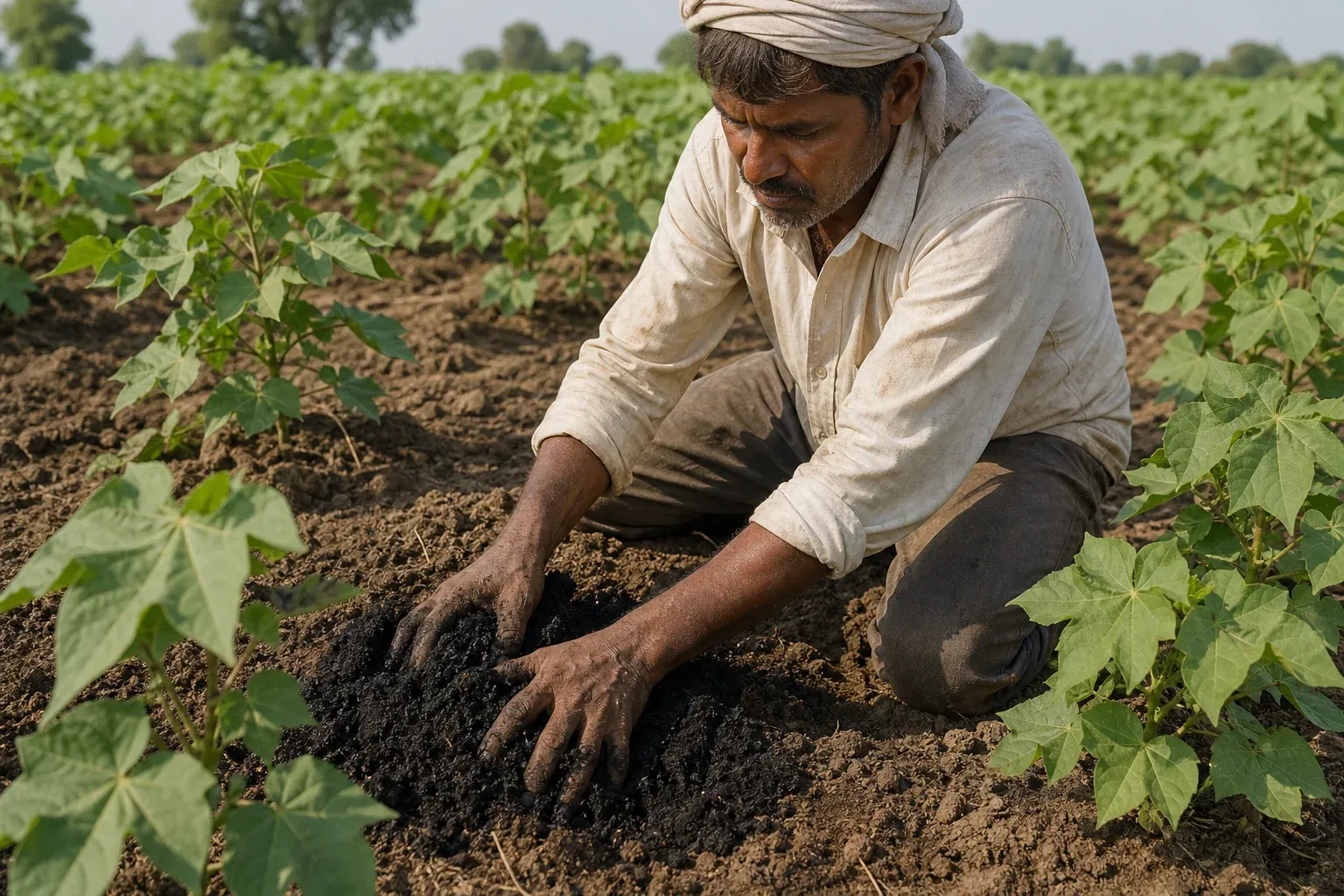
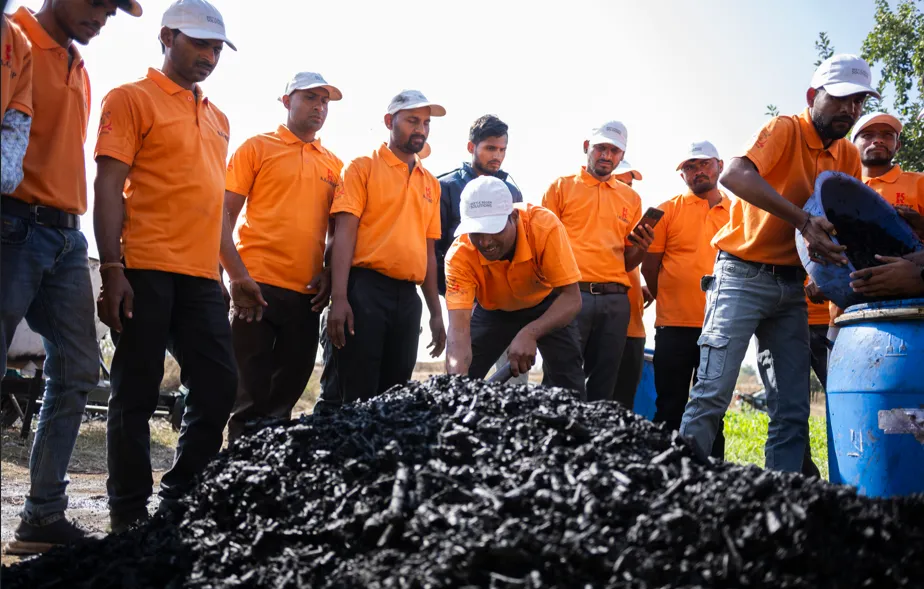
Biochar comes from converting leftover cotton stalks and crop residue into a stable, carbon-rich material instead of burning it in the open. Burning residue releases carbon and pollutes the air within minutes. Converting it into biochar locks that same carbon into the soil for decades. Learn the full mechanics in what is biochar and what are its uses in farming.
For farms near paddy rotations, Alternate Wetting and Drying (AWD) cuts methane emissions from rice fields between cotton seasons, adding another layer to your overall carbon reduction story. Expect soil carbon gains to show up within one season but compound meaningfully across two to three.
To understand what regenerative cotton actually means before you commit budget to it, read what is regenerative cotton, which breaks down the difference between regenerative claims and organic certification.
4. Set Up Carbon Insetting Instead of Buying Generic Offsets
Carbon offsetting means paying for emissions reductions somewhere unrelated to your supply chain, a forest project in another country, for example. Carbon insetting means funding carbon reduction inside your own value chain, on the same farms that grow your cotton. Under CSRD and most modern brand disclosure rules, insetting carries far more credibility because auditors can trace the reduction back to a named farm and a verified practice.
Biochar production is one of the few insetting methods with durable, measurable carbon removal, because the carbon stays locked in soil for centuries rather than a few years. That durability matters when a verifier checks your claims against recognized emissions accounting frameworks.
See exactly how this process runs field to certificate in how biochar carbon insetting works for textile brands, and how one farmer's soil data changed over two seasons in how one cotton farmer doubled his soil organic carbon in two seasons.
5. Bring Women Farmers and Cooperatives Into the Program Design
Compost preparation, seed selection, and weeding decide most of your soil carbon and yield outcomes, and women farmers handle the bulk of that hands-on work across cotton-growing regions in India and Bangladesh. Programs that leave women out of training design end up with weaker data and slower adoption, because the people doing the work never got asked how it should run.
Structure your cooperative agreements so women farmers hold formal roles in data collection and decision-making, not just field labor. This isn't a side initiative; it directly affects whether your KPIs move. Read more in women farmers participation in regenerative cotton programs: why it matters.
6. Track KPIs That Prove the Program Works
A net zero claim without KPIs is a farming pilot dressed up as a climate program. You need five numbers moving in the right direction before you present anything to a brand board or auditor: soil organic carbon, yield per acre, water use per acre, farmer net income, and the percentage of your cotton volume covered by verified traceability data.
- Soil organic carbon: Track percentage change season over season against baseline.
- Yield per acre: HDPS and biochar combined typically raise yield without added chemical input costs.
- Water use per acre: AWD and cover crops reduce irrigation demand measurably by the second season.
- Farmer net income: Include both crop revenue and any carbon credit payouts.
- Traceability coverage: Percentage of sourced cotton with a verified farm-to-mill chain of custody.
For a full breakdown of how to set targets and thresholds for each metric, see what KPIs should you track in a regenerative cotton program.
7. Turn Data Into CSRD-Ready Disclosures and Carbon Credit Revenue
Once your KPIs run steady across two seasons, package the data for two audiences: regulators and buyers. The EU's Corporate Sustainability Reporting Directive requires value-chain-grounded Scope 3 disclosures, not generic industry averages. Farm-level soil and traceability data built through this program becomes your audit trail. The European Financial Reporting Advisory Group's ESRS standards spell out exactly what disclosure-grade data needs to look like.
The same data, once verified against a recognized protocol, can be registered as carbon credits and sold or retained for insetting claims. Connect your farmer training records and carbon platform data through API integration so nothing gets lost between field collection and your reporting dashboard. See API integration for carbon credit platforms: a complete guide for the technical setup.
What Is Regenerative Cotton and Why It Anchors Net Zero Claims
Regenerative cotton is cotton grown using practices that actively rebuild soil health, biodiversity, and water cycles, rather than practices that merely avoid harm. It differs from organic certification because organic standards focus on excluding synthetic inputs, while regenerative programs measure outcomes: rising soil organic carbon, improving water retention, and increasing farmer income over time.
This distinction matters for net zero claims because regenerative outcomes are what generate the carbon reductions you report. Organic certification alone doesn't produce a verifiable emissions number.
Cotton Supply Chain Traceability: What It Actually Requires
Traceability requires four linked layers: a digital farmer ID tied to GPS plot data, a ginning record that keeps regenerative and conventional cotton segregated, a spinning record that tracks blend ratios, and a final chain-of-custody document that follows the fiber to finished fabric. Miss any one layer and your traceability claim has a gap an auditor will find.
Brands sourcing extra long staple (ELS) cotton or other premium fiber types face extra scrutiny here, since buyers increasingly ask whether premium cotton claims are backed by the same traceability rigor as regenerative claims.
Common Mistakes Brands Make Chasing Net Zero Cotton
- Buying offsets before collecting farm data: This produces a number with no audit trail, which regulators and buyers now reject.
- Skipping farmer training on safe practices: Programs that push biochar production without proper kiln safety training see slower adoption and higher dropout.
- Ignoring cooperative governance: Programs designed top-down, without farmer and cooperative input, generate weaker data because participation stays shallow.
- Treating year one as proof: Soil carbon and yield gains need two to three seasons to show a reliable trend line; reporting year-one numbers as final results misleads stakeholders.
For a full list of pitfalls, see Beetle Regen case studies: real results from farm to fashion, which documents what worked and what needed correction across multiple program seasons.
FAQ
What is regenerative cotton?
Regenerative cotton is grown using practices, like reduced tillage, cover cropping, and biochar application, that measurably rebuild soil health and carbon over time, rather than simply avoiding synthetic inputs.
How long does a net zero cotton transition take?
Most brands need two to three growing seasons before farm-level data is stable enough to support formal disclosures, plus additional time to register and monetize carbon credits.
Do carbon credits alone make a supply chain net zero?
No. Credits purchased without farm-level Scope 3 data and verified regenerative practices don't meet CSRD's value-chain-grounded disclosure standard, and most brand boards now reject offset-only claims as reputational risk.
A net zero cotton supply chain isn't built through procurement decisions alone. It's built through long-term partnerships with farmers, science-backed regenerative practices, and data systems that hold up under audit. When you invest in soil, you invest in a stronger supply chain. When you invest in farmers, you invest in resilience that outlasts any single contract.
The path from farm-level data to CSRD-ready disclosure runs through the same fields where your cotton already grows. If you're ready to map your sourcing regions, set up traceability, and build a carbon insetting program grounded in verified farm data, contact us to start scoping your net zero cotton roadmap with our team.