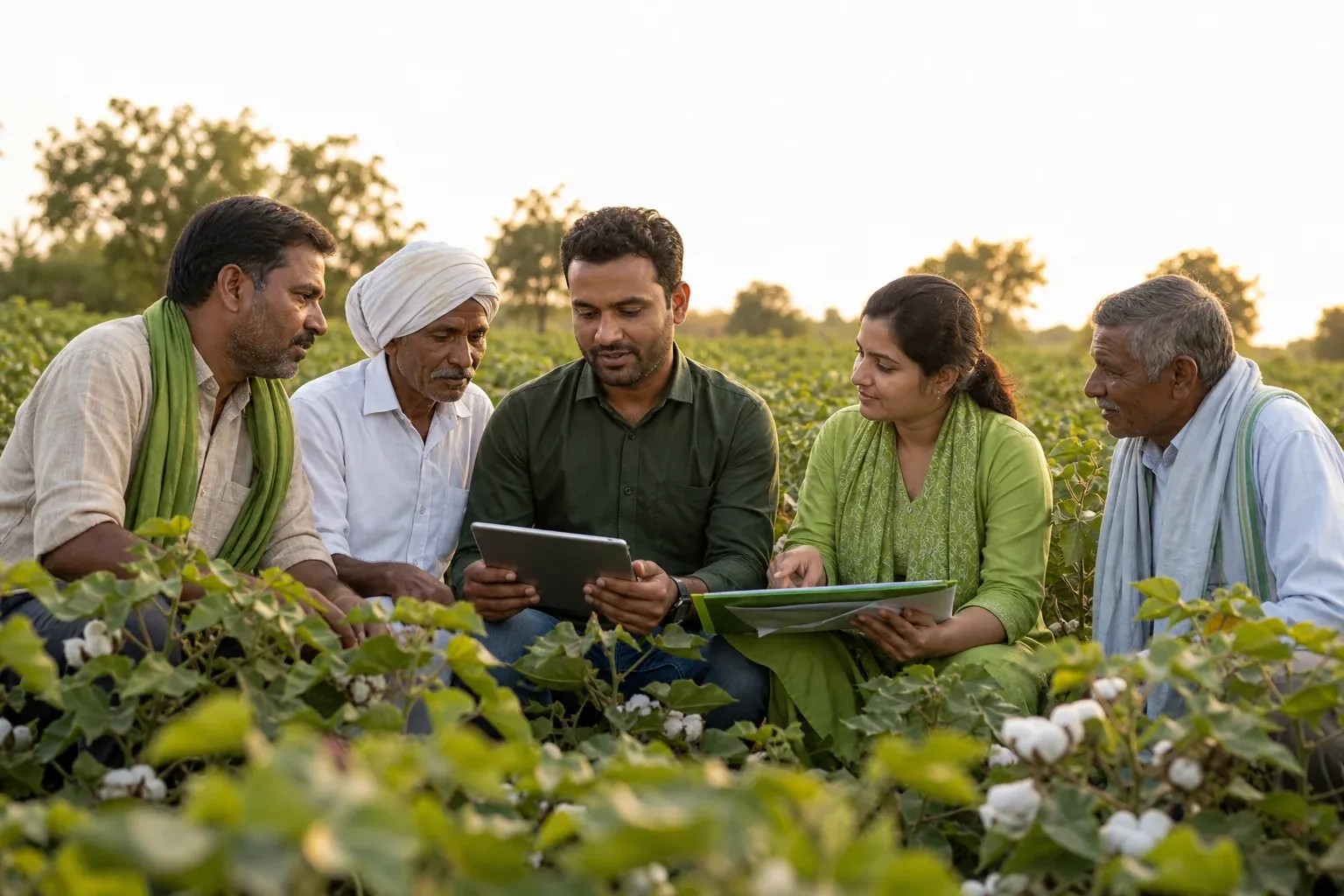
How to Get a Carbon Project Registered in India
Getting a carbon project registered in India means completing five linked stages: confirming eligibility, choosing a standard (Verra or Gold Standard), selecting a matching methodology, building an MRV system before you draft any paperwork, and passing independent validation and verification. Most farmer cooperatives that follow this order in sequence reach first credit issuance in 12 to 24 months. Those that skip the MRV step almost always get sent back by the validator.
Key Takeaways
- Timeline: Expect 12-24 months from initial eligibility screening to first credit issuance, depending on how quickly baseline data is collected.
- Standard choice matters: Verra's VCS program suits large-scale soil carbon and biochar projects; Gold Standard often appeals to buyers who want stronger co-benefit reporting on farmer livelihoods and gender inclusion.
- MRV comes first, not last: Baseline soil sampling and farmer enrollment records must exist before you draft the Project Design Document, not after.
- Validator and verifier are separate parties: One checks your design before the project starts; the other checks your results after monitoring. Confusing the two causes real delays.
- Aggregation lowers cost per farmer: A cooperative pooling 200+ smallholder plots under one PDD cuts registration cost per tonne far below what any single 3-acre farm could achieve alone.
Carbon Project Registration at a Glance
| Stage | Typical Duration | Main Cost Driver | Who's Involved |
|---|---|---|---|
| Eligibility screening | 2-4 weeks | Internal staff time | Cooperative + project developer |
| Standard & methodology selection | 2-6 weeks | Technical consulting | Project developer, registry guidance docs |
| Baseline MRV data collection | 2-4 months | Soil sampling, geotagging, staff | Field technicians, farmers |
| PDD drafting & stakeholder consultation | 1-3 months | Documentation labor | Project developer, local stakeholders |
| Validation | 3-6 months | Validation body fees | Accredited validation/verification body (VVB) |
| Registration & listing | 4-8 weeks | Registry fees | Verra or Gold Standard registry |
| First verification & issuance | 12-18 months post-monitoring start | Verifier fees, ongoing monitoring | VVB, cooperative |
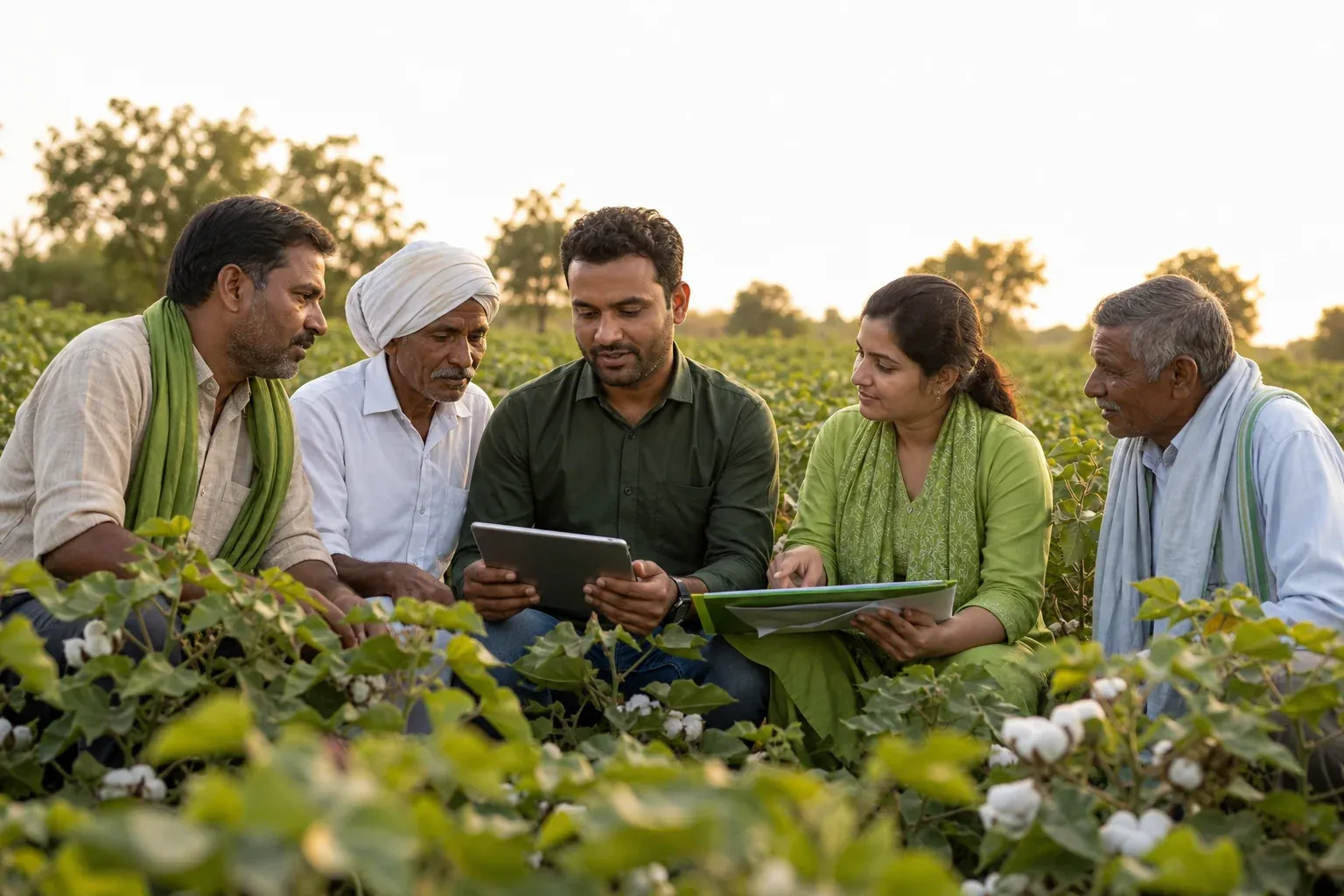
1. Confirm Your Project Qualifies Before You Start
Before you spend a rupee on documentation, run an honest eligibility check. Carbon registries require additionality: proof that the emission reduction or carbon removal would not have happened without the project's incentive. If your cooperative already practices reduced tillage on every field without any external program pushing it, a registry may reject the claim outright.
You also need scale. Verra and Gold Standard rarely accept a single 3-acre farm as a standalone project. Most methodologies expect either a minimum land area or a pooled group of farmers, which is exactly why cooperatives and aggregators exist in this space. If you're working with smallholder cotton or paddy farmers in India, plan from day one to register as a group, not as individuals.
Finally, match the qualifying activity to a real practice change already underway or planned: biochar production from crop residue, Alternate Wetting and Drying (AWD) in paddy fields, High-Density Planting Systems, or reduced tillage with cover cropping. Each of these has its own methodology path, covered in Step 3. If your farmers are still deciding which practice to adopt, our guide on regenerative vs conventional cotton breaks down what actually shifts soil carbon enough to qualify.
2. Pick the Right Standard: Verra or Gold Standard
Verra's Verified Carbon Standard (VCS) is the largest voluntary carbon registry globally and the default choice for most agricultural soil carbon and biochar projects in India. It has a well-documented methodology library, an established registry portal, and broad buyer recognition among textile and apparel brands.
Gold Standard takes a different angle. It was built with the UN Sustainable Development Goals baked into its assessment criteria, so projects with strong farmer livelihood, water, or gender-inclusion outcomes often score better there. If your cooperative's story includes measurable women farmer participation or community water savings from AWD, Gold Standard's co-benefit reporting can make that case more visibly to buyers. For more on this angle, see our piece on women farmers' participation in regenerative cotton programs.
In practice, many project developers let the buyer decide. If a specific textile brand or corporate partner has already committed to purchase credits, ask which registry their internal sustainability policy accepts. Some brands only count Verra-issued credits toward Scope 3 reduction claims; others accept both. You can review both registries' public project databases directly: Verra's VCS Program and Gold Standard's project developer resources.
3. Select a Methodology That Matches Your Practices
The methodology is the technical rulebook that tells you exactly how to calculate, monitor, and report your carbon outcome. Choosing the wrong one is the single most common reason projects stall mid-design.
- Soil organic carbon methodologies (such as Verra's VM0042) apply to reduced tillage, cover cropping, and compost-based practices that raise soil carbon over multiple seasons.
- Biochar methodologies apply when crop residue is converted through pyrolysis into stable carbon and returned to soil. This path suits cotton belts where stalk burning was previously the default disposal method. Our guide on how biochar carbon insetting works for textile brands explains the mechanics behind this credit type.
- AWD methodologies apply to rice and paddy farming where controlled flooding cycles cut methane emissions instead of building soil carbon.
Don't pick a methodology because it sounds attractive to buyers. Pick the one that matches the practice change your farmers are actually making on the ground. A validator will check your monitoring data against the methodology's required parameters, and a mismatch here forces a costly restart.
4. Build Your MRV System Before You Draft the PDD
MRV stands for Measurement, Reporting, and Verification, and it is the backbone of every registered carbon project. Skip this step or treat it as an afterthought, and your Project Design Document will not survive validation.
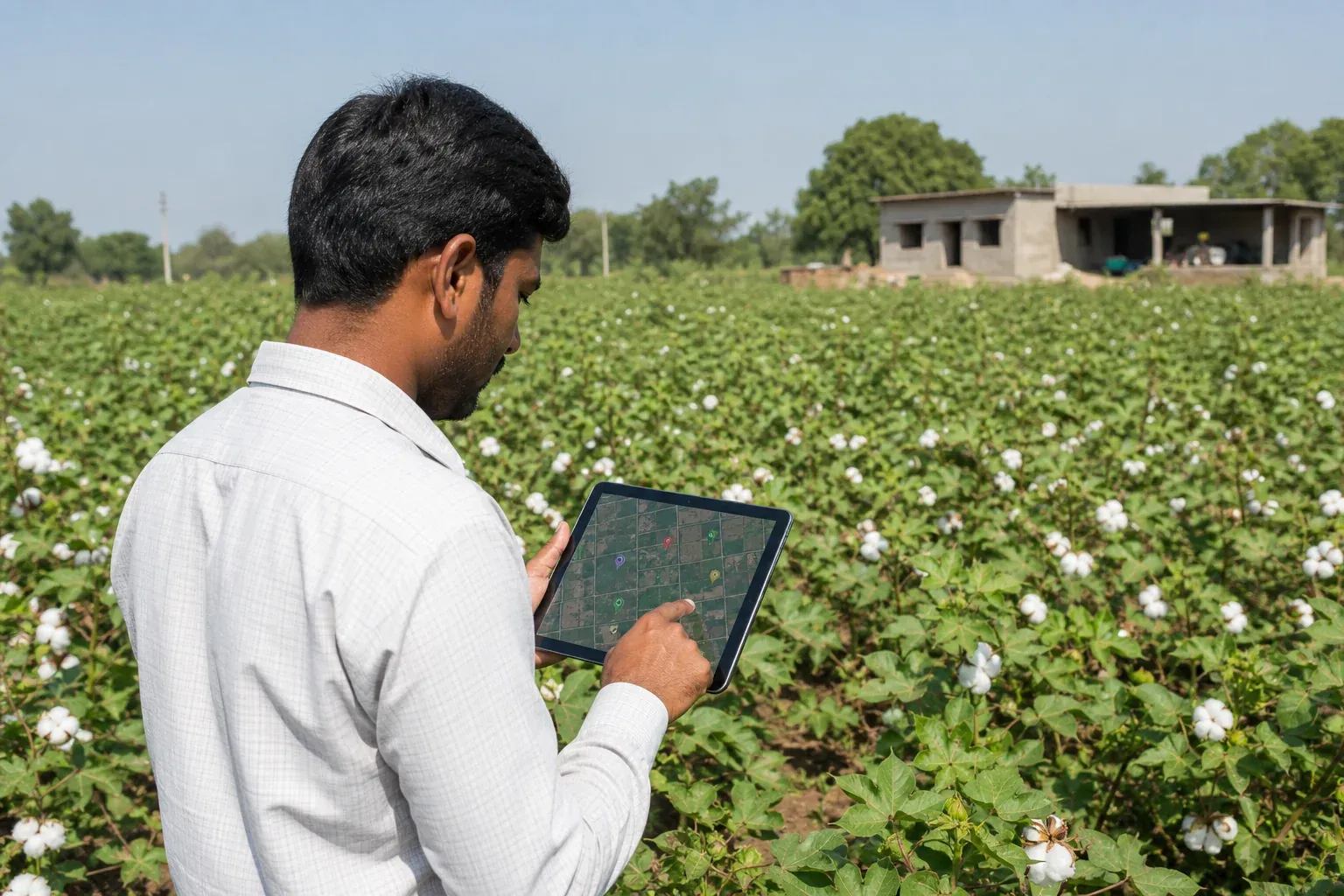
Start with baseline soil sampling across a representative set of enrolled plots, before any practice change happens. Without a documented "before" state, no registry can calculate the "after" improvement. Geotag every plot so field boundaries are unambiguous. Record farmer enrollment agreements, practice logs, and any input use (compost, biochar volumes, irrigation cycles) on a system that timestamps entries rather than relying on paper notebooks that get lost between seasons.
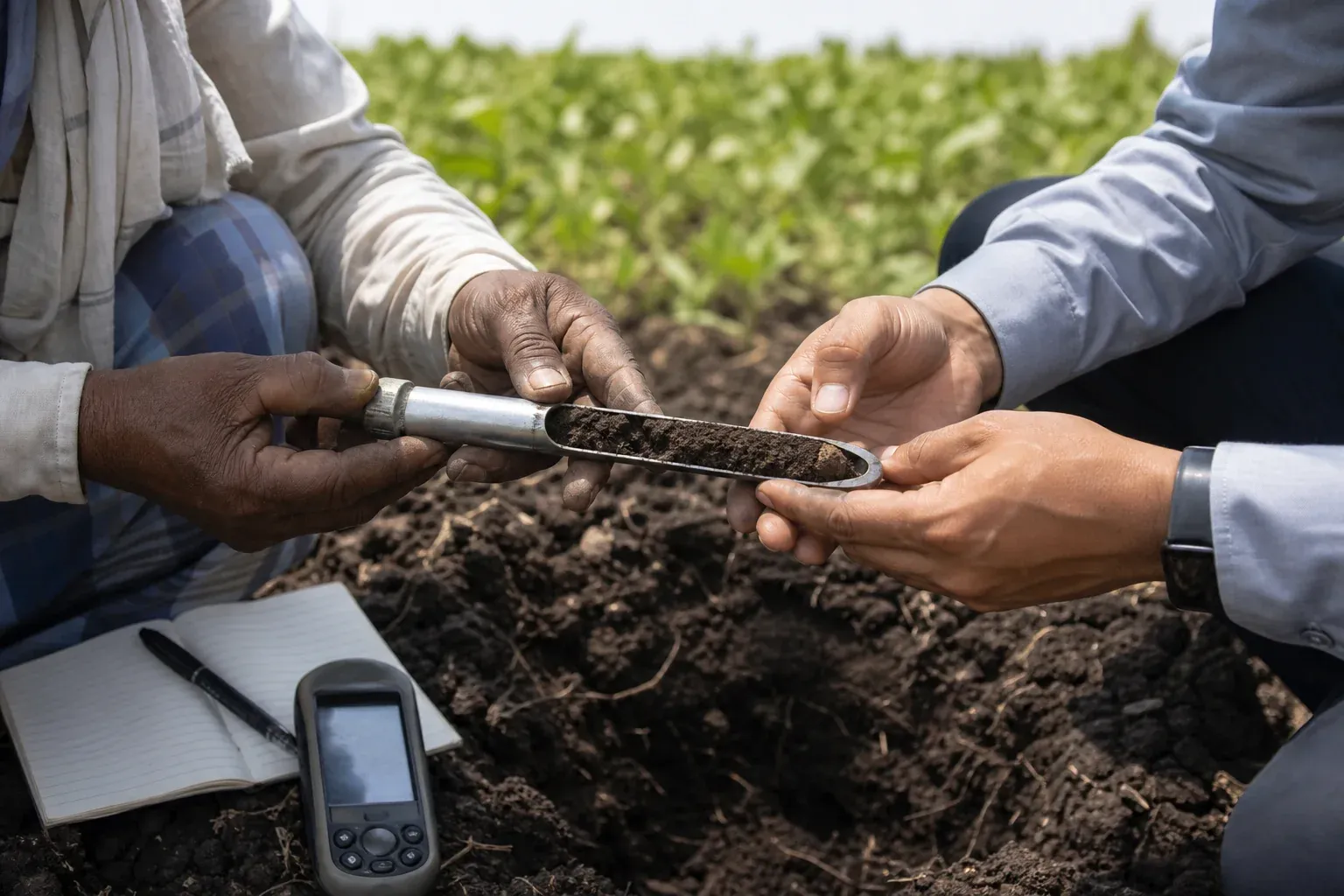
This is where Beetle Regen's own MRV traceability services were built specifically for this gap: cooperatives and agribusinesses often have the farmer relationships but not the digital data infrastructure a validator expects to see. A well-built MRV system also makes downstream monetization far easier, since buyers increasingly ask for farm-level evidence, not aggregate estimates. If your cooperative is thinking ahead to selling the resulting credits, our companion guide on how brands buy carbon credits in India shows what buyers actually check before signing a purchase agreement, and our detailed farmer-facing walkthrough on how smallholder farmers can monetize these credits is worth reading in parallel with this one.
5. Draft and Submit the Project Design Document (PDD)
The PDD is the formal application. It defines your project boundary (which farms and land are included), your baseline scenario (what would have happened without the project), your monitoring plan (how and when you'll measure results), and your estimated emission reductions or removals.
Both Verra and Gold Standard require a public stakeholder consultation period before submission. This means notifying local communities and giving them a window to raise concerns, usually 30 days. Document this process carefully; validators check for evidence that consultation actually happened, not just that a notice was posted.
Once the PDD is complete, it goes through the registry's online submission portal alongside supporting evidence: land tenure or usage agreements, farmer enrollment lists, and your baseline MRV data from Step 4. Incomplete submissions are the most common cause of avoidable delay at this stage.
6. Validation: Independent Third-Party Review
Validation is where an accredited Validation and Verification Body (VVB), a firm independent of both you and the registry, reviews your PDD against the chosen methodology's requirements. This typically includes a document review, farmer interviews, and often a site visit to confirm that what's on paper matches what's happening in the field.
Common findings that delay approval include missing baseline data for a subset of enrolled farms, unclear project boundaries where plot ownership changed mid-season, and monitoring plans that don't specify measurement frequency clearly enough. Build buffer time into your project schedule for at least one round of validator queries; it's the norm, not the exception.
7. Verification and Credit Issuance
After validation, your project is registered and monitoring begins in the field. A separate verifier, sometimes the same VVB firm but acting in a distinct role, later reviews the monitoring period's actual results: soil carbon change, biochar volumes produced, or methane reduction achieved through AWD. Only after this verification step does the registry issue tradable carbon credits.
First issuance typically arrives 12 to 18 months after monitoring starts, since most methodologies require at least one full growing season of data. After that, verification cycles repeat every one to three years depending on the methodology, generating fresh credit batches each time.
8. Aggregating Smallholder Farms to Meet Scale Requirements
Almost no Indian cotton or paddy smallholder farms 2 to 6 acres in size can register a viable carbon project alone. The fixed costs of validation and MRV setup don't scale down proportionally with plot size. This is why cooperative aggregation matters so much in practice: pooling 100, 500, or 2,000 smallholder plots under a single PDD spreads registration and verification costs across a much larger tonne count, making the per-farmer economics work.
Aggregation also strengthens your MRV story. A cooperative with centralized digital record-keeping across all member farms presents a more consistent, auditable dataset than dozens of individual farmers each keeping separate paper logs. If your cooperative is exploring this route, our detailed walkthrough on how smallholder farmers can sell carbon credits in India picks up exactly where this article ends, covering pricing, buyer negotiation, and payment distribution once credits are issued. For a broader look at what real carbon project sites look like on the ground in India, see biochar projects in India: scaling carbon insetting for textile supply chains.
It's also worth understanding how registration decisions connect to what corporate buyers actually want. Many brands now distinguish between generic offsets and traceable insetting projects; our piece on what buyers really want from climate projects in 2026 explains why traceability, not just tonnage, increasingly drives which projects get funded.
Frequently Asked Questions
How long does carbon project registration take in India?
Most agricultural carbon projects take 12 to 24 months from initial eligibility screening to first credit issuance. The baseline MRV data collection and validation stages are usually the two biggest time drivers, not the registry paperwork itself.
Can a single smallholder farmer register a carbon project?
Rarely on their own. Registration costs and methodology requirements are built around scale, so cooperatives, farmer producer organizations, or aggregators typically pool many small plots under one project design document.
What does MRV traceability actually mean for buyers?
It means every credit a buyer purchases can be traced back to a specific farm, a documented practice change, and a measured outcome, rather than an averaged regional estimate. Brands facing Scope 3 disclosure requirements increasingly demand this level of detail before they'll count a credit toward their climate targets. For more on what this traceability requires operationally, see our guide on why traceability in cotton matters for brand compliance.
What KPIs should a cooperative track once a project is registered?
Soil organic carbon change, biochar volume produced, farmer enrollment retention, and yield stability are the four most requested metrics by both registries and buyers. Our detailed breakdown in what KPIs should you track in a regenerative cotton program covers how to build a reporting cadence around these.
Registering a carbon project in India is a technical process, but it doesn't have to be one your cooperative navigates alone. Beetle Regen works directly with farmer cooperatives and agribusinesses across India's cotton and paddy belts to build the MRV traceability systems, methodology selection, and validator-ready documentation this process demands. If your cooperative is weighing whether biochar, AWD, or soil carbon is the right registration path, contact us to walk through your specific land, crop, and farmer profile before you draft a single document.