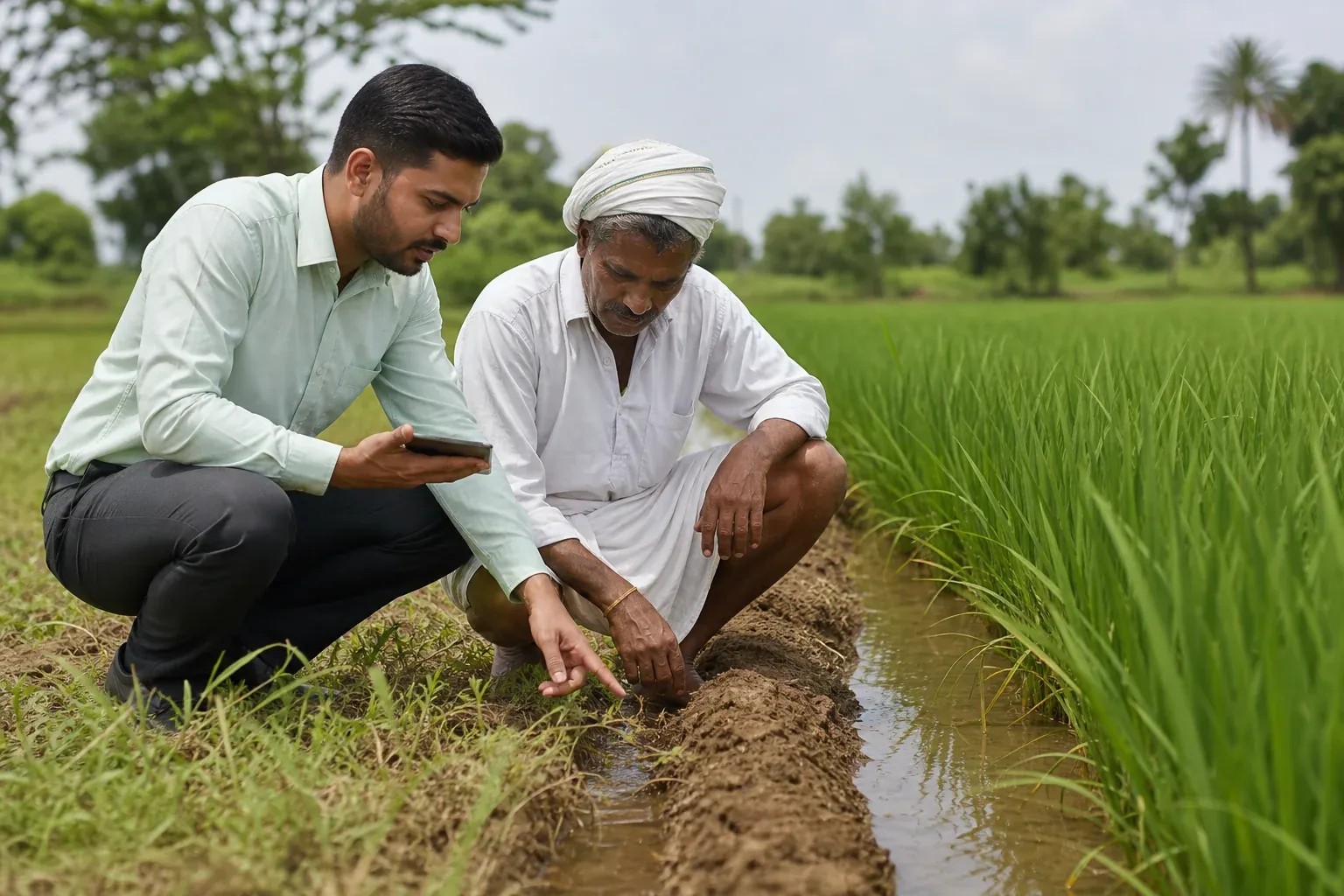
How to Onboard Rice Farmers Into an AWD Program
You onboard rice farmers into an AWD program through five linked steps: screen each paddy field for bunding and water control, recruit through cooperatives rather than farm by farm, run hands-on training on safe drawdown depth, install simple water-level monitoring tubes on every plot, and set up MRV tracking before the first wetting cycle begins. Skip the field screening step and you enroll farmers whose plots physically cannot hold or drain water on schedule, which wastes training time and stalls carbon credit issuance later.
Key Takeaways
- Screen before you recruit: A field needs functional bunds and a reliable irrigation source before it qualifies for Alternate Wetting and Drying; skipping this step is the single biggest cause of dropout.
- Group-based onboarding cuts cost: Recruiting through a cooperative or farmer producer organization reduces per-farmer onboarding cost compared to individual farm visits, because training, data collection, and monitoring tools scale across a shared plot cluster.
- 15 cm is the safe drawdown mark: Farmers should re-flood when the water table drops about 15 centimeters below the soil surface, checked using a simple perforated field tube.
- MRV must start before the first cycle, not after: Plot IDs, farmer IDs, and water-level logs need to exist before the first drying event, or that event cannot count toward a verified carbon claim.
- Payment timing drives retention: Farmers who see payment tied clearly to verified drying events stay in the program longer than those given vague seasonal promises.
At a Glance: AWD Onboarding Checklist
| Onboarding Stage | What Happens | Typical Timing | Who Leads It |
|---|---|---|---|
| Field screening | Check bunds, irrigation source, soil drainage | 2-4 weeks before season start | Cooperative agronomist |
| Group recruitment | Explain AWD, methane cuts, and credit income to cooperative members | 4-6 weeks before season start | Program manager + cooperative leadership |
| Training | Field days on tube installation, drawdown timing, re-flooding cues | 2-3 weeks before transplanting | Field trainers |
| Monitoring setup | Install perforated water tubes, assign plot IDs | At transplanting | Field technicians |
| MRV activation | Link farmer ID, plot ID, and water logs to the tracking system | Before first wetting cycle | MRV team |
| Ongoing monitoring | Photo verification, periodic spot checks | Throughout the season | Field technicians |
| Payment cycle | Payments tied to verified drying events | Post-harvest or per verified milestone | Cooperative + program finance |
1. Screen Paddy Fields Before You Recruit Anyone
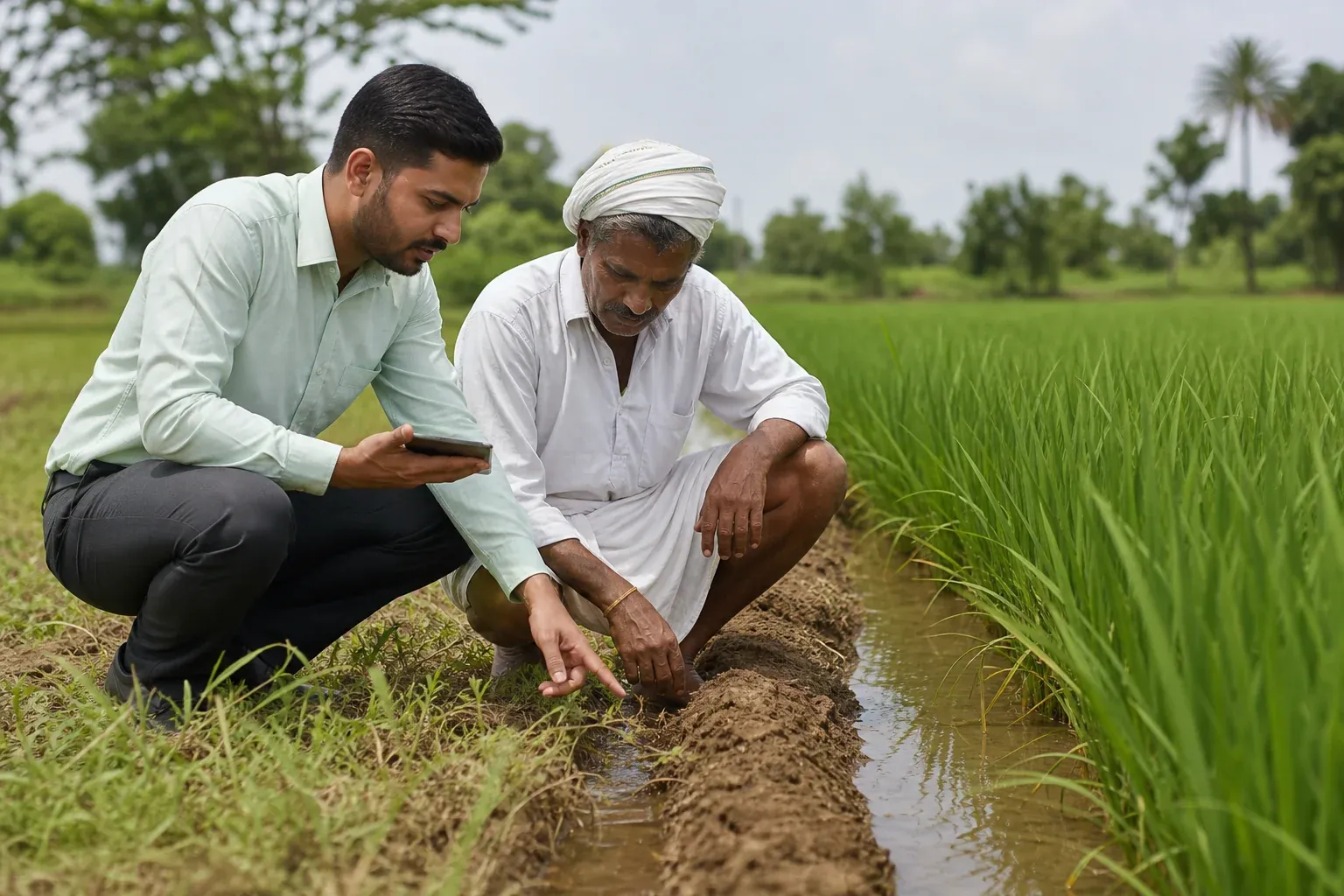
Not every paddy plot is ready for Alternate Wetting and Drying. A field needs intact bunds, because water has to hold at a set depth without leaking away overnight. It needs a controllable irrigation source, whether that's a tube well, canal turn, or pump, so the farmer can re-flood on demand rather than waiting for a shared schedule.
Cooperative agronomists should walk each candidate plot before enrollment, not after. Check soil texture too: heavy clay holds water longer and dries more predictably than sandy loam, which drains fast and can dry out before the safe re-flood window. A quick soil pinch test and a look at last season's flooding pattern tell you most of what you need.
Fields with unreliable water access, cracked or poorly maintained bunds, or a history of flash flooding should wait a season. Enrolling them anyway sets the farmer up to fail the practice and wastes MRV resources on data that will never qualify for a carbon claim. For the underlying water science behind these thresholds, our field programs across India and Bangladesh apply the same screening logic before any training begins.
2. Recruit Farmers Cooperative by Cooperative, Not Farm by Farm
Door-to-door recruitment works, but it's slow and expensive at scale. Cooperatives and farmer producer organizations already have trust networks, shared irrigation schedules, and group meeting structures you can use instead of building outreach from zero.
Start with the cooperative's executive committee. Walk them through what AWD actually changes: fields get flooded, then allowed to dry to about 15 centimeters below the surface, then reflooded, instead of staying continuously submerged. That drying period is what cuts methane, because standing water is what feeds the anaerobic bacteria responsible for most of rice farming's methane output.
Expect real skepticism about yield. Farmers who have flooded continuously for generations reasonably worry that any change to water management will hurt output. Address this directly with local data where you have it, and be honest that AWD needs closer field attention in the first season than continuous flooding does. Farmers who feel misled about the learning curve are the ones who quit mid-season.
Carbon credit income should be framed as a secondary benefit tied to verified performance, not a guaranteed check. Overpromising on credit revenue before MRV data exists damages trust faster than any other single mistake in this process. Our earlier guide on how carbon projects get registered in India covers the verification chain that ultimately determines when and how much a farmer earns.
3. Run a Training Curriculum That Farmers Can Actually Use
Classroom sessions alone don't change field behavior. Effective AWD training happens in the paddy itself, with a perforated field water tube in hand, showing farmers exactly how to read the water table and when to re-flood.
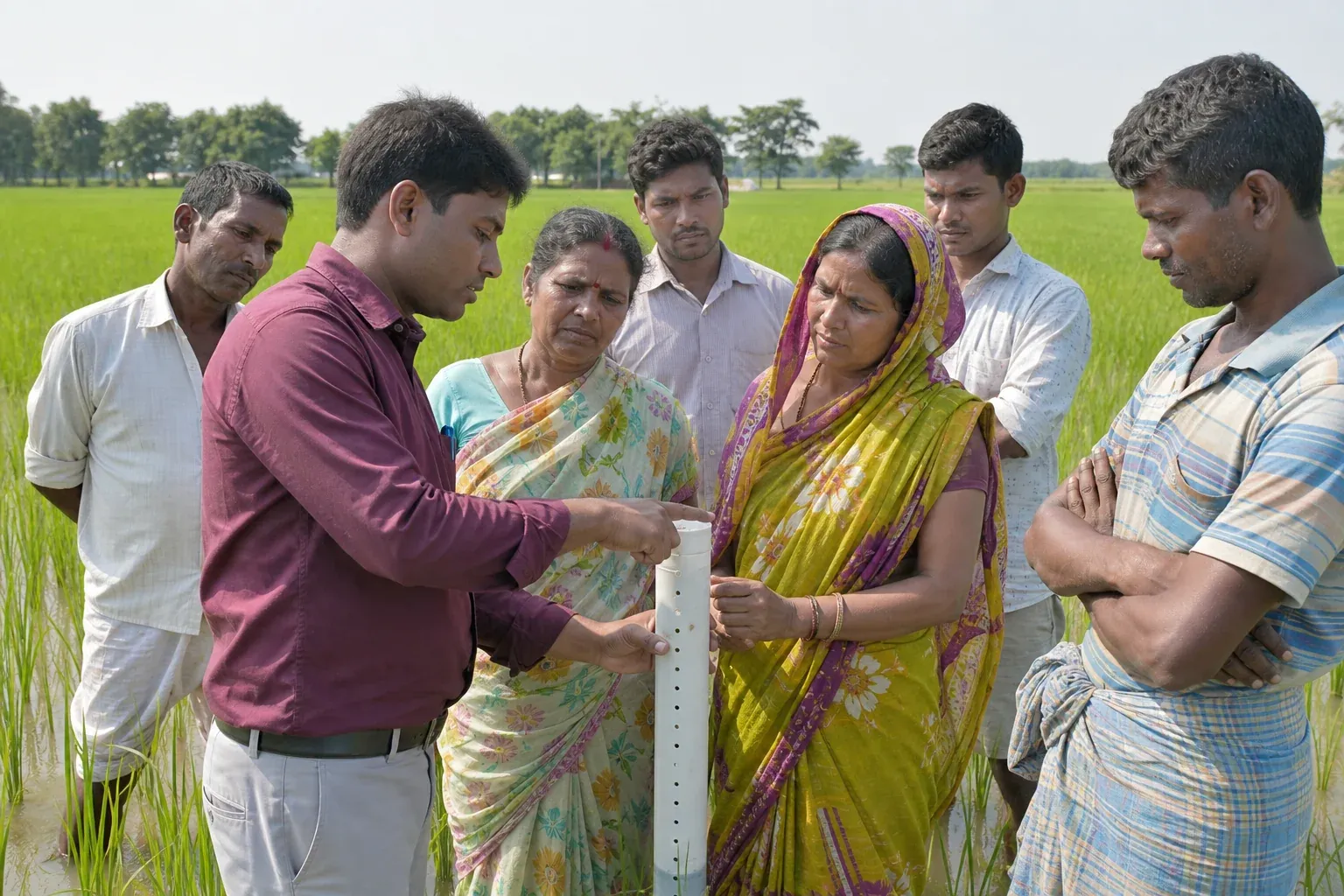
Build the curriculum around four practical sessions rather than one long lecture. Session one covers why drying matters and what methane reduction looks like in plain terms. Session two is hands-on tube installation, done plot by plot so every farmer installs at least one themselves. Session three walks through the drawdown-to-reflood cycle across a full week, using a real field as the example. Session four covers what to do when rain interferes with the schedule, since unplanned rainfall is the most common reason farmers report confusion.
Materials need to be in the local language, with diagrams instead of dense text wherever possible. Include women farmers as primary trainees, not just as attendees standing behind male household heads, since women often manage day-to-day field irrigation decisions in many paddy households. Our detailed piece on women farmers' participation in regenerative programs lays out why this inclusion changes program retention.
For the technical mechanics behind methane suppression and drawdown science, the deeper field guide on rice methane reduction covers the agronomy in more depth than a training curriculum needs to.
4. Install Simple Monitoring Tools on Every Plot
A perforated PVC field water tube, sunk about 20 centimeters into the soil with holes drilled along its length, is the standard low-cost tool for tracking water depth. Farmers can read it with a simple ruler or a marked stick, no electronics required.
Assign each enrolled plot a unique ID at this stage, even if your program is still small. Retrofitting plot IDs after a season has already started creates gaps in your data history that are hard to fix later. Tie that ID to the farmer's name, plot size, and GPS coordinates in one shared record from day one.
Photo-based verification adds a cheap second layer of proof. A dated photo of the water tube reading, taken on a smartphone during each drying and re-flooding event, gives auditors a visual cross-check against the farmer's logged numbers.
Why would regenerative farmers want to use crop rotation instead of monoculture?
Crop rotation breaks pest and disease cycles that build up when the same crop grows in the same soil season after season, and it varies root depth and nutrient demand so the soil doesn't get stripped of the same minerals repeatedly. Monoculture paddy systems that flood continuously also compact soil structure over time; rotating in a dry-season pulse or oilseed crop, which AWD's drying phases make more feasible, helps restore aeration and organic matter between rice cycles.
5. Set Up MRV Before the First Wetting Cycle
Measurement, reporting, and verification cannot be an afterthought bolted onto a program that's already running. Every farmer ID and plot ID needs to exist in your MRV system before anyone dries out a field for the first time, because a drying event with no prior baseline record can't be counted toward a carbon claim.
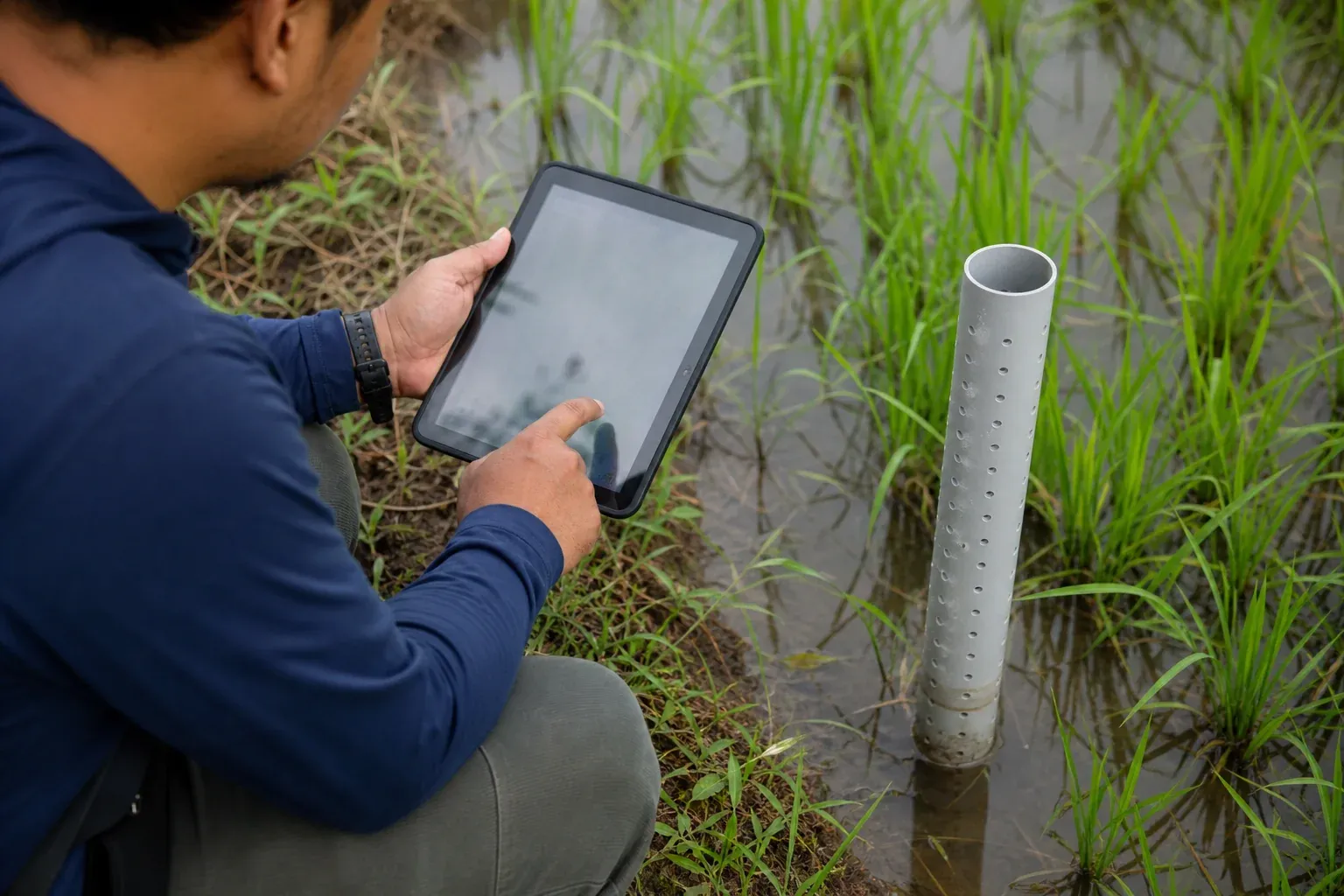
Set up a simple data flow: farmer logs the water tube reading, the field technician confirms it during a periodic visit, and the reading gets entered against that plot's unique ID with a timestamp. Where budget allows, cross-check a sample of plots against satellite soil moisture data or low-cost sensors to catch reporting errors early.
Cooperatives that build this discipline early avoid the scramble that happens when a buyer or registry auditor asks for a full season of records six months after the fact. Our guide on what KPIs to track in a regenerative program applies directly to AWD data structures as well, even though it was written for cotton.
6. Track Adoption and Pay Farmers on Time
A shared dashboard, even a basic spreadsheet shared across the cooperative in its early stages, lets program managers see which plots are following the drawdown schedule and which have gone quiet. Quiet plots need a follow-up visit, not just a note.
Payment structure matters more than payment size for retention. Farmers who understand that payment is tied to verified drying events, not to a vague end-of-season bonus, plan their season around the practice with more confidence. Publish the payment schedule at enrollment, not after the season closes.
Common Onboarding Mistakes Cooperatives Should Avoid
- Skipping field screening to hit enrollment targets: Plots without water control fail mid-season and drag down your program's overall verified acreage.
- Training once and never returning: A single field day doesn't cover what farmers encounter across a full season of weather variability; plan at least one mid-season refresher.
- Weak recordkeeping in the first cycle: Missing plot IDs or undated readings in the first wetting cycle can invalidate that whole cycle's data for carbon accounting purposes.
- Overpromising credit income before verification exists: Setting expectations on unearned numbers erodes trust faster than any delay in payment does.
What Comes After Onboarding?
Once a cooperative has one season of clean AWD data, scaling to neighboring plots and additional cooperatives gets faster, because the field screening criteria, training materials, and MRV templates are already built. The harder work of cutting methane at scale then shifts from onboarding logistics to season-over-season consistency.
For the technical detail behind water depth science and methane suppression that this operational guide intentionally kept light, read our companion piece on how carbon insetting works across our farm programs, and see how rice-specific credit issuance connects to buyer demand in our guide on what climate project buyers actually want in 2026.
Cooperatives should also track how AWD interacts with broader soil health goals over multiple seasons, not just methane numbers, since a paddy field's long-term productivity depends on more than water management alone. That interaction between drying cycles and soil structure over several years is still an area our field teams are actively measuring rather than one with settled answers.
According to the US EPA's data on rice cultivation methane, flooded paddies are among the largest agricultural methane sources globally, which is why drawdown timing accuracy matters so much for credit integrity. The FAO's water-saving technologies module also documents AWD's water use reduction alongside its methane benefits, useful context if your cooperative is fielding questions from skeptical members.
If your cooperative or program team is ready to build a structured AWD onboarding pipeline, from field screening through MRV setup, contact us to talk through what a season-one rollout would look like for your rice farming region.