How to Set Up Cotton Supply Chain Traceability
Picture this: your brand's sustainability report is due in six weeks. Your sourcing team has contracts with three ginners in Gujarat and two spinning mills in Tamil Nadu. But when your ESG auditor asks for farm-level origin data — GPS coordinates, farming practice records, soil health indicators — the answer is silence. The data simply does not exist in a form anyone can verify.
This is the exact moment when the difference between a sustainability claim and a traceable supply chain becomes painfully clear. Setting up supply chain traceability for cotton brands is not a one-time audit exercise. It is a structured, multi-tier data infrastructure that connects what happens at the farm gate to what appears on your ESG report — and ultimately, to what your buyers and regulators will accept as credible evidence.
This guide walks you through each step of that setup process: from defining your scope and mapping your tiers, to capturing farm-level data, implementing digital tracking, and generating audit-ready reports that meet the expectations of buyers like H&M, Primark, and Marks & Spencer, as well as frameworks like the EU CSRD.
Why Cotton Traceability Is No Longer Optional
The regulatory and commercial pressure on textile brands to prove their sustainability claims has shifted from gradual to urgent. The EU Corporate Sustainability Reporting Directive (CSRD), which came into full force for large companies in 2025 and extends to mid-size firms through 2026, requires brands to disclose material sustainability information across their value chains, including Scope 3 emissions from purchased goods. Cotton, which accounts for a significant share of most apparel brands' upstream emissions, sits squarely in that disclosure zone.
Beyond regulation, major retailers are tightening their supplier requirements. Buyers increasingly ask for transaction certificates, farm-level origin documentation, and third-party verified sustainability data before renewing contracts. A brand that cannot answer "where exactly did this cotton come from, and how was it grown?" is at a competitive disadvantage, and, under CSRD, potentially a compliance risk.
Traceability also matters for carbon accounting. If your brand is working toward net zero targets, your Scope 3 Category 1 emissions, the footprint embedded in your raw materials, cannot be credibly reduced without knowing what farming practices produced those materials. MRV and traceability systems for cotton are the foundation on which any credible carbon insetting or reduction claim must rest.
The good news: setting up a functional traceability system is achievable, even for brands sourcing from smallholder-dominated supply chains in India and Bangladesh. The key is following the right sequence.
1. Define Your Traceability Scope and Objectives
Before selecting any platform or tool, you need to answer a more fundamental question: what exactly are you tracing, and why? The answer shapes every subsequent decision.
What Are You Tracing?
Cotton supply chain traceability can cover several distinct data layers, and most brands do not need all of them from day one:
- Fiber origin: Which farm, district, or region did the cotton come from? This is the baseline layer most buyers now expect.
- Farming practices: Was the cotton grown using regenerative methods, reduced chemical inputs, or certified organic practices? This layer supports sustainability claims.
- Carbon and soil data: What is the carbon sequestration potential of the farming system? This layer feeds into Scope 3 emissions calculations and carbon insetting programs.
- Social compliance: Are labor standards, fair wage practices, and farmer income data documented? This layer addresses human rights due diligence requirements.
Most brands starting their traceability journey should prioritize fiber origin and farming practices first, then layer in carbon and social data as the system matures.
Set Compliance-Driven Objectives
Your objectives should map directly to the compliance frameworks and buyer requirements you face. Common drivers include:
- CSRD double materiality reporting on upstream Scope 3 emissions
- Buyer audit requirements from major retailers
- Net zero target verification for science-based targets (SBTi)
- Greenwashing risk mitigation, ensuring marketing claims are substantiated
Defining these objectives upfront prevents the common mistake of collecting data that looks comprehensive but does not actually answer the questions your auditors or buyers will ask. For a broader view of how traceability connects to your net zero strategy, the Fashion Brand Net Zero Roadmap provides a useful strategic framework.
2. Map and Onboard Your Supply Chain Tiers
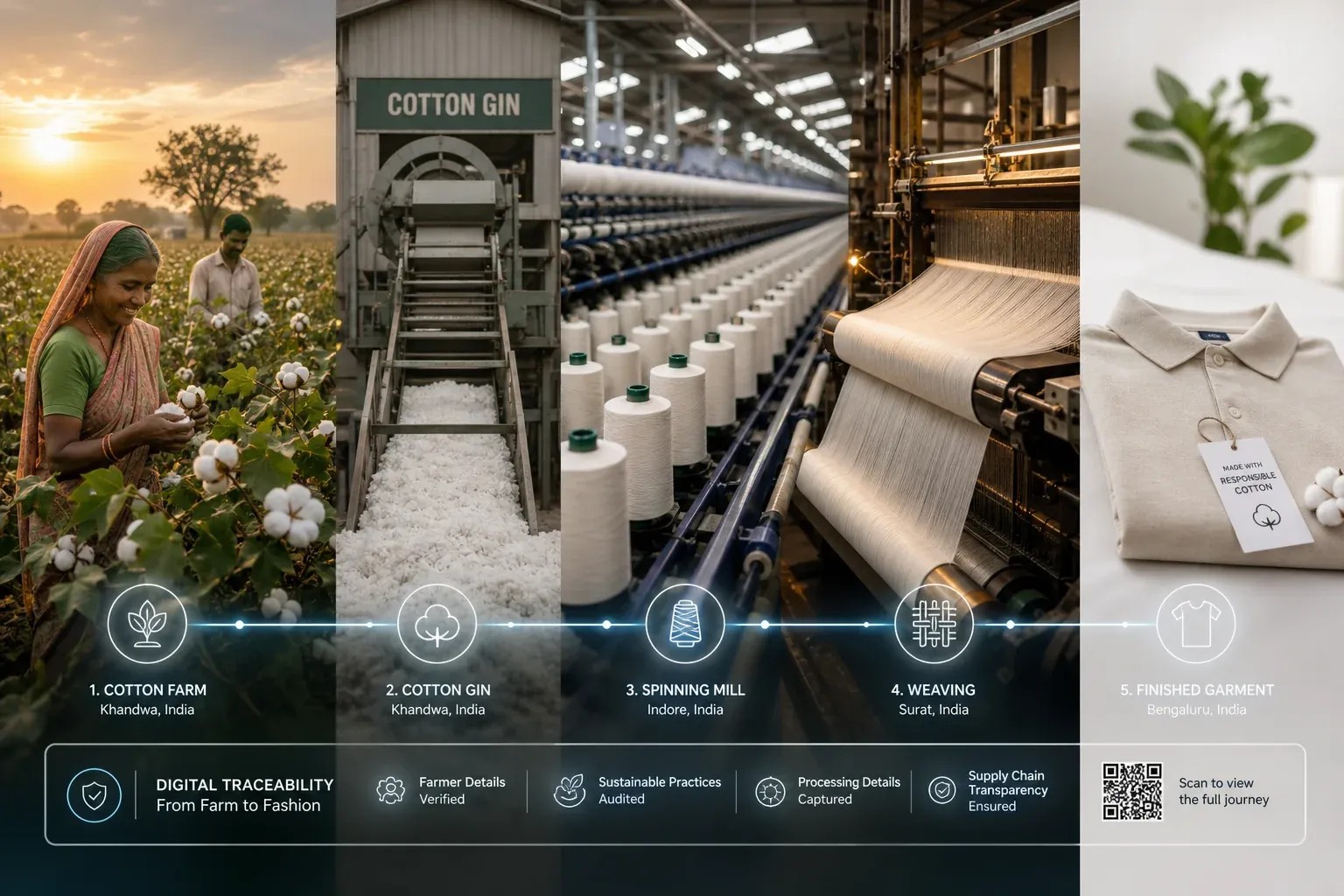
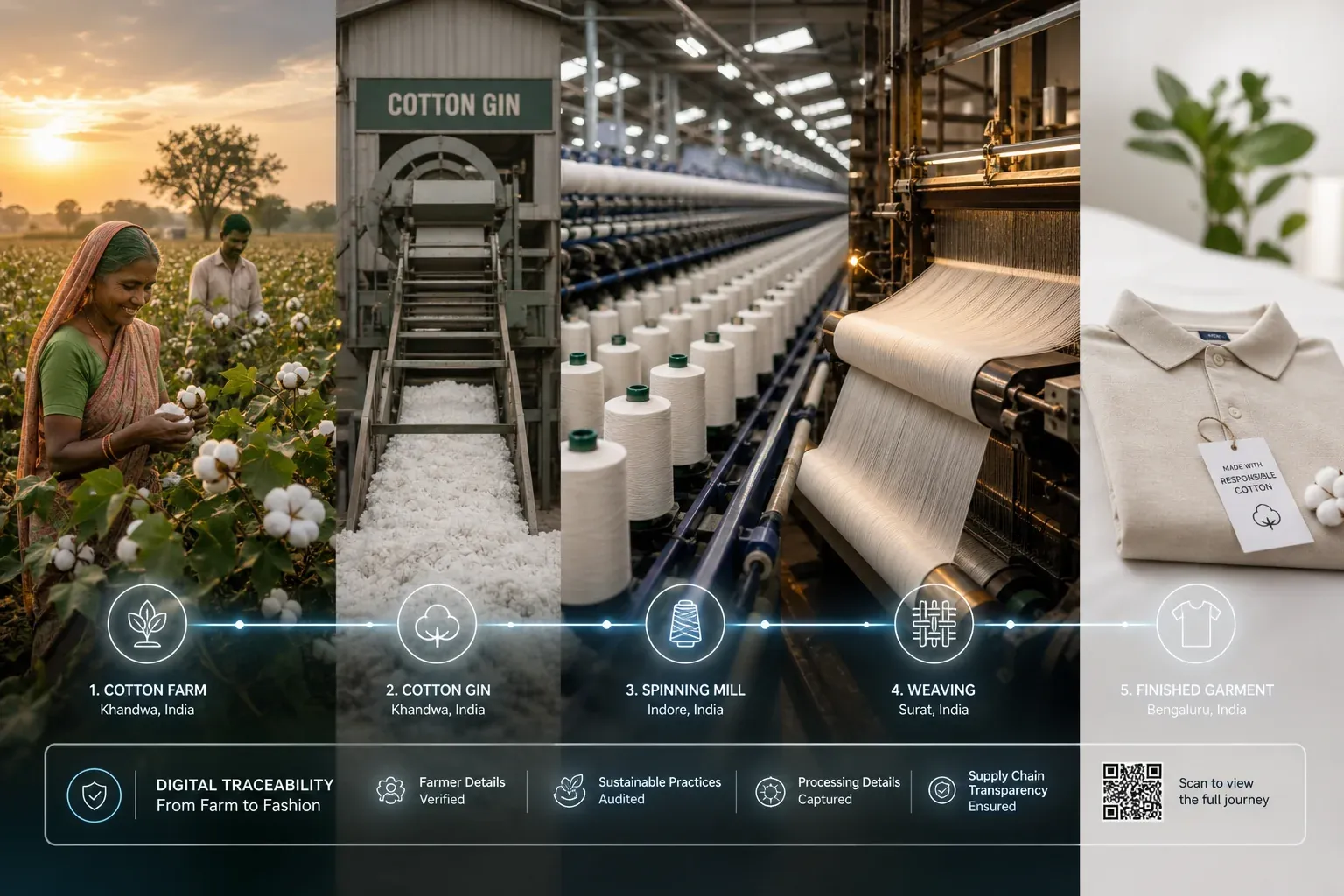
A cotton supply chain typically runs through five to seven distinct tiers between the farm and the finished garment. Traceability requires you to document each one, and to establish data-sharing relationships at every stage.
The Standard Cotton Supply Chain Tiers
- Farm: Smallholder or commercial cotton growers. In India, the average cotton farm is under 2 hectares, meaning your supply chain may involve hundreds or thousands of individual farmers.
- Ginning: The facility that separates cotton fiber from seeds. This is often the first point where fiber from multiple farms is mixed, making it a critical traceability checkpoint.
- Spinning: Converts raw fiber into yarn. Again, a potential mixing point if not managed carefully.
- Weaving or Knitting: Converts yarn into fabric.
- Processing and Finishing: Dyeing, printing, and finishing treatments.
- Cut, Make, Trim (CMT): Garment manufacturing.
- Brand / Retailer: The finished product reaches the brand's inventory.
Conducting a Supplier Mapping Exercise
Start by documenting every supplier at each tier. For many brands, Tier 1 (CMT) and Tier 2 (fabric mills) are already known. The challenge is Tier 3 and beyond, spinners, ginners, and farms, where data is sparse or entirely absent.
A practical approach: work backward from your existing Tier 1 suppliers. Ask each one to identify their yarn sources. Then ask those spinners to identify their ginners. Then ask ginners to identify the farmer groups or cooperatives they source from. This cascading disclosure process is time-consuming but necessary. Building it into supplier contracts as a condition of business accelerates compliance significantly.
For brands sourcing from India and Bangladesh, engaging with farmer cooperatives and aggregators early in this process is essential. Cooperatives often represent hundreds of smallholder farmers and can serve as a single data-collection interface rather than requiring individual farmer outreach at scale. Learn more about how regenerative cotton sourcing in India and Bangladesh works in practice.
3. Establish Farm-Level Data Capture Points
Farm-level data is the foundation of any credible traceability system. Without it, your chain of custody begins at the gin, which means you can trace the fiber's journey through processing, but you cannot verify where or how it was grown. That gap is precisely what regulators and buyers are now closing in on.
What Data to Collect at the Farm Gate
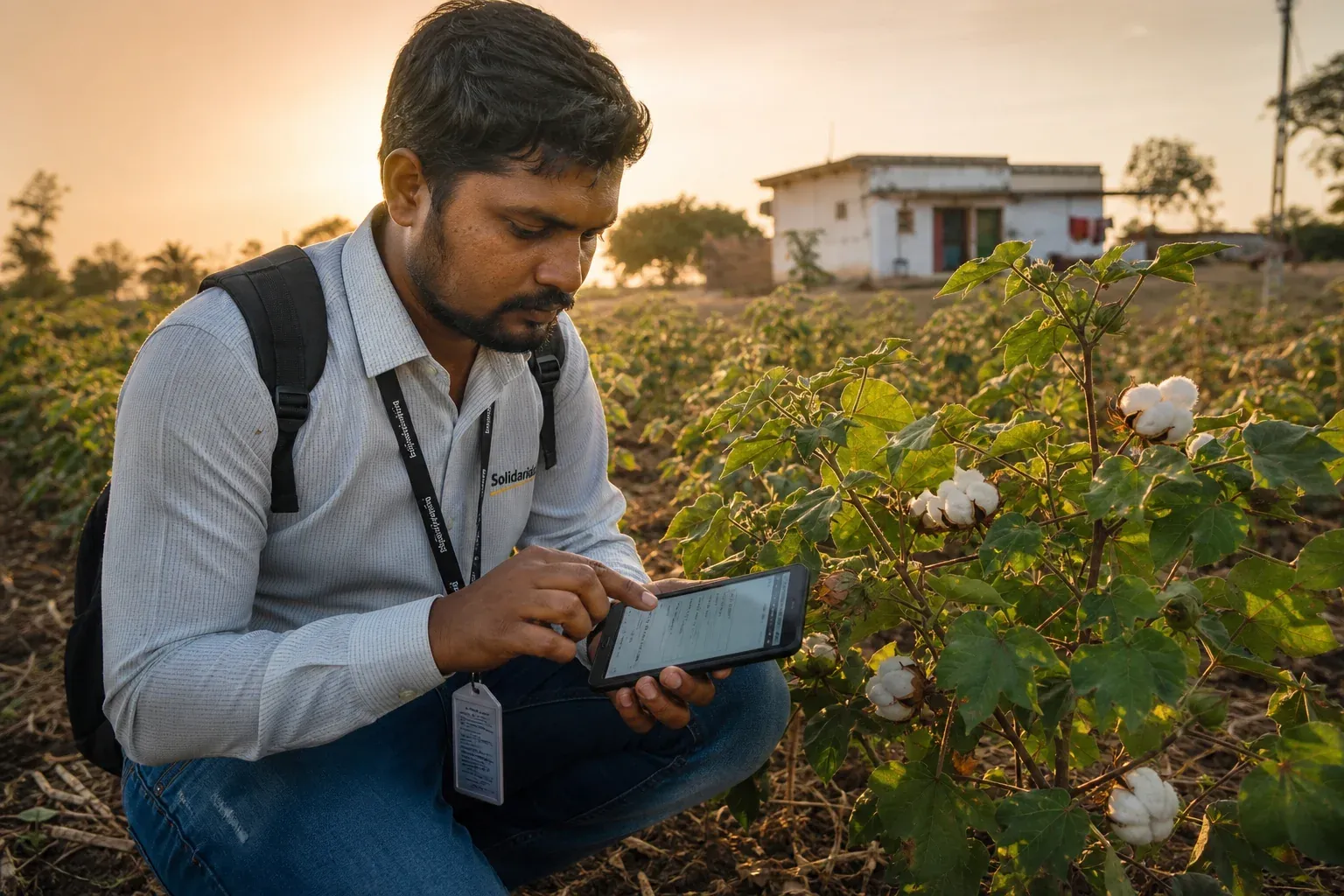
The minimum viable dataset for farm-level traceability includes:
- GPS coordinates and farm boundary mapping: Establishes the physical location and size of each farm plot.
- Farmer identity and land tenure documentation: Confirms who is farming the land and their legal right to do so.
- Input records: Pesticide, fertilizer, and water usage data. Critical for organic and regenerative claims.
- Yield data: Kilograms of seed cotton harvested per acre, per season.
- Farming practice records: Cover cropping, composting, reduced tillage, biochar application, and other regenerative practices. These feed directly into carbon sequestration calculations.
- Soil health indicators: Organic carbon content, pH, and microbial activity, measured at baseline and annually.
For brands participating in carbon insetting programs, soil health and farming practice data are not optional, they are the basis on which carbon credits are calculated and verified. The carbon sequestration in agriculture framework explains how these measurements translate into verified carbon outcomes.
Using Mobile-Based Field Data Collection
Collecting this data from thousands of smallholder farmers across multiple districts requires a mobile-first approach. Field agents, typically agronomists or program coordinators employed by the traceability program, visit farms and enter data directly into a mobile application. The best systems work offline (critical in rural areas with poor connectivity) and sync to a central database when connectivity is restored.
Key features to look for in a field data collection tool:
- Offline functionality with automatic sync
- GPS-enabled farm boundary capture
- Photo documentation capability
- Multi-language support (Hindi, Marathi, Telugu, Bengali, etc.)
- Integration with central traceability platforms
Integrating MRV Protocols
Data collection alone is not traceability. The data must be measured, reported, and verified (MRV) against a recognized methodology. For regenerative cotton programs, this means selecting an MRV protocol, such as those developed by Verra, Gold Standard, or soil carbon-specific methodologies, and ensuring your field data collection aligns with that protocol's requirements from the start. Retrofitting data to a protocol after collection is expensive and often impossible.
4. Implement Digital Tracking Across Processing Stages
Once farm-level data is captured, the next challenge is maintaining the integrity of that data as the fiber moves through ginning, spinning, weaving, and manufacturing. This is where chain-of-custody documentation becomes critical.
Assigning Batch Identifiers at the Gin
The ginning stage is the first major mixing risk. Cotton from multiple farms arrives at the gin simultaneously. Without a clear system for separating and labeling fiber by origin, traceability breaks down immediately.
The solution is to assign unique batch or lot identifiers at the point of delivery to the gin. Each batch is tagged with:
- The farm or farmer group of origin
- The date of delivery
- The weight and quality grade
- A reference to the farm-level data record in the traceability system
This batch identifier travels with the fiber through every subsequent processing stage. At each handoff, gin to spinner, spinner to mill, a transaction certificate is issued that references the batch identifier and confirms the quantity transferred.
Chain-of-Custody Documentation Through Spinning and Weaving
Transaction certificates (TCs) are the backbone of chain-of-custody documentation. Each TC records:
- The seller and buyer of the fiber or yarn
- The quantity and specification of material transferred
- The batch identifier linking back to farm origin
- Third-party verification (where applicable)
For brands seeking certification under frameworks like the Organic Content Standard (OCS) or Regenerative Organic Certified (ROC), TCs are a mandatory requirement. Even for brands not pursuing formal certification, TCs provide the audit trail that buyers and regulators expect.
Third-Party Verification at Key Stages
Self-reported data from suppliers carries inherent credibility risk. Building third-party verification into your traceability system, at minimum at the farm level and at the gin, significantly strengthens the integrity of your claims. Third-party verifiers review field data, conduct spot-check farm visits, and confirm that the quantities reported match physical records.
This verification layer is what separates a traceability system that can withstand an audit from one that looks good on paper but collapses under scrutiny. It is also what distinguishes genuine supply chain transparency from greenwashing, a distinction that is increasingly consequential as regulatory enforcement tightens. For more on how to integrate this data across your supply chain systems, see how to integrate regenerative agriculture data across supply chains.
5. Integrate Traceability Data with ESG Reporting Systems
A traceability system that lives in isolation, disconnected from your ESG reporting, carbon accounting, and compliance workflows, delivers only a fraction of its potential value. The goal is to make traceability data flow automatically into the reports and dashboards your sustainability team, auditors, and buyers actually use.
Connecting Traceability to Scope 3 Emissions Calculations
Your farm-level data, farming practices, input usage, soil carbon measurements, is the raw material for calculating the embedded carbon footprint of your cotton. When this data is structured correctly and linked to recognized emission factors, it feeds directly into your Scope 3 Category 1 calculations under the GHG Protocol.
For brands participating in carbon insetting programs, the same data that supports traceability also supports carbon credit generation and verification. This dual-use value is one of the strongest arguments for investing in robust farm-level data capture from the outset. The carbon insetting solutions guide explains how this works in practice for textile supply chains.
Feeding Data into CSRD and Sustainability Report Frameworks
The EU CSRD requires disclosure under the European Sustainability Reporting Standards (ESRS), including ESRS E1 (climate) and ESRS S2 (workers in the value chain). Both standards require supply chain data that goes beyond what most brands currently collect. A well-structured traceability system generates the underlying data that makes CSRD disclosure credible rather than estimated.
Practically, this means your traceability platform should be able to export data in formats compatible with your sustainability reporting software, whether that is a dedicated ESG platform, a spreadsheet-based model, or a third-party reporting tool. Building this integration early prevents the manual data reconciliation that consumes sustainability teams' time at every reporting cycle.
6. Generate Audit-Ready Reports and Buyer-Facing Transparency
The final output of a traceability system is documentation, reports, certificates, and dashboards that communicate your supply chain story to the audiences that matter most.
What a Complete Traceability Report Should Contain
A buyer-ready traceability report for cotton typically includes:
- Farm origin summary: Number of farms, total acreage, geographic distribution (district and state level), and farmer profile data.
- Farming practice documentation: Evidence of regenerative or sustainable practices, including input records and soil health data.
- Chain-of-custody records: Transaction certificates from farm through to finished goods, with batch identifiers at each stage.
- Carbon and environmental metrics: Soil organic carbon measurements, estimated carbon sequestration, water usage data, and biodiversity indicators where available.
- Third-party verification statements: Confirmation from an independent verifier that the data has been reviewed and validated.
- Compliance mapping: A section that maps the traceability data to specific CSRD, SBTi, or buyer audit requirements.
Formats Buyers Expect
Major retailers have specific expectations about how traceability data is presented. Some require data submission through their own supplier portals. Others accept standardized formats like the Higg Index, Textile Exchange's supplier data templates, or custom audit questionnaires. Understanding your key buyers' preferred formats before you build your reporting outputs saves significant rework later.
For brands supplying to retailers like H&M, Primark, or Marks & Spencer, traceability documentation is increasingly a pre-qualification requirement rather than a differentiator. Brands that can provide verified farm-to-fashion data are better positioned in supplier selection processes and contract renewals.
Using Dashboards for Ongoing Transparency
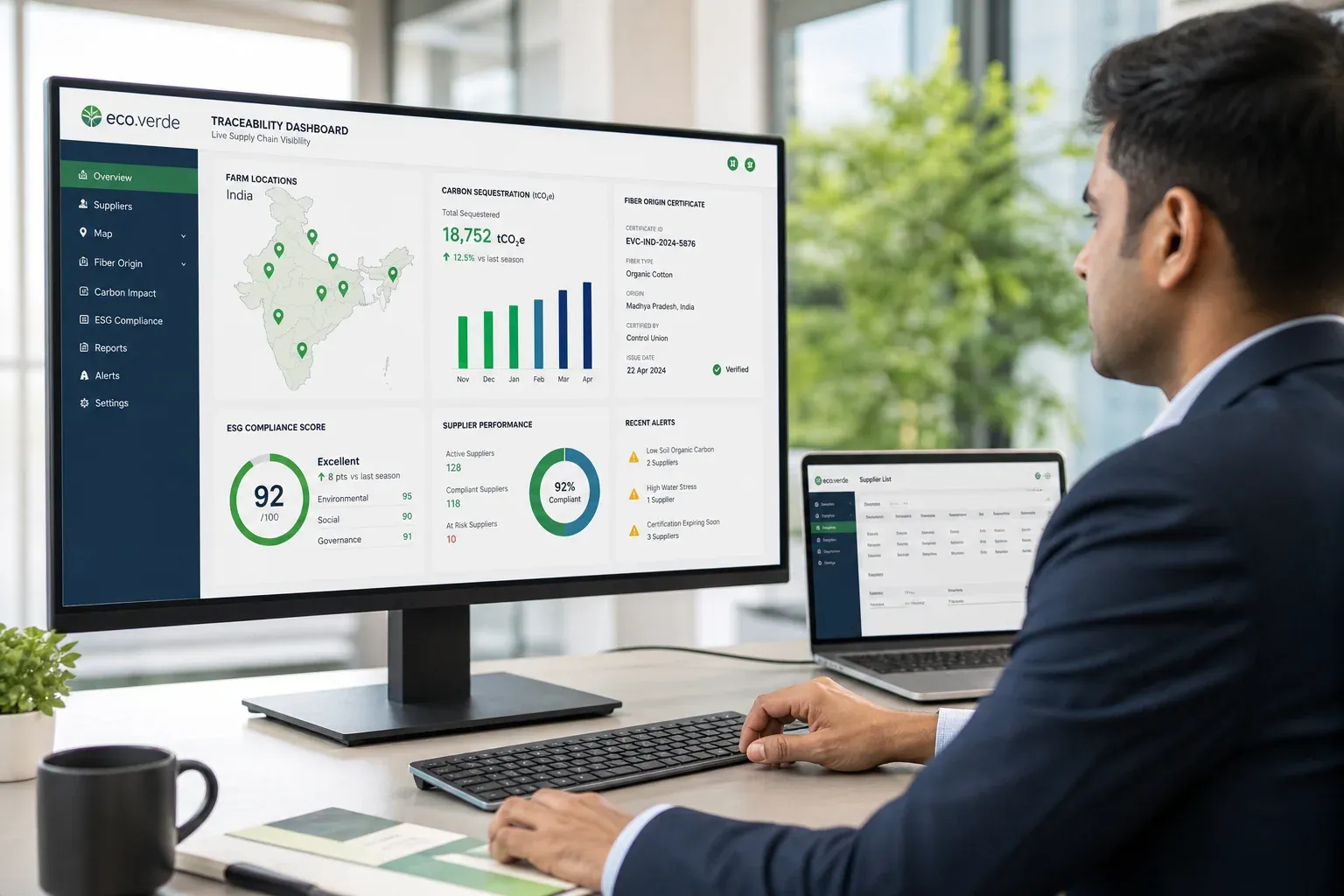
Beyond static reports, leading traceability programs use live dashboards that give brands real-time visibility into their supply chain. These dashboards typically show farm locations on a map, current season data collection status, carbon metrics, and compliance indicators. They also serve as a communication tool, some brands share a simplified version with their customers as part of their product transparency story.
Common Setup Mistakes and How to Avoid Them
Most traceability implementations that fail do so for predictable reasons. Knowing these pitfalls in advance saves time, money, and credibility.
Starting at the Mill Instead of the Farm
The most common mistake is beginning traceability at Tier 2 or Tier 3, the spinning mill or fabric mill, rather than at the farm. This produces a chain of custody that covers processing but cannot verify origin or farming practices. Buyers and regulators are increasingly aware of this gap and are specifically asking for farm-level data. Build from the farm up, not from the mill down.
Collecting Data Without a Verification Layer
Self-reported supplier data without independent verification is not traceability, it is a survey. The MRV gap is one of the most significant credibility risks in cotton sustainability programs. Budget for third-party verification from the start, even if it means covering fewer farms in the first season. Verified data from 500 farms is worth more than unverified data from 5,000.
Siloed Data Systems
Many brands end up with farm data in one spreadsheet, transaction certificates in a supplier portal, carbon data in a separate tool, and ESG metrics in yet another system. When audit time comes, reconciling these siloed datasets is a manual nightmare. Choose a traceability platform that can serve as a single source of truth, or invest in integration between your existing systems early.
Underestimating Smallholder Farmer Onboarding
Working with smallholder farmers in India and Bangladesh requires more than distributing a data collection app. Farmers need to understand why data is being collected, how it benefits them, and how to interact with field agents. Language barriers, low digital literacy, and trust gaps all require investment in farmer engagement and capacity building. Programs that skip this step see poor data quality and high dropout rates. The complete guide to regenerative agriculture covers the farmer engagement principles that underpin successful programs.
Confusing Certification with Traceability
Organic or regenerative certification confirms that a farming system meets certain standards. Traceability confirms that a specific batch of fiber came from a certified farm. These are related but distinct. A brand can have certified suppliers without traceability (no chain of custody), or traceability without certification (origin verified but practices not independently assessed). Ideally, you build both, but they require different systems and should not be conflated in your planning.
How Beetle Regen's Traceability Service Connects Farm to Fashion
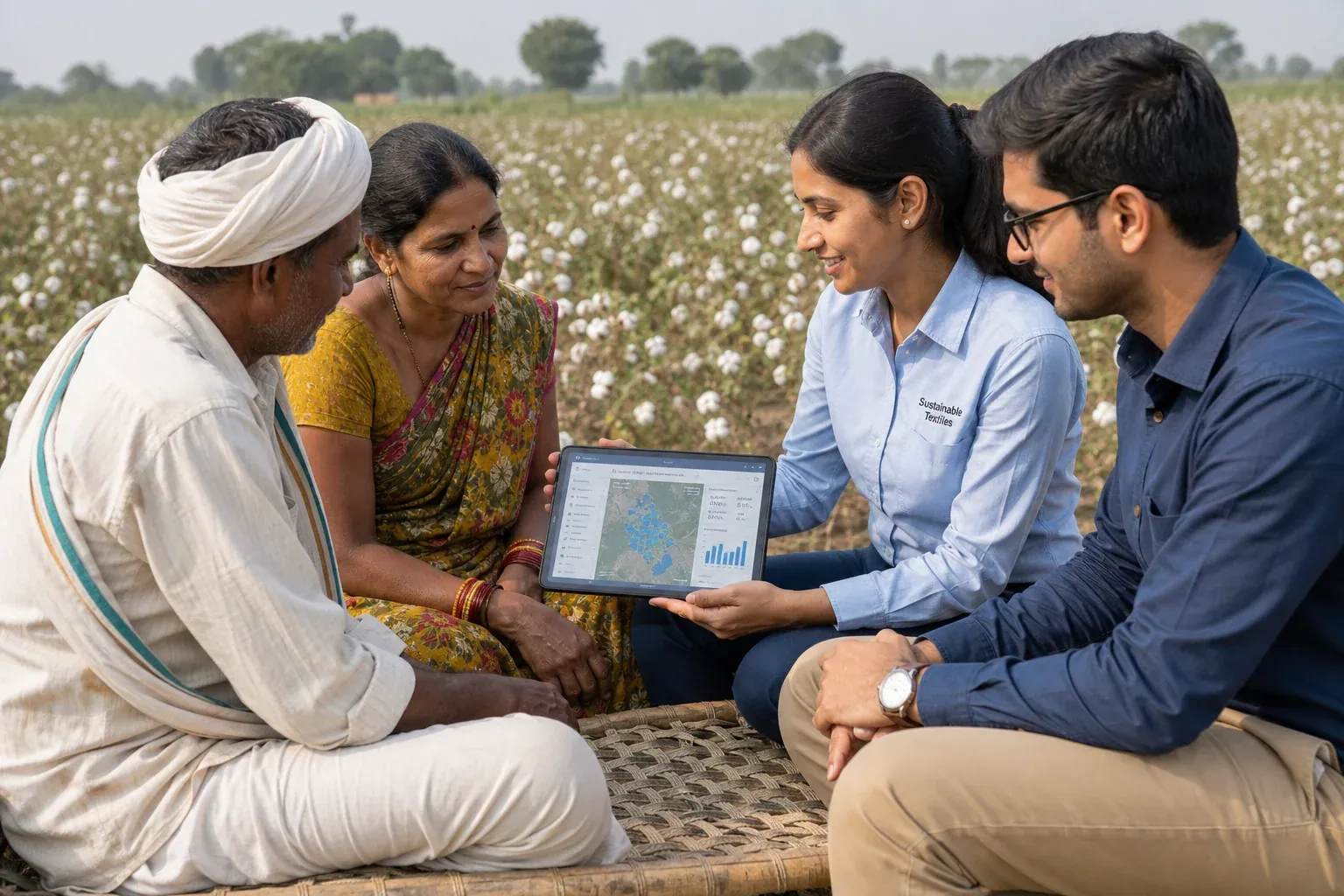
Beetle Regen's supply chain traceability service is designed specifically for the complexity of cotton sourcing from smallholder-dominated supply chains in India and Bangladesh. Rather than offering a generic software platform, Beetle Regen provides end-to-end implementation support, from farmer onboarding and field data collection through to audit-ready reporting and ESG integration.
What the Service Covers
The traceability program integrates three data streams that most standalone platforms treat separately:
- Fiber origin and chain of custody: GPS-mapped farm plots, farmer identity records, and transaction certificates from farm through to finished goods.
- Regenerative practice documentation: Field-verified records of soil health practices, input reduction, cover cropping, biochar application, and other regenerative interventions aligned with regenerative agriculture principles.
- Carbon and MRV data: Soil organic carbon measurements, carbon sequestration estimates, and MRV documentation that supports both Scope 3 reporting and carbon insetting credit generation.
This integrated approach means that a brand working with Beetle Regen gets traceability data, sustainability practice evidence, and carbon accounting inputs from a single, coherent data system, rather than having to reconcile three separate programs.
Sustainability as a Service for Brands That Need Implementation Support
For brands that lack the internal capacity to design and manage a traceability program, Beetle Regen's Sustainability as a Service model provides a fully managed solution. This includes program design, supplier engagement, field data collection, third-party verification coordination, and report generation, delivered as an ongoing service rather than a one-time project.
This model is particularly well-suited to mid-size brands that have made sustainability commitments but do not have the team size or technical infrastructure to implement traceability independently. It is also valuable for larger brands that want to pilot a traceability program in a specific sourcing region before scaling across their full supply base.
Connecting Traceability to Carbon Insetting
One of the distinctive features of Beetle Regen's approach is the direct connection between traceability data and carbon insetting outcomes. When a brand sources regenerative cotton through Beetle Regen's program, the same farm-level data that supports traceability also feeds into the carbon credit calculation for that season's crop. This means brands can simultaneously demonstrate fiber origin transparency and claim verified Scope 3 emission reductions, two of the most pressing requirements in textile ESG compliance today.
For brands exploring how carbon insetting fits into their broader decarbonization strategy, the carbon insetting solutions guide provides a detailed breakdown of how the economics and verification process work.
Frequently Asked Questions
How long does it take to set up a cotton traceability system?
A basic traceability system covering fiber origin and chain of custody can be operational within one growing season, typically four to six months from program design to first data collection. A full system including MRV-verified carbon data and ESG reporting integration usually takes two to three seasons to reach maturity, as soil carbon measurements require baseline and follow-up data points.
How much does cotton supply chain traceability cost?
Costs vary significantly based on the number of farms covered, the depth of data collected, and whether you use a managed service or build in-house. The most cost-effective approach for most brands is to partner with a program operator like Beetle Regen that already has field infrastructure, farmer relationships, and verification protocols in place, rather than building from scratch. Contact Beetle Regen directly for a program scope and cost discussion tailored to your sourcing volume and compliance requirements.
Can traceability work with smallholder farmers who have no digital access?
Yes. The most effective smallholder traceability programs use field agents rather than expecting farmers to self-report digitally. Trained agronomists visit farms, collect data on behalf of farmers using mobile tools, and build the data record centrally. Farmers receive feedback on their data, soil health results, carbon metrics, practice recommendations, through the same field agent network. This model works well across India and Bangladesh, where smallholder farm sizes and digital literacy vary widely.
What is the difference between traceability and certification?
Certification (organic, regenerative, fair trade) confirms that a farming system meets a defined standard. Traceability confirms that a specific batch of fiber can be tracked from a specific farm through to a finished product. Both are valuable, but they answer different questions. Certification answers "how was this cotton grown?" Traceability answers "where did this specific cotton come from?" A robust program delivers both.
Which regulatory frameworks require cotton traceability?
The EU CSRD requires value chain sustainability disclosure, which effectively mandates supply chain data collection for brands selling in the EU. The EU Deforestation Regulation (EUDR) requires geographic origin data for certain commodities. The German Supply Chain Due Diligence Act (LkSG) requires risk assessment and documentation across supply chains. Beyond regulation, major retailers increasingly require traceability as a supplier qualification criterion. The MRV and traceability systems guide covers the regulatory landscape in more detail.
Take the Next Step Toward Verified Supply Chain Traceability
Setting up supply chain traceability for cotton is not a single project, it is a capability that your brand builds over time, season by season, tier by tier. The brands that start now, even with a limited scope, will be significantly better positioned when buyer requirements tighten and regulatory deadlines arrive.
Beetle Regen works with textile brands and sourcing teams to design and implement traceability programs that are built for the realities of Indian and Bangladeshi cotton supply chains, smallholder farmers, complex processing networks, and the dual need for fiber origin data and carbon accounting. If your team is ready to move from sustainability commitments to verified, audit-ready supply chain data, reach out to Beetle Regen's traceability team to discuss a program scope that fits your sourcing volume, compliance timeline, and reporting requirements.