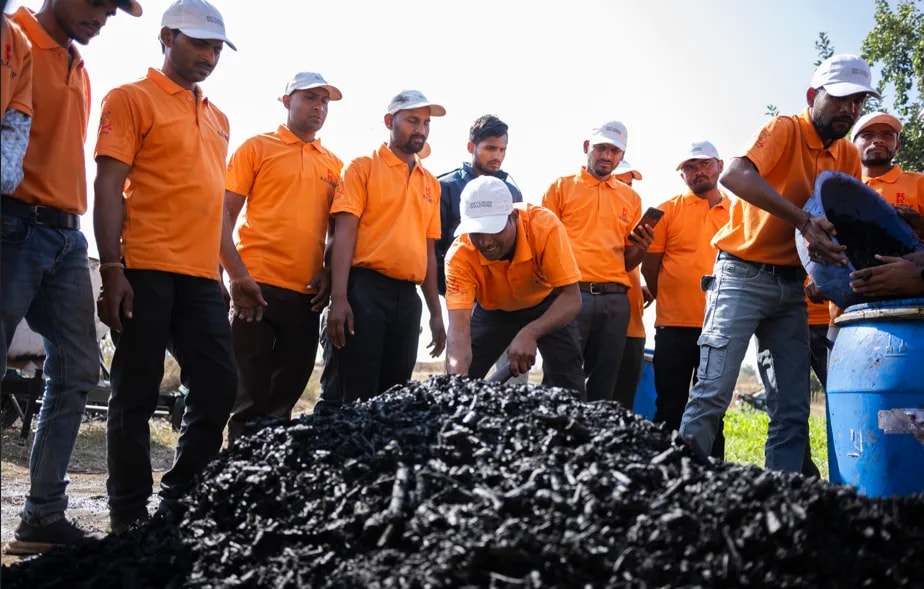
Is the Regenerative Cotton Price Premium Worth It for Retailers?
A regenerative cotton price premium of roughly 10-25% over conventional cotton buys three things retailers rarely price correctly: farmer training that prevents yield collapse during transition, verified traceability data that survives an audit, and carbon insetting capacity against Scope 3 targets. For most large apparel buyers sourcing from India and Bangladesh, that premium pays for itself within two to three sourcing cycles once compliance risk and supply disruption are factored in.
Key Takeaways
- Premium range: Regenerative cotton typically costs 10-25% more than conventional cotton at the farm gate, driven mainly by farmer training, transition-season yield support, and MRV verification costs.
- Where the money goes: A large share funds capacity building for smallholder farmers on 2-6 acre plots, not marketing or logo licensing.
- Offsetting mechanism: Carbon insetting through biochar lets brands apply verified farm-level carbon data against Scope 3 emissions instead of buying generic offsets.
- Regulatory shield: The EU Green Claims Directive requires substantiated, evidence-backed sustainability claims; unverified "eco" cotton claims risk fines and product bans starting in coming enforcement cycles.
- Decision rule: Brands with high Scope 3 exposure in cotton categories and near-term CSRD reporting deadlines should treat the premium as compliance infrastructure, not discretionary spend.
At a Glance: Regenerative Cotton vs Conventional Sourcing
| Factor | Conventional Cotton | Regenerative Cotton |
|---|---|---|
| Typical price premium | Baseline | 10-25% above conventional |
| Farmer training included | No | Yes, multi-season |
| Farm-level traceability | Rare (mass balance only) | Named farmer and plot ID |
| Scope 3 carbon data | Estimated / industry average | Measured, verifiable (MRV) |
| Carbon insetting eligible | No | Yes, via biochar and soil carbon |
| Drought/flood yield resilience | Low, input-dependent | Higher, soil-health driven |
| Greenwashing exposure under EU rules | High | Low, with documented evidence chain |
Retail sustainability teams in India, Bangladesh, and buying offices across Europe keep asking the same question: does the extra line item on a cotton invoice actually change anything downstream, or is it just a certification tax? The honest answer sits in what that money funds and what happens if a brand skips it.
What Actually Sits Inside the Regenerative Cotton Price Premium?
The premium is not a flat markup for a nicer label. It funds four specific cost centers that conventional cotton sourcing never touches, and each one has a direct payback for the buying brand.
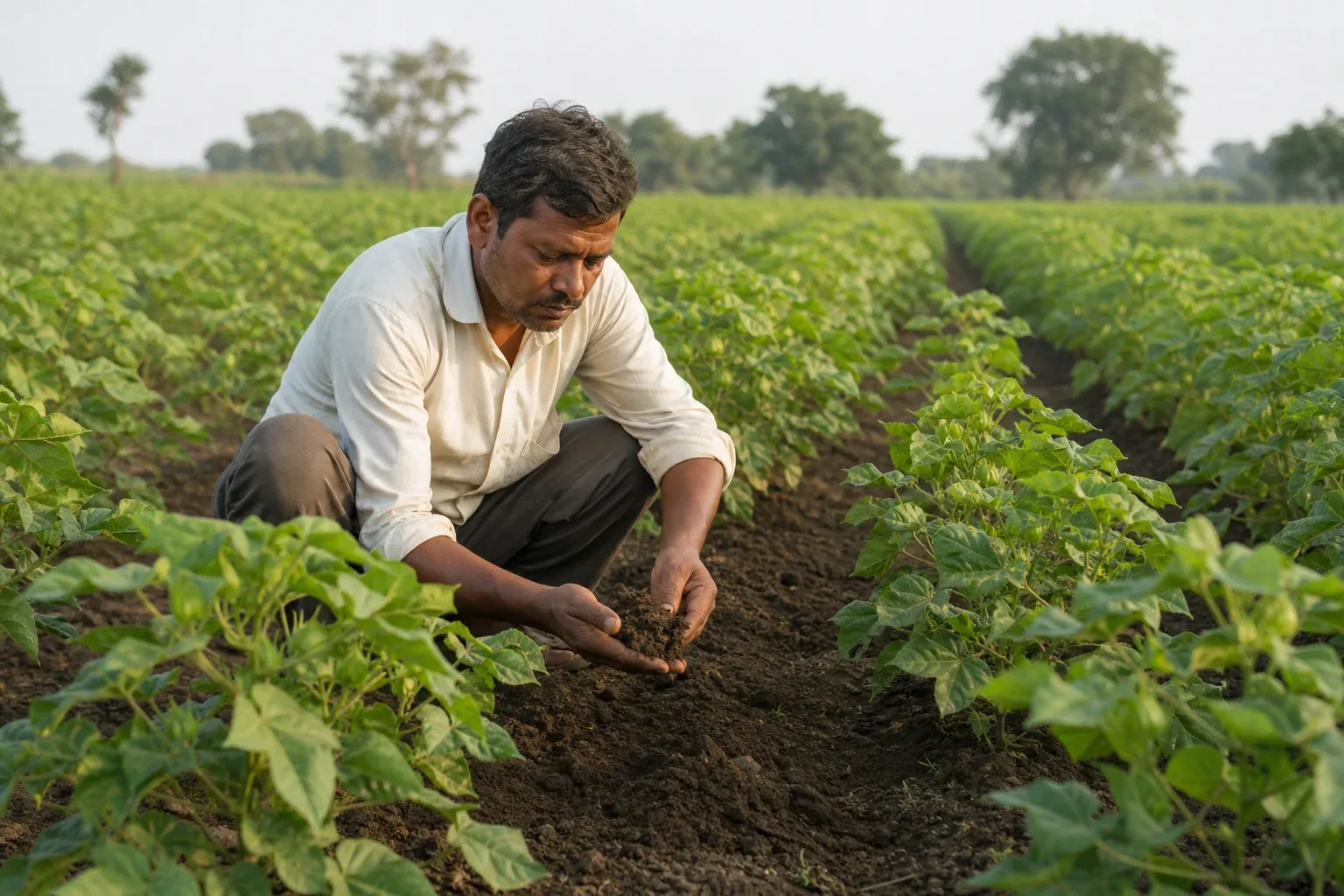
Farmer training and capacity building makes up the largest share. Teaching a smallholder farmer in Madhya Pradesh or Maharashtra to cut synthetic inputs, rotate crops, and apply compost or biochar takes multiple seasons of field visits, demo plots, and follow-up coaching. This is not a one-day workshop; it is the mechanism that keeps yields from dropping during the transition years.
Certification and MRV audit costs come next. Measurement, reporting, and verification systems require soil testing, plot-level record-keeping, and third-party audits. Brands that skip this step end up with a marketing claim rather than a defensible data trail, which becomes a liability the moment a regulator or journalist asks for proof.
A smaller portion covers transition-period yield insurance for farmers, since soil health improvements take two to three seasons to show up in output. Without that cushion, farmers revert to conventional chemical-heavy practices the first time yields dip. The remainder funds biochar production and application, which builds long-term soil carbon rather than a one-season fix.
Regenerative Cotton vs Organic vs Conventional: A Cost and Risk Comparison
Retailers often compare regenerative cotton only against conventional, but the more useful comparison includes organic certification, since many buyers already hold organic contracts and want to know if switching adds value.
| Attribute | Conventional | Organic-Certified | Regenerative |
|---|---|---|---|
| Certification focus | None | Input restrictions (no synthetic chemicals) | Soil outcomes and practice verification |
| Farm-level data | Minimal | Batch-level, sometimes mass balance | Named farm, dated soil test data |
| Carbon credit eligibility | No | Rarely | Yes, biochar/soil carbon insetting |
| Yield during transition | Stable but input-dependent | Often dips 15-20% early on | Managed with training support |
| Price premium vs conventional | Baseline | 20-40% | 10-25% |
Organic certification restricts what farmers put into the soil. Regenerative verification tracks what actually happens to the soil, which is why it pairs more directly with carbon insetting and Scope 3 disclosure. Brands weighing the two should read our comparison of regenerative vs conventional cotton and what brands actually pay for before locking a sourcing decision.
How Does Climate Resilience Offset the Regenerative Cotton Price Premium?
Climate resilience offsets the premium by reducing the odds of a failed harvest disrupting your supply contract. Soil with higher organic carbon holds water longer during dry spells and drains better during floods, which stabilizes yield when conventional plots nearby fail.
Cotton belts in Madhya Pradesh and Maharashtra face increasingly erratic monsoon patterns. A conventional plot with depleted soil loses more yield during a dry spell than a regenerative plot with better water retention. For a retailer locked into a delivery schedule, that difference is the gap between hitting a shipment date and scrambling for spot-market cotton at a much higher price than any regenerative premium.
Input cost volatility follows the same pattern. Farmers using fewer synthetic fertilizers and pesticides are less exposed to price swings in those markets, which keeps their production costs, and therefore your supply pricing, more predictable year over year.
Can Carbon Insetting Turn the Premium Into a Scope 3 Asset?
Yes. Carbon insetting converts the regenerative premium into usable Scope 3 emissions reduction data, because the carbon sequestered on your own supplier's farms counts against your supply chain footprint instead of sitting in a generic, unrelated offset project.
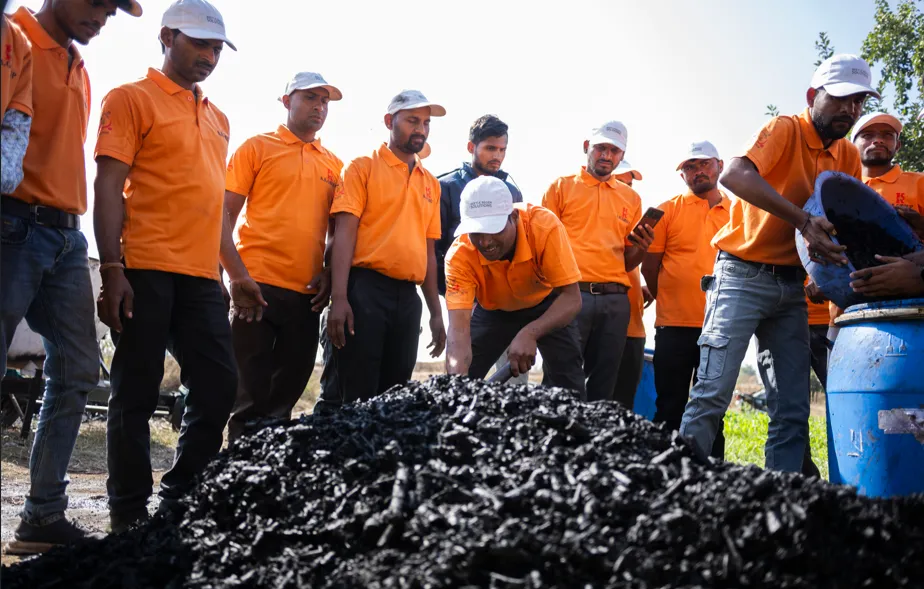
Biochar production is the clearest example. Crop residue that would otherwise be burned, releasing carbon and causing local air pollution, gets converted into biochar and worked back into the soil. That process locks carbon into a stable form for decades, and because it happens on the same farms supplying your cotton, the resulting carbon data attaches directly to your supply chain rather than to a forestry project on another continent.
This distinction matters for CSRD and Scope 3 reporting, where regulators and investors increasingly want value-chain-grounded emissions data, not generic offset purchases. Our guide on how biochar carbon insetting works for textile brands walks through the measurement chain in more detail.
Why Does Supply Chain Stability Matter More Than the Sticker Price?
Supply chain stability matters more than the sticker price because a single disrupted shipment, whether from crop failure, farmer attrition, or a failed audit, costs far more than the annual premium on a full cotton order. Trained, cooperative-linked farmers with multi-year contracts are less likely to exit the program mid-season.
Traceability data collected through the MRV process also reduces downstream audit costs. When a retailer can produce a documented chain from a named farm to a finished garment, customs checks, retailer audits, and buyer due diligence move faster, cutting administrative overhead that conventional supply chains absorb quietly every season.
Does Regenerative Cotton Protect Retailers From Greenwashing Regulation?
Regenerative cotton with verified MRV data protects retailers from greenwashing penalties because the EU Green Claims Directive requires environmental claims to be backed by evidence a regulator can check, not by a supplier's word or a generic certification logo. Farm-level records provide exactly that evidence.

The directive, along with related EU rules on unsubstantiated environmental claims, puts the burden of proof on the brand making the claim. A retailer that markets a product as "regenerative" or "climate positive" without a traceable data chain risks fines, mandatory claim withdrawal, and reputational damage once enforcement ramps up across EU markets that many Indian and Bangladeshi cotton exports feed into.
A marketing claim without a data trail is a liability waiting for an audit. A claim backed by named-farm soil data and third-party MRV verification is an asset that survives one.
This is precisely where the price premium converts from a cost line into risk insurance. Brands that pay for verification upfront avoid a much larger cost later: legal exposure, forced retraction of marketing claims, and the customer trust that evaporates when a claim gets publicly debunked. Read our breakdown of why traceability in cotton matters for brand compliance for the audit mechanics.
What Is Regen Cotton and How Is It Different From Organic-Only Sourcing?
Regenerative cotton, often shortened to "regen cotton" in search and buyer conversations, is cotton grown under farming practices that actively rebuild soil health, such as reduced tillage, crop rotation, and biochar application, verified through farm-level data rather than input restrictions alone.
Organic-only sourcing certifies what farmers avoid: synthetic pesticides and fertilizers. It says little about whether the soil is actually improving. Regenerative verification measures the outcome directly, through soil organic carbon testing and yield tracking over multiple seasons. Many brands now request both, but the data collected under a regenerative program is what unlocks carbon insetting eligibility. For a full breakdown, see what is regenerative cotton.
How Should Retailers Decide If the Premium Fits Their Sourcing Strategy?
Retailers should treat the regenerative cotton price premium as a fit decision based on three factors: how much cotton sits in your Scope 3 footprint, how close your CSRD or equivalent disclosure deadline is, and how exposed your brand is to greenwashing scrutiny in EU or UK markets.
Brands with cotton-heavy product lines and near-term reporting deadlines gain the most, since the traceability data pays for itself in compliance readiness alone. Brands with smaller cotton exposure or longer reporting timelines can start smaller.
- Run a single-mill pilot before committing to full-volume regenerative sourcing, so your team can validate data quality and farmer retention before scaling spend.
- Track soil organic carbon, farmer retention, and yield stability as your first KPIs, not just tonnage sourced.
- Set a two-to-three season timeline before expecting the premium to show measurable Scope 3 or resilience payback.
One thing worth stating plainly: not every product line needs the full premium today. A brand with minimal EU exposure and no near-term CSRD obligation can reasonably phase in regenerative volumes over several years rather than converting an entire portfolio at once. That is a legitimate strategic choice, not a compromise.
Building Customer Loyalty Beyond the Price Tag
Verified regenerative claims give marketing teams language that survives scrutiny, which builds a different kind of customer trust than a generic sustainability badge. Shoppers increasingly check claims against news coverage and third-party databases before buying, especially in categories where greenwashing scandals have already made headlines.
A traceable story, a named cotton belt in Maharashtra, a specific farmer cooperative, a documented soil carbon gain, holds up under that scrutiny in a way a vague "eco-friendly" label never will. That difference compounds over repeat purchases and press coverage, even if it takes longer to show up on a balance sheet than a one-season discount promotion would.
Brands wanting to see how this plays out in practice can review real farm-to-fashion results from regenerative cotton programs before setting internal targets.
FAQ
Is regenerative cotton always more expensive than conventional cotton?
Yes, regenerative cotton carries a premium in almost every sourcing region today because it funds active farmer training and verification that conventional cotton contracts never include. The gap narrows as programs mature and farmer yields stabilize over multiple seasons.
Can small and mid-size retailers access regenerative cotton, or is it only for large brands?
Small and mid-size retailers can access regenerative cotton through pooled sourcing programs and single-mill pilots, which lower the minimum volume commitment compared to building a dedicated program from scratch.
How long before a regenerative cotton program shows measurable ROI?
Most programs show measurable soil and yield data within two to three growing seasons, while compliance and greenwashing-risk benefits apply from the first verified harvest onward.
If your sourcing team is weighing whether the regenerative cotton price premium fits your next buying cycle, the fastest way to get a real number is to run it against your own supply chain data rather than industry averages. Contact Beetle Regen to scope a pilot with one mill, get verified farm-level cost and carbon data, and see exactly what the premium would buy in your specific sourcing region.