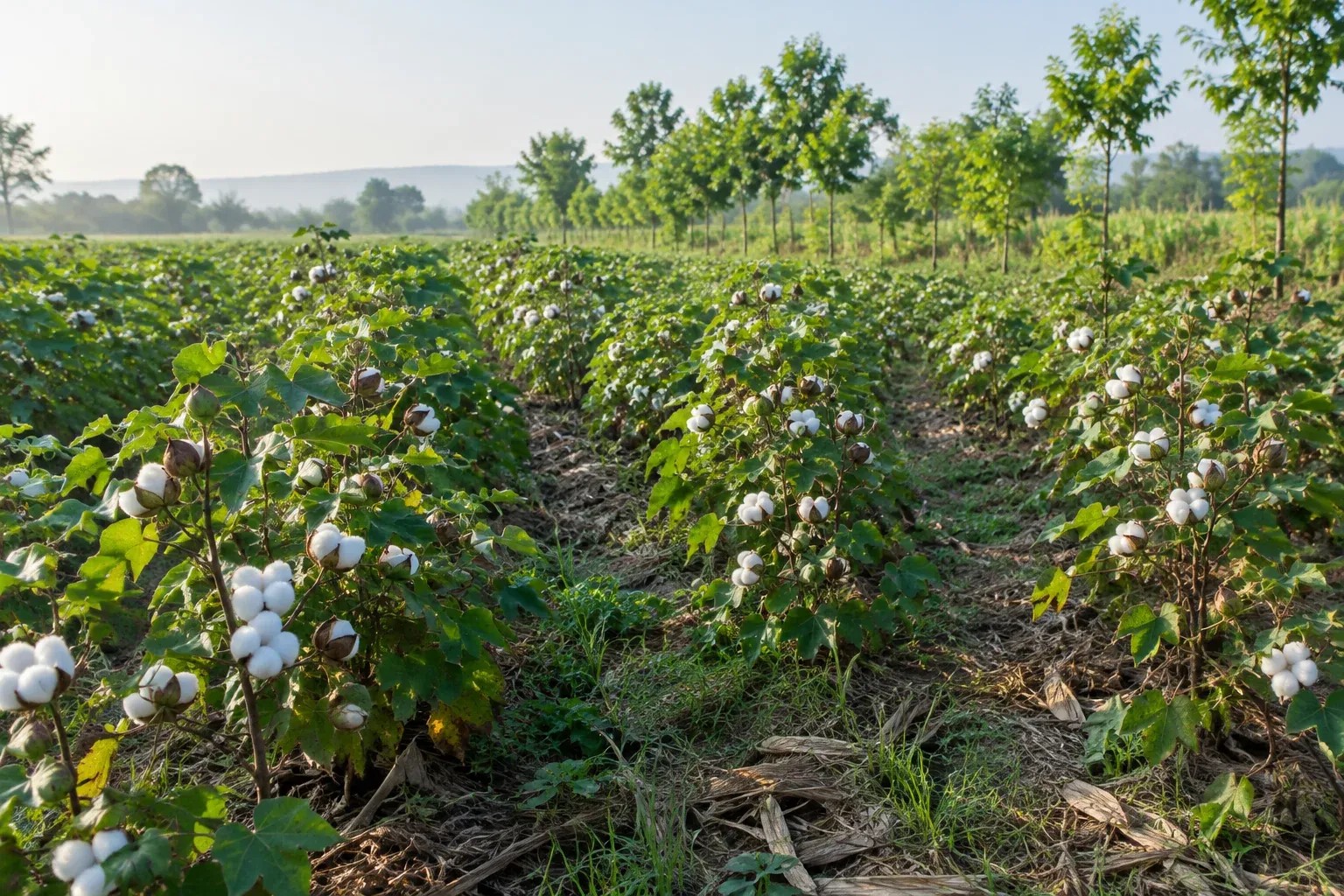
Regenagri Certification: What Farms and Brands Should Know
Regenagri certification is an independent check that a farm is moving to regenerative practices that improve soil health, biodiversity, water use and livelihoods, and that the product can be followed through the supply chain. For cotton farmer groups in India, preparing means keeping practice records and showing change. For brands, it means asking exactly what the certificate covers.
Key takeaways
- It checks practice and people: the standard looks at soil, biodiversity, water, carbon and the social conditions on the farm, not only at which inputs were used.
- Records are the real workload: farmer groups spend more time on consistent, dated practice records than on any single field change.
- It is not organic: organic certification in India under NPOP restricts how you farm; Regenagri targets regenerative outcomes. The two can sit side by side.
- Beetle has regenagri certified cotton: our farmer training work is built around the practices and records a certificate depends on.
- Brands should read scope first: ask what the certificate covers, who holds chain of custody, and what farm data sits behind the claim.
Regenagri certification at a glance
| Question | Short answer |
|---|---|
| What is it? | An international regenerative agriculture programme with published farm and chain of custody standards |
| Current farm standard | Farm Standard 4.0, launched by Regenagri in July 2026 |
| What is checked on the farm? | Soil health, biodiversity, climate resilience, water and energy management, livelihoods and labour conditions |
| What a farmer group prepares | Practice records, group registers, input and crop logs, evidence of change over seasons |
| Versus organic (NPOP) | Organic restricts inputs and methods; Regenagri targets regenerative outcomes and broader farm viability |
| What brands should ask | Certificate scope, chain of custody, farm-level data, control-group evidence, and how claims are worded |
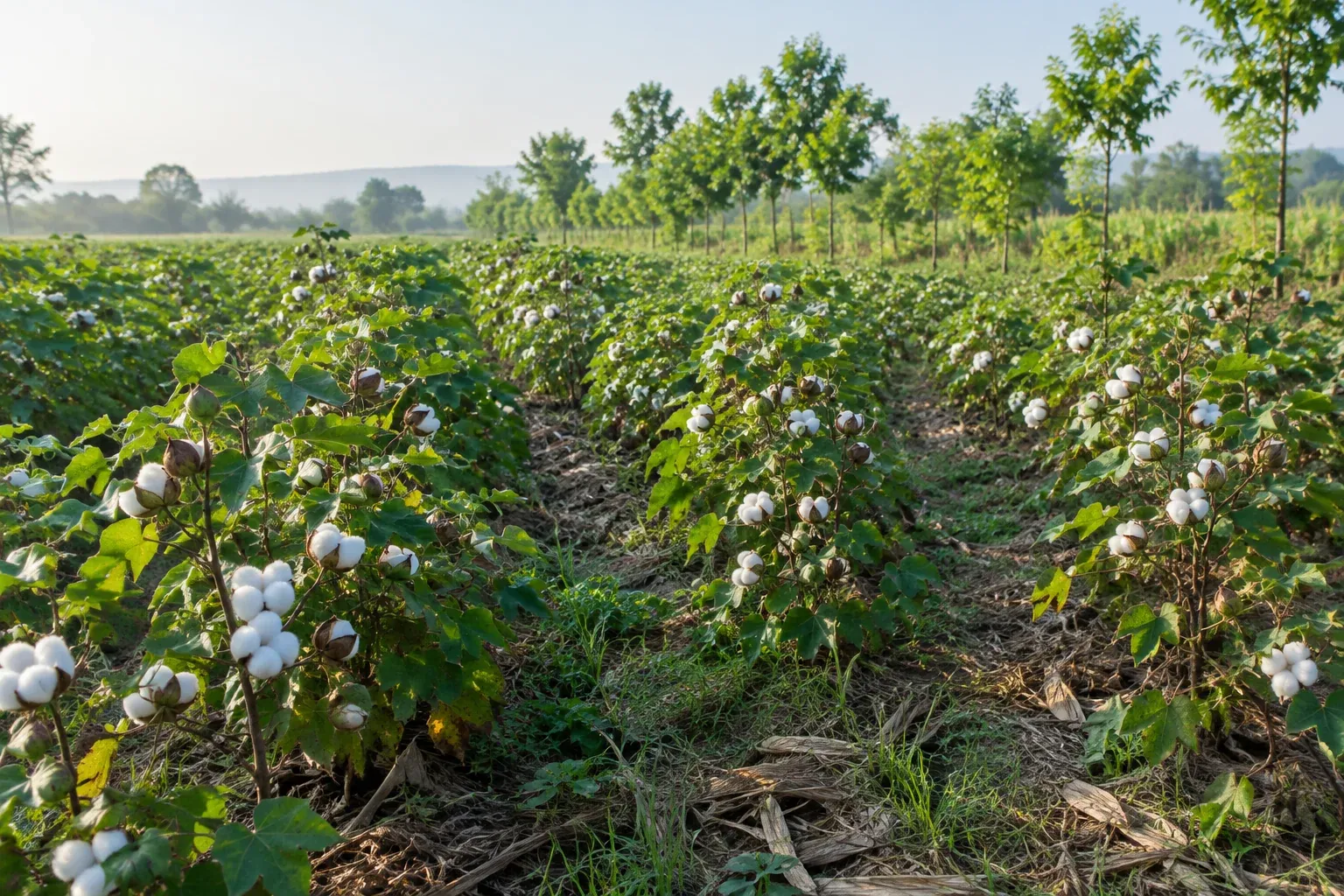
What is Regenagri certification?
Regenagri is an international regenerative agriculture programme that supports farms and organisations to move to holistic farming systems that improve soil health, encourage biodiversity and reduce carbon footprint. Farms and supply chain businesses can be certified against its published standards, with audits carried out by an independent certification body.
The programme publishes a farm standard, a chain of custody standard and a document on auditing and certification requirements. Those three papers matter for different readers. The farm standard is for the grower, the chain of custody standard is for ginners, spinners and brands, and the auditing document tells everyone how checks work.
In July 2026 Regenagri launched Farm Standard 4.0. It describes the standard as covering the full range of regenerative outcomes, from soil health, climate resilience and biodiversity to livelihoods, inclusion and long-term farm viability, with tighter attention to data integrity and consistency. Control Union is the certification body that certifies farms under the programme.
One practical point for Indian cotton groups: standards get revised. A consultation on updated farm criteria opened in late 2025, including revised criteria for crops and livestock production. Always work from the version your certification body tells you will be used at audit, not from a summary, including this one.
What does the Regenagri standard check on the farm?
The standard looks at whether farm management improves soil health, biodiversity, and water and energy management, and whether the farm meets labour, health and safety expectations. It assesses what a farm does in the field and the social conditions around that work, so a clean field record alone does not pass.
Public descriptions of the programme point to the same themes again and again. The Hindu reports on the Regenagri tea rollout in south India that growers are supported to adopt farming techniques that raise soil organic matter, encourage biodiversity, sequester carbon dioxide, and improve water and energy management. Cotton is a different crop, but the outcome areas carry over.
Soil and carbon
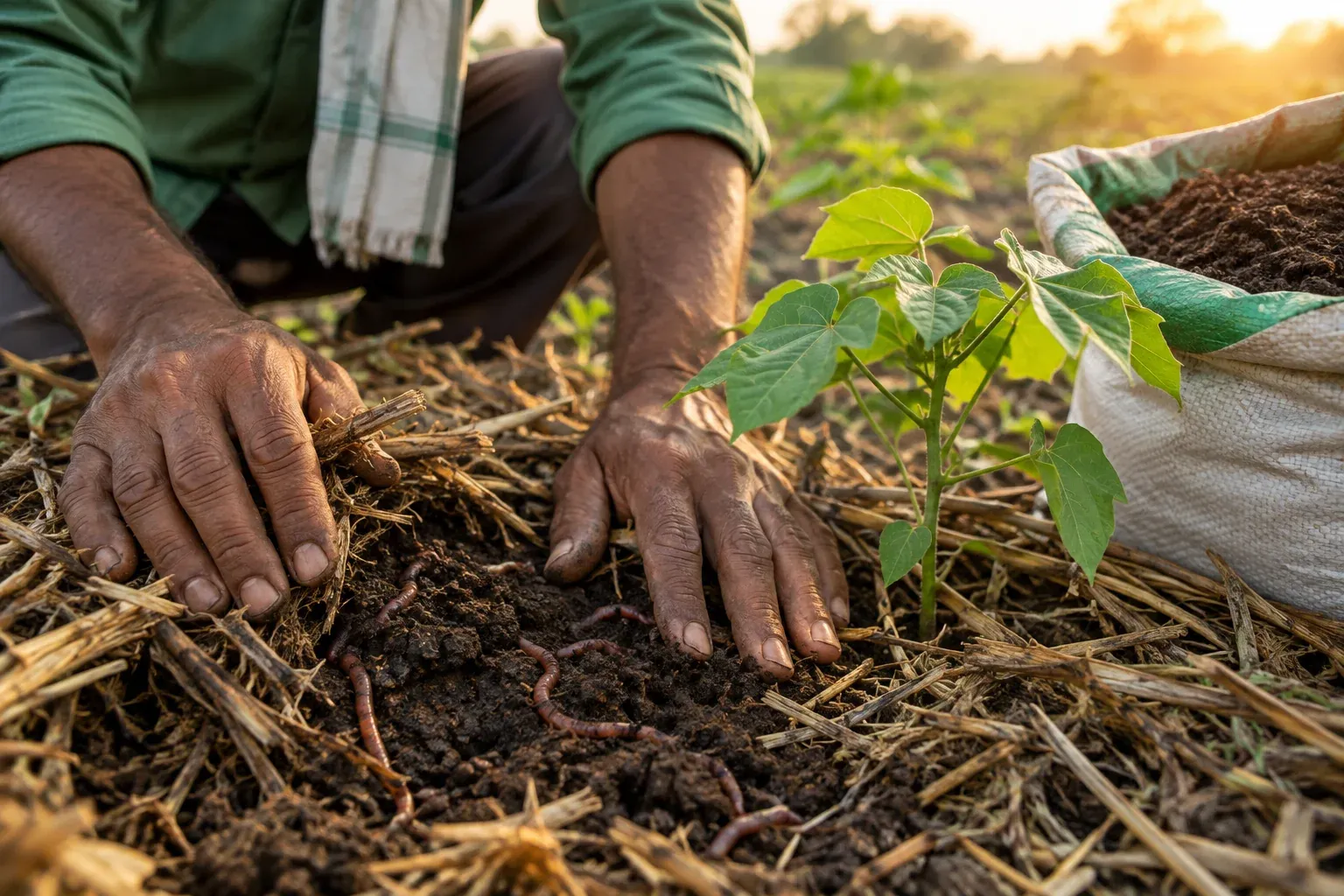
Soil is the centre of the standard. Expect questions about how you keep the ground covered, how you reduce disturbance, what you do with crop residue, and how you build organic matter. In our cotton programmes, the practices behind this are reduced tillage, residue incorporation, intercropping, organic amendments and biochar made from cotton stalks.
Biodiversity and trees
Biodiversity is judged through what is growing on and around the farm. Cover crops, intercropping and boundary plantation all count as visible evidence. In our 2025-26 programme year, 29% of participating farmers had adopted boundary plantation, alongside work on crop diversification.
Water, inputs and energy
Auditors want to see how water is managed and whether synthetic inputs are being used more carefully over time. Public material on the standard mentions practices such as agroforestry and precision irrigation. For a smallholder group, the realistic evidence is a record of irrigation timing, fertilizer use per plot, and any shift towards bio-inputs.
People and working conditions
This is the part farmer groups most often underestimate. The standard sets expectations on labour, health, safety, fair wages and ethical employment. Cotton harvest depends on hired and family labour, so a group needs to know who works on each plot and under what terms before the auditor asks.
What records and practice changes should a farmer group prepare?
A farmer group should prepare a member register, plot-level maps or identifiers, dated records of each practice, input and fertilizer logs, harvest records, and evidence of labour conditions. The certification body confirms the exact list. Consistent entries across a full season carry more weight than a thick folder written the week before an audit.
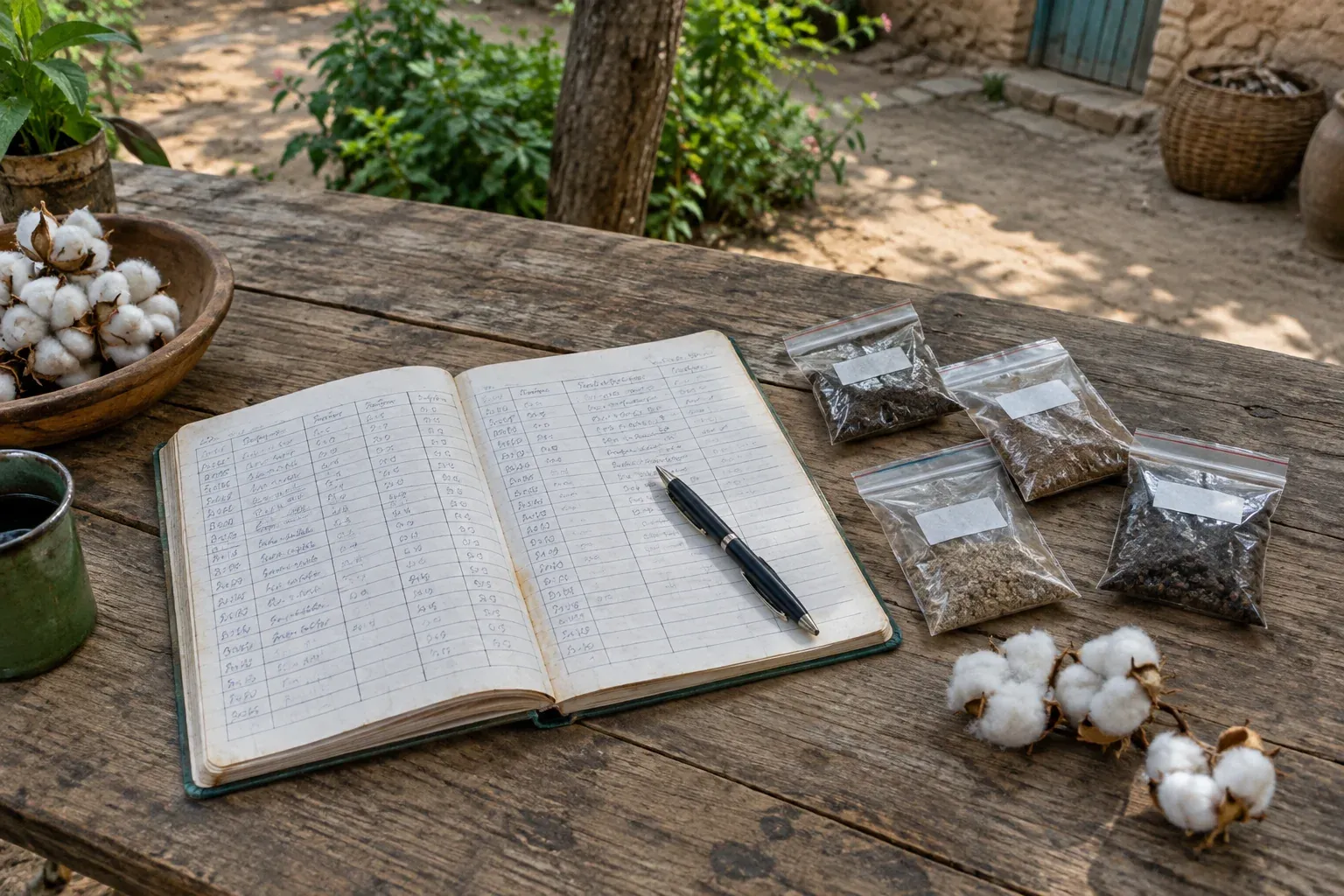
Here is the record set we train farmer groups to keep, based on our own programme experience. Treat it as a working checklist, then compare it against the standard text your certification body supplies.
- Member register: each farmer's name, village, plot size and a unique ID, with written consent to share data.
- Plot identifier: a map or boundary record that links each plot to one farmer, so no field is counted twice.
- Practice log: date and type of each practice, such as sowing method, tillage, residue handling, intercrop sown, organic amendment applied.
- Input log: fertilizer, pesticide and bio-input use per plot, with quantities and dates.
- Water note: how and when each plot was irrigated.
- Harvest and sales record: yield per plot and where the cotton went, which is the first link in traceability.
- People record: who works on the plot, and basic health and safety measures in place.
What we see on the ground
Our 2025-26 programme report shows each participating farmer adopting four to five regenerative practices on their farm. It also names a challenge we plan around: adoption has begun across geographies, but practices vary from farm to farm, so continued handholding is needed to make them consistent.
That finding shapes how we prepare groups. A certificate depends on consistency across members, so we spend training time on the farmer who is falling behind, not on the demonstration plot that already looks good. Field partners such as the Niranjanlal Agrawal Foundation handle farmer mobilisation, demonstration plots, monitoring and data collection, which is the daily work behind a clean record.
The practice changes that usually matter first
Farmers adopt what they can see working. In our experience, the first changes are lower-cost ones: residue incorporation instead of burning, reduced tillage, intercropping, and bio-inputs prepared locally. Bio Resource Centres help here because inputs are made and explained inside the village. Our 2025-26 report names them as one of three pillars of the capacity framework we helped design for the IDH-led RPLC programme in Madhya Pradesh.
Higher-skill changes come next. High-density planting systems (HDPS) need matched seed and tight crop management, and farmer-led biochar needs safe kiln practice. We would not push either before basic record keeping is stable. You can see where these programmes run on our projects page.
How to prepare a farmer group for Regenagri certification, step by step
Start by choosing a group with a clear register, then record a baseline, train on a small set of practices, keep dated records through a full season, run an internal check, and only then approach a certification body. Skipping the baseline and internal check is the most common reason groups fail their first audit.
Step 1: Define the group and its boundary
List every farmer and plot that will be in scope. Confirm each member agrees in writing. Pass mark: every plot has one owner of record and one ID. Walk-away signal: members who cannot say whether their plot is in or out, because the auditor will find the same gap.
Step 2: Record a baseline
Before changing anything, note current tillage, residue handling, fertilizer use, irrigation and crop mix for each plot. Take soil samples where the programme calls for them. Without a baseline, you cannot show that anything improved.
Step 3: Pick a short list of practices
Choose the four or five changes that fit your soil, rainfall and crop calendar. Our programme experience is that farmers adopt four to five practices each. More than that spreads training thin and weakens record quality.
Step 4: Train, demonstrate, then repeat
Run training in the village, in the local language, with a demonstration plot that farmers can visit. Repeat at the stages of the crop when each practice matters. One workshop at the start of the season does not hold up across the months that follow.
Step 5: Keep records weekly, not at season end
Assign a field facilitator for a set number of farmers who checks logbooks or app entries on a fixed rhythm. If entries are missing for a plot for more than a normal gap between operations, visit that farmer before the next entry is due.
Step 6: Run an internal check against the standard text
Take the current farm standard and tick each requirement against your records and what you see in the field. For any gap, decide whether it is a missing record or a missing practice. A missing record can be fixed next week. A missing practice needs a season.
Step 7: Approach a certification body and plan for follow-up
Ask for the audit scope, the sample the auditor will visit, the timetable, and a written fee quote. Then plan for corrective actions, because first audits often raise some. Our own measurement and verification systems for carbon projects use the same discipline, and our guide on KPIs for a regenerative cotton program covers what to track once certified.
A hypothetical example
Suppose a producer group of cotton farmers in Maharashtra has a good member list but keeps no input records. The practical order is baseline first, then one season of input logs, then the internal check. Applying for certification before the logs exist would only produce a list of findings. Waiting one season is cheaper than paying for an audit that fails on records alone.
How does Regenagri differ from organic certification?
Organic certification in India under the National Programme for Organic Production sets rules on how crops are grown and which inputs are allowed. Regenagri sets requirements aimed at regenerative outcomes such as soil health, biodiversity and livelihoods. Organic tells you what a farmer avoided; Regenagri asks what is improving on the land.
The Indian organic system is run through APEDA's NPOP pages, which describe standards for organic production, accreditation of certification bodies and the India Organic logo. A US university extension note adds that producers working towards organic certification prepare an Organic Systems Plan with documents on farm production and management.
| Feature | Regenagri | Organic (NPOP in India) |
|---|---|---|
| Core idea | Move farms to regenerative systems | Produce crops under organic rules |
| Main focus | Soil health, biodiversity, climate resilience, water, livelihoods, inclusion | Allowed and prohibited inputs and methods |
| Social criteria | Labour, health and safety expectations in the farm standard | Not the headline focus of production rules |
| Typical paperwork | Practice, input, water, harvest and people records | Organic system plan, input and harvest records, declarations |
| Can synthetic inputs be used? | Standard aims to reduce them; check the current text | No, banned under organic rules |
| Who holds the scheme? | Regenagri, certified by an independent body | Government of India programme run through APEDA |
| Chain of custody | Separate chain of custody standard | Required traceability through certified operators |
Regenagri cotton vs organic cotton: which should you choose?
Choose organic when your buyer specifically requires an organic label or you want to sell as organic in export markets. Choose Regenagri when your buyer wants evidence of soil, biodiversity and livelihood outcomes. Many groups will need both over time, because the two schemes answer different buyer questions.
People often search this exact comparison, and the honest answer is that neither is a superset of the other. An organic field can have poor ground cover and low diversity. A regenerative field can still use some inputs that organic would ban. We covered the commercial side in our post on whether regenerative cotton earns a premium over organic, and our view has not changed: the premium follows verified, traceable evidence, not the label.
For a farmer group deciding where to put limited time, our rule is simple. If a named buyer is asking for one scheme, prepare for that one first. If no buyer is asking yet, build the practices and records that serve both, which are cover, reduced disturbance, input logs and plot-level traceability.
Beetle's regenagri certified cotton
Beetle has regenagri certified cotton. That sits alongside the work we do with farmer groups: training, field demonstrations, record keeping and traceability from the plot through the gin.
In FY 2025-26 we launched the Women in Regenerative Cotton initiative with Varshman Textiles for a leading global brand. It embeds gender inclusion within regenagri-certified farm systems and positions women as recognised co-farmers. The programme reached more than 620 women across 103 villages, combining regenerative practice with financial and digital literacy and market linkages.
This matters for the standard's social side. Women do a great deal of cotton work but often have little say in decisions or access to knowledge and finance. A certificate that looks at livelihoods and inclusion rewards groups that deal with this directly.
Certification is not the same as impact
A certificate tells a brand that a farm met a standard at audit. It does not by itself tell you how much yield, income or input use changed. For that we use control-group comparisons.
In 2025-26, participating farmers in our programmes showed about 18% higher yield, about 38% higher net annual income, about 23% lower chemical fertilizer use, about 16% better water-use efficiency and about 17% lower greenhouse gas emissions per hectare than control group farmers or baseline, as reported in our year-end report.
Those figures describe our programme, not what any certificate guarantees. A brand should ask for both: the certificate for scope and assurance, and programme data for outcomes. Our guide to verifying farm-level carbon insetting claims explains how that second layer is checked.
What should brands ask before relying on Regenagri certification?
Brands should ask what the certificate covers, who in the chain holds chain of custody certification, what farm-level data sits behind the claim, and how the product claim is worded. A certificate is evidence of a standard met, so the claim on a label must not say more than the certificate does.
Use this list when you speak to a supplier. Each question has a pass mark and a walk-away signal.
- What exactly is certified? Pass: a certificate naming the farms or group, the crop and the validity dates. Walk away if the supplier shows a logo with no certificate and no scope.
- Which standard version was used? Pass: a clear answer, such as the current farm standard, with the audit date. Walk away if nobody can say.
- Is there chain of custody for the cotton I buy? Pass: certified operators from gin to spinner, with transaction records. Walk away if certified farm cotton is blended without a documented way to track it.
- Can I trace to the farm? Pass: plot-level IDs linked to a farmer register and consent. Walk away if traceability stops at the ginner.
- What farm data exists beyond the certificate? Pass: practice adoption, yield and input data with a comparison group. Walk away if the only evidence is the certificate itself.
- How will we word the claim? Pass: wording that names the certification and its scope. Walk away from any claim of carbon neutrality based on the certificate alone.
Two items stay unsettled across the industry. Standards keep being revised, so a certificate from an older version may not mean the same thing as one from a newer version. And brands still differ on how to treat blended or mass balance volumes. We would rather you ask openly than accept a vague answer. Our posts on farm-level claim verification and on greenwashing risk in regenerative claims go further on this.
If you also report Scope 3 emissions
Certification and footprint calculation are different jobs. A product carbon footprint for cotton needs its own method, such as ISO 14067, plus farm activity data. Our life cycle assessment work for Texprocil in Jalgaon, Maharashtra, follows ISO 14040, ISO 14044 and ISO 14067, and it collects inputs, irrigation, residue management and farm-level emissions from 1,200 farmers. Certification records can feed that data, but they do not replace it.
Frequently asked questions
Is Regenagri certification the same as organic certification?
No. Organic certification in India under NPOP is about how a crop is grown and which inputs are allowed. Regenagri certification is about moving a farm toward regenerative outcomes such as soil health, biodiversity and livelihoods. A farm can hold one, both or neither, depending on buyer demand.
How long does it take to prepare for Regenagri certification?
It depends on where the group starts. If member lists and records already exist, a season of dated records may be enough to prepare. For groups starting from scratch, plan for more than one season. In Regenagri's south India tea programme, growers are usually supported over three years.
What does Regenagri certification cost?
Costs are set by the certification body and depend on scope, group size and audit design. We do not publish a figure here because none is fixed for every group. Ask the certification body for a written quote that separates audit fees, travel and any follow-up visits before you commit.
Does a Regenagri certificate prove a product is carbon neutral?
No. The certificate shows that a farm or supply chain met a standard. A carbon footprint or carbon neutral claim needs its own calculation and verification. Treat the certificate as one input to that work, alongside farm activity data and a recognised method.
Next step: get your group or sourcing programme certificate-ready
Whether you are a farmer group asking what regenagri certification would take, or a brand asking how far a certificate can be trusted, the work starts with records and traceability. We train farmers, build the field data behind the claim, and connect it to buyers. Contact our team with your crop, location and sourcing goal, and we will talk through what preparing would involve in your case.