Regenerative Agriculture Meaning: A Beginner's Guide for Farmers & Brands
Regenerative agriculture meaning, at its simplest, is farming that rebuilds the soil it uses instead of running it down. It combines practices like reduced tillage, crop rotation, cover cropping, and biochar application to raise soil organic carbon, cut water and chemical use, and give farmers a second income stream through carbon credits. In India and Bangladesh, this shift is moving fast because conventional cotton and paddy farming has left many fields with thinner, weaker soil every season.
Key Takeaways
- Regeneration means addition, not maintenance: it actively rebuilds soil organic carbon and structure, rather than just avoiding further damage.
- Biochar and cover crops do the heavy lifting: converting crop residue into biochar can lock carbon into soil for decades, while cover crops rebuild microbial life between main crop seasons.
- Farmers gain income beyond yield: carbon credit programs, reduced input costs, and better water management (like Alternate Wetting and Drying) create new revenue on top of harvest income.
- Brands need this for compliance, not just marketing: Scope 3 disclosure rules and CSRD reporting push textile brands toward traceable, farm-level carbon data instead of generic offsets.
- Crop rotation beats monoculture on resilience: rotating cotton, legumes, and cover crops breaks pest cycles and stabilizes yield across erratic monsoon seasons.
Regenerative Agriculture At a Glance
| Factor | Conventional Farming | Regenerative Agriculture |
|---|---|---|
| Soil organic carbon trend | Flat or declining over seasons | Rising, often 0.3% to 0.6%+ within two seasons |
| Crop residue handling | Often burned in the field | Converted to biochar and returned to soil |
| Planting pattern | Monoculture, same crop every season | Crop rotation with legumes and cover crops |
| Water use (paddy/rice) | Continuous flooding | Alternate Wetting and Drying, cuts water 15-30% |
| Farmer income streams | Harvest sale only | Harvest sale plus carbon credits and residue value |
| Chemical input dependency | High, rising with pest resistance | Reduced over 2-3 seasons as soil biology recovers |
| Traceability for brands | Limited or none at farm level | Farm-level MRV data supports Scope 3 reporting |
What Regenerative Agriculture Actually Means on the Ground
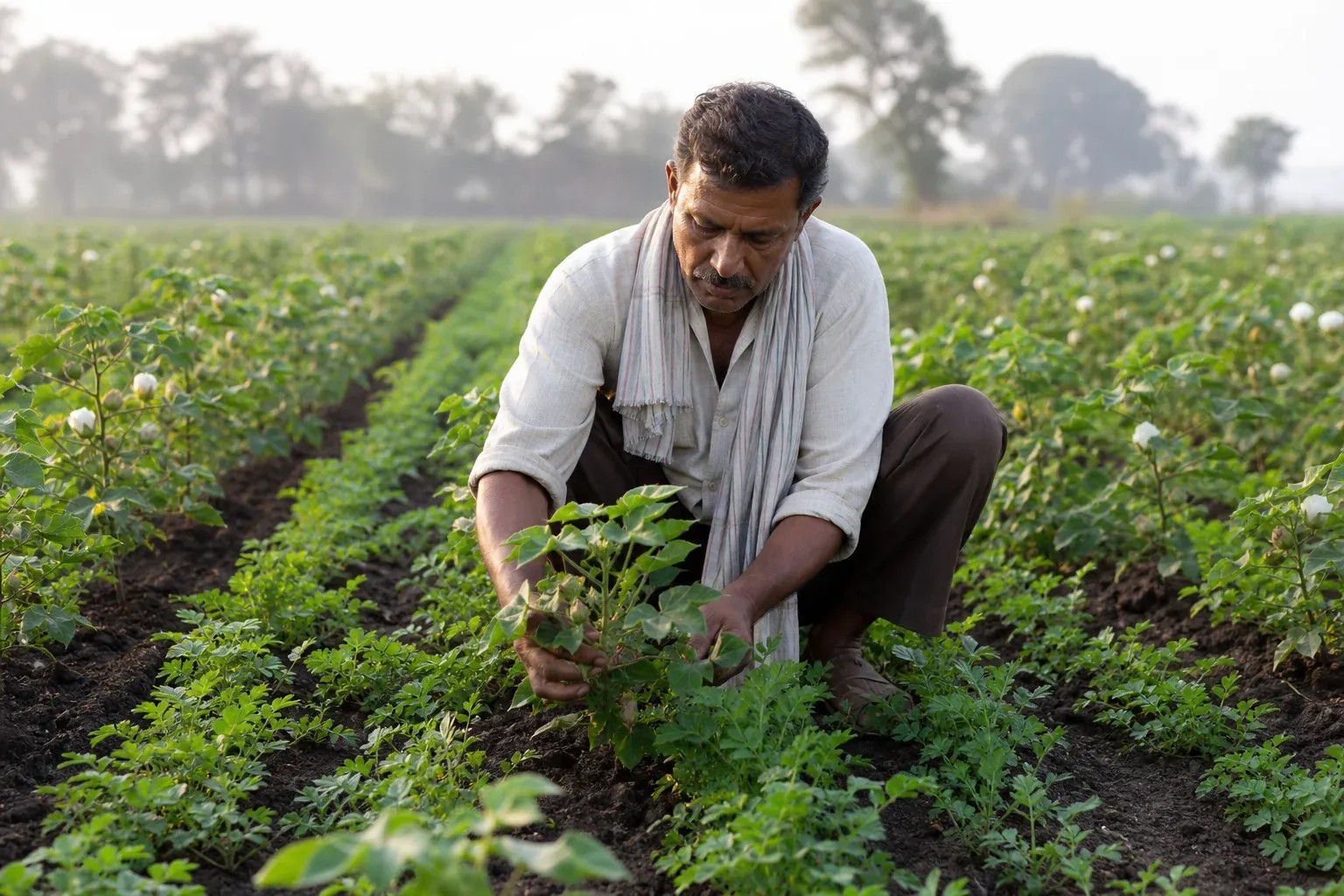
Walk a cotton field in Yavatmal or a paddy plot near Rajshahi that has moved to regenerative practices, and the difference is visible before you check a single soil report. The rows aren't bare between plants. There's a low cover crop filling the gaps, the soil holds together in clumps instead of turning to dust, and there's far less crop residue smoke in the air after harvest.
That visible change is the plain-language version of regenerative agriculture meaning: you stop treating soil as a passive growing medium and start treating it as a living system you feed and protect. Farmers do this through a handful of connected practices, reduced tillage, cover cropping, composting, and biochar application, each one reinforcing the others. None of them work in isolation for long. A farmer who adds biochar but keeps deep-tilling every season loses much of the soil structure gain within a year or two.
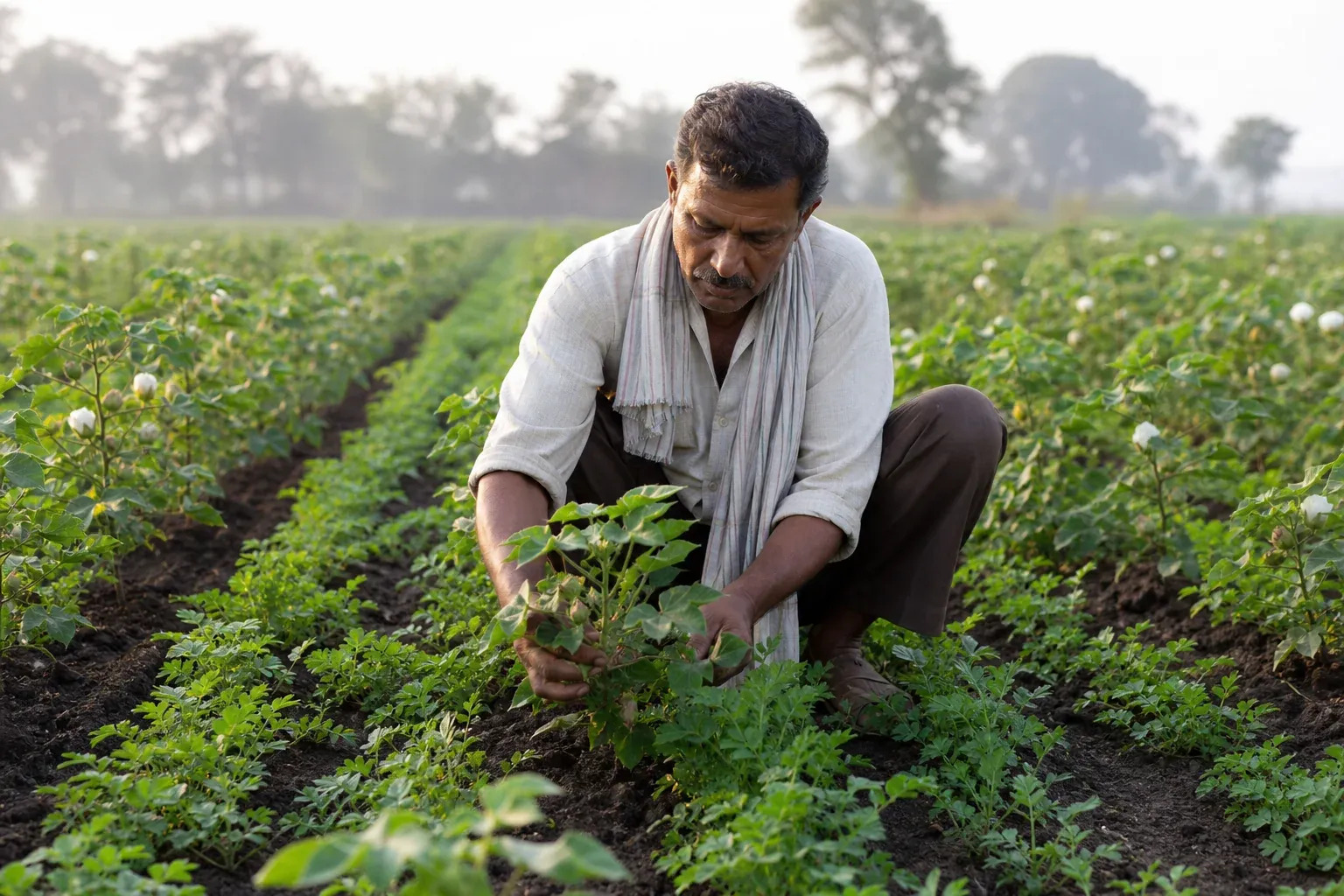
You'll also hear this model called regenerative farming in most search queries, and the terms are used interchangeably in India and Bangladesh's farming and textile sectors. Our own guide on sustainable farming and regenerative agriculture goes deeper into the full practice list if you want the complete picture beyond this beginner overview.
How Regenerative Agriculture Restores Soil Health
Soil restoration under this model works on three fronts at once: structure, biology, and carbon. Reduced tillage keeps fungal networks and earthworm channels intact instead of breaking them apart every planting season. Cover crops feed soil microbes between main harvests, which keeps nutrient cycling active year-round instead of stalling during fallow periods. Biochar, made by heating crop residue in a low-oxygen kiln instead of burning it in open air, adds a stable carbon structure that holds water and nutrients in place for years.
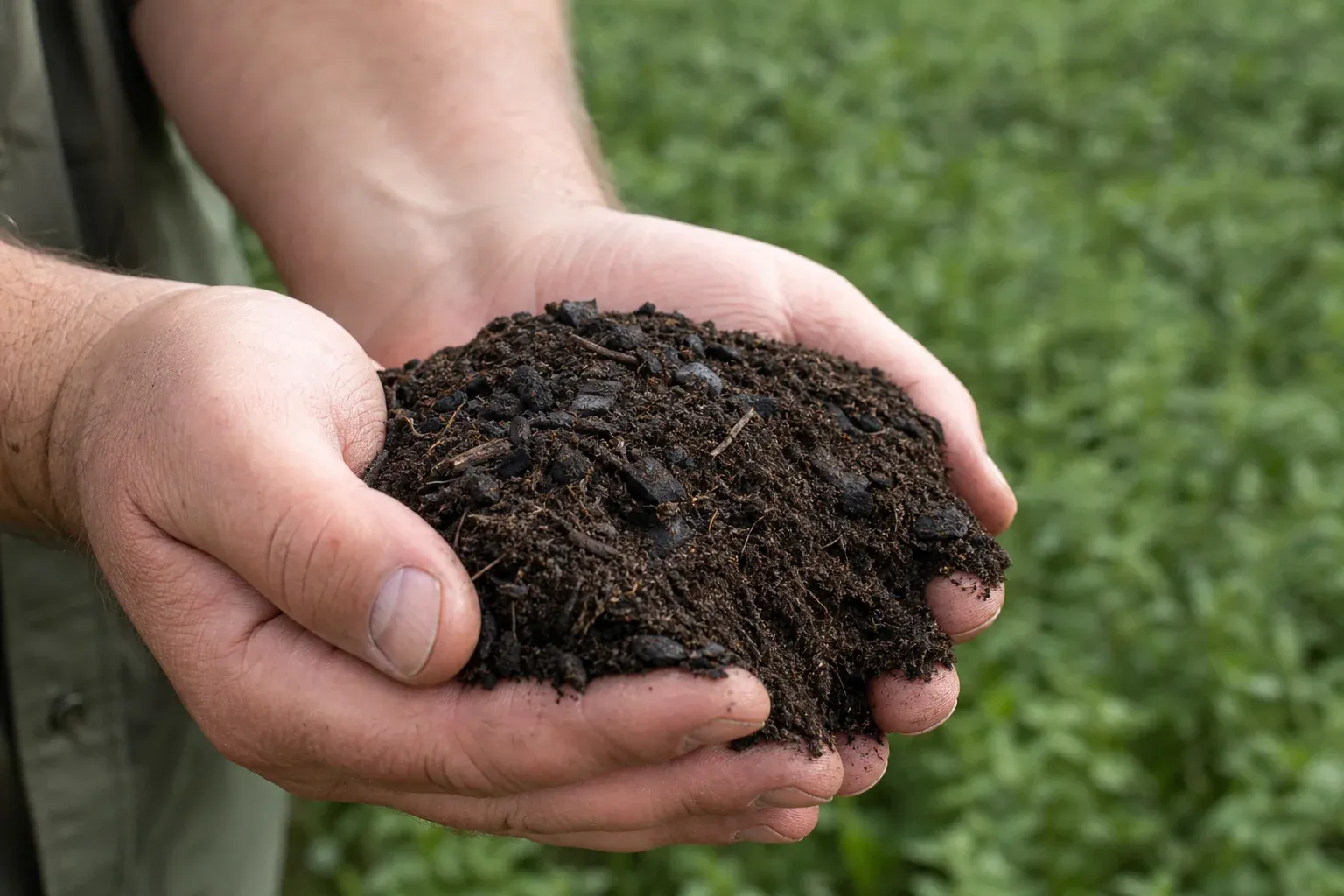
The results show up as a rise in soil organic carbon, the single clearest number for tracking whether soil is actually recovering. One farmer we worked with in Yavatmal district raised his soil organic carbon from 0.31% to 0.62% in two growing seasons by stacking exactly these changes, as documented in our piece on how one cotton farmer doubled his soil organic carbon in two seasons. That kind of change isn't rare once biochar, reduced tillage, and cover cropping are stacked together consistently.
If you want the mechanics of how the carbon-conversion step works, our explainer on what is biochar and what are its uses in farming breaks down the kiln process and application rates in detail.
What Is Regenerative Farming Doing for Carbon Sequestration
Carbon sequestration is the part of regenerative agriculture meaning that matters most to brands and policymakers, even though farmers usually experience it first as better soil. When biochar goes into a field, it locks carbon into a form that resists breakdown for decades, sometimes centuries. That stability is why biochar-based carbon insetting appeals more to textile brands than generic offset purchases: it's tied to a specific farm, a specific practice, and a verifiable amount of carbon.
Farmers also earn from this side of the practice. Verified carbon reductions convert into carbon credits that cooperatives or individual farmers can sell, adding income beyond the harvest. Our guide on biochar's role in soil and carbon systems and our broader piece on how biochar carbon insetting works for textile brands cover the mechanics of turning soil carbon gains into monetized credits step by step.
According to the UN Food and Agriculture Organization, roughly a third of the world's soils are already degraded, which is a large part of why carbon sequestration through farming, not just industrial capture, has become a serious policy focus in India's agriculture ministry discussions and in international climate frameworks tracked by the UNFCCC.
Regenerative Agriculture vs Conventional Agriculture: Where the Real Differences Show Up
The comparison table above covers the headline differences, but three areas deserve a closer look because they're where farmers and brands actually feel the shift.
Why Farmers Want Crop Rotation Instead of Monoculture
Monoculture cotton, planted season after season on the same plot, invites the same pests and diseases every year because their life cycles line up perfectly with the crop calendar. Rotating in legumes or short-duration cover crops breaks that cycle. It also spreads a farmer's income risk across more than one crop, so a bad cotton price year doesn't wipe out the whole season's earnings. Roots from different crop types also work different soil depths, which builds a stronger structure than any single crop can on its own.
Why Regenerative Farming Wheat and Cotton Yields Hold Up Better
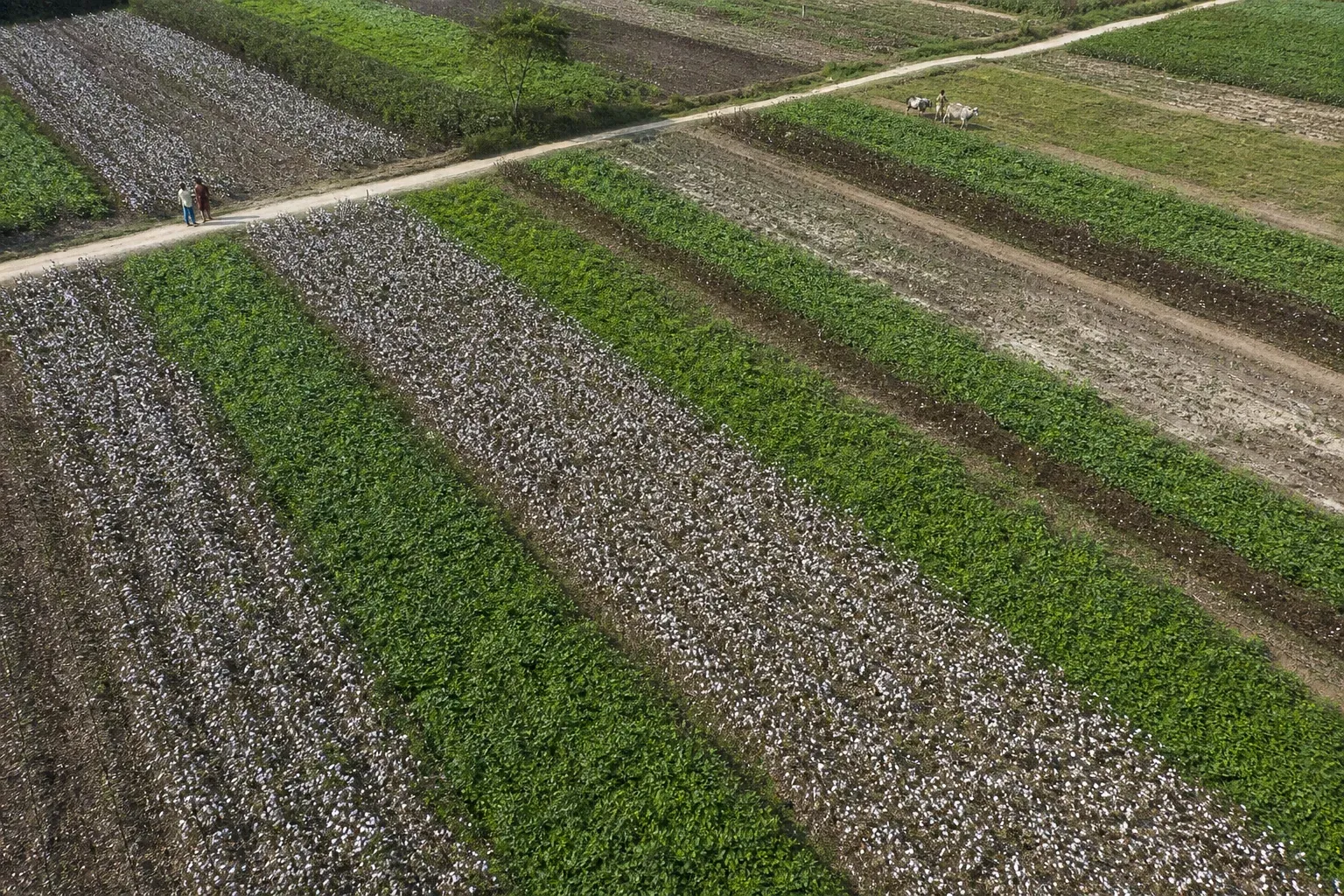
Yield stability, not just peak yield, is the real advantage. Regenerative fields with higher soil organic carbon hold water longer during dry spells and drain better during heavy rain, which matters more every year as monsoon patterns get less predictable. Farmers using High-Density Planting Systems alongside regenerative soil practices have reported yield gains without a matching jump in water or chemical input costs, because the soil itself is doing more of the work that fertilizer and irrigation used to compensate for.
Why Brands in India and Bangladesh Are Bridging Conventional and Regenerative Agriculture
Textile brands aren't adopting regenerative sourcing out of goodwill alone. Regulatory pressure from frameworks like the EU's Corporate Sustainability Reporting Directive now requires Scope 3 emissions data that traces back to the farm, not a generic industry average. That single requirement has pushed brands like the ones sourcing cotton from India and Bangladesh to look for suppliers who can prove, with farm-level records, exactly how their fiber was grown.
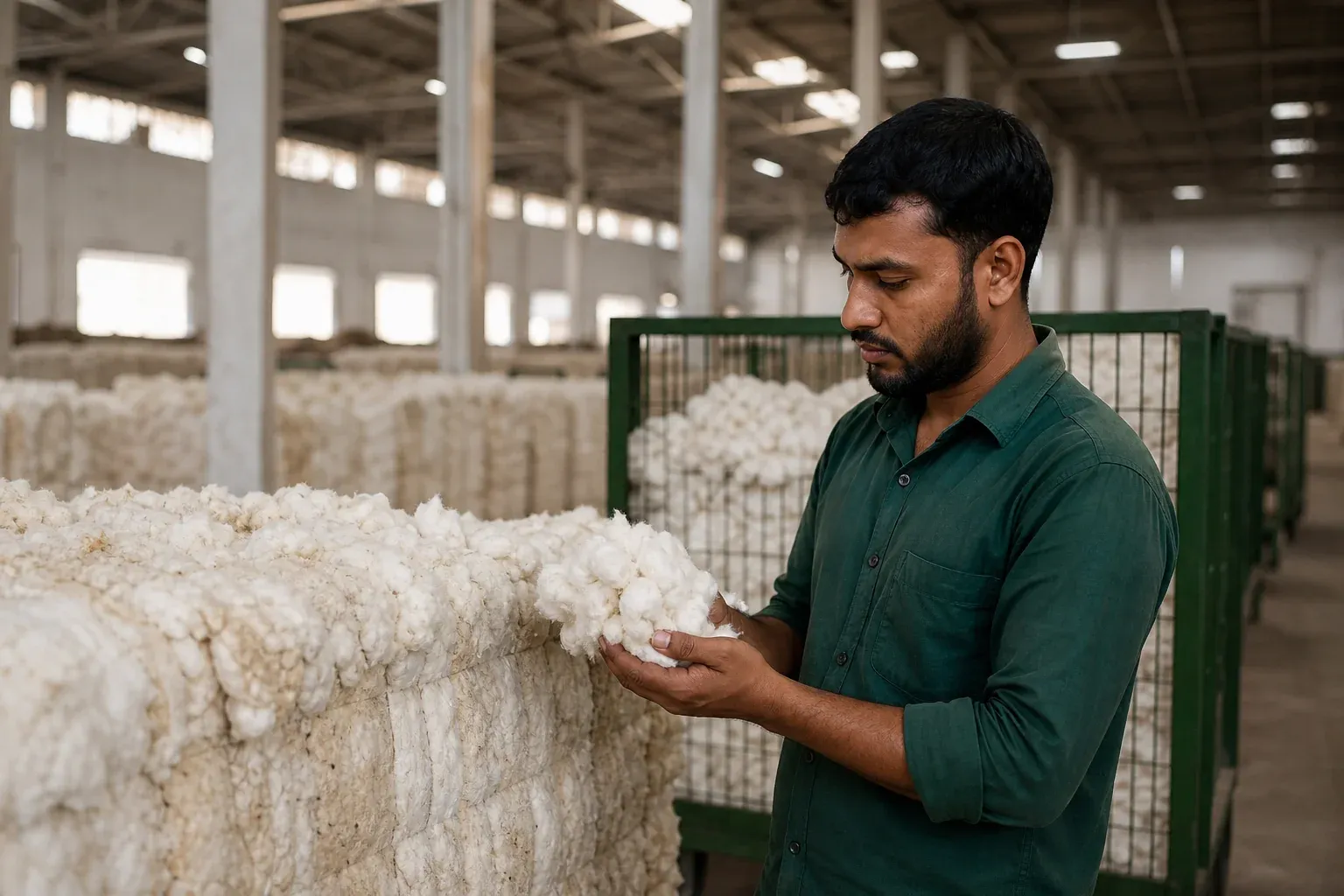
Bridging conventional and regenerative agriculture also solves a supply chain problem brands couldn't ignore: degraded soil eventually means unstable fiber supply. A cotton belt losing organic matter every season produces less predictable yield and quality, which is bad for a brand's sourcing plan regardless of its sustainability goals. Traceability systems that connect farm practices to fiber lots give brands the proof they need for both compliance and supply security. Our piece on why traceability in cotton matters for brand compliance covers this in more depth, and regenerative vs conventional cotton: what brands pay for breaks down the sourcing economics specifically.
How Beetle Regen Puts Regenerative Agriculture Meaning Into Practice
Beetle Regen runs regenerative cotton and rice programs across India and Bangladesh that turn the definitions above into farm-level action. Farmers in our cotton programs get direct training on reduced tillage, cover cropping, and biochar production, while rice farmers adopt Alternate Wetting and Drying to cut water use without losing yield. Every practice change gets tracked through our Measurement, Reporting, and Verification systems, so the soil carbon gains and water savings are documented, not just claimed.
On the brand side, our Sustainability-as-a-Service model takes that farm-level data and turns it into Scope 3-ready reporting, traceable fiber sourcing, and carbon credit monetization, closing the loop between what happens in a field in Maharashtra and what a brand's sustainability team needs to report to regulators or its board. You can see how this plays out in practice in our case studies from farm to fashion, and how program outcomes get tracked in what KPIs to track in a regenerative cotton program.
Farmer inclusion matters too. Our programs are built to bring in women farmers, who handle much of the hands-on work that determines soil outcomes but are historically underrepresented in formal training. Our article on women farmers' participation in regenerative cotton programs explains why this inclusion changes program results, not just optics.
Frequently Asked Questions
What is regenerative farming, in one sentence?
Regenerative farming is a set of practices, reduced tillage, cover cropping, crop rotation, and biochar use, that actively rebuild soil carbon and structure while cutting input costs and creating new income through carbon credits.
What is the key difference between regenerative agriculture and conventional agriculture?
Conventional agriculture aims to sustain output using external inputs like fertilizer and irrigation. Regenerative agriculture aims to rebuild the soil itself so it needs fewer external inputs over time, which is a fundamentally different goal, not just a different technique.
Does regenerative farming lower yields compared to conventional methods?
Not once the transition period passes. Most farmers see yield stability improve within two to three seasons, especially during erratic rainfall years, because healthier soil holds water and nutrients more consistently than depleted soil under heavy chemical input.
How is regenerative cotton different from regenerative agriculture generally?
Regenerative cotton applies the same soil-first principles specifically to cotton farming, with added focus on fiber traceability for textile brands. Our guide on what is regenerative cotton covers that fiber-specific angle in full.
Understanding the regenerative agriculture meaning is only the first step. Turning it into measurable soil carbon, stable yields, and traceable fiber supply takes structured training, kiln access, and verification systems most farmers and brands can't build alone. If you're a farmer cooperative ready to start, or a brand that needs traceable, carbon-insetted cotton to meet reporting requirements, contact Beetle Regen to talk through what a program would look like for your fields or your supply chain.