Regenerative Agriculture vs. Conventional Farming: ROI in 2026
As agricultural businesses and textile industry leaders face mounting pressure to meet sustainability targets in 2026, the debate between regenerative agriculture and conventional farming has shifted from environmental idealism to hard financial analysis. With 33% of global soils already degraded according to UN FAO data, and climate policy increasingly favoring sustainable practices, the question is no longer whether to change, but which approach delivers genuine return on investment.
This comprehensive comparison examines both farming systems across critical metrics including soil health, operational costs, yield performance, carbon credit opportunities, and long-term profitability. Whether you're a commercial farmer evaluating transition options, a textile manufacturer seeking sustainable supply chains, or a corporate sustainability team working toward Net Zero goals, understanding the complete financial picture is essential for strategic decision-making.
Understanding the Two Farming Paradigms
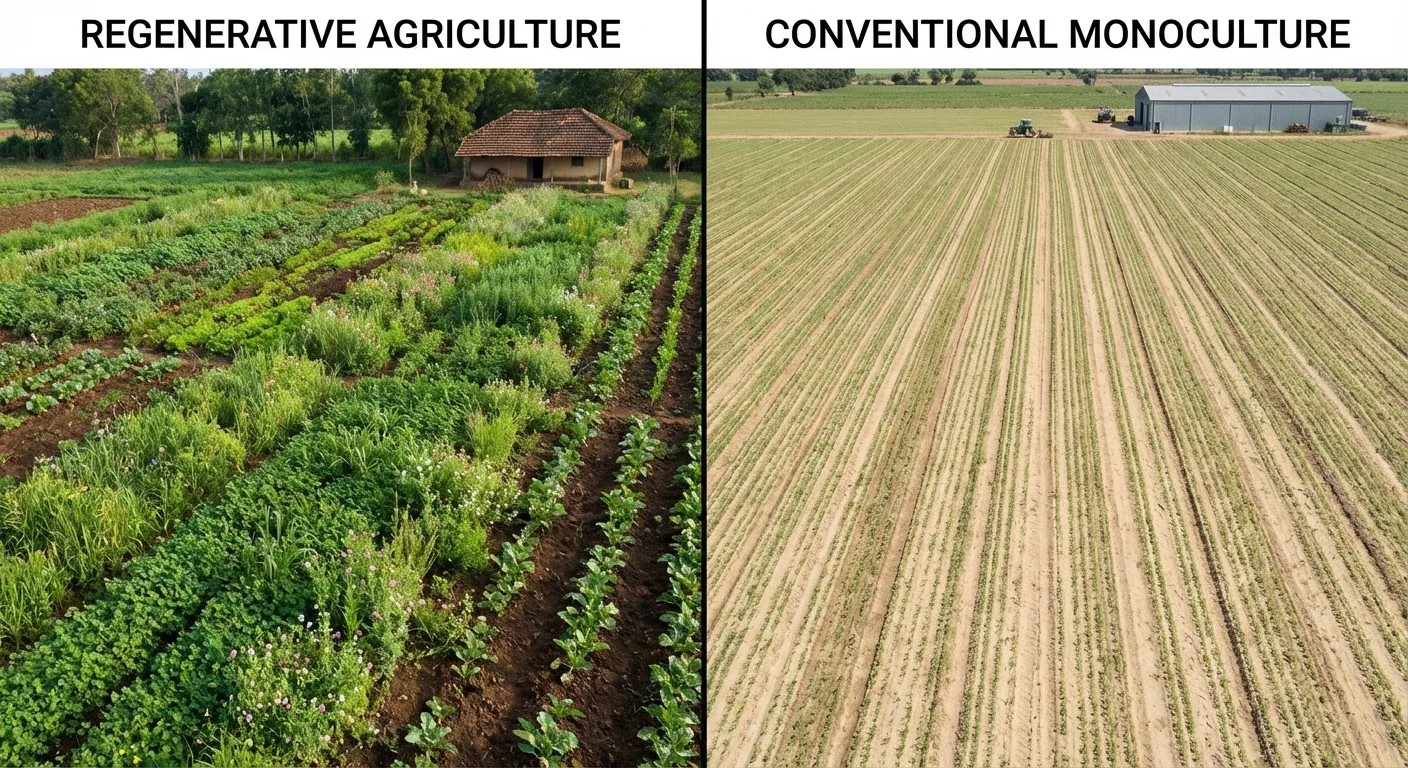
Before diving into financial comparisons, it's important to establish clear definitions of what we're comparing. Regenerative agriculture represents a holistic farming approach focused on rebuilding soil organic matter, enhancing biodiversity, improving water cycles, and sequestering carbon. This system works with natural processes rather than against them, using practices like cover cropping, reduced tillage, crop rotation, and integrated livestock management.
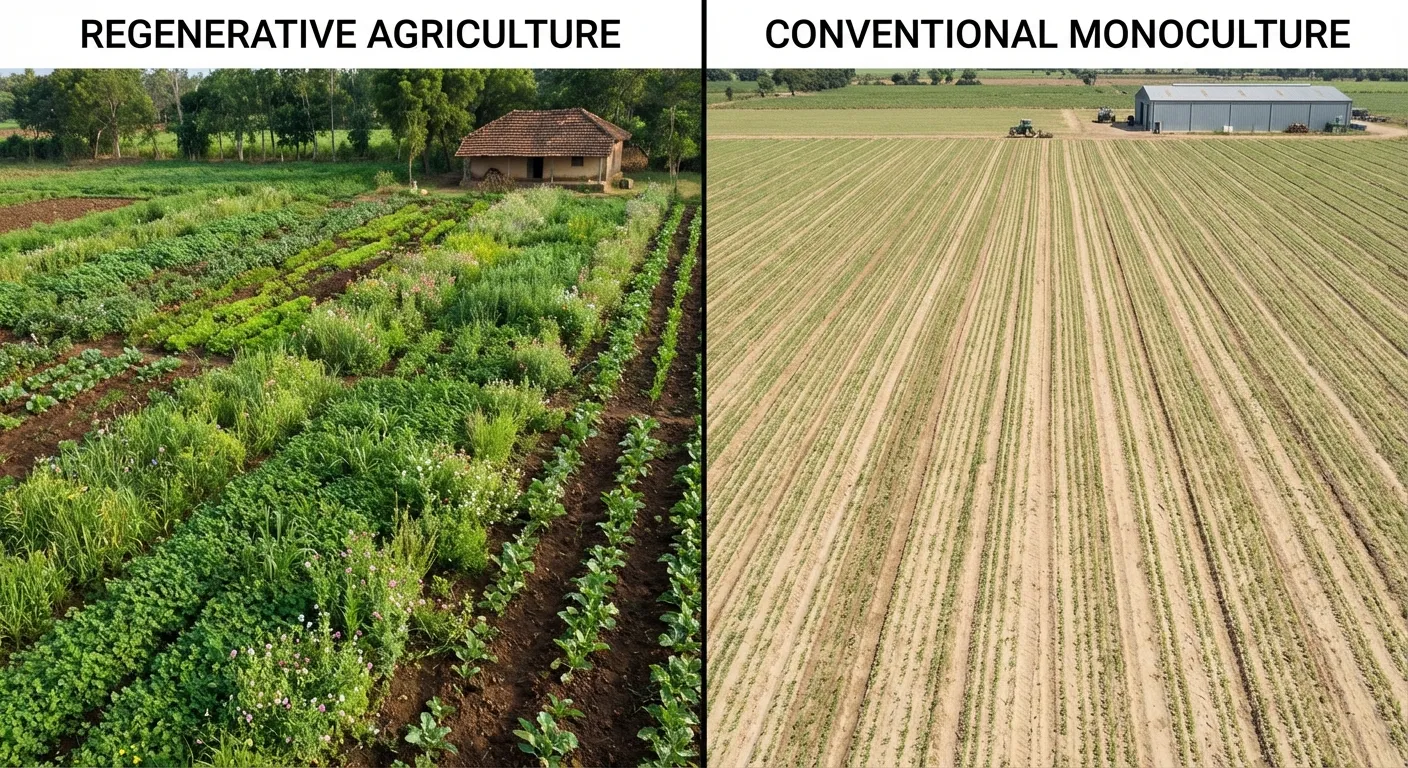
Conventional farming, by contrast, emerged from the Green Revolution of the mid-20th century and relies heavily on synthetic fertilizers, pesticides, monoculture cropping, and intensive tillage. This approach prioritized maximizing short-term yields through external inputs and mechanization, creating the industrial agriculture system that dominates global food production today.
In 2026, the context for this comparison has evolved significantly. Climate policy frameworks increasingly recognize agriculture's role in carbon sequestration. Carbon credit markets have matured, creating new revenue streams for farmers who adopt regenerative practices. Meanwhile, textile and fashion industry businesses face growing consumer demand for sustainable supply chains and regulatory pressure to reduce environmental footprints.
The economic calculus has fundamentally changed. What once appeared as a trade-off between productivity and sustainability now reveals itself as a choice between short-term extraction and long-term value creation. The question facing agricultural enterprises is whether the transition investment in regenerative agriculture delivers superior returns compared to continuing conventional methods.
Soil Health: The Foundation of Long-Term Productivity
Soil health represents the most fundamental difference between regenerative agriculture and conventional farming, with profound implications for long-term profitability. In regenerative systems, soil is treated as a living ecosystem to be nurtured and enhanced. Conventional farming, conversely, often treats soil primarily as a medium for holding plants while external inputs provide nutrition.
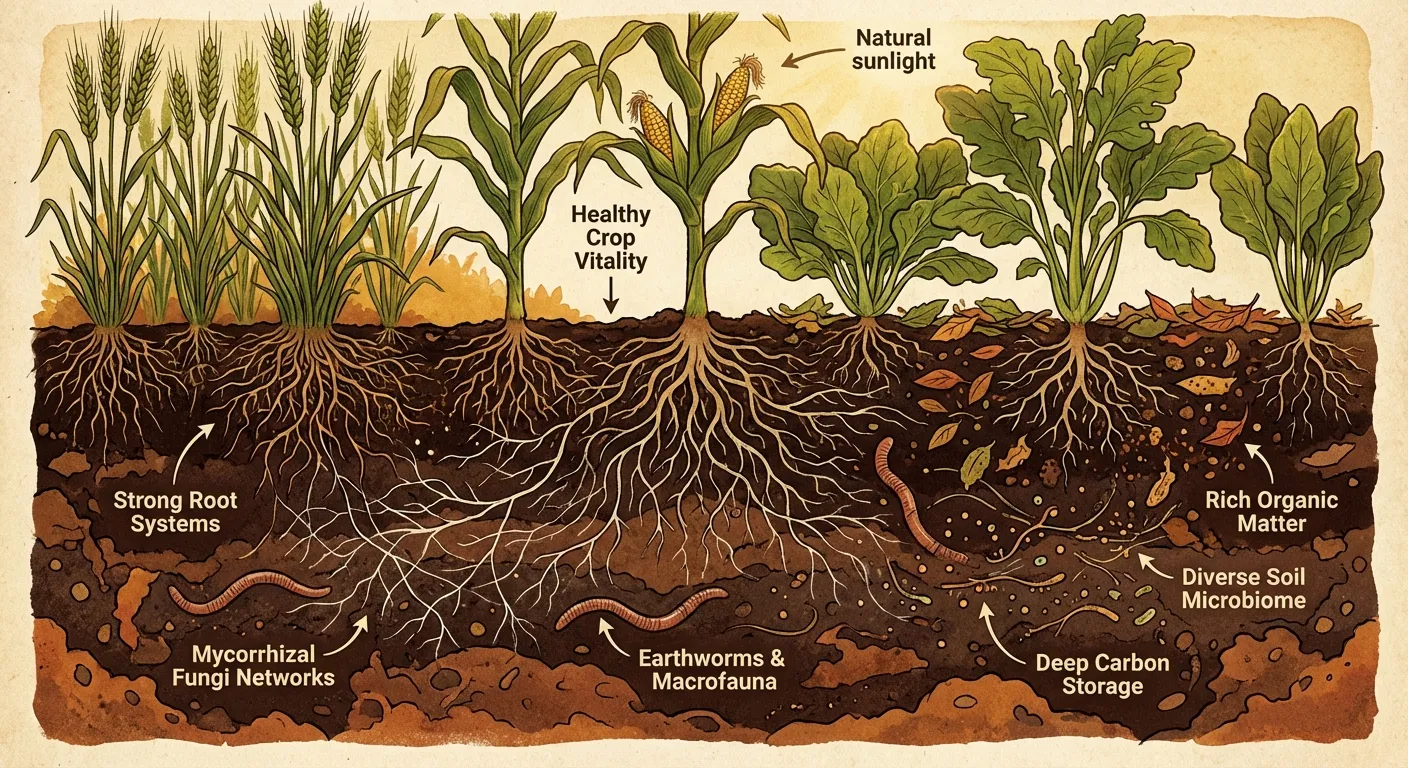
Regenerative agriculture actively rebuilds soil organic matter through practices like cover cropping, composting, and minimizing soil disturbance. This organic matter acts as a carbon sink, improves water retention, enhances nutrient cycling, and supports beneficial microbial communities. Farms implementing regenerative practices typically see soil organic matter increase by 0.5-1% annually during the first five years, with corresponding improvements in soil structure and fertility.
Conventional farming methods, particularly intensive tillage and monoculture cropping, accelerate soil degradation. The UN FAO reports that 33% of global soils are already degraded, with conventional agriculture practices being a primary driver. Tillage disrupts soil structure, oxidizes organic matter, and destroys microbial networks. Chemical inputs can further diminish soil biology, creating dependency on external fertilizers as natural fertility declines.
The financial implications extend beyond immediate input costs. Degraded soils require increasing fertilizer applications to maintain yields, creating an escalating cost spiral. They also exhibit reduced water infiltration, leading to erosion, runoff, and vulnerability during drought conditions. Healthy soils in regenerative systems, by contrast, can hold significantly more water and nutrients, reducing input requirements while improving resilience to climate variability.
For agricultural businesses evaluating long-term asset value, soil health represents the difference between depleting capital and building it. A farm with improving soil health increases in value and productive capacity over time. A farm with degrading soils faces declining productivity and increasing operational costs, ultimately diminishing asset value.
Input Costs: Short-Term vs. Long-Term Investment
The cost structure comparison between regenerative agriculture and conventional farming reveals a critical distinction between operating expenses and capital investment. Conventional farming typically involves lower initial transition costs but higher ongoing operational expenses. Regenerative agriculture requires upfront investment in knowledge, equipment modifications, and transition management, but delivers declining input costs over time.
In conventional farming systems, synthetic fertilizers and pesticides represent major recurring expenses. Global fertilizer prices have experienced significant volatility, with nitrogen fertilizer costs fluctuating based on natural gas prices and geopolitical factors. Pesticide expenses similarly continue throughout the farming operation, with additional costs arising as pest resistance develops and requires stronger or more frequent applications.
The transition to regenerative agriculture involves several categories of investment. Farmer training programs are essential, as regenerative methods require different knowledge and skills than conventional approaches. Equipment modifications may be needed for cover crop planting, reduced tillage, or integrated livestock management. During the transition period, typically lasting two to four years, farms may experience temporary yield reductions as soil biology rebuilds and new systems stabilize.
However, the long-term cost trajectory favors regenerative systems. As soil health improves, natural fertility reduces or eliminates synthetic fertilizer requirements. Enhanced biodiversity and ecosystem balance diminish pest pressure, reducing pesticide needs. Improved water retention lowers irrigation costs. Many regenerative farms report 50-70% reductions in input costs within five years of transition, with some achieving complete independence from synthetic inputs.
Labor considerations present a nuanced picture. Regenerative agriculture often requires more management intensity and observation skills, though not necessarily more total labor hours. The knowledge-intensive nature of regenerative farming means that stakeholder engagement and continuous learning become operational necessities rather than optional enhancements.
For textile industry businesses evaluating supply chain partners, understanding this cost structure is crucial. Initial transition support may be necessary, but the long-term economics create more stable, resilient supplier relationships with reduced exposure to input price volatility.
Crop Yield Performance: Debunking the Productivity Myth
Perhaps no aspect of the regenerative agriculture versus conventional farming debate generates more controversy than yield performance. The conventional wisdom that industrial methods are necessary for high productivity deserves careful examination against emerging data from regenerative systems.
During the initial transition period, regenerative agriculture systems often experience yield reductions of 10-25% compared to conventional baselines. This temporary decline occurs as soil biology rebuilds, natural pest-predator balances establish, and farmers develop proficiency with new management approaches. This transition period represents a genuine economic challenge that must be factored into ROI calculations.
However, the long-term yield picture tells a different story. Once regenerative systems mature, typically after three to five years, crop yield performance often matches or exceeds conventional systems. More importantly, regenerative yields demonstrate greater stability across varying weather conditions. During drought years, regenerative farms with improved soil water retention frequently outperform conventional neighbors by significant margins.
A comprehensive analysis must look beyond simple quantity metrics to consider quality factors. Crops grown in healthy, biologically active soils often exhibit higher nutrient density, commanding premium prices in quality-conscious markets. For textile industry applications, fiber quality improvements can translate to superior material properties and market positioning.
The resilience advantage of regenerative agriculture becomes increasingly valuable in the context of climate change. Extreme weather events, whether drought, flooding, or temperature fluctuations, impact conventional monocultures more severely than diversified regenerative systems. This resilience represents a form of risk-adjusted return that traditional yield comparisons often overlook.
For agricultural enterprises, the yield question ultimately centers on consistency and risk management rather than peak production. A system that delivers 95% of maximum yield with high reliability and low input costs often outperforms a system achieving 100% yield in ideal conditions but vulnerable to collapse during stress periods.
Carbon Credits and New Revenue Streams
The emergence of mature carbon markets in 2026 has fundamentally altered the economic equation for regenerative agriculture. What was once primarily an environmental benefit now represents a quantifiable revenue stream that significantly impacts ROI calculations.
Carbon sequestration occurs naturally in regenerative agriculture systems as plants capture atmospheric carbon dioxide through photosynthesis and transfer it into soil organic matter through root exudates and plant residue decomposition. Well-managed regenerative systems can sequester 0.5 to 2 tons of carbon per hectare annually, with rates varying based on climate, soil type, and specific practices implemented.
Carbon credit markets have evolved considerably, with prices in 2026 reflecting growing corporate demand for high-quality offsets to meet Net Zero commitments. Agricultural carbon credits, particularly those verified through rigorous measurement protocols, command premium prices due to their co-benefits for soil health, water quality, and biodiversity. For detailed frameworks on implementing carbon sequestration programs, see our guide on carbon sequestration in agriculture.
Beyond carbon credits, regenerative agriculture creates additional revenue opportunities. Textile sustainability initiatives increasingly seek verified regenerative fiber sources, with brands willing to pay premiums for materials grown using practices aligned with their environmental commitments. This creates direct financial incentives for farmers supplying the textile industry to adopt regenerative methods.
Ecosystem service payments represent another emerging revenue category. Watershed protection programs, biodiversity conservation initiatives, and soil health incentives provide additional income streams for regenerative farmers. While conventional farming generates revenue solely from crop sales, regenerative systems monetize multiple outputs from the same land base.
For corporate sustainability teams evaluating agricultural partnerships, these new revenue streams create alignment between environmental goals and economic incentives. Rather than viewing sustainability as a cost center, regenerative agriculture enables companies to participate in value creation throughout the supply chain, from farmers to manufacturers, retailers, and consumers.
Environmental Impact and Regulatory Considerations
The environmental performance differences between regenerative agriculture and conventional farming extend beyond carbon sequestration to encompass water quality, biodiversity, and broader ecosystem health. In 2026, these environmental factors increasingly translate into regulatory compliance costs and market access considerations that directly impact financial returns.
Water quality represents a critical distinction. Conventional farming's reliance on synthetic fertilizers and pesticides creates nutrient runoff and chemical contamination of waterways. Nitrogen and phosphorus pollution from agricultural sources contributes to dead zones in coastal areas and drinking water contamination. Regulatory frameworks increasingly impose costs on pollution sources, whether through direct penalties, required mitigation measures, or participation in watershed protection programs.
Regenerative agriculture, by contrast, improves water quality through reduced chemical inputs and enhanced soil structure that minimizes runoff. The improved water infiltration in healthy soils means that rainfall stays on the farm rather than carrying nutrients and sediments into waterways. This environmental performance reduces regulatory risk and may qualify farms for incentive payments from watershed protection programs.
Climate policy trends in 2026 increasingly favor regenerative practices through both incentives and regulations. Many jurisdictions now offer tax credits, grants, or technical assistance for farmers transitioning to regenerative methods. Conversely, regulations targeting greenhouse gas emissions, soil degradation, or biodiversity loss create compliance costs for conventional operations that regenerative systems avoid.
Biodiversity considerations affect both environmental performance and operational resilience. Conventional monocultures create simplified ecosystems vulnerable to pest outbreaks and disease. Regenerative systems with diverse crop rotations, integrated livestock, and habitat preservation support beneficial insects, pollinators, and natural pest predators. This biodiversity provides free ecosystem services that conventional farms must purchase through pesticide applications.
For businesses in the textile and agriculture industries, regulatory trends create strategic imperatives. Companies building supply chains around regenerative agriculture position themselves ahead of regulatory curves, avoiding future compliance costs while accessing current incentive programs. Those maintaining conventional supply chains face increasing regulatory risk and potential stranded assets as environmental standards tighten.
ROI Analysis: The Complete Financial Picture
Synthesizing the various cost and revenue factors into a comprehensive ROI analysis reveals the true economic comparison between regenerative agriculture and conventional farming. The financial picture varies significantly across different time horizons, requiring careful consideration of both short-term cash flow and long-term value creation.
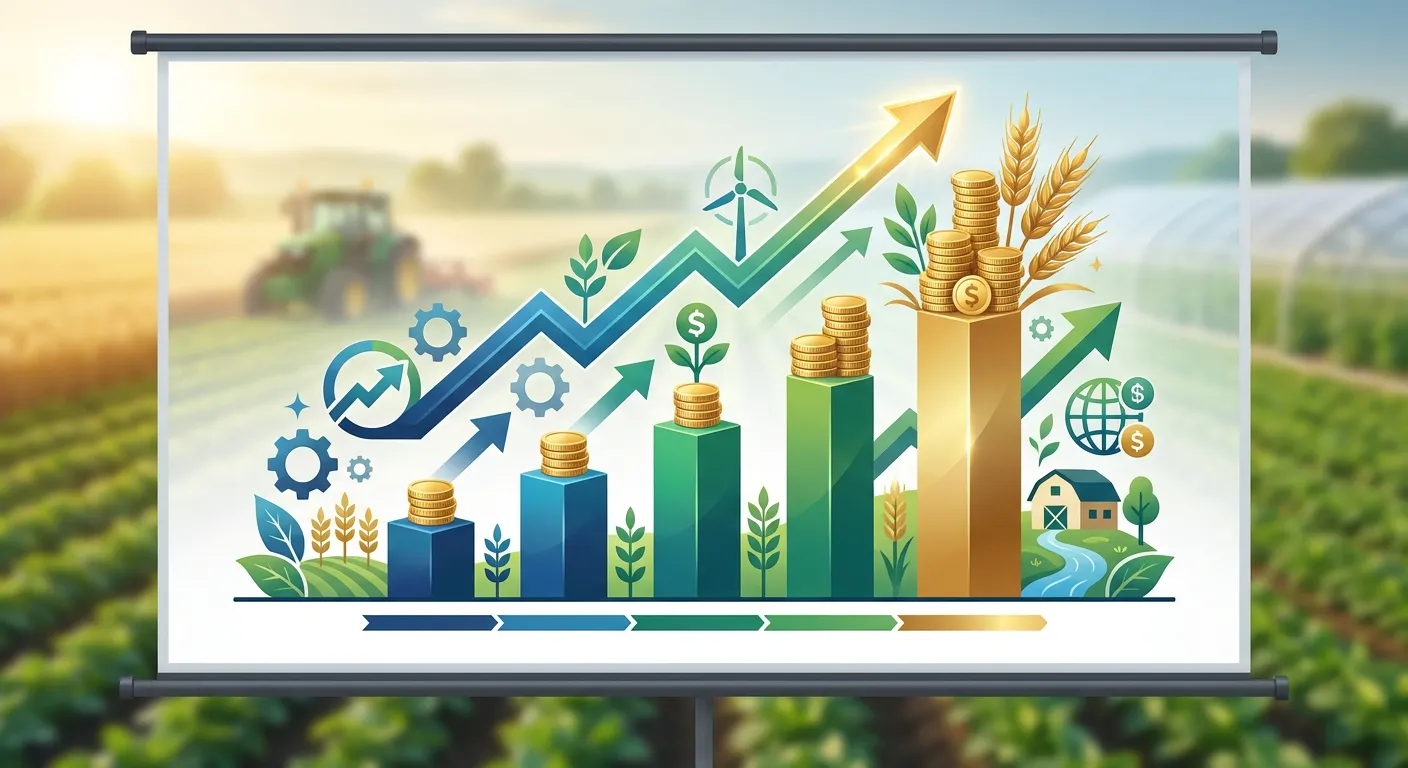
Year 1-2: The Investment Phase - During the initial transition period, regenerative agriculture typically shows lower returns than continuing conventional methods. Transition costs include farmer training, equipment modifications, and potential yield reductions. Cash flow may be negative or reduced compared to conventional baselines. However, this period also sees the beginning of input cost reductions and potential access to transition support programs.
Year 3-4: The Break-Even Period - As soil health improves and management skills develop, regenerative systems typically reach financial parity with conventional farming. Yields recover to competitive levels while input costs continue declining. Carbon credit revenue begins contributing meaningfully to farm income. The cumulative investment begins generating returns, though total ROI may still favor conventional systems when measured from the transition starting point.
Year 5+: The Value Creation Phase - Mature regenerative systems typically demonstrate superior financial performance compared to conventional farming. Reduced input costs, stable yields, carbon credit revenue, and potential market premiums combine to deliver higher net income. More importantly, the farm asset itself increases in value as soil health improves, creating equity appreciation that conventional operations don't experience.
A complete ROI analysis must account for risk-adjusted returns. Regenerative agriculture's resilience to climate variability, reduced exposure to input price volatility, and diversified revenue streams lower overall business risk. In financial terms, regenerative systems may deliver similar average returns with lower variance, resulting in superior risk-adjusted performance.
The total cost of ownership perspective reveals additional advantages. Conventional farming's environmental externalities, while often not directly borne by individual farmers, create societal costs that increasingly translate into regulatory burdens, compliance expenses, and market access restrictions. Regenerative agriculture generates positive externalities that create value for farmers through ecosystem service payments, brand partnerships, and regulatory advantages.
For agricultural businesses and textile industry partners evaluating long-term strategy, the ROI analysis increasingly favors regenerative agriculture when viewed through a comprehensive lens that includes risk management, asset appreciation, regulatory positioning, and emerging revenue streams beyond commodity crop sales.
Industry-Specific Applications: Textile and Agriculture Sectors
The comparison between regenerative agriculture and conventional farming takes on specific dimensions when examined through the lens of textile industry applications and agricultural enterprise strategy. The integration of regenerative practices into textile supply chains creates unique value propositions that extend beyond farm-level economics.
For textile and fashion industry businesses, regenerative agriculture offers a pathway to credible sustainability claims backed by measurable environmental improvements. Consumer demand for sustainable fashion continues growing in 2026, with increasing sophistication about greenwashing versus genuine environmental performance. Regenerative fiber sourcing provides verifiable metrics around carbon sequestration, soil health improvement, and biodiversity enhancement that resonate with environmentally conscious consumers.
The supply chain transformation required for regenerative textile production creates both challenges and opportunities. Traceability systems must track fiber from regenerative farms through processing and manufacturing. This transparency, while requiring investment in data integration and verification systems, creates competitive advantages through brand differentiation and premium pricing opportunities.
Farmer training programs represent a critical success factor for scaling regenerative agriculture in textile supply chains. The knowledge-intensive nature of regenerative methods means that simply mandating practice changes without adequate training and support leads to poor outcomes. Successful programs, like those offered by organizations such as Beetle Regen Solutions, provide comprehensive education on regenerative principles, hands-on implementation support, and ongoing technical assistance.
The circular economy principles embedded in regenerative agriculture align naturally with textile industry sustainability goals. Rather than linear take-make-dispose models, regenerative systems create closed loops where waste becomes input, biological cycles regenerate resources, and long-term value creation replaces short-term extraction. This philosophical alignment facilitates integration between regenerative agriculture and circular textile innovation.
For agricultural enterprises, the textile industry represents a high-value market segment willing to pay premiums for regeneratively produced fiber. This creates economic incentives that can offset transition costs and accelerate ROI timelines. Strategic partnerships between farmers and textile companies, facilitated through platforms like collaborative forums for sustainable agriculture solutions, enable risk-sharing and mutual value creation throughout the transition process.
Stakeholder engagement across the value chain becomes essential. Successful regenerative textile supply chains require coordination among farmers, processors, manufacturers, brands, retailers, and consumers. Each stakeholder must understand their role in the system and the value they receive from participation. This collaborative approach contrasts with conventional supply chains' often adversarial relationships focused solely on price negotiation.
Making the Transition: Practical Implementation Pathways
Understanding the theoretical advantages of regenerative agriculture versus conventional farming is one thing; successfully implementing the transition is another. Agricultural businesses and textile industry partners need practical pathways that manage risk, maintain cash flow, and build capabilities systematically.
The assessment and planning phase begins with comprehensive evaluation of current operations, soil health baselines, and specific goals. This assessment should include soil testing for organic matter, nutrient levels, and biological activity; analysis of current input costs and yield performance; and identification of specific environmental and financial objectives. Clear baseline data enables meaningful measurement of progress and ROI calculation.
Farmer training programs provide the knowledge foundation for successful transition. Regenerative agriculture requires different observation skills, decision-making frameworks, and management approaches than conventional farming. Effective training combines classroom education on regenerative principles with hands-on field demonstrations, peer learning networks, and ongoing technical support. The investment in training represents a critical success factor that should not be minimized or rushed.
Phased implementation strategies manage risk by transitioning portions of farm operations incrementally rather than attempting wholesale transformation overnight. A common approach involves starting with cover crops on a portion of acreage, then expanding to reduced tillage, diversified rotations, and integrated livestock as experience and confidence build. This phased approach maintains cash flow from conventional operations while developing regenerative systems.
Data integration and monitoring systems track progress and inform adaptive management. Key metrics include soil organic matter trends, input cost changes, yield performance, carbon sequestration rates, and financial returns. Regular monitoring enables course corrections and provides documentation for carbon credit verification, organic certification, or supply chain traceability requirements.
For textile industry businesses supporting farmer transitions, partnership models should address the financial challenges of the transition period. Options include premium pricing commitments, advance payments, technical assistance provision, or cost-sharing for training and equipment. These investments create stable supply relationships and ensure adequate fiber availability as regenerative sourcing scales.
Organizations like Beetle Regen Solutions provide comprehensive support throughout the transition process, from initial assessment through implementation and ongoing optimization. Their evidence-based, data-led approach combines research expertise with practical field experience, helping agricultural businesses and textile industry partners navigate the complexities of regenerative transition while maximizing ROI.
The implementation pathway should also consider certification and verification systems. Organic certification may be a goal for some operations, though regenerative agriculture and organic certification are distinct concepts with different requirements. Carbon credit verification protocols, supply chain traceability standards, and industry-specific sustainability certifications each have specific documentation and practice requirements that should be integrated into implementation planning.
The Verdict: Which Approach Delivers Better ROI in 2026?
After examining regenerative agriculture and conventional farming across soil health, input costs, yield performance, carbon credits, environmental impact, and industry applications, the ROI question reveals itself to be more nuanced than a simple binary choice. The answer depends critically on time horizon, risk tolerance, and strategic objectives.
For businesses focused solely on minimizing short-term costs and maintaining current operations, conventional farming may appear financially advantageous in Years 1-2. The absence of transition costs and the continuation of familiar practices create a path of least resistance. However, this short-term perspective overlooks mounting risks from soil degradation, input price volatility, regulatory trends, and climate impacts.
For agricultural enterprises and textile industry businesses taking a strategic, long-term view, regenerative agriculture delivers superior risk-adjusted returns. The initial transition investment pays dividends through reduced input costs, diversified revenue streams, improved resilience, asset appreciation, and positioning ahead of regulatory and market trends. By Year 5, the cumulative ROI typically favors regenerative systems, with the gap widening in subsequent years.
The comparison becomes even more compelling when considering factors beyond direct farm-level economics. For textile and fashion industry businesses, regenerative supply chains create brand value, market differentiation, and credible sustainability narratives that command premium pricing. For corporate sustainability teams, regenerative agriculture partnerships provide measurable progress toward carbon neutral and Net Zero goals while creating positive impacts throughout the supply chain.
The environmental imperative adds urgency to the economic analysis. With 33% of global soils already degraded and climate change accelerating, continuing conventional farming practices represents not just a missed opportunity but an actively destructive path. The question is not whether agriculture must transition to regenerative practices, but whether individual businesses will lead or lag in that inevitable transition.
In 2026, the evidence increasingly supports regenerative agriculture as the approach delivering better ROI when measured comprehensively across financial returns, risk management, asset value, regulatory positioning, and strategic alignment with market trends. The transition requires commitment, investment, and patience, but the long-term value creation justifies the near-term challenges.
For agricultural businesses, textile industry partners, and corporate sustainability teams ready to move beyond comparison to implementation, the pathway forward involves assessment, training, phased transition, and ongoing optimization. Success requires collaboration among farmers, businesses, and technical experts who understand both the agronomic principles and the commercial realities of regenerative agriculture.
Beetle Regen Solutions works with businesses and farmers throughout this transition journey, providing regenerative agriculture consulting, comprehensive training programs, and implementation support tailored to textile industry and agricultural enterprise needs. Their collaborative approach creates economic benefits throughout the supply chain while delivering measurable environmental improvements in soil health, carbon sequestration, and ecosystem restoration. If you're ready to explore how regenerative agriculture can deliver superior ROI for your organization while contributing to climate action and sustainable farming, reach out to discuss your specific goals and implementation pathway.