What Is Regenerative Agriculture? A Field-Level View From India and Bangladesh
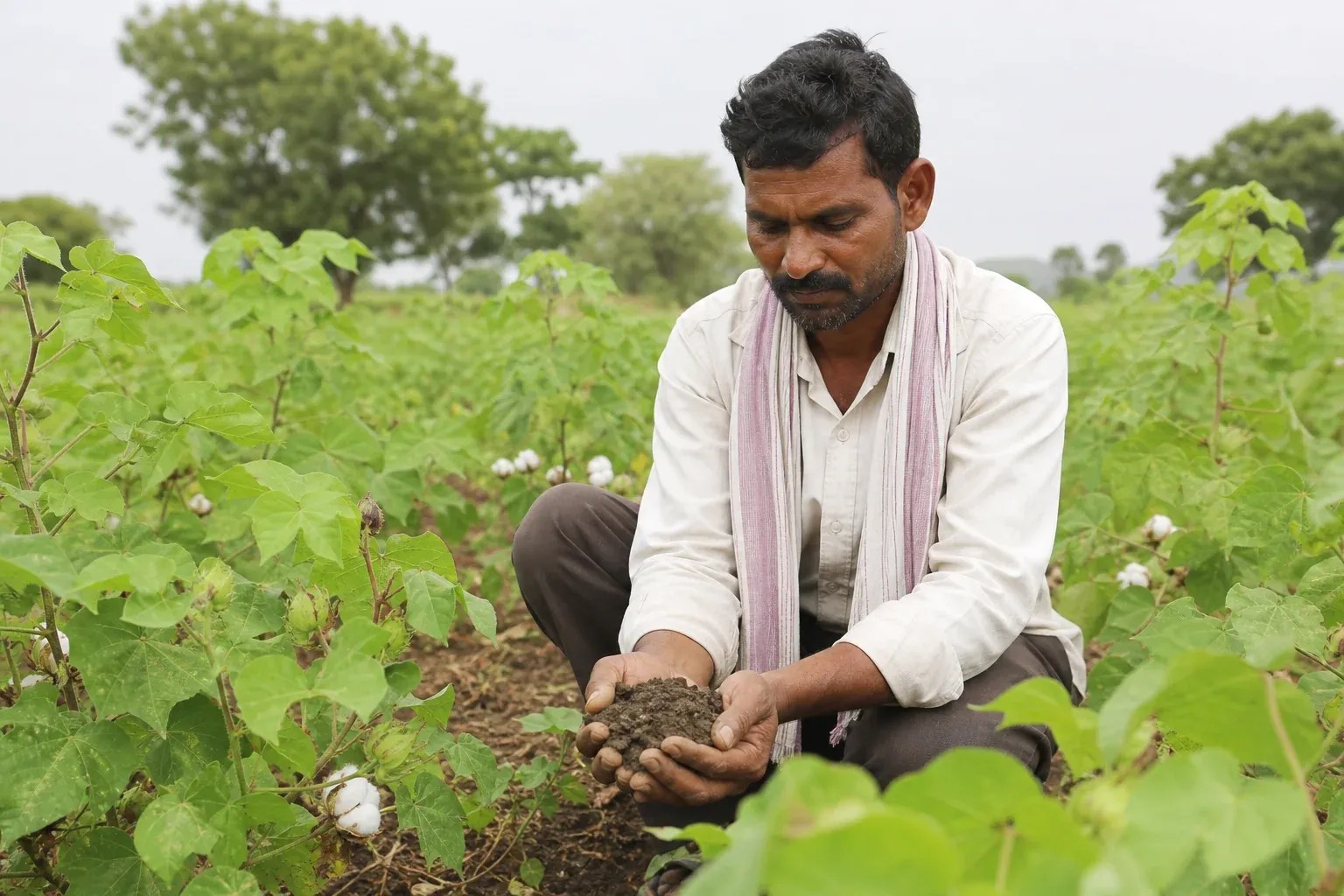
Regenerative agriculture means farming in a way that rebuilds soil, cuts chemical use and raises farmer income at the same time, rather than trading one for another. Across Beetle's programmes in India and Bangladesh, that has meant 18% higher yields, 38% higher net income and 23% less chemical fertilizer among participating cotton farmers, using two concrete practices: high-density planting and farmer-led biochar.
These figures are drawn from Beetle's own programme reporting, and are discussed in more detail in Beetle's account of what regenerative agriculture looks like on the ground.
Key Takeaways
- Definition by practice: Regenerative agriculture is a set of field-level habits (reduced tillage, residue return, biochar, better nutrient timing) that a farmer adopts season over season, not a single certification.
- Real outcomes, not projections: Beetle's programme farmers saw an average 18% yield increase, 38% income improvement, 23% fertilizer reduction and 17% avoided greenhouse gas emissions per hectare compared with control-group farmers, as described in Beetle's farmer case notes from Sambhaji Nagar.
- Two practices carry most of the change: High-Density Planting Systems (HDPS) and farmer-led biochar from cotton stalks are the interventions farmers actually keep using once they see results.
- Scale is real, not aspirational: Beetle's work now reaches close to 120,000 farmers across India, and 2025-26 marked its first pilot interventions in Bangladesh.
- Adoption is gradual by design: Farmers typically add 4 to 5 regenerative practices to their farms, one season at a time, rather than switching all at once.
The Core Principles of Regenerative Agriculture, Wherever You Farm
Before looking at Beetle's specific programme, it helps to name the general principles that regenerative agriculture is built on globally. These show up under different names in different countries, but they are the same underlying habits:
- Minimum or no-till: disturbing the soil as little as possible so its structure, fungal networks and carbon stores stay intact.
- Cover cropping: keeping a living plant in the ground between main crops, rather than leaving soil bare, to protect it from erosion and add organic matter.
- Crop residue return: putting stalks, straw and other leftover plant material back into the soil (or converting them to biochar) instead of burning them.
- Rotational grazing: moving livestock across paddocks in a planned sequence so pasture has time to recover, rather than letting animals graze one area continuously.
- Diversified rotations and intercropping: growing more than one crop type across a season or field to break pest cycles and reduce reliance on a single input.
- Optimized nutrient timing: applying fertilizer and organic amendments when the crop can actually use them, rather than on a fixed calendar.
Beetle's programme uses a specific subset of these — reduced tillage, residue return via biochar, and optimized nutrient timing — matched to cotton farming in India and Bangladesh. A farmer growing a different crop, or running livestock, would lean on a different mix from the same list.
The Wider Picture: What Regenerative Practices Look Like Outside Beetle's Programme
Beetle's case study sits inside a much larger, ongoing body of independent research on the same practices.
In China, provincial-scale research has tracked how chemical fertilizer use, cultivated land area and grain yield move together, which is the same logic behind Beetle's own 23% fertilizer-reduction figure: cutting synthetic inputs does not have to mean cutting yield, when it is paired with better soil management, as this provincial-scale study of fertilizer use, land area and grain yield in China shows.
In sub-Saharan Africa, researchers studying maize cropping have focused on the greenhouse gas footprint of nitrogen fertilizer use and on building region-specific emission factors, the same category of measurement (avoided emissions per hectare) that Beetle reports for its own cotton farmers; see this study of greenhouse gas emissions from fertilization practices in maize cropping across sub-Saharan Africa.
And across organic versus mineral fertilizer systems more broadly, independent meta-analysis work has compared soil fertility, crop yield and greenhouse gas outcomes across cropping systems, which is worth reading alongside any single programme's numbers, including Beetle's, in this meta-analysis of soil fertility, crop yield and greenhouse gas trade-offs across fertilizer types.
Not every study in this space agrees on scale of benefit: a separate European analysis found that greater functional diversity of ground beetle communities improved pest control but did not translate into higher crop yields, a useful reminder that regenerative practices don't move every metric at once, as shown in this study of ground beetle diversity, pest control and crop yield on European farms.
In India specifically, farmer-led natural farming outside Beetle's own programme has produced similar directional results using a different mix of practices. In Betul district, agroecological revival supported by the non-profit Naman Seva Samiti and financial backing through the ATI/IVA programme helped convert watershed-degraded land back into productive farms, described in Betul's agroecological revival.
The mechanism is different from HDPS or biochar, but the underlying pattern — gradual practice change, farmer-led adoption, measurable soil and income recovery — is the same one this article describes in Beetle's cotton belt.
At a Glance: Beetle's Regenerative Agriculture Programme
| Metric | 2025-26 Result |
|---|---|
| Farmers reached | ~120,000 across India and Bangladesh |
| Yield change vs control group | ~18% increase |
| Farmer net income change | ~38% improvement |
| Chemical fertilizer reduction | ~23% |
| Water-use efficiency gain (cotton) | ~16% vs control |
| GHG emissions avoided per hectare | ~17% |
| HDPS coverage this year | 2,100+ hectares, 2,800+ farmers |
| New geography added | Bangladesh (first international pilots) |
What Does Regenerative Agriculture Mean on a Working Farm?
Regenerative agriculture is not a certification you buy or a single technique you install. It is the accumulation of small, repeated changes a farmer makes to how they treat soil, water and crop residue. In Beetle's programmes, each participating farmer typically adopts 4 to 5 regenerative practices on their own land during a season, not all of them at once.
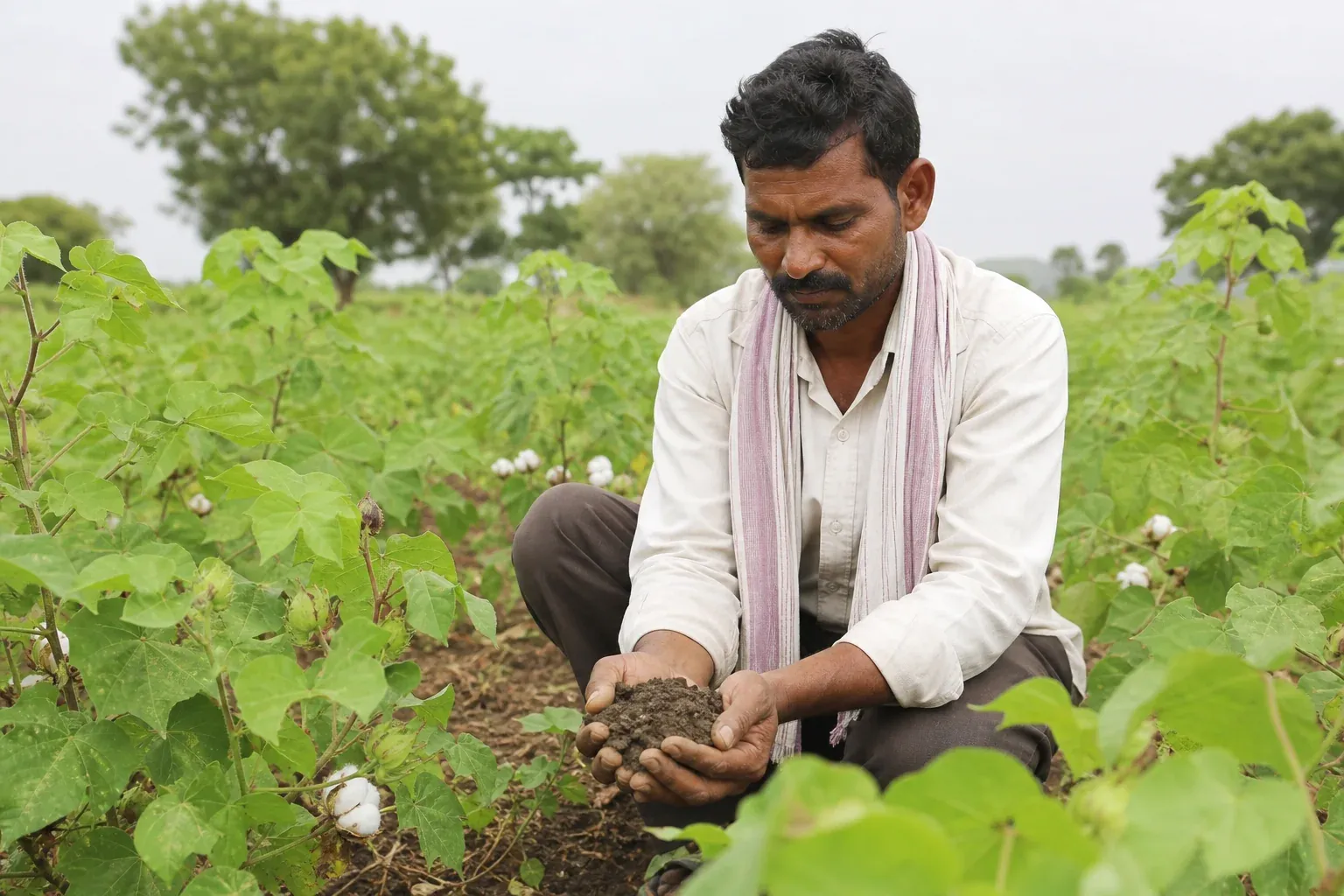
Those practices include reduced tillage, crop residue incorporation instead of burning, optimized nutrient application, intercropping and organic amendments. None of these are exotic. What changes is sequencing and consistency; a farmer who reduces tillage but keeps burning residue only gets part of the benefit. Beetle's field teams and the Niranjanlal Agrawal Foundation (NAF) work directly with farming households on demonstration plots so the difference is visible before farmers are asked to commit more acreage.
This is also why regenerative agriculture reads differently on paper than it does in a field. For a deeper look at how these practices rebuild soil over multiple seasons, see how regenerative agriculture restores soil fertility.
A Starting Checklist for an Individual Farmer
If you farm on your own land and want to start without waiting on a programme, the order matters more than trying everything at once. Based on the sequence Beetle's own field teams use with farmers, a workable starting order looks like this:
- Stop burning crop residue first. Leave stalks and straw in the field, or set them aside for later conversion to biochar, instead of burning them after harvest.
- Reduce tillage on at least one plot. Pick a single field to trial minimum tillage for a season before changing your whole holding.
- Return that residue to the soil, or process it into biochar. This is the step that converts a waste problem (burnt stalks) into a soil input.
- Retime your nutrient application. Match fertilizer and organic amendment timing to when the crop actually needs it, rather than a fixed calendar.
- Add a second practice only once the first is holding. Beetle's own farmers average 4 to 5 practices, added one season at a time, not in a single year.
- Track yield, input cost and income against your own previous season as your control group, so you can see whether the change is actually paying off on your specific soil.
This sequence is a starting point, not a fixed rulebook: soil type, water availability and crop choice will change which step matters most first. A similar sequencing, adapted for natural farming rather than cotton biochar, produced practical results in Betul, India, where farmer-led adoption paired with agroecological support from Naman Seva Samiti reclaimed watershed land — see Betul's agroecological revival for that example.
Budgeting for Biochar Without a Programme Behind You
A solo farmer asking "what will this cost me and how long will it take" deserves a direct answer, and the honest one here is that this article and Beetle's published material don't state a standalone kiln price or setup timeframe for someone working outside a programme.
Rather than guess a number, treat the checklist above as your budgeting sequence: start with stopping residue burning (zero cost, immediate), move to a small-scale biochar trial on the stalks from a single plot before buying or building any equipment, and only then price out a kiln or conversion unit once you know how much residue your own farm actually produces in a season.
Before committing money, check current setup costs and timeframes with a local agricultural extension office, a biochar equipment supplier in your district, or a regenerative agriculture programme operating in your region, since these costs vary by kiln scale, stalk volume and local labour rates in ways no single national figure can capture.
High-Density Planting: Getting More From Every Hectare
High-Density Planting Systems (HDPS) is the first practice most farmers in Beetle's cotton programme test, because the result shows up in a single season. Instead of wide-spaced rows, HDPS packs more plants per acre in a tighter layout matched to seed type and local rainfall.
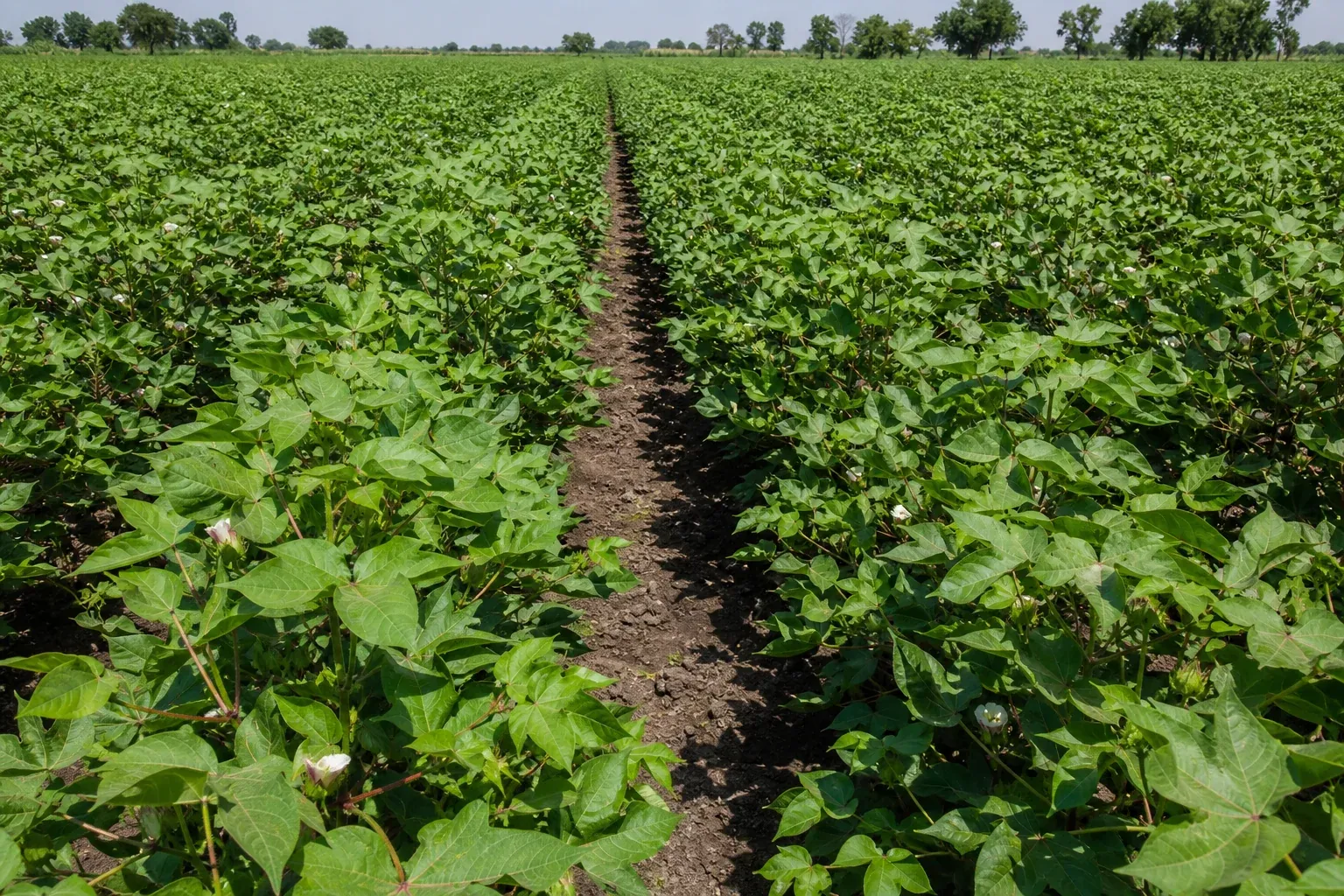
In 2025-26, the HDPS programme reached more than 2,800 farmers across roughly 2,100 hectares in Madhya Pradesh and Maharashtra. Early results show participating farmers gained an average cotton yield increase of approximately 25% compared with conventional planting, a figure documented in Beetle's field notes on its Training of Trainers programme in Indore, along with more uniform crop stands and better resilience under rainfed conditions.
Beetle now plans to scale HDPS to over 20,000 hectares in the coming year, pairing it with the right seed linkages and crop management support rather than seed access alone. The full mechanics of this scale-up are covered in how regenerative agriculture increases crop yield.
Biochar: Turning Cotton Stalks Into a Climate Asset
Cotton stalks left in the field after harvest are usually burned, a practice that pollutes the air and wastes organic material that could rebuild soil carbon. Beetle's farmer-led biochar work converts those stalks into a soil amendment the farmer produces and applies on their own land.
The appeal is that it solves three problems in one move. Farmers get healthier soil and a possible new income stream through carbon markets. Industries and brands get a documented pathway for carbon dioxide removal. Regulators get a working alternative to residue burning.
In Khulna, Bangladesh, a similarly saline-affected region, farmers are now producing biochar locally and applying it directly to their fields, as documented in Beetle's account of biochar adoption in Khulna. This is a sign the approach travels beyond India's cotton belt. Details on how the income side works are covered in how biochar boosts farmer income in regenerative agriculture.
What Results Are Farmers Actually Seeing?
Farmers in Beetle's programme see measurable gains across five areas: an 18% yield increase, a 38% income improvement, a 23% cut in chemical fertilizer use (a reduction in the same direction as the fertilizer-yield relationship documented in independent provincial-scale research on chemical fertilizer, land area and grain yield in China), a 16% gain in water-use efficiency, and 17% fewer greenhouse gas emissions per hectare (comparable in kind to the emission-factor work done for maize cropping systems in sub-Saharan Africa), all measured against control-group farms.
These figures come from the same season and rainfall zone as the control group, which matters more than a single national average would. Income gains outpace yield gains because farmers are also spending less on inputs while producing more, and in some cases earning from biochar sales on the side.
None of these numbers are guaranteed for every farm; soil type, rainfall and how consistently a farmer applies each practice all move the outcome, a caution echoed by the independent finding that greater ecological diversity improved pest control without lifting yields in the European ground beetle study.
How Is This Different From Conventional or Organic Farming?
Regenerative agriculture sits between conventional high-input farming and organic certification, borrowing the practical flexibility of the first and the soil focus of the second without either one's constraints.
| Factor | Conventional Farming | Organic Certification | Regenerative Agriculture |
|---|---|---|---|
| Chemical inputs | Full use, minimal restriction | Synthetic inputs banned | Reduced, not eliminated (~23% cut seen in Beetle's data) |
| Certification required | No | Yes, multi-year transition | No, outcome-based |
| Soil carbon focus | Not a design goal | Indirect benefit | Central design goal |
| Residue management | Often burned | Varies | Converted to biochar or incorporated |
| Yield during transition | Stable | Often dips 2-3 years | Increases seen from season one in HDPS trials |
| Carbon market access | No | Limited | Direct pathway via biochar and soil carbon projects |
The practical difference is that regenerative agriculture asks a farmer to change practices gradually and measures results against a control group, rather than requiring a fixed, all-or-nothing standard. A fuller comparison against conventional economics is in regenerative agriculture vs. conventional farming: ROI in 2026.
Why Did Beetle Expand Into Bangladesh?
Beetle expanded into Bangladesh because the same farmer-centric approach that worked in India's cotton belt applies to other water-stressed, resource-constrained farming regions. 2025-26 marked the organisation's first international pilot interventions there.
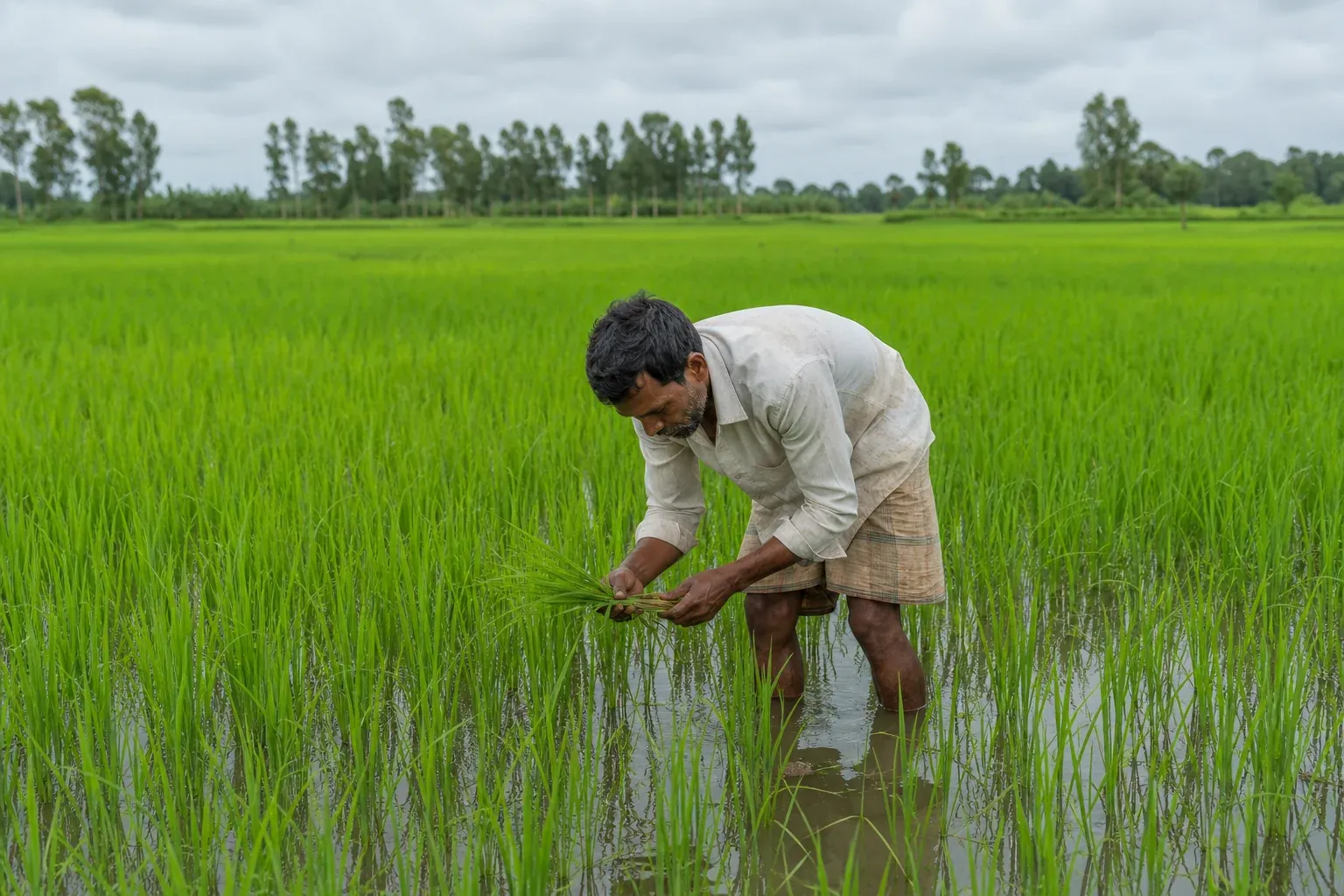
In Khulna, one of Bangladesh's most saline-affected regions, farmers are learning to produce biochar locally, a direct extension of the cotton stalk model used in Madhya Pradesh.
This isn't a separate initiative bolted on for growth optics; it is the same practice, adapted to a region where soil salinity, not just fertility, limits what a farmer can grow. Co-founder Amol Mishra has described this direction as connecting regenerative agriculture with industrial decarbonization over the coming decade, and Bangladesh is the first proof point outside India.
Who Is Involved: Farmers, Partners, and Brands
Beetle's field work depends on partners with existing community trust. The Niranjanlal Agrawal Foundation (NAF) leads on-ground operations across several intervention states, including farmer mobilization, demonstration plot management and continuous engagement with farming households. That grassroots reach, paired with Beetle's technical design, is what lets 4 to 5 practices per farmer actually stick across a season rather than fading after one training session.
Beetle also works within the broader sustainability ecosystem, contributing to industry-wide capacity building and standardized training manuals for partner organisations delivering regenerative cotton work in Madhya Pradesh. Separately, the Women in Regenerative Cotton initiative has engaged more than 620 women across 103 villages, positioning them as recognized co-farmers rather than secondary contributors. For brands and cooperatives evaluating how farmers actually organise around these programmes, how farmer collaboration drives regenerative agriculture covers the mechanics.
How Can Agricultural Businesses and Brands Get Involved?
Agricultural businesses and brands get involved by starting with a scoped pilot in a specific region. That pilot should be tied to measurable outcomes like yield, income or fertilizer reduction, rather than committing to a full supply-chain overhaul upfront.
That means picking a cotton or rice-growing region, agreeing on a control group for comparison, and choosing which practices (HDPS, biochar, or both) fit the local soil and water conditions. Brands sourcing cotton from India or Bangladesh can review sourcing-specific detail in Beetle's regenerative cotton sourcing guide for India and Bangladesh.
What This Means Going Forward
The scale-up plans are specific rather than vague: HDPS is targeted to expand from roughly 2,100 hectares to over 20,000 hectares. Biochar production is expanding alongside carbon project development in Khargone, Nagpur and Chhatrapati Sambhaji Nagar. What isn't settled yet is how consistently new regions will match the results seen in the original pilot areas; adoption gaps across geographies remain a stated focus area for the organisation, not a solved problem.
If you're weighing whether a regenerative agriculture programme fits your farm, cooperative or sourcing strategy, the practical next step is a conversation grounded in your own soil, region and crop, not a generic pitch. Contact Beetle Regen to discuss a pilot scoped to your farms or supply chain, and see how HDPS or farmer-led biochar could apply to your specific conditions.