What KPIs Should You Track in a Regenerative Cotton Program?
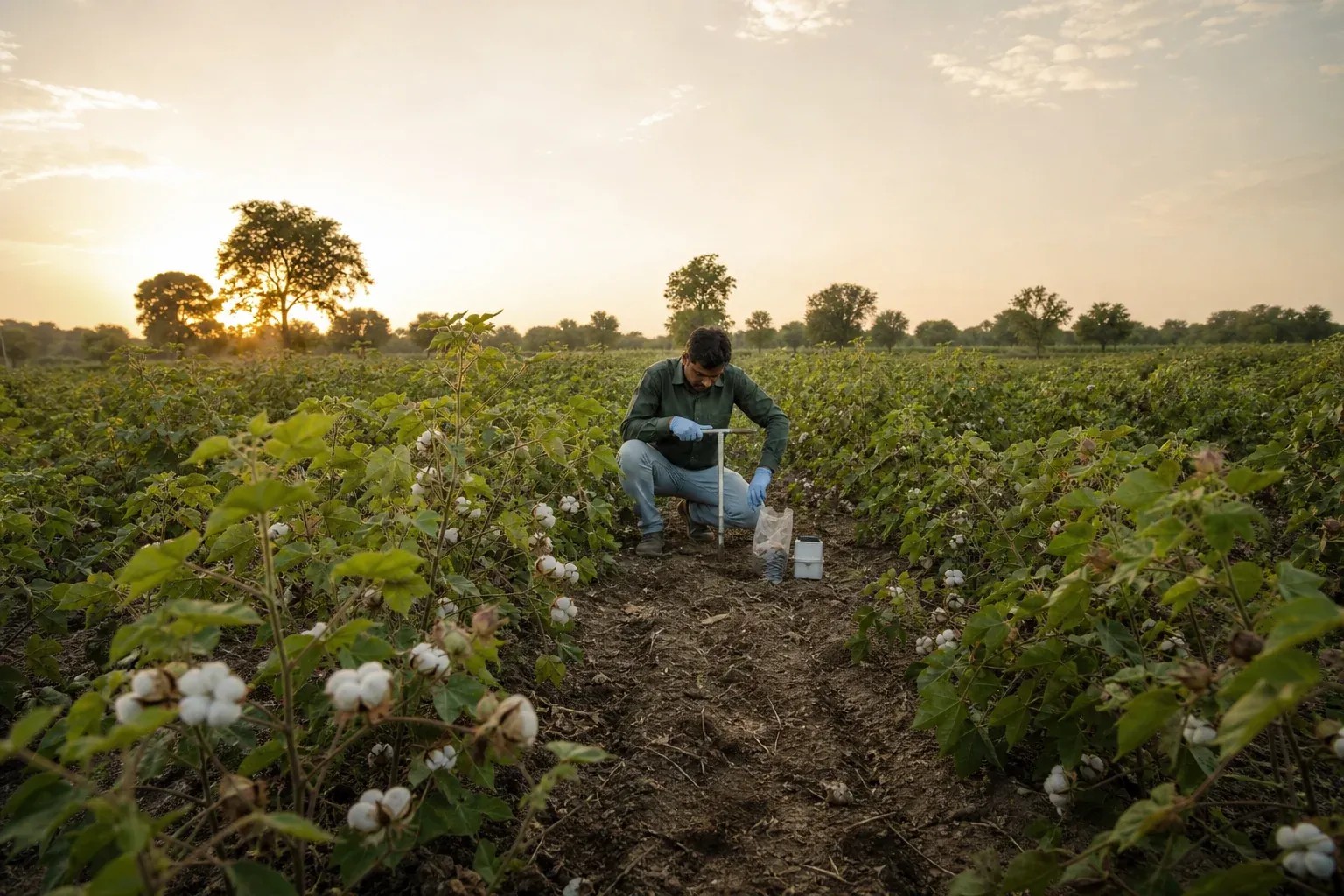
A regenerative cotton program without KPIs is just a farming pilot with good intentions. If you can't show a auditor or a brand's sustainability team measurable movement in soil organic carbon, yield, water use, farmer income, and traceability, your program has no proof it worked, no matter how many workshops you ran. The KPIs for a regenerative cotton program fall into five buckets, and each one answers a different question a buyer, auditor, or farmer will eventually ask.
Key Takeaways
- Five KPI categories cover the whole program: soil organic carbon (SOC), yield per acre, water use intensity, farmer income, and traceability data — track all five, not just the ones that make good marketing copy.
- SOC moves slowly: expect 0.1-0.3% organic carbon gain per year in most Indian cotton belts, so a one-season snapshot proves nothing without a baseline.
- Yield dips before it climbs: many regenerative transitions show a flat or slightly lower yield in year one, then a 15-35% gain by year three once soil biology and planting density catch up.
- Weak KPI tracking is the top reason pilots fail: programs that skip baseline data or delay farmer payment tracking see dropout rates spike mid-season.
- Traceability data is what makes every other KPI defensible in a CSRD disclosure or a brand's Scope 3 report — without it, soil and yield numbers can't be tied to a specific bale of cotton.
At a Glance: Regenerative Cotton Program KPIs
| KPI | Typical Target/Range | Measurement Frequency | Primary Data Source |
|---|---|---|---|
| Soil Organic Carbon (SOC) | +0.1% to 0.3% per year | Baseline, then annually | Lab soil test (composite samples) |
| Yield per Acre | Flat in year 1, +15-35% by year 3 (with HDPS) | Every harvest | Farmer-reported + cooperative logs |
| Water Use Intensity | 10-25% reduction in irrigated blocks | Per irrigation cycle | Meter reading or estimated flow logs |
| Farmer Income | Premium + yield gain + carbon share, tracked per farmer | Per season, per payment cycle | Payment records, cooperative ledgers |
| Traceability Coverage | 90%+ of bales geotagged to source farm | Continuous, per batch | Traceability/MRV platform |
| Farmer Retention Rate | 85%+ season-over-season | Annually | Onboarding and renewal records |
1. Soil Organic Carbon: Your Baseline Metric
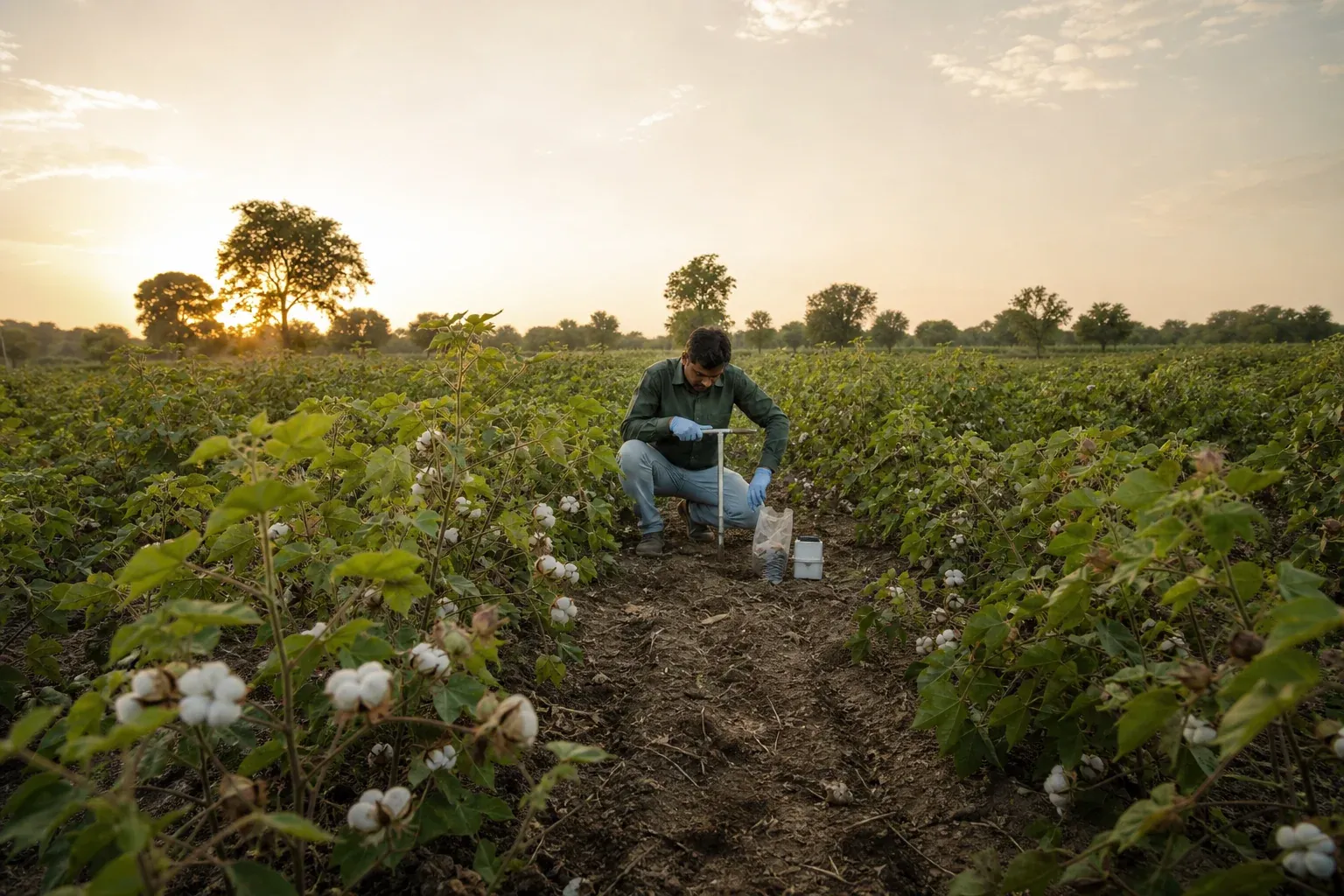
Soil organic carbon is the KPI everything else depends on. It tells you whether the practices you're funding, whether that's reduced tillage, biochar application, or cover cropping, are actually changing the soil, not just the paperwork. Without a baseline reading before the program starts, you have no way to prove a change happened at all.
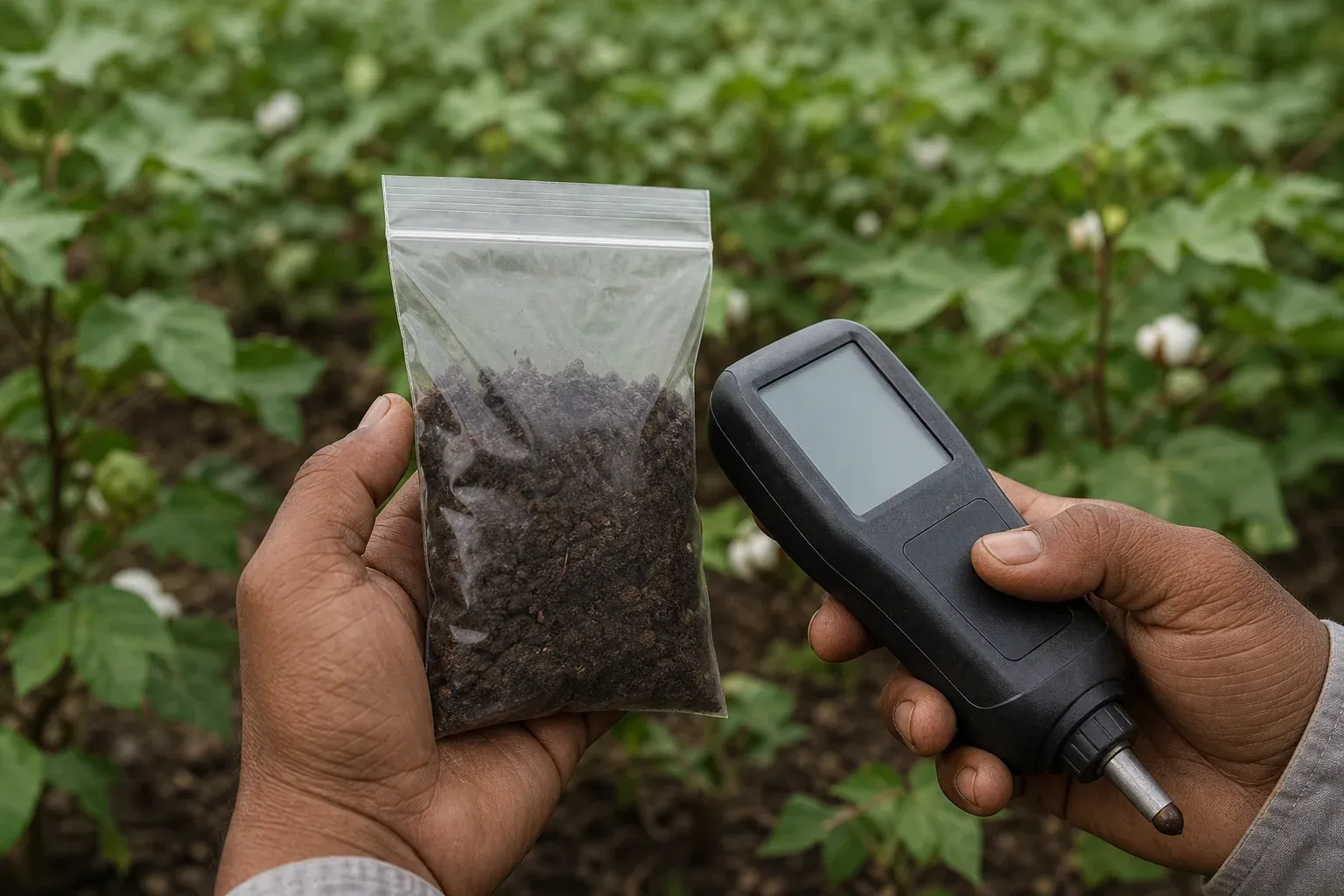
Pull composite soil samples from the same GPS-tagged points every season, at a consistent depth of 15-30 cm. Lab tests give you defensible numbers for a brand's disclosure; handheld field probes are faster but less precise, so use them for mid-season checks, not final reporting. In cotton belts like Madhya Pradesh and Maharashtra, realistic annual SOC gains run 0.1% to 0.3%. Anyone promising faster results in a single season is likely rounding up.
If you're comparing biochar-based approaches to other soil carbon strategies, biochar's soil carbon benefits in Indian cotton farming show up faster than compost alone but still need multiple seasons to compound.
2. Yield Per Acre: Proving Productivity Doesn't Drop
Farmers won't stay in a program that lowers their harvest, and brands won't fund one either. Yield per acre is the KPI that answers the question every skeptical farmer asks first: "Will I make less cotton this way?"
Expect a flat or slightly lower yield in the first transition season as soil biology adjusts. By year two or three, especially where you've paired regenerative practices with a high-density planting system, yield gains of 15-35% are realistic and repeatable across cotton belts. Track yield against the regional government or cooperative baseline for that district, not just your own program average from last year. Comparing only within your own cohort hides whether you're actually beating conventional farming or just matching a good rainfall year.
3. Water Use: Liters Per Kilogram of Lint
Water use is easy to claim and hard to prove unless you measure it as an intensity ratio, liters used per kilogram of lint produced, not just "we used less water this year." Rainfall variation alone can make raw water numbers meaningless year to year.
Where irrigation is metered, log flow readings per cycle. Where it isn't, use a consistent estimation method (pump run-time multiplied by known flow rate) and apply it the same way across every field in the program. Regenerative cotton practices, including reduced tillage and better soil structure that holds moisture longer, typically cut water use intensity by 10-25% compared to conventionally farmed plots in the same district. If you want the full picture of how these practices reduce consumption, see what regenerative cotton actually changes at the field level.
4. Farmer Income: The KPI That Keeps Farmers In the Program
Farmer income is the KPI most programs under-track, and it's often the reason they fail. If a farmer can't see, in writing, that a premium payment, a yield gain, and a carbon credit share add up to more money than last season, they leave the program before the next planting cycle. Root causes of pilot failure almost always trace back to a farmer feeling underpaid or uninformed about payment timing.
Break this KPI into three components and track them per farmer, not just as a cooperative-wide average: the price premium paid for regenerative cotton, any yield-linked income change, and the farmer's share of carbon credit revenue if the program includes insetting. For the full list of common breakdowns, Why Do Regenerative Cotton Pilots Fail? 7 Root Causes covers how weak KPI and payment tracking derails otherwise well-designed programs.
5. Traceability Data: The KPI That Makes the Others Credible
None of the first four KPIs mean anything to an auditor or a brand's compliance team unless you can tie them to a specific bale of cotton, from a specific farm, in a specific season. Traceability data is the KPI that turns your soil carbon and yield numbers into a defensible claim instead of a good story.
Track the percentage of bales with a verified, geotagged chain of custody record from farm through ginning to spinning. Aim for 90% or higher coverage; anything lower creates gaps that a verifier or journalist can exploit. This is also the KPI most directly tied to CSRD Scope 3 reporting requirements, since EU disclosure rules increasingly ask for value-chain-grounded data, not blended averages or generic offsets. For the mechanics of building this system, see supply chain transparency in textiles from farm to fashion and how biochar carbon insetting works for textile brands if your program includes an insetting component.
How to Set Up a KPI Tracking Cadence
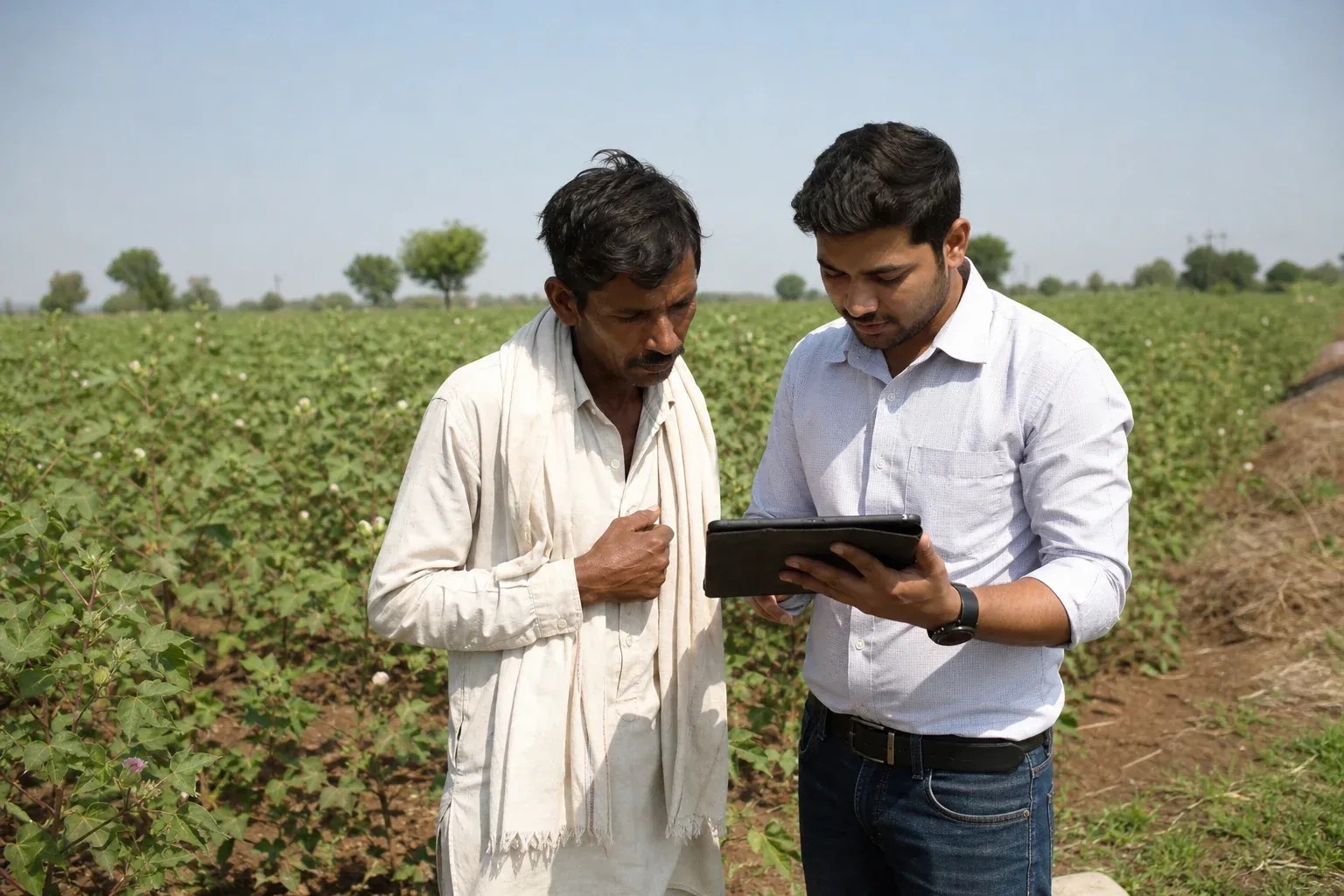
Most KPI tracking failures come down to timing, not tools. Set a clear cadence before the first season starts:
- Baseline year: collect soil samples, prior-season yield data, and irrigation records before any regenerative practice changes.
- Mid-season checks: field staff log yield indicators, water use, and farmer feedback at the halfway point of the growing cycle.
- End-of-season verification: a third-party auditor or your traceability platform confirms harvest data, payment records, and bale-level tagging before the season closes.
Assign a single KPI owner for each metric. Soil data usually belongs to the agronomy team, income data to the cooperative or finance lead, and traceability to whoever manages the MRV platform. Programs that leave KPI ownership vague tend to discover gaps only when a brand asks for the numbers, which is far too late to fix a missing baseline.
Using These KPIs for CSRD and Brand ROI Reporting
Corporate sustainability teams need these five KPIs to do two jobs at once: satisfy regulatory disclosure and justify the program's cost internally. The EU's Corporate Sustainability Reporting Directive (CSRD) increasingly expects Scope 3 disclosures grounded in verifiable, farm-level data rather than industry averages, which is exactly what soil carbon, yield, and traceability KPIs provide.
For internal ROI justification, pair the hard numbers with a simple before-and-after narrative: soil carbon up X%, yield stable or improved, water use down Y%, farmer income up Z%, and traceability coverage at a stated percentage. That combination is far more persuasive to a finance committee than a single sustainability claim. If you're building this reporting structure from scratch, Fashion Brand Net Zero Roadmap: 5 Steps to Verified Climate Targets walks through how KPI data feeds a verified climate target, and Beetle Regen's case studies from farm to fashion show what this looks like across a full season.
FAQ: Regenerative Cotton Program KPIs
What is regenerative cotton and how is it measured?
Regenerative cotton is grown using practices, like reduced tillage, cover cropping, and biochar application, that rebuild soil health while producing fiber. It's measured through the same KPIs covered here: soil organic carbon change, yield per acre, water use intensity, farmer income, and traceability coverage, rather than a single certification stamp.
How does regenerative cotton farming cut water use?
Regenerative practices improve soil structure so it holds moisture longer between irrigation cycles, reducing total water needed per kilogram of lint. Programs that also apply water management techniques adapted from paddy farming, such as more precise irrigation scheduling, typically see 10-25% reductions in water use intensity.
How do regenerative agriculture carbon credits factor into program KPIs?
Carbon credits are usually tracked as a sub-component of the farmer income KPI and the soil organic carbon KPI. The credits themselves are generated from verified SOC gains or biochar carbon insetting, and the revenue share paid to farmers should appear as a line item in your income tracking, not a separate, disconnected number.
Why do KPI gaps cause regenerative cotton pilots to fail?
When programs skip baseline soil sampling, delay farmer payment tracking, or fail to log traceability data from the first harvest, there's no way to prove impact later. That gap erodes farmer trust and gives brands no defensible data for disclosure, which is one of the most common reasons pilots stall after year one.
A regenerative cotton program that can show soil, yield, water, income, and traceability data together is one that a brand's legal and sustainability teams can actually defend in an audit, not just a press release.
If you're building or auditing a regenerative cotton program and need a partner who tracks these five KPIs from baseline through harvest, with farmer income and traceability data built into the same system, contact Beetle Regen to talk through how our farm-to-fashion tracking works in Indian and Bangladeshi cotton belts. Getting the KPI framework right from season one is the difference between a pilot that stalls and a program that scales.