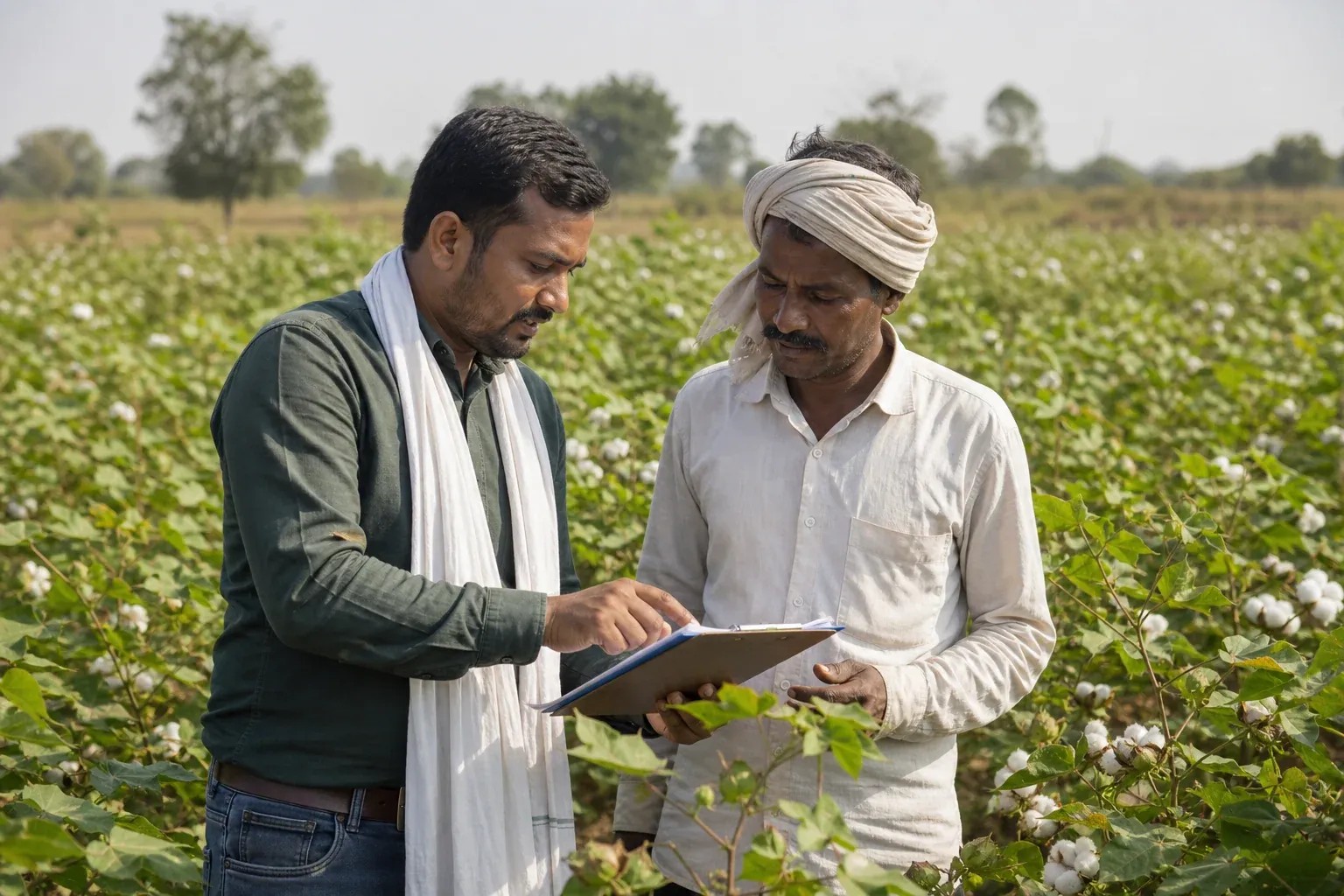
Why Do Regenerative Cotton Pilots Fail? 7 Root Causes
Most regenerative cotton pilots don't fail because the agronomy is wrong. They fail because the program was built for a press release instead of a supply chain. The common reasons regenerative cotton pilots fail cluster around seven predictable gaps: rushed farmer onboarding, missing MRV data, unrealistic ROI timelines, no segregation plan at the mill, unclear carbon credit ownership, weak farmer payment structures, and a pilot design that never intended to scale.
Key Takeaways
- Consent and baseline data come first: Pilots that skip baseline soil sampling before season one almost always lose verifiability later, no matter how good the training was.
- MRV can't be retrofitted: Brands that build traceability after the pilot starts typically find gaps a verifier rejects, forcing a repeat season.
- Two to three seasons, not one: Soil health and yield gains that justify a price premium usually take two to three growing seasons to show up in the data.
- Segregation breaks at the gin, not the farm: Most commingling problems trace back to a mill that was never briefed on how to keep regenerative bales separate.
- Contracts decide who owns the win: Unclear terms on carbon credit ownership and insetting claims cause legal delays that stall pilots even after the farming succeeds.
Regenerative Cotton Pilot Failure: At a Glance
| Root Cause | Typical Symptom | Fix | Timeline Impact if Ignored |
|---|---|---|---|
| Weak onboarding | Farmers drop out mid-season | Structured consent + baseline sampling | Loses 1 full season |
| Missing MRV/traceability | Verifier rejects claims | Set up MRV before planting | Delays claims by 6-12 months |
| Unrealistic ROI timeline | Budget pulled early | Set 2-3 season expectations upfront | Pilot cancelled before results show |
| No segregation plan | Bales commingled at gin | Written mill briefing document | Loses entire batch's traceability |
| Unclear carbon credit ownership | Legal review blocks claims | Define ownership in supplier contract | Delays go-to-market by months |
| Weak farmer payment structure | Trust breakdown, low participation | Tie payments to verified milestones | Farmer attrition next season |
| Marketing-first design | No path to scale beyond pilot cohort | Write a sourcing policy before launch | Pilot stays a one-off forever |
1. Farmer Onboarding That Skips Consent and Baseline Data
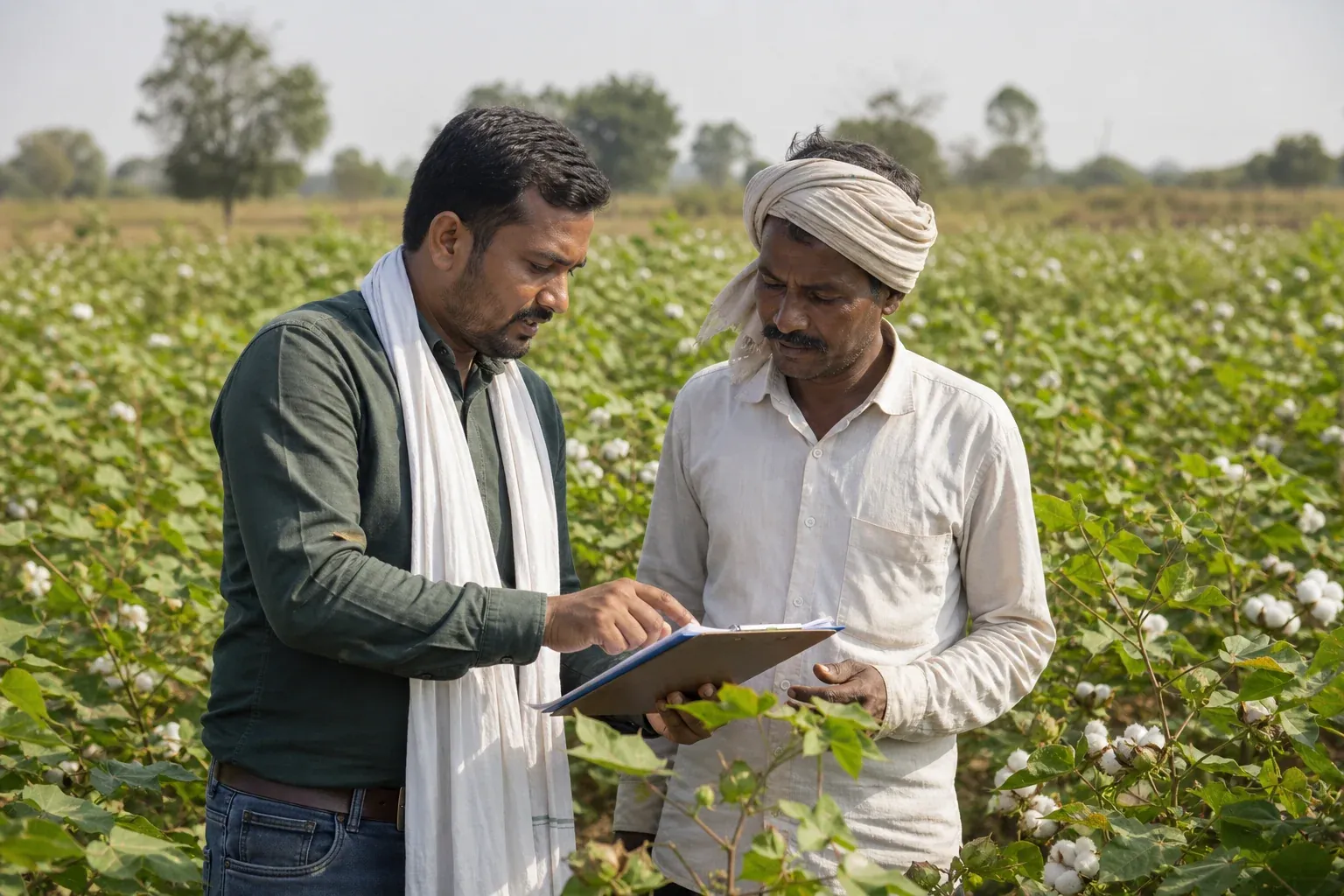
Sourcing teams under pressure to launch a pilot often start enrolling farmers before they've explained what the program actually asks of them. Farmers sign up without understanding the practice changes required, the data they'll need to share, or how long it takes to see a payout. Three months in, half the cohort has quietly gone back to old habits.
Baseline soil sampling is the other piece that gets skipped. Without a measured starting point, you cannot prove improvement later. A verifier will ask for a pre-season baseline, and if you don't have one, the entire season's carbon or soil claim becomes unusable. This single gap kills more pilots than any agronomic problem.
Fixing this means treating onboarding as five sequential steps: informed consent, baseline data collection, MRV setup, contracting, and season-long training. Our guide on how to onboard farmers into a carbon program walks through each step in order, and skipping any one of them is exactly where most pilots start to unravel.
2. Missing MRV and Traceability Infrastructure
A brand launches a pilot with a mill and a farmer cooperative, gets everyone excited about regenerative cotton, and only then asks: how do we prove any of this happened? By that point it's too late. Measurement, reporting, and verification (MRV) systems need to exist before the first seed goes into the ground, not after harvest.
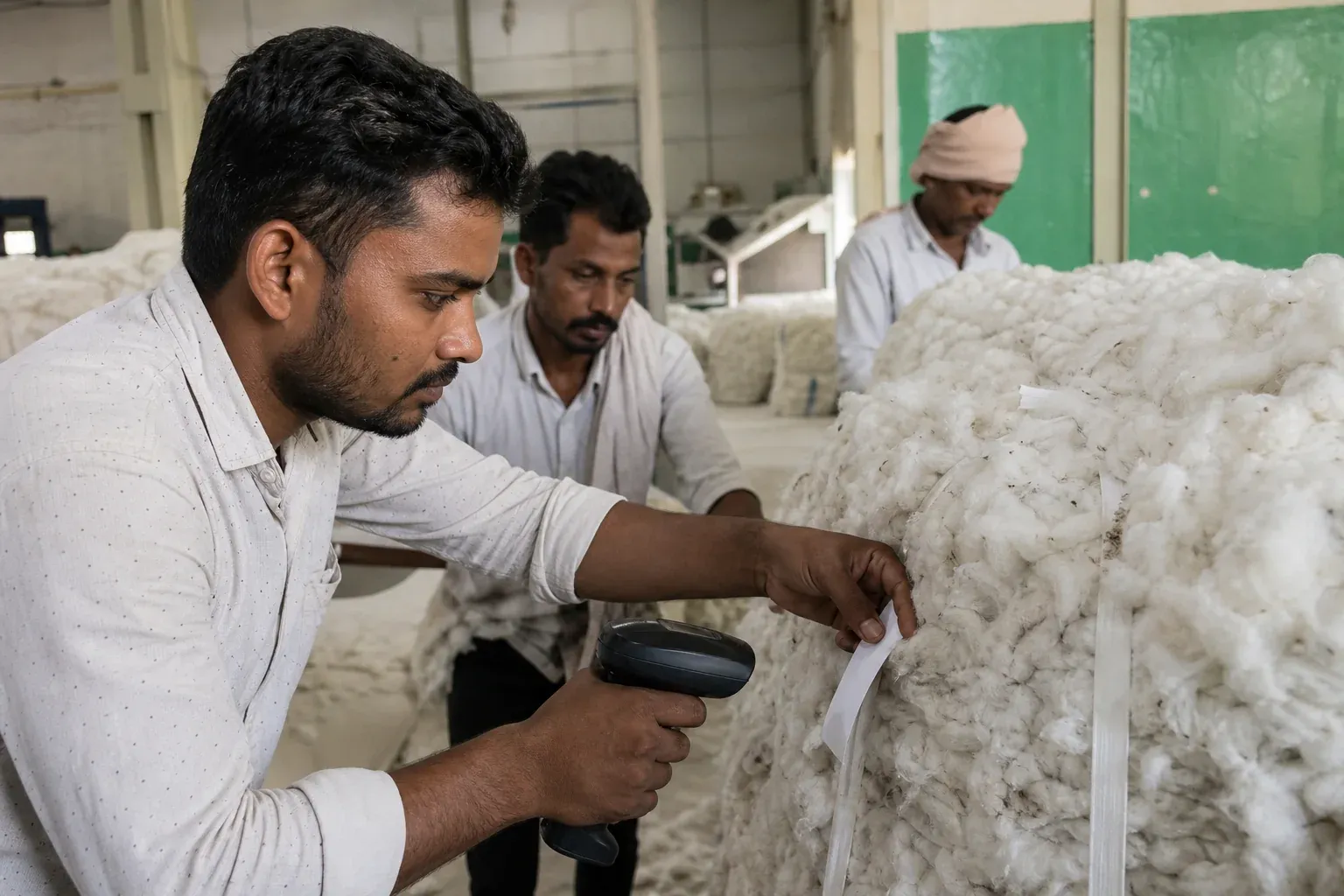
Traceability breaks most often at the ginning stage, where regenerative cotton and conventional cotton physically look identical once baled. Without a chain-of-custody system, the two get mixed, and every claim you wanted to make about that cotton becomes unverifiable. Brands then find out during a third-party audit that their "regenerative" shipment can't be traced back to a specific field.
Our complete breakdown in MRV and Traceability Systems for Cotton: A Complete Guide covers what data to capture at each stage, from farm to gin to spinner, so you don't discover the gap after the cotton has already shipped.
3. Unrealistic ROI Timelines Set by Brand Teams
Sustainability teams sometimes commit to internal stakeholders that a pilot will show measurable return within one growing season. Soil biology does not work on that schedule. Meaningful gains in soil organic carbon, water retention, and yield typically take two to three seasons to compound into numbers a finance team will accept.
When year-one results look modest, budget owners lose confidence and pull funding before the program has a chance to prove itself. This is arguably the single most common reason a technically sound pilot gets shut down. The agronomy was working. The internal timeline was not.
Set expectations before launch, not after. Share a season-by-season projection with finance and procurement stakeholders, and be explicit that price premium justification is a multi-season case, not a quarterly one. Our piece comparing what brands actually pay for with regenerative vs conventional cotton is a useful reference when building that internal business case.
4. Single-Mill, Single-Farmer-Group Pilots With No Segregation Plan
Running a pilot with one mill and one farmer group sounds manageable, and it is a smart way to start. The problem shows up when nobody briefs the mill on how to keep regenerative bales physically separate from everything else moving through the facility. Mills process cotton at volume; without a written segregation protocol, regenerative bales get stacked, ginned, and blended alongside conventional stock within days.
A segregation briefing needs to cover storage location, batch labeling, ginning sequence, and who signs off at each handoff. Without it, you can have flawless farm-level data and still lose the ability to trace a single bale of finished fabric back to the farmers who grew it.
5. No Clear Owner for Carbon Credits or Insetting Claims
Carbon credit ownership sounds like a legal detail until it stops a pilot in its tracks. If the supplier contract doesn't specify whether the brand, the farmer cooperative, or a third-party project developer owns the resulting carbon credits, legal teams will freeze the program the moment someone tries to make a public claim about it.
Double counting is the related risk. If a farmer group is already enrolled in an offsetting program and a brand tries to layer an insetting claim on top of the same practice change, both claims become invalid. Sorting this out after the season is far harder than writing it into the contract before planting starts. Read our guide on carbon insetting vs carbon offsetting to understand how these claim types interact and where overlap risk actually comes from.
6. Underestimating Farmer Payment and Incentive Structure
A price premium promised at the start of a pilot means little if payment terms are vague or delayed. Smallholder farmers operate on tight cash cycles. If a payment tied to a "verified outcome" arrives four months late because the verification process wasn't scoped properly, trust in the program erodes fast, and it rarely recovers within the same cooperative.
Payments should be structured against milestones farmers can see and understand: enrollment, mid-season practice adoption, harvest, and final verification. Ambiguity anywhere in that chain is one of the fastest ways to lose a cohort before you ever get to measure the agronomic results.
7. Treating the Pilot as a Marketing Exercise, Not an Operating Model
Some regenerative cotton pilots are designed, whether intentionally or not, to produce a good story rather than a repeatable sourcing model. There's no plan for what happens after the pilot cohort's cotton gets woven into a capsule collection. No sourcing policy exists. No supplier contract template has been drafted. When leadership asks "what's next," there's no answer beyond "we could do it again."
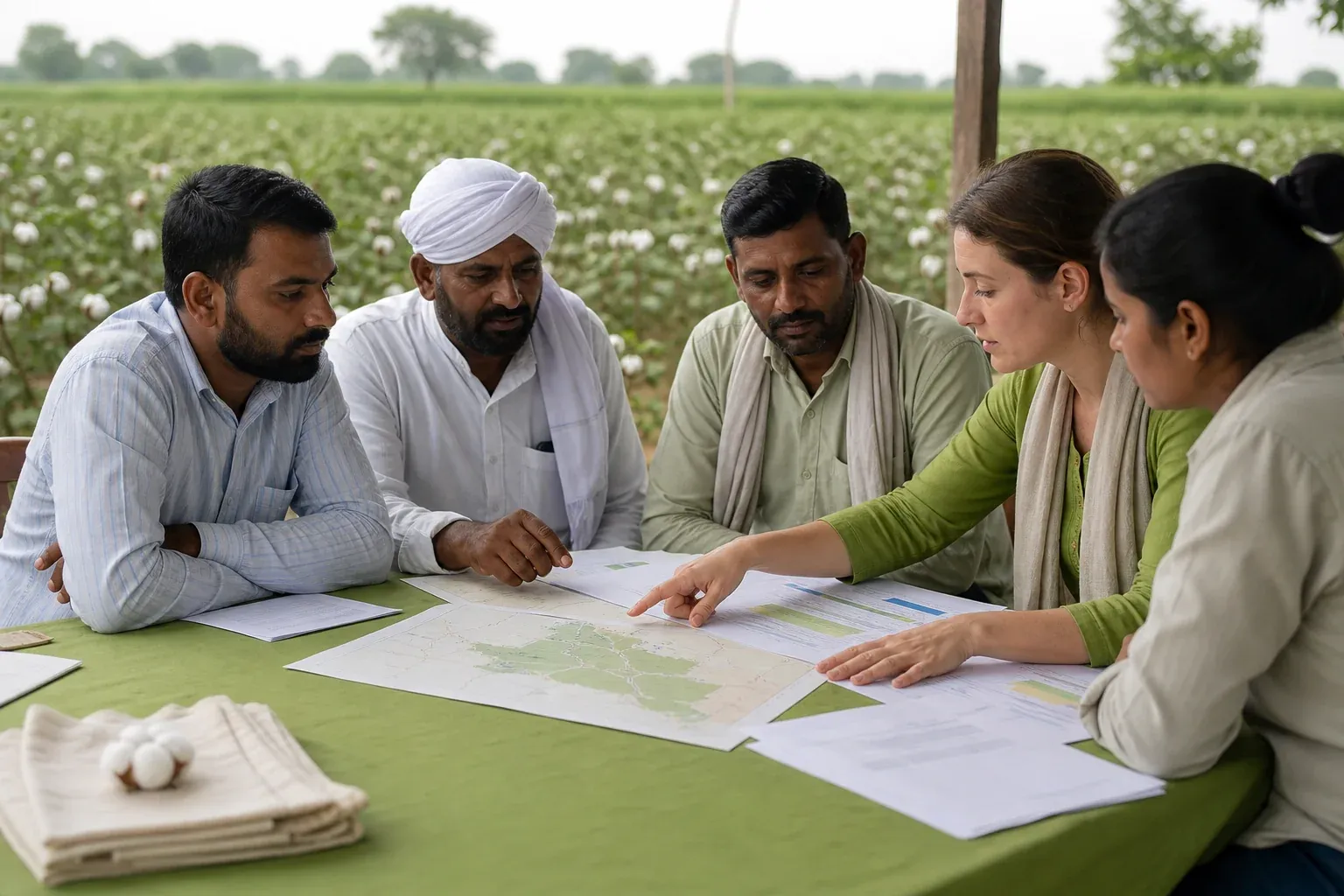
A pilot that's built to scale looks different from day one. It includes a written sourcing policy, defined minimum order quantities that match what the farmer group can realistically supply, and a supplier contract that already anticipates a second and third season. Our guide on real results from farm to fashion pilots shows what that operating model looks like once it moves past a single season.
What Is Regenerative Cotton, and Why Does the Definition Gap Cause Pilots to Fail?
Regenerative cotton refers to cotton grown using farming practices that actively rebuild soil health, such as reduced tillage, cover cropping, composting, and high-density planting, rather than practices that simply avoid synthetic inputs. It differs from organic cotton, which is defined by what's excluded (synthetic pesticides and fertilizers), and from climate-smart agriculture, which is a broader policy framework.
This definitional confusion causes real operational damage. A mill briefed on "organic" segregation protocols may not understand what a "regenerative" claim requires in terms of soil data or MRV. A farmer trained under a generic sustainability program may not know which specific practices count toward the pilot's goals. Getting everyone, from the field team to the brand's legal department, aligned on one clear definition before launch prevents half the confusion that later shows up as a failed audit. For a full breakdown, see What is Regenerative Cotton.
How to De-Risk Your Next Regenerative Cotton Pilot
Before launching, work through this checklist:
- Consent first: Confirm every farmer understands the practice changes, timeline, and payment structure before enrollment.
- Baseline before planting: Collect soil and yield baseline data before season one starts, not after.
- MRV designed upfront: Build your traceability and data capture system before the first seed goes in, using a proven carbon credit data integration approach so records sync cleanly across platforms.
- Contract terms written in plain language: Define carbon credit ownership, price premium terms, and payment milestones before signing.
- Mill briefed on segregation: Put the segregation protocol in writing and confirm the mill has agreed to it.
- Realistic timeline shared internally: Set finance and leadership expectations for a two-to-three season program, not a one-quarter win.
Programs that pass this checklist before launch consistently outperform pilots that treat these steps as something to figure out along the way. According to the UN Food and Agriculture Organization, roughly a third of global soils are already degraded, which is exactly why regenerative practices matter, but that urgency is also why brands rush pilots without the groundwork described above. Slowing down at the start is what makes scaling possible later.
Frequently Asked Questions
How long should a regenerative cotton pilot run before scaling?
Plan for at least two full growing seasons before scaling a pilot. Soil health indicators and yield data need that long to move past normal seasonal variation, and a single season rarely gives verifiers enough data to support a strong claim.
Can one mill run a regenerative cotton pilot alone?
Yes, and it's often the smartest way to start, as long as the mill is fully briefed on segregation protocols before the cotton arrives. A single-mill pilot without that briefing is one of the most common ways traceability breaks down early.
What causes farmers to drop out of regenerative programs?
Unclear payment timelines, vague expectations set during onboarding, and delayed communication are the top drivers. Programs that pay against clear, visible milestones and explain the full season timeline upfront see far higher retention.
What is regenerative cotton, in plain terms?
It's cotton grown with practices that rebuild soil health over time, like reduced tillage, cover cropping, and composting, rather than cotton defined only by the absence of synthetic chemicals, which is how organic certification works.
If your regenerative cotton program is stuck between a good pilot and a real supply chain, the gap is usually one of the seven causes above, not the farming itself. Beetle Regen works with textile brands and their supply chain partners to build farmer onboarding, MRV, and traceability into a pilot from day one, so the second season doesn't repeat the first season's mistakes. Contact us to walk through your current pilot design and find out exactly where it needs reinforcement before you commit to scaling it.