Why Traceability in Cotton Matters for Brand Compliance
Traceability in cotton means knowing, with verifiable records, exactly which farm your fiber came from, how it was grown, and every hand it passed through before it reached a garment. Brands need this now because CSRD, Scope 3 disclosure rules, and net zero claims all require value-chain-grounded evidence, not a certificate alone. Without it, sustainability claims carry real legal and reputational risk.
Key Takeaways
CSRD forces the issue: The EU's Corporate Sustainability Reporting Directive requires companies to disclose value-chain data, not generic industry averages, and cotton sits deep in Scope 3.
Certification alone isn't traceability: An organic label tells you farming method; it rarely tells you which bale went into which shipment.
Farm-level data closes the gap: GPS-tagged plots, farmer IDs, and batch segregation at the gin let a brand prove origin instead of estimating it.
Greenwashing exposure is rising: Regulators in the EU and UK are penalizing unverifiable green claims, and cotton's upstream emissions are a common weak point.
Beetle Regen links training to data: Farmer onboarding, regenerative practice, and MRV records happen together across India and Bangladesh, so the traceability record and the carbon story come from the same field.
Traceability in Cotton at a Glance
| Data Point | Why It Matters | Who Captures It |
|---|---|---|
| Farm ID and GPS location | Proves origin for Scope 3 and CSRD disclosures | Field coordinators at onboarding |
| Input and practice records | Supports regenerative or reduced-chemical claims | Farmer training logs |
| Harvest volume and quality | Links yield to a specific plot and season | Farm-level MRV system |
| Batch segregation at ginning | Keeps traceable cotton separate from mixed lots | Ginning facility records |
| Spinner transaction record | Confirms traceable fiber entered the yarn supply | Mill purchase documentation |
| Chain-of-custody documentation | Gives auditors a farm-to-fabric paper trail | Beetle Regen's SaaS reporting layer |
| Carbon and soil data | Backs insetting claims with measured, not assumed, results | Soil sampling and biochar tracking |
What Traceability in Cotton Actually Means
Picture a bale of cotton leaving a gin in Khargone. Without traceability, that bale merges into a general lot the moment it's baled, and nobody downstream can say which farm, or which farming method, produced it. With traceability, that bale carries a record: the farmer's ID, the plot's GPS coordinates, the season's input use, and the harvest weight tied to that specific field.
This is different from certification. A certification tells a buyer that a set of farms followed certain rules during an audit window. It doesn't usually follow a specific bale through ginning, spinning, and fabric production. Cotton supply chain traceability follows the physical material, not just the farming method. That distinction matters enormously once a brand has to answer an auditor's question: "Show me the fiber in this garment came from the farms you claim."
You get real traceability when three things happen together: farm-level data capture, batch segregation at every processing step, and a digital record that survives the handoffs between gin, spinner, and mill. Miss any one of the three and you end up with a partial story, which is exactly what regulators and brand auditors are now trained to spot.
Why CSRD and Scope 3 Rules Are Forcing the Issue
The EU's Corporate Sustainability Reporting Directive pushes companies to report on their full value chain, including upstream agricultural inputs like cotton. That's a shift from older reporting norms, where a brand could lean on industry-average emission factors and call it done. CSRD wants value-chain-grounded numbers, and cotton farming is where a huge share of a garment's carbon footprint originates, long before it reaches a cutting table. You can read a detailed breakdown in our post on carbon insetting vs carbon offsetting.
Scope 3 emissions, the ones that happen outside a company's own operations, typically make up the largest share of a fashion brand's carbon footprint. For a cotton-heavy retailer, farm-level nitrogen use, irrigation, and land management decisions all roll up into that Scope 3 number. Brands like Primark, H&M, C&A, Marks & Spencer, Burberry, and PVH have all made public net zero commitments, and each one now faces the same problem: you cannot manage what you cannot measure at the farm level.
Traceability in cotton solves the measurement problem. It gives a sustainability team an actual data trail instead of an estimate borrowed from a national average. For a deeper look at where the biggest emission hotspots sit in a typical cotton chain, see our piece on supply chain transparency in textiles from farm to fashion.
The Greenwashing Risk Without Verified Origin Data
A net zero claim built on generic offsets, credits bought from an unrelated project with no link to a brand's own supply chain, is increasingly hard to defend. Regulators in the EU and UK have already taken action against vague or unsubstantiated green claims, and cotton sourcing is a frequent target because so much of the industry still relies on paper certificates rather than physical traceability.
Here's the practical risk: if a brand claims "regenerative cotton" or "carbon reduced" without a documented trail back to specific farms and specific carbon measurements, that claim is vulnerable the moment a journalist, NGO, or regulator asks for proof. Carbon insetting, reducing emissions inside your own supply chain rather than buying unrelated offsets, only works as a defensible claim when it's backed by traceable, farm-level data. Our guide on regenerative vs conventional cotton covers what brands are actually paying for when they choose a verified supply chain over a generic one.
A sustainability claim is only as strong as the weakest link in its evidence chain. For cotton, that weak link is almost always the farm-to-gin handoff.
How Farm-to-Fashion Tracking Systems Capture Verified Data
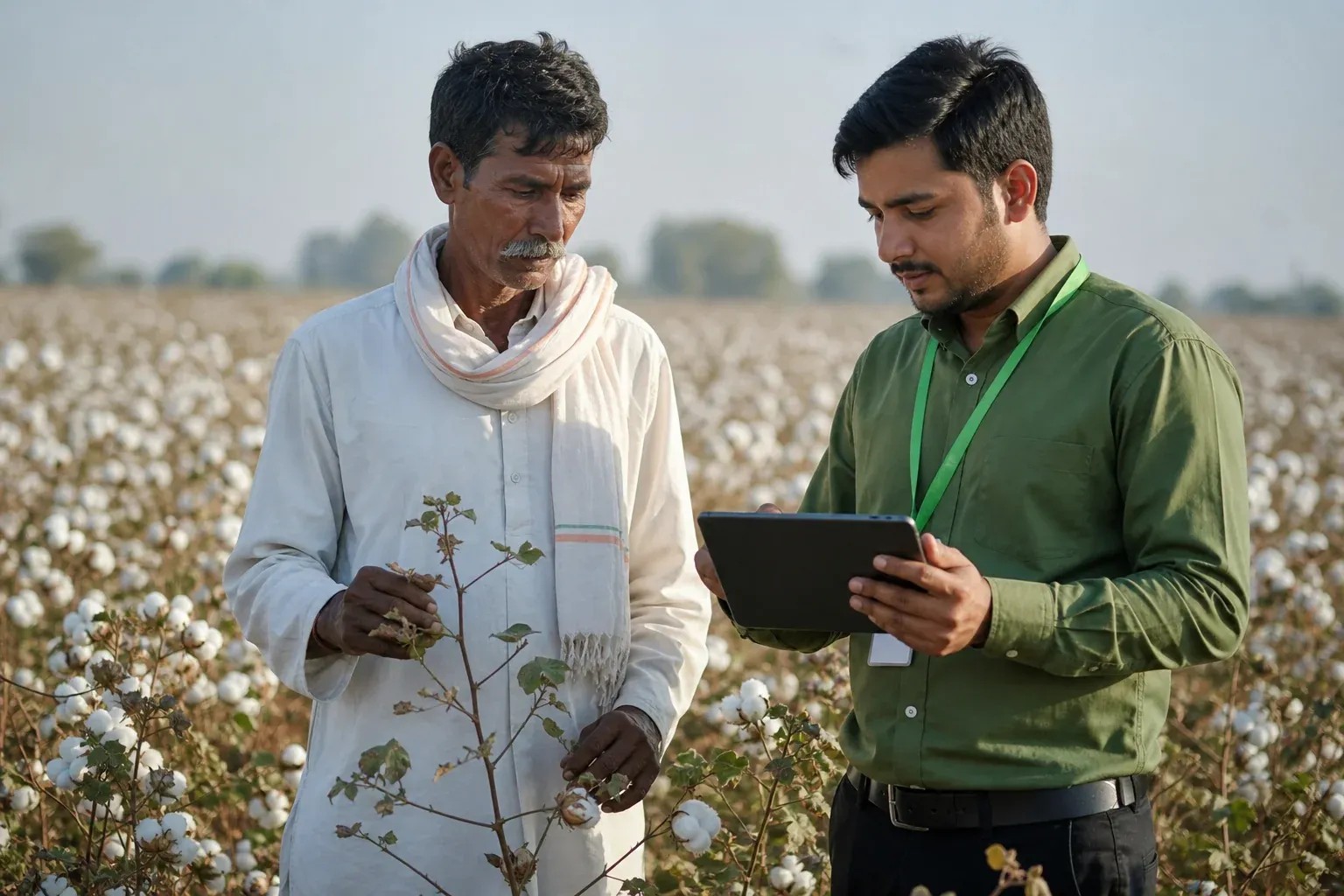
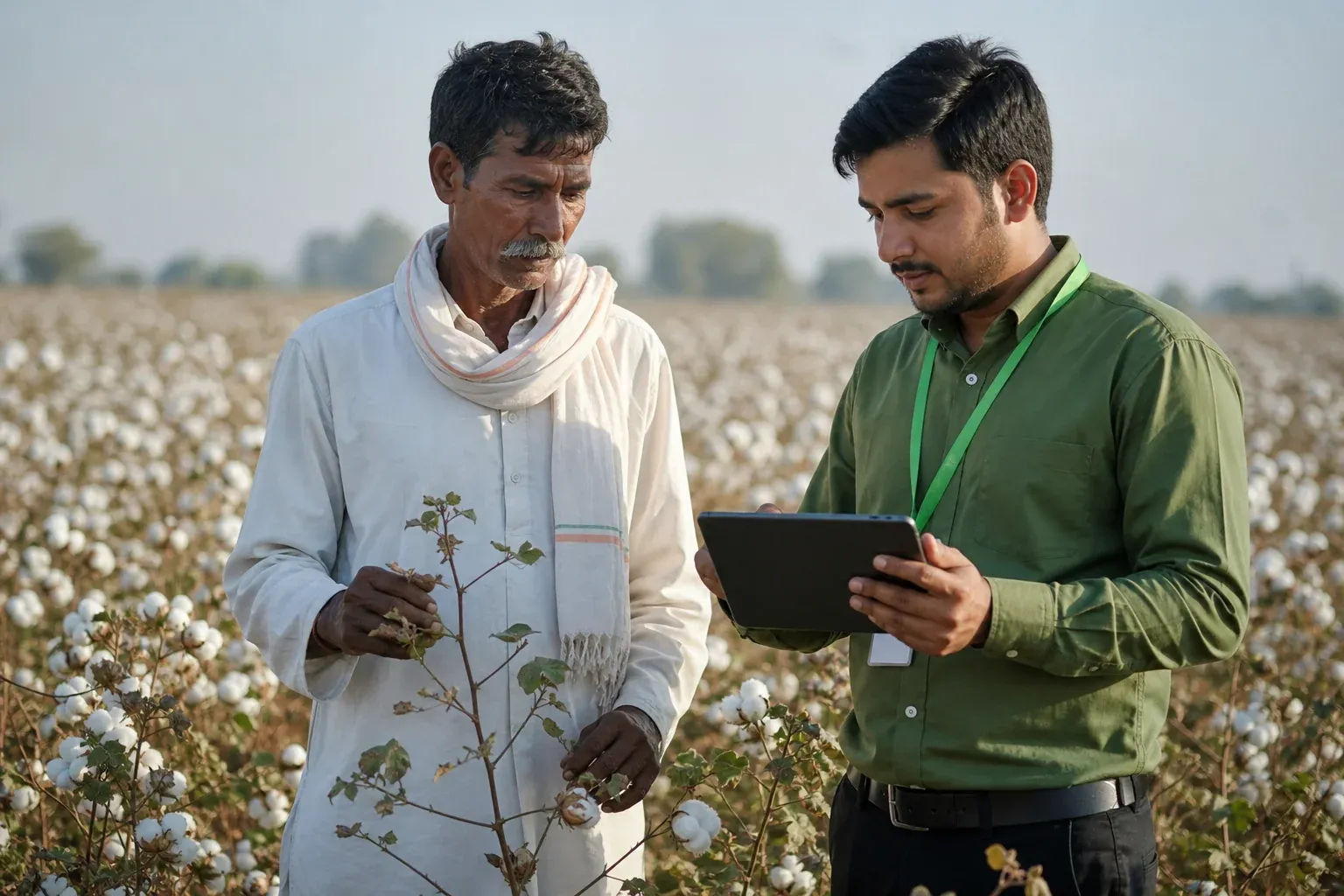
A working traceability system runs on Measurement, Reporting, and Verification, usually shortened to MRV. It starts with farmer onboarding: each participating farmer gets a unique ID linked to their plot's GPS boundary. From there, field staff log input use, irrigation practices, and harvest data throughout the season.
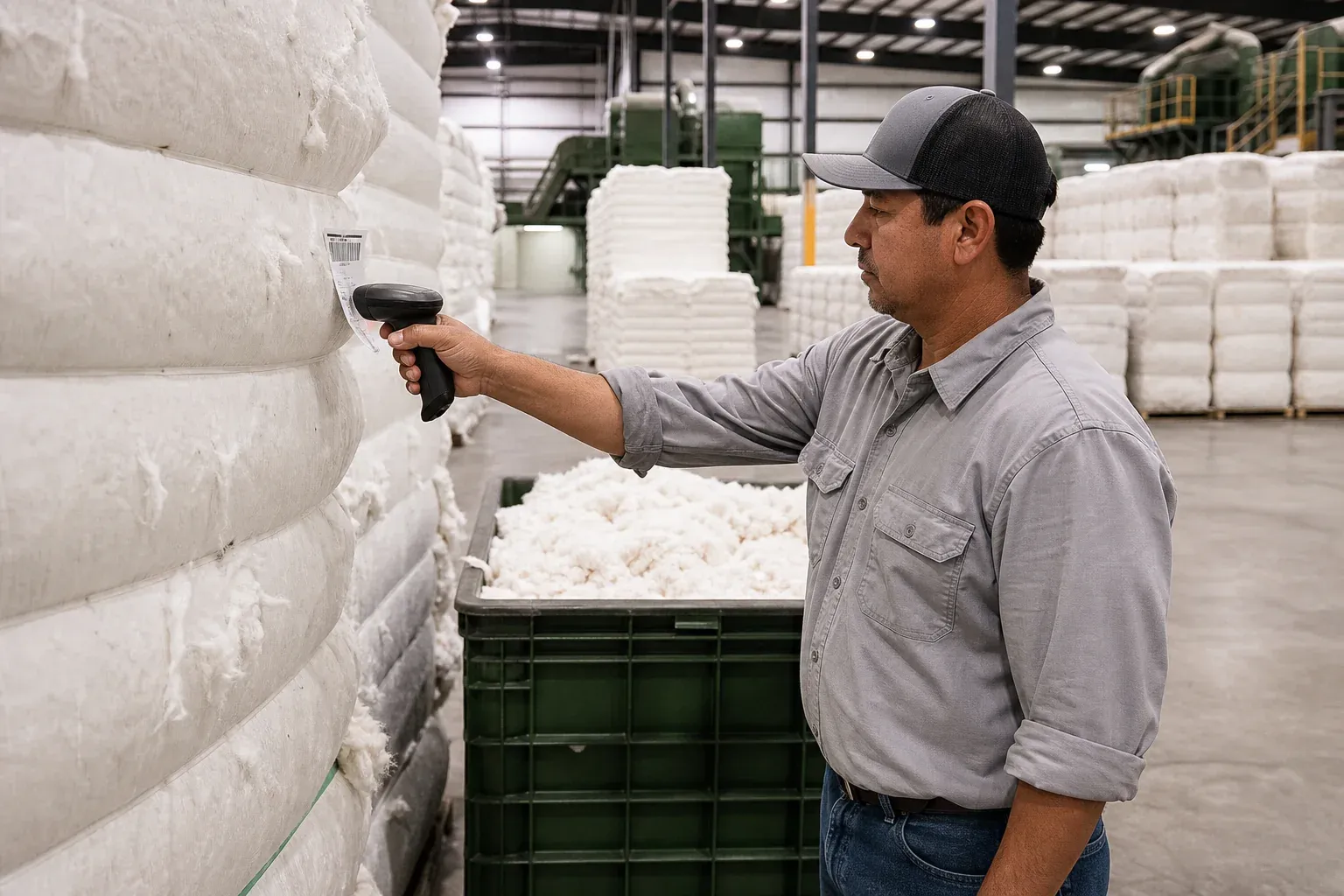
The harder part happens after harvest. Cotton from traceable farms has to stay physically separate from conventional lots at the gin, get weighed and logged as a distinct batch, and carry that batch identity through to the spinning mill. This is where a lot of supply chains break down, because ginning facilities weren't built with segregation in mind. A traceability system that only tracks data on the farm and loses the thread at the gin isn't much better than a certificate.
Good systems track a specific set of KPIs alongside the traceability record itself: soil organic carbon, yield per acre, farmer income change, and batch volume matched against final shipment weight. Our post on KPIs to track in a regenerative cotton program walks through how these numbers get reported back to a brand. For the technical side of connecting farm data to digital ledgers, see our guide on API integration for carbon credit platforms.
Beetle Regen's Traceability Model Across India and Bangladesh
Madhya Pradesh and Maharashtra are where most of our regenerative cotton training programs run today, alongside a newer expansion into Bangladesh. In each region, we tie traceability directly to farmer training rather than treating them as separate workstreams. When a farmer joins a program, their plot gets mapped, their baseline soil data gets recorded, and their training attendance gets logged in the same system that later tracks their harvest.
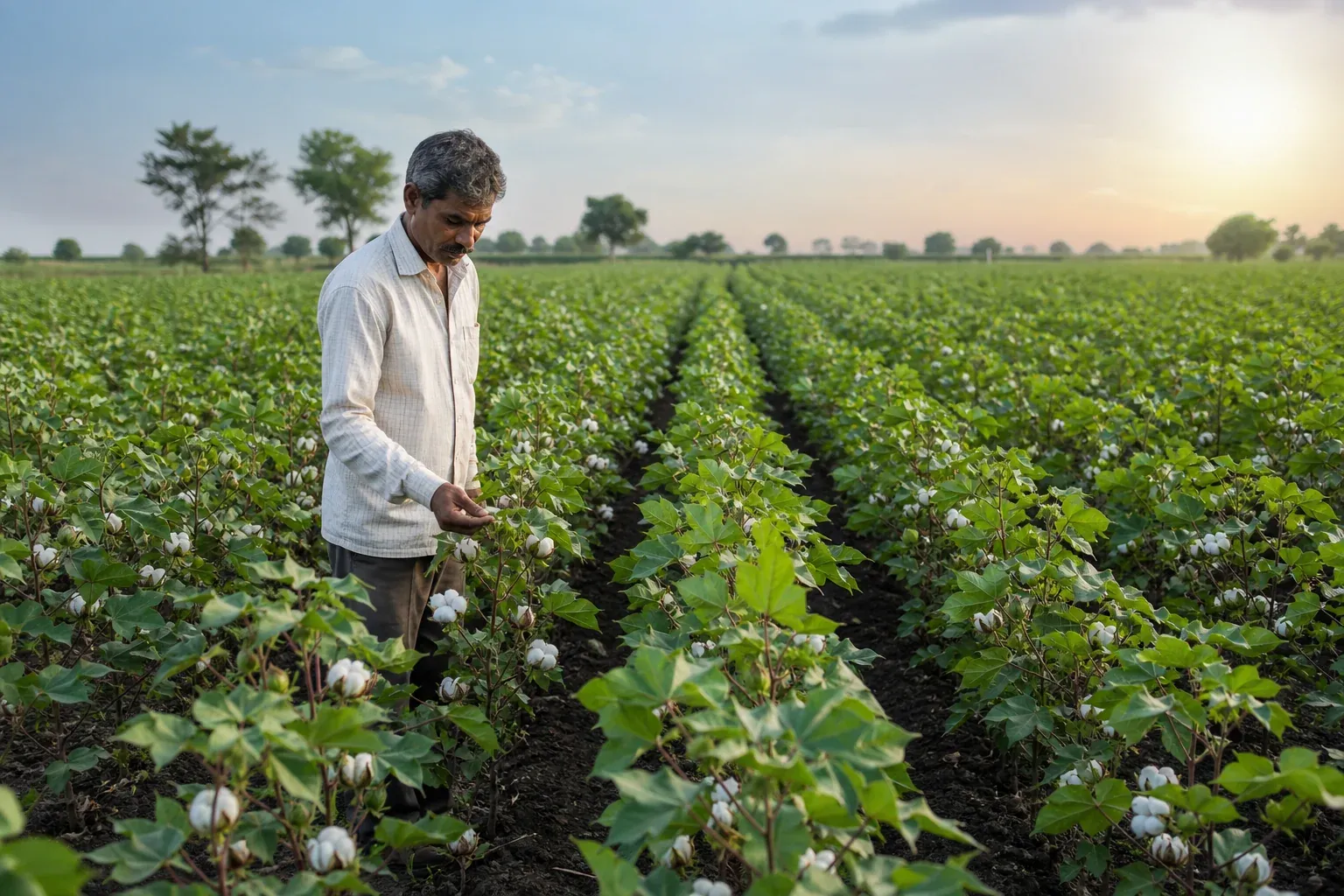
That link matters because it means the traceability record and the sustainability story come from the same source. When a brand asks for proof of a regenerative claim, we can show the soil sample, the training log, and the batch record for the exact cotton in question, not a generalized statement about "farmers in the region." You can see how this plays out in practice in our case studies on real results from farm to fashion, and read about the broader biochar-based carbon insetting work happening alongside it in how biochar carbon insetting works for textile brands.
Women farmers make up a significant share of the hands-on labor in these fields, from seed selection to input application, yet they're often left out of formal data collection. Our program builds their participation directly into the traceability record rather than treating it as an afterthought; more on why that matters in our post on women farmers' participation in regenerative cotton programs.
Cotton Supply Chain Traceability vs Certification-Only Claims
Brands often ask whether a certification label is enough on its own. Here's how the three common approaches stack up against what CSRD and Scope 3 disclosure actually require.
| Approach | Farm-Level Data | Batch Segregation | Holds Up Under CSRD Audit |
|---|---|---|---|
| Certification only (e.g., organic label) | Limited, audited periodically | Not guaranteed | Weak on its own |
| Generic carbon offsets | None tied to your supply chain | Not applicable | High greenwashing risk |
| Farm-to-fashion traceability (MRV-based) | Full, farmer-linked | Tracked through gin and spinner | Strong, evidence-based |
This isn't an argument against certification. Certification and traceability work well together, one confirms method, the other confirms physical origin. The problem shows up when a brand relies on certification alone and assumes it covers the traceability gap. It doesn't.
How to Start Building Traceability Into Your Cotton Sourcing
You don't need to overhaul your entire supply chain in one step. Start narrow and prove the model before scaling.
- Map your current cotton suppliers: Identify which mills and ginners already have any batch-tracking practice in place.
- Pick one region for a pilot: A single sourcing region with a committed ginner and spinner makes it far easier to test segregation before you scale.
- Define your data capture points upfront: Decide what you'll record at the farm, the gin, and the mill before the season starts, not after harvest.
- Connect the data to your reporting stack: Traceability data only helps compliance teams if it feeds into the same system used for CSRD or Scope 3 reporting.
- Train the people, not just the system: Field staff and ginning teams need to understand why segregation matters, or the physical chain of custody breaks down regardless of the software.
For a full walkthrough of this process, our guide on setting up farm-to-fashion traceability step by step covers each stage in more depth, including where most brands stall out.
Frequently Asked Questions
What is regenerative cotton and how does it connect to traceability?
Regenerative cotton is grown using practices that restore soil health, like reduced tillage, cover cropping, and biochar application, rather than depleting it season over season. Traceability is what proves a specific bale actually came from a regenerative field rather than a conventional one. Without traceability, a regenerative claim is just a description of a farming philosophy, not a verified fact about the fiber you bought. See our explainer on what is regenerative cotton for the full picture.
Does cotton supply chain traceability replace certification?
No. Certification and traceability answer different questions. Certification confirms a farming method met a standard during an audit period. Traceability confirms which physical batch of fiber came from which farm. Brands preparing for CSRD or Scope 3 disclosure typically need both, with traceability filling the evidence gap certification leaves open.
How long does it take to implement cotton traceability?
A pilot covering one region and one mill can be running within a single growing season, roughly four to six months from farmer onboarding to first traceable shipment. Scaling across multiple regions and processing partners takes longer, usually one to two years, depending on how many ginning and spinning partners need to adopt segregation practices.
What is "cotton supply chain traceability" in practical terms for a brand?
It's the ability to answer, with documentation, exactly which farms and which farming practices produced the cotton in a specific product line. That documentation includes farm GPS records, harvest data, batch segregation logs, and mill purchase records tied to the same batch identity from start to finish.
If your sustainability team is under pressure to back up net zero claims with real, farm-level evidence, this is the moment to move past certificates and generic offsets. Beetle Regen builds traceability and regenerative training into the same program across India and Bangladesh, so the data behind your claims comes from the same fields as your fiber. Contact us to talk through what a traceable cotton pilot could look like for your supply chain.