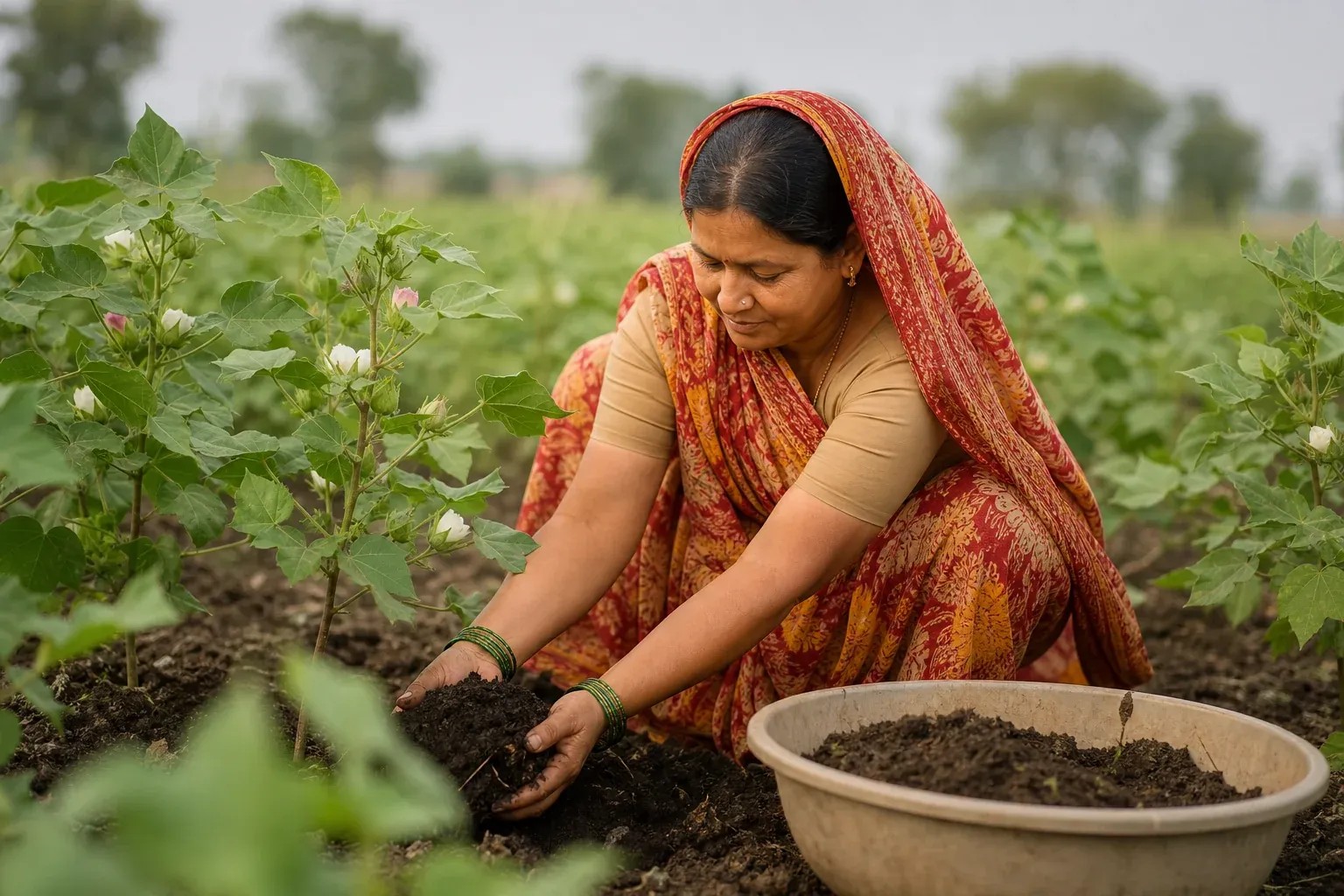
Women Farmers Participation in Regenerative Cotton Programs: Why It Matters
Women farmers participation in regenerative cotton programs shapes whether those programs actually work. Women handle most of the hands-on tasks that determine soil outcomes, compost preparation, seed selection, weeding, bio-input application, yet they are rarely counted in formal training rosters or land records. Close that gap and programs see faster adoption, steadier household income, and stronger retention season after season.
Key Takeaways
- Women do the work that decides soil health: compost prep, seed handling, weeding, and bio-input application in cotton fields are largely done by women, even though training and contracts are often addressed to male landholders.
- Self-Help Groups (SHGs) work as a training delivery channel: group-based sessions on biochar, vermicomposting, and bio-inputs reach more women than individual farm visits and improve knowledge retention through peer learning.
- Income diversification reduces program dropout: women running decentralized bio-input micro-enterprises add a second income stream, which makes households less likely to abandon regenerative practices when a season is tough.
- Land title exclusion is the biggest structural barrier: most cotton land in India and Bangladesh is titled to men, so women who do the fieldwork often can't sign carbon program contracts or receive payments directly.
- Gender-disaggregated data strengthens traceability claims: brands that ask suppliers to report participation by gender get a clearer, more defensible picture of who is actually driving on-farm change.
Women's Role in Regenerative Cotton at a Glance
| Area | Typical Role of Women | Main Barrier | Beetle Regen Intervention |
|---|---|---|---|
| Compost and vermicompost | Primary preparation and application | No formal recognition in land or contract records | SHG-based hands-on training |
| Bio-input production | Mixing and applying botanical extracts, biochar slurry | Limited access to raw materials and markets | Decentralized micro-enterprise support |
| Seed selection and storage | Traditional knowledge holders | Knowledge undocumented, not passed into formal training | SHG knowledge-sharing sessions |
| Weeding and harvest | Majority of field labor hours | Time and mobility constraints | Village-level, flexible-timing workshops |
| Carbon program contracts | Rarely a named party | Land titled to male household head | Advocacy for joint or group-based enrollment |
| Financial literacy | Limited exposure to formal banking | Language and literacy gaps | SHG financial literacy modules |
| Household nutrition | Manages kitchen gardens | Rarely linked to farm income planning | Kitchen nutrition garden training tied to SHGs |
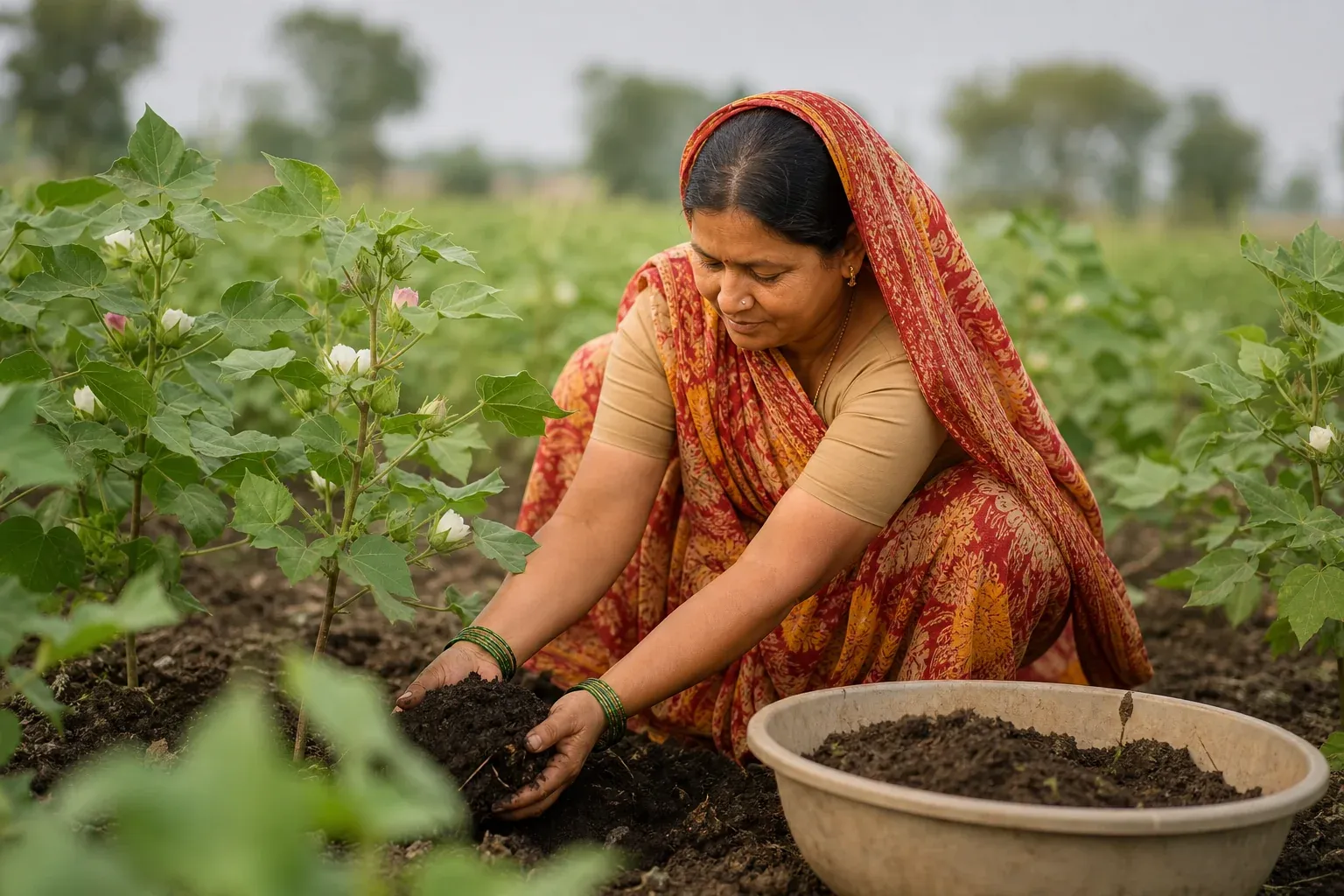
Why Women's Work in Cotton Fields Stays Invisible
Madhya Pradesh and Maharashtra cotton fields run on labor that is mostly female. Women prepare compost pits, mix bio-inputs, select seed for the next season, and spend more hours weeding and harvesting than any other household member. Ask a village agronomist who applies the vermicompost or who decides which boll looks healthy enough to save for seed, and the answer is almost always a woman.
Formal records tell a different story. Land titles list a male household head. Farmer ID numbers in cooperative databases match that same name. Carbon program contracts, sourcing agreements, and even training attendance sheets get built around whoever holds the title, not whoever does the work. That mismatch has a direct cost: training reaches the wrong person, adoption slows, and the knowledge that actually changes soil outcomes stays undocumented.
This isn't a side issue for a regenerative cotton program. If the person applying biochar slurry to the root zone never receives direct training on ratios or timing, yield and soil carbon gains stall regardless of how good the agronomy plan looks on paper. Our biochar carbon insetting programs depend on consistent, correct application at the field level, which means the training has to reach the hands actually doing the work.
How Self-Help Groups Change the Training Model
Individual farm visits don't scale, and they tend to default to whoever answers the door, usually the male household head. Self-Help Groups (SHGs) solve that by putting women together as the primary audience from the start.
Beetle Regen runs SHG-based sessions across cotton-belt villages covering biochar production basics, vermicomposting, bio-input preparation, soil health indicators, and water stewardship. The group format does three things an individual visit can't:
- It lowers the social and logistical barrier to attending. Women show up as a group, at a time that fits around household duties, rather than negotiating one-on-one access.
- It speeds adoption through peer learning. When one woman in the group gets vermicompost ratios right, the rest of the group sees it and copies it within the same season.
- It creates a lasting local network for troubleshooting, so questions about a failed compost batch or a pest outbreak get answered by a neighbor instead of waiting for the next official visit.
SHGs also carry modules beyond agronomy: financial literacy, entrepreneurship basics, and kitchen nutrition gardens. That breadth matters because a woman who understands basic bookkeeping is better positioned to manage income from a bio-input micro-enterprise or negotiate fair pricing when she sells surplus compost to a neighboring farm.
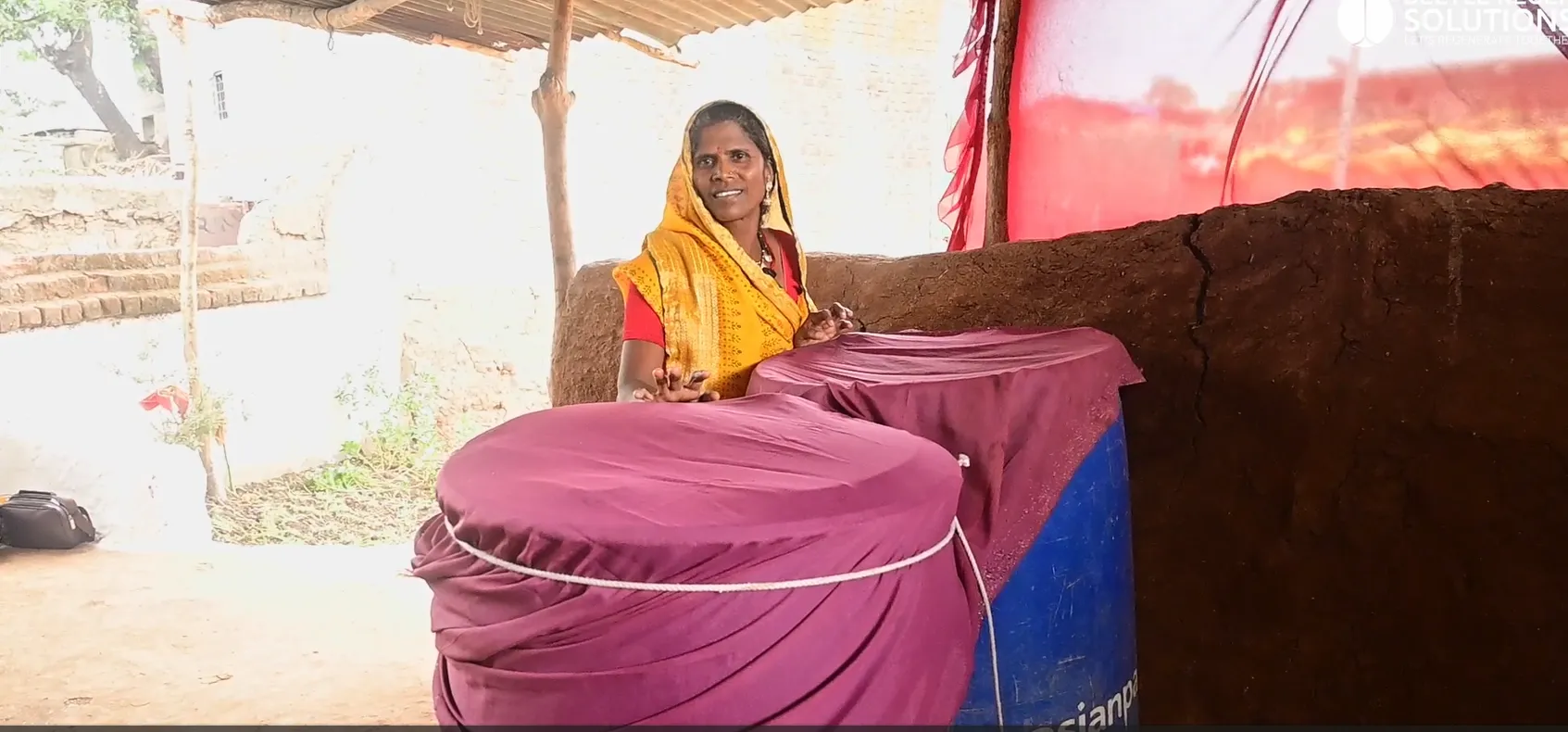
What Women Farmers Participation in Regenerative Cotton Programs Looks Like on the Ground
In practice, this participation takes a few concrete forms. SHG members in Madhya Pradesh and Maharashtra run decentralized production units for vermicompost and botanical bio-inputs, selling to their own households first and then to neighboring farms once volume grows. That's a second income stream that didn't exist before, layered on top of whatever the main cotton harvest brings in.
Kitchen nutrition gardens run in parallel. Women use small household plots to grow vegetables using the same regenerative principles, compost, minimal tillage, water conservation, which improves household food security without competing with the main cotton crop for land or labor.
In Bangladesh, where Beetle Regen has expanded its cotton and paddy programs, the same SHG structure is being adapted to local social norms, with training sessions timed around agricultural calendars that account for both cotton and rice cycles. The core idea stays the same across both countries: put the training in front of the people doing the work, in a format that fits their time and social context, and adoption follows faster than it would through a one-size-fits-all workshop aimed at landholders. You can see how this fits into the bigger 2025-2026 program picture in our end-of-year impact report.
The Barriers Still Blocking Full Participation
None of this erases the real barriers. Land title exclusion remains the biggest one. Most cotton land is registered to men, which means women who do the fieldwork often can't be listed as the contracted party in a carbon insetting or sourcing agreement, and can't receive payments directly. That structural gap affects who gets counted in official participation numbers, even when the actual labor tells a different story.
Mobility and time constraints follow close behind. Household duties, childcare, and social norms around travel limit how far a woman can go for training, which is part of why village-level, SHG-based delivery works better than centralized workshops.
Literacy and language gaps also shape how training material gets absorbed. Written manuals in a formal register don't land the same way as a hands-on demonstration led in the local dialect. And market access for bio-input micro-enterprises is still limited, since selling surplus vermicompost or botanical extracts beyond the immediate village requires transport and buyer relationships that most SHGs are still building.
These barriers are documented broadly in agricultural development research; the FAO's Gender and Land Rights Database tracks land title disparities across South Asia, and the pattern in Indian and Bangladeshi cotton belts is consistent with that broader picture.
Why This Strengthens Program Resilience for Brands
For a brand or mill sourcing regenerative cotton, women's participation isn't a side benefit, it's a resilience factor. Women tend to stay rooted in their villages across seasons more consistently than migrant male labor, which means the knowledge they build through SHG training doesn't leave with them. That continuity reduces the risk of a program losing its trained base between seasons.
Household income diversification matters too. When a family has income from cotton, plus a bio-input micro-enterprise, plus a kitchen garden, a bad cotton season is less likely to push that household out of the regenerative program entirely. Dropout is one of the biggest risks to any multi-year sourcing commitment, and diversified income is a direct hedge against it.
Empowering women farmers is not a parallel initiative. It is fundamental to building resilient, traceable and inclusive regenerative cotton value chains where environmental restoration and rural prosperity grow together.
There's also a traceability angle. Brands under increasing pressure to substantiate Scope 3 and CSRD-aligned claims need supply chain data that holds up to scrutiny. If the person actually applying bio-inputs in the field isn't part of the recorded training data, that's a gap in the story you're telling regulators and auditors. Gender-disaggregated participation data closes that gap and gives brands a stronger, more defensible narrative. Our guide on supply chain transparency in textiles covers how this kind of data feeds into broader traceability systems.
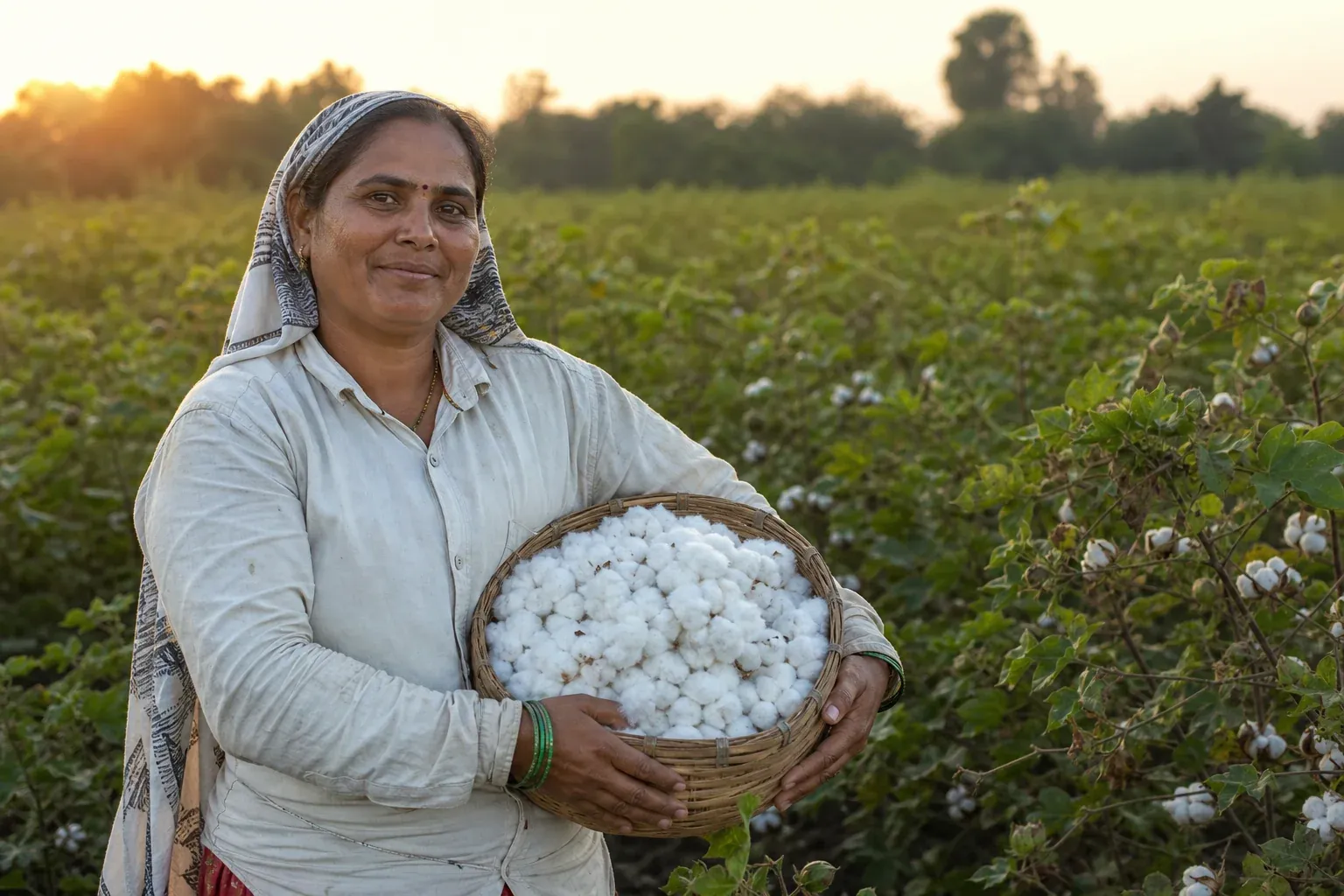
How Brands and Mills Can Support Inclusive Regenerative Cotton Sourcing
Brands don't need to run their own SHG programs to make a difference here. A few concrete steps go a long way:
- Ask suppliers for gender-disaggregated participation data as part of program reporting, not just aggregate farmer counts. This should sit alongside the other metrics covered in our piece on KPIs to track in a regenerative cotton program.
- Fund SHG-based training explicitly as a line item in sourcing contracts or carbon insetting agreements, rather than assuming general program budgets will cover it.
- Require joint or group-based enrollment options in carbon program contracts, so payment structures don't default to excluding women who don't hold formal land title.
- Support market access for decentralized bio-input enterprises, which can double as a lower-cost input source for the broader regenerative supply chain.
- Reference this in your sourcing policy, following the approach outlined in our guide on what regenerative cotton actually means for buyers evaluating supplier claims.
None of these steps require a large budget shift. They require a decision to count and support the people already doing the work.
FAQ
What is regenerative cotton?
Regenerative cotton is cotton grown using practices that rebuild soil health, biochar application, reduced tillage, cover cropping, and organic inputs, rather than depleting it. It differs from organic certification in that it focuses on measurable soil and carbon outcomes over time, not just input restrictions. Our detailed explainer on what is regenerative cotton covers this in full.
How does regenerative farming compare to conventional agriculture?
Regenerative farming reduces synthetic input use, builds soil organic carbon, and often improves water retention, whereas conventional agriculture typically relies on higher chemical input volumes and can accelerate soil degradation over time. See our comparison in Sustainable Farming: A Complete Guide to Regenerative Agriculture.
How is women's participation actually measured in these programs?
Beetle Regen tracks SHG membership numbers, training attendance disaggregated by gender, and household-level income data from bio-input micro-enterprises, alongside the standard soil and yield KPIs applied across the program.
Do women farmers receive carbon credit payments directly?
Not always, because land title often sits with a male household member. Beetle Regen is working toward group-based and joint enrollment structures so payment access better reflects who is actually doing the fieldwork.
If you're sourcing regenerative cotton and want supplier reporting that actually reflects who is doing the on-farm work, including women's participation data alongside soil and yield metrics, contact us to talk through how Beetle Regen structures its SHG-based training and reporting for brand partners.