From Farm to Super Fine Yarn to Premium Fabric-The Opportunity Story of Extra Long Staple Cotton
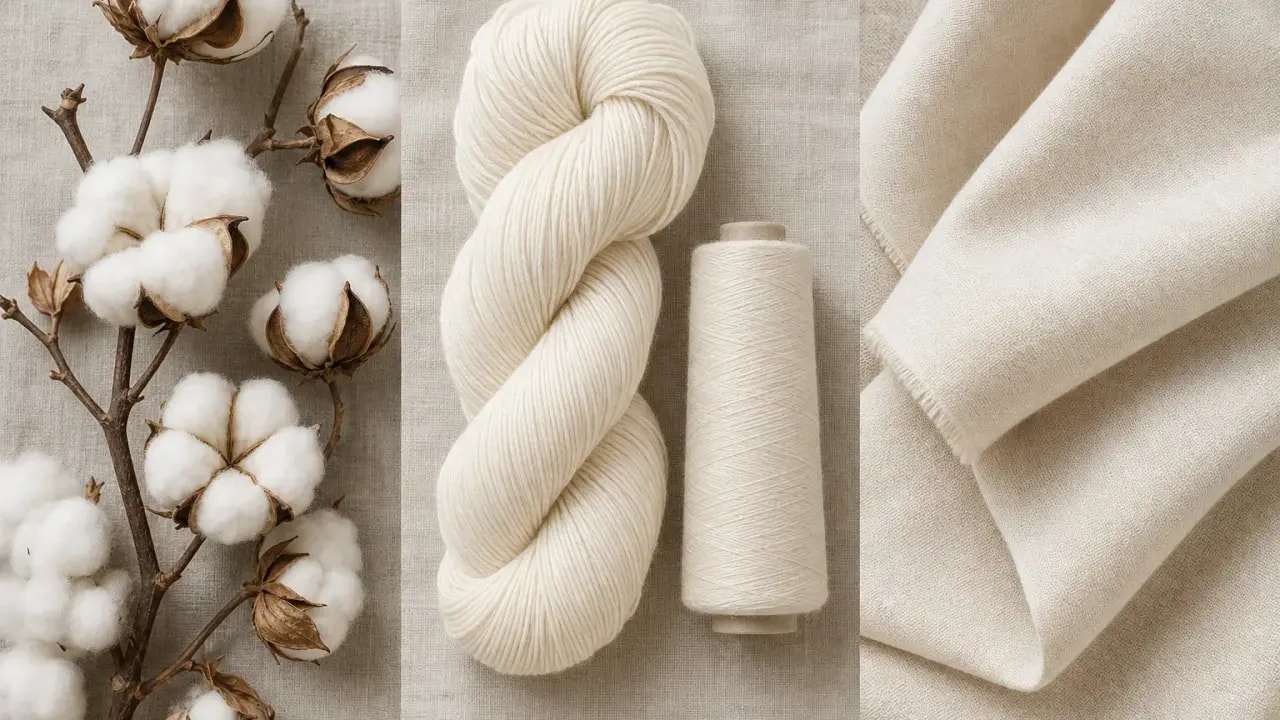
Walk into an uber luxury retail store anywhere in the world and you'll find labels proudly speaking of softness, thread count, fiber quality, craftsmanship, and premium cotton.
What most consumers do not realize is that the story of that fabric began long before the spinning mill.
It began with fiber. And not just any fiber. It began with Extra Long Staple (ELS) Cotton, which comprises around 1 to 2% of total world production - one of the most prized natural fibres in the global textile industry. This premium cotton, known for fibre lengths that may exceed 36 mm, stands apart from medium staple varieties that generally measure around 28 to 29 mm. Its softness, strength, and durability make it highly sought after for luxury textiles.
The Current Landscape of Extra-Long Staple and LS (Long Staple) Cotton in India
India produces around 110,000 MT of ELS cotton, largely confined to pockets in Madhya Pradesh and Karnataka, contributing about 0.4% of global production. The total production of ELS and LS cotton in India reached 110,000 tons in the 2024-25 season, 10% higher than the previous season, driven by supportive policy attention and government investment.
Additionally, the MCU-5 (super fine) variety thrives in the irrigated zones of Tamil Nadu, coastal Andhra Pradesh, and Navarangapur in Odisha. Other interspecific hybrids such as TCH-213, SIMA HB-3, and Sara-2 are also cultivated in parts of Tamil Nadu and Karnataka.
Despite India's strength in traditional cotton varieties, ELS cotton production has been waning while textile demand continues to rise. Current demand is estimated at about 900,000 bales against available supply of roughly 400,000 bales.
Projections suggest a need for over 2 million bales by 2026 to meet growing consumption, which has accelerated notably compared to the previous decade.
Recognizing this gap, the Government of India has increasingly highlighted the need to strengthen domestic ELS cotton production . Recent policy initiatives have focused on improving cotton productivity, fiber quality, research, and reducing dependence on imported extra-long staple cotton.
The opportunity is clear.
As global demand for premium textiles grows, India has the potential to build stronger domestic value chains that connect agriculture, fiber quality, textile manufacturing, and export competitiveness.
Supply Chain Traceability
Today's consumers and global brands want to know more than just where a garment was made; they want to understand where the fiber originated and how it was grown.
As the conversation shifts from the finished product back to the farm, traceability is becoming a critical factor in sourcing decisions. This creates a significant opportunity for differentiated fibres like ELS and LS cotton, where superior quality can be linked directly to origin, cultivation practices, and supply chain transparency.
In an increasingly quality-conscious and accountability-driven market, the ability to trace a fiber journey from farm to fabric is no longer a value-add; it is becoming a competitive advantage.
Regenerative ELS / LS Cotton: The Next Frontier
The convergence of ELS and LS cotton's quality premium with regenerative agriculture's environmental and social benefits creates one of the most compelling opportunities in sustainable textile sourcing today.
ELS and LS cotton connect to sustainability in several ways: their longer product lifespan can reduce textile waste, their soil health requirements create incentives for regenerative farming, and transparent supply chains can support carbon insetting programs that reduce Scope 3 emissions.
However, ELS cotton is not inherently sustainable. Land management practices, water use, and supply chain transparency determine the actual environmental outcome.
The Business Case for Regenerative ELS Cotton
For farmers, ELS and LS cotton represent more than a premium fibre; they represent an opportunity to participate in a differentiated value chain where quality is recognized, rewarded, and connected to market demand.
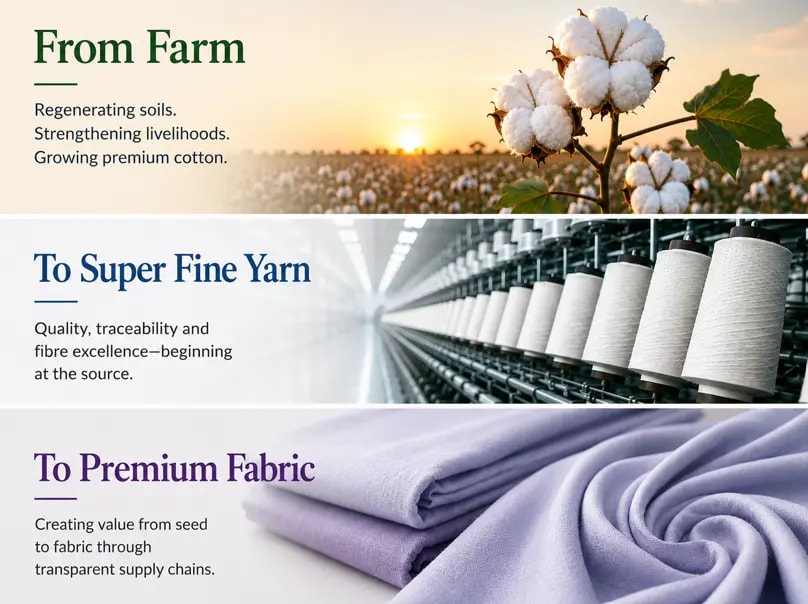
When combined with regenerative agriculture, traceability enables brands to verify not only the origin of the fibre but also the environmental and social impact behind it. Every stage of the journey can be documented, from the seed planted in the soil to the premium fabric reaching consumers.
For farmers, this creates the potential to move beyond commodity markets and become part of premium, quality-driven supply chains where fibre characteristics, cultivation practices, and sustainability outcomes matter. For brands, it offers confidence in sourcing, stronger sustainability claims, and a credible farm-to-fashion story that consumers increasingly expect.
As the industry moves toward premiumization, sustainability, transparency, and quality differentiation, ELS and LS cotton represent more than a crop category.
They represent an opportunity.
An opportunity to create greater value at the farm level.
An opportunity to strengthen India's textile competitiveness.
An opportunity to connect agriculture and manufacturing through a shared focus on quality.
And sometimes, the future of an industry can be traced back to a single fiber.
If your brand is exploring premium regenerative cotton sourcing, or if you are a supply chain professional building an ELS / LS cotton program with genuine ESG credentials, we would welcome the conversation.
Reach out to us - [email protected]