Agroforestry Systems: A Complete Guide to Carbon Sequestration and Soil Health
As global agriculture faces mounting pressure from climate change and soil degradation, agroforestry systems have emerged as a powerful regenerative solution that addresses multiple environmental and economic challenges simultaneously. With 33% of the world's soils already degraded according to UN FAO data, the integration of trees with agricultural crops offers a nature-based pathway to restore soil health, sequester carbon, and create sustainable income streams for farming communities.
For textile brands, agricultural businesses, and sustainability teams working toward carbon neutral and Net Zero goals, agroforestry systems represent a commercially viable strategy that transforms supply chains while delivering measurable environmental impact. This comprehensive guide explores how these integrated farming approaches are revolutionizing Indian agriculture and creating opportunities for businesses to achieve their climate commitments through farmer-first partnerships.
What Are Agroforestry Systems?
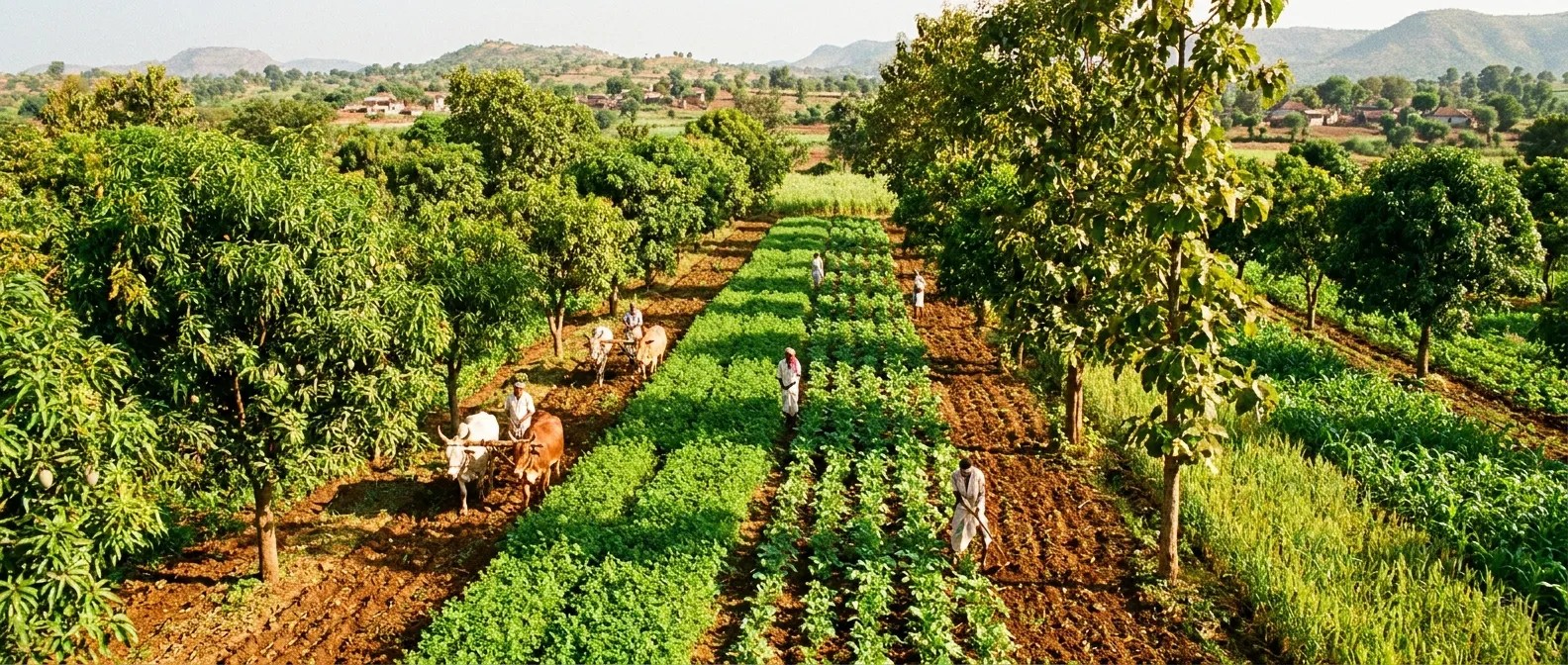
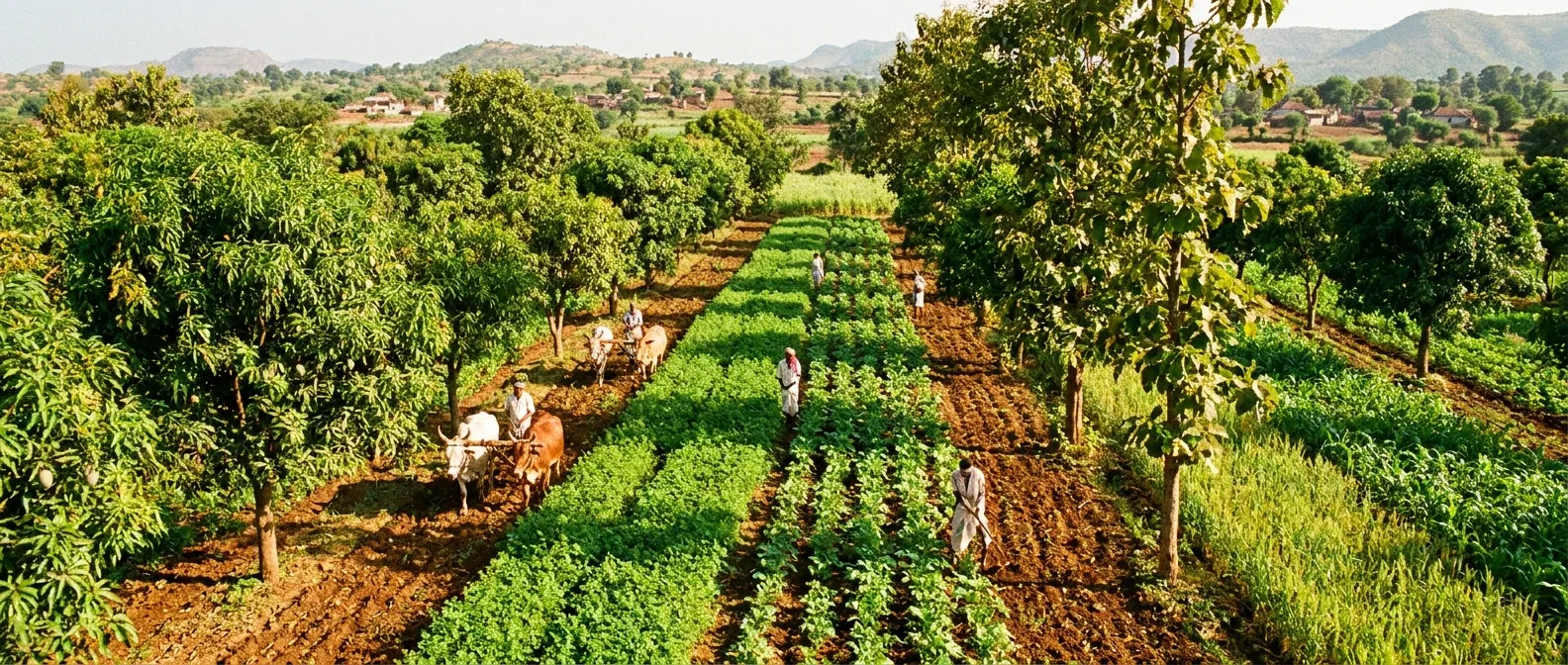
Agroforestry systems are intentional land-use practices that integrate trees and shrubs with crops and livestock on the same piece of land. Unlike conventional monoculture farming that separates forestry from agriculture, agroforestry creates synergistic relationships between different plant species and agricultural activities to enhance productivity, environmental sustainability, and economic resilience.
At their core, agroforestry systems follow several key principles:
- Intentional integration: Trees are deliberately planted and managed alongside agricultural crops rather than occurring by chance
- Ecological interactions: Different plant species complement each other through nutrient cycling, pest management, and microclimate modification
- Multiple outputs: Systems produce diverse products including timber, fruits, fodder, and agricultural crops
- Temporal and spatial arrangement: Components are organized in time and space to maximize beneficial interactions
India has a rich history of traditional agroforestry practices dating back centuries. Farmers have long understood the benefits of integrating trees like neem, mango, and tamarind with crops such as cotton, pulses, and millets. These time-tested approaches align perfectly with modern regenerative agriculture principles that focus on restoring ecosystem health while maintaining productive farming operations.
The distinction between agroforestry systems and conventional farming is significant. Traditional monoculture agriculture typically involves clearing all trees from farmland to maximize space for a single crop. This approach, while initially productive, leads to soil erosion, nutrient depletion, reduced biodiversity, and increased vulnerability to climate extremes. In contrast, agroforestry systems work with natural ecological processes to create more resilient and sustainable agricultural landscapes.
Types of Agroforestry Systems for Indian Agriculture
Different agroforestry systems suit different agricultural contexts, climate zones, and farmer objectives. Understanding these variations helps businesses and farmers select the most appropriate model for their specific circumstances.
Silvo-Pastoral Systems
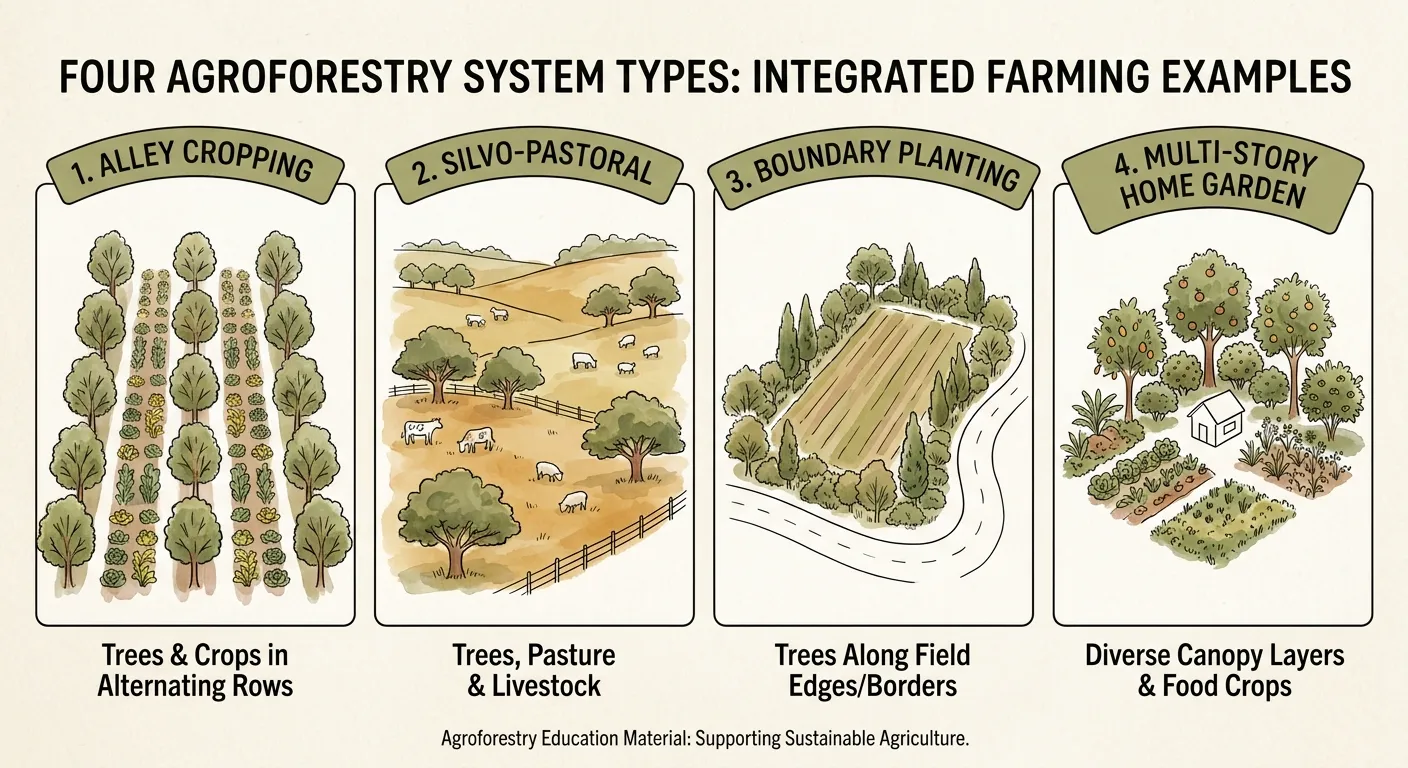
Silvo-pastoral agroforestry combines trees with livestock grazing. Trees provide shade for animals, reduce heat stress, and offer supplementary fodder through leaves and pods. The livestock, in turn, contribute manure that enriches soil fertility. This system works particularly well in semi-arid regions of India where water scarcity makes pure crop production challenging. Common tree species include subabul, gliricidia, and various acacia species that tolerate grazing pressure while providing nitrogen fixation benefits.
Alley Cropping
Alley cropping involves planting rows of trees with crops cultivated in the alleys between tree rows. This is one of the most popular agroforestry systems for commercial agriculture because it allows mechanized farming operations while capturing the benefits of tree integration. Trees are typically pruned regularly to reduce shading and provide organic mulch for crops. In Indian cotton-growing regions, farmers successfully grow cotton, pulses, and vegetables between rows of timber or fruit trees, creating diversified income streams.
Agri-Silviculture
Agri-silviculture integrates timber or fruit trees with annual agricultural crops. Trees are planted at wider spacing to allow sufficient light for crop growth. Popular combinations include mango or guava trees with cotton, teak with turmeric, or eucalyptus with groundnut. This system provides long-term income from timber or fruit while maintaining annual crop production. The tree component acts as a savings account that farmers can harvest when needed for major expenses like education or weddings.
High-Density Plantation Systems (HDPS)
High-density plantation systems optimize land use by planting trees at closer spacing than traditional forestry while maintaining crop production in the understory or between rows. This approach maximizes carbon sequestration per hectare while generating multiple income streams. HDPS models are particularly relevant for businesses seeking to achieve carbon neutral goals through carbon insetting programs that directly offset emissions within their supply chains.
Boundary Planting and Windbreak Systems
Boundary planting involves establishing trees along field edges, property lines, or water channels. While requiring minimal land area, these systems provide significant benefits including wind protection, reduced soil erosion, and additional income from tree products. Windbreak systems are especially valuable in regions prone to strong winds that can damage crops and accelerate soil moisture loss.
Home Gardens and Multi-Story Cropping
Home garden agroforestry creates multi-layered systems with tall trees, medium-height fruit trees, shrubs, and ground-level crops all growing together. This approach mimics natural forest structure and maximizes productivity per unit area. Common in Kerala and other parts of southern India, these systems produce coconut, banana, pepper, turmeric, and vegetables simultaneously, providing year-round nutrition and income for farming families.
How Agroforestry Systems Sequester Carbon
The climate mitigation potential of agroforestry systems makes them increasingly attractive to textile brands and agricultural businesses working toward Net Zero commitments. These systems sequester carbon through multiple pathways, creating measurable impact that can be verified and monetized through carbon credit programs.
Above-Ground Carbon Storage
Trees in agroforestry systems capture atmospheric carbon dioxide through photosynthesis and store it in their trunks, branches, and leaves. As trees grow, they accumulate significant biomass that represents long-term carbon storage. A mature tree can sequester 20-50 kg of carbon annually, depending on species, climate, and management practices. When multiplied across thousands of hectares in agricultural landscapes, this represents substantial climate impact.
Below-Ground Carbon Sequestration
Tree root systems extend deep into the soil profile, storing carbon in root biomass and releasing carbon-rich compounds that feed soil microorganisms. Deep-rooted trees access nutrients and water from soil layers that annual crops cannot reach, bringing these resources into the agricultural system. Root exudates stimulate microbial activity that builds soil organic matter, creating a positive feedback loop for carbon storage.
Soil Organic Carbon Enhancement
Perhaps the most significant carbon benefit of agroforestry systems comes from enhanced soil health and increased soil organic carbon. Leaf litter, pruned branches, and root turnover continuously add organic matter to the soil. This organic matter improves soil structure, water retention, and nutrient availability while sequestering carbon for decades or centuries. Studies show that well-managed agroforestry systems can increase soil organic carbon by 0.5-2 tonnes per hectare annually.
Quantifying Carbon Sequestration Rates
Different agroforestry systems sequester carbon at varying rates depending on tree species, density, climate, and management practices. Research in Indian conditions shows:
- Silvo-pastoral systems: 2-5 tonnes CO2 equivalent per hectare per year
- Alley cropping with timber trees: 3-7 tonnes CO2 equivalent per hectare per year
- High-density plantation systems: 5-12 tonnes CO2 equivalent per hectare per year
- Multi-story home gardens: 4-8 tonnes CO2 equivalent per hectare per year
These sequestration rates make agroforestry a powerful tool for carbon insetting programs where textile brands offset their scope 3 emissions by investing in regenerative practices within their own supply chains. Unlike purchasing carbon offsets from unrelated projects, carbon insetting through agroforestry creates direct value for the farmers who supply raw materials while achieving measurable climate impact.
For businesses implementing carbon credit programs, agroforestry systems offer verifiable, long-term carbon storage that meets international standards for carbon accounting and sustainability reporting. The combination of above-ground biomass, below-ground root systems, and enhanced soil carbon creates multiple verification pathways that strengthen the credibility of carbon claims.
Soil Health Benefits of Agroforestry Systems
Beyond carbon sequestration, agroforestry systems deliver profound improvements to soil health that address the global soil degradation crisis. With one-third of the world's soils already degraded, these regenerative approaches offer practical solutions for restoring agricultural productivity while building long-term resilience.
Improved Soil Structure and Reduced Erosion
Tree roots create channels in the soil that improve structure and porosity. These root channels enhance water infiltration and air circulation, creating ideal conditions for beneficial soil organisms. The tree canopy and leaf litter protect soil from the impact of heavy rainfall, dramatically reducing erosion. In sloped agricultural areas, agroforestry systems can reduce soil loss by 50-90% compared to conventional farming, preserving valuable topsoil that takes centuries to form.
Enhanced Nutrient Cycling and Soil Fertility
Many tree species used in agroforestry systems are nitrogen-fixing legumes that capture atmospheric nitrogen and make it available to crops. Species like gliricidia, sesbania, and various acacias host bacteria in their root nodules that convert nitrogen gas into plant-available forms. This biological nitrogen fixation reduces or eliminates the need for synthetic fertilizers, cutting costs for farmers while reducing the environmental impact associated with fertilizer production and application.
Deep-rooted trees also act as nutrient pumps, accessing minerals from deep soil layers and bringing them to the surface through leaf fall. As leaves decompose, these nutrients become available to shallow-rooted crops. This nutrient cycling creates a more efficient agricultural system that maintains fertility without depleting soil reserves.
Increased Soil Organic Matter and Microbial Activity
The continuous addition of organic matter from leaf litter, pruned branches, and root turnover feeds diverse communities of soil microorganisms. These microbes break down organic matter, releasing nutrients gradually and creating stable humus that improves soil structure. Healthy soil microbial communities also suppress plant diseases and enhance nutrient availability through complex biochemical processes.
Regular soil testing in agroforestry systems consistently shows higher levels of soil organic matter, microbial biomass, and enzyme activity compared to conventional farms. These indicators reflect living, functioning soils that support robust plant growth and resilience to environmental stress.
Better Water Infiltration and Moisture Retention
The improved soil structure created by tree roots and organic matter dramatically enhances water infiltration rates. Rather than running off the surface and causing erosion, rainfall penetrates deeply into the soil profile where it becomes available to plants during dry periods. This increased water-holding capacity makes agroforestry systems more resilient to drought and reduces irrigation requirements.
Tree shade also reduces soil surface temperatures and evaporation rates, further conserving soil moisture. In semi-arid regions of India, this microclimate modification can mean the difference between crop success and failure during critical growth periods.
Reversing Soil Degradation
For the 33% of global soils that are already degraded, agroforestry systems offer a proven pathway to restoration. By addressing the root causes of degradation—erosion, nutrient depletion, organic matter loss, and compaction—these integrated approaches can restore productivity to degraded lands within 3-7 years. This restoration potential makes agroforestry particularly valuable for reversing soil damage in intensive agricultural regions where conventional practices have depleted soil resources.
Economic Benefits: Creating Sustainable Income Streams for Farmers
While the environmental benefits of agroforestry systems are compelling, economic viability determines whether farmers will adopt these practices at scale. Fortunately, well-designed agroforestry systems create multiple income streams that improve farmer income and financial stability.
Diversified Income from Multiple Products
Unlike monoculture farming that depends on a single crop, agroforestry systems generate income from timber, fruits, fodder, and agricultural crops. This diversification spreads risk across multiple products with different market cycles and harvest times. When cotton prices are low, farmers still have income from fruit sales or timber harvesting. This economic resilience is particularly valuable in volatile agricultural markets.
Reduced Input Costs
The natural pest control, nutrient cycling, and soil improvement provided by trees reduce the need for expensive external inputs. Farmers report 30-50% reductions in fertilizer costs and 20-40% reductions in pesticide use after establishing agroforestry systems. These input cost savings directly improve farm profitability, especially important for smallholder farmers operating on thin margins.
Access to Carbon Credit Monetization
The carbon sequestration achieved through agroforestry systems creates opportunities for farmers to access carbon credit markets. Through partnerships with sustainability consultancies and textile brands, farmers can receive payments for the carbon they sequester, creating an additional income stream that rewards environmental stewardship. These carbon payments can range from $5-20 per tonne of CO2 equivalent, providing significant supplementary income when aggregated across farming communities.
Premium Pricing for Regenerative Products
Cotton and other crops grown in agroforestry systems often qualify for premium pricing in sustainable supply chains. Textile brands seeking traceable, regenerative materials are willing to pay 10-30% premiums for cotton grown using practices that restore soil health and sequester carbon. This premium pricing recognizes the additional environmental value created by farmers and provides economic incentive for continued regenerative management.
Long-Term Financial Stability
The tree component of agroforestry systems acts as a long-term savings account and insurance policy. Timber trees can be harvested when farmers face major expenses or financial emergencies, providing a financial buffer that reduces vulnerability to economic shocks. Fruit trees provide regular income that supplements annual crop production, smoothing cash flow throughout the year.
Research on regenerative agriculture ROI consistently shows that agroforestry systems deliver higher long-term returns than conventional monoculture farming, despite requiring initial investment and patience during establishment years.
Implementing Agroforestry Systems: Practical Strategies
Successfully establishing agroforestry systems requires careful planning, appropriate species selection, and ongoing management. This section provides practical guidance for farmers, agricultural businesses, and sustainability teams looking to implement these regenerative approaches.
Site Assessment and Soil Testing
Implementation begins with thorough site assessment including soil testing to understand baseline conditions. Key parameters include soil pH, organic matter content, nutrient levels, texture, and drainage characteristics. This baseline data informs species selection and helps track improvement over time. Climate analysis including rainfall patterns, temperature ranges, and frost risk also guides appropriate system design.
Selecting Appropriate Tree Species
Tree species selection is critical to agroforestry success. Appropriate species must match local climate conditions, soil types, and farmer objectives. For Indian conditions, popular choices include:
- Nitrogen-fixing trees: Gliricidia, subabul, sesbania, acacia species for soil fertility enhancement
- Timber trees: Teak, eucalyptus, casuarina, melia for long-term income
- Fruit trees: Mango, guava, citrus, sapota for regular income and nutrition
- Multipurpose trees: Neem, tamarind, drumstick for diverse products and services
Species should be selected based on compatibility with existing crops, market demand for tree products, growth rates, and maintenance requirements. Native species often perform better than exotics and provide greater biodiversity benefits.
Spacing and Design Considerations
Proper spacing balances the benefits of trees with the light and space requirements of crops. General guidelines include:
- Alley cropping: Tree rows spaced 8-15 meters apart depending on tree species and crop requirements
- Boundary planting: Single or double rows along field edges
- Scattered trees: 50-100 trees per hectare at irregular spacing
- High-density systems: 400-1000 trees per hectare with compatible understory crops
East-west orientation of tree rows minimizes shading of crops in alley cropping systems. Spacing should accommodate farm equipment if mechanization is used.
Integration with Cotton and Textile Crop Production
For textile supply chains, integrating agroforestry systems with cotton production creates opportunities for brands to source regenerative materials while supporting farmer livelihoods. Cotton grows well in alley cropping systems with appropriate tree spacing. The improved soil fertility and pest control provided by trees can increase cotton yields by 15-25% while reducing input costs.
Combining agroforestry with regenerative cotton production creates highly traceable, sustainable supply chains that meet the growing demand for environmentally responsible textiles. This integration supports circular economy principles in fashion by creating closed-loop systems that regenerate natural resources.
Timeline and Phased Implementation
Agroforestry establishment follows a phased timeline:
- Year 1: Site preparation, soil testing, species selection, tree planting, establishment care
- Years 2-3: Tree establishment, regular pruning, continued crop production, monitoring growth
- Years 4-7: System maturation, increasing tree benefits, optimization of management practices
- Years 8+: Mature system with full benefits, potential timber harvesting, ongoing management
Farmers should expect 2-3 years before seeing significant benefits from trees, though some fast-growing species provide benefits sooner. Crop production continues throughout establishment, maintaining income during transition.
Training and Capacity Building
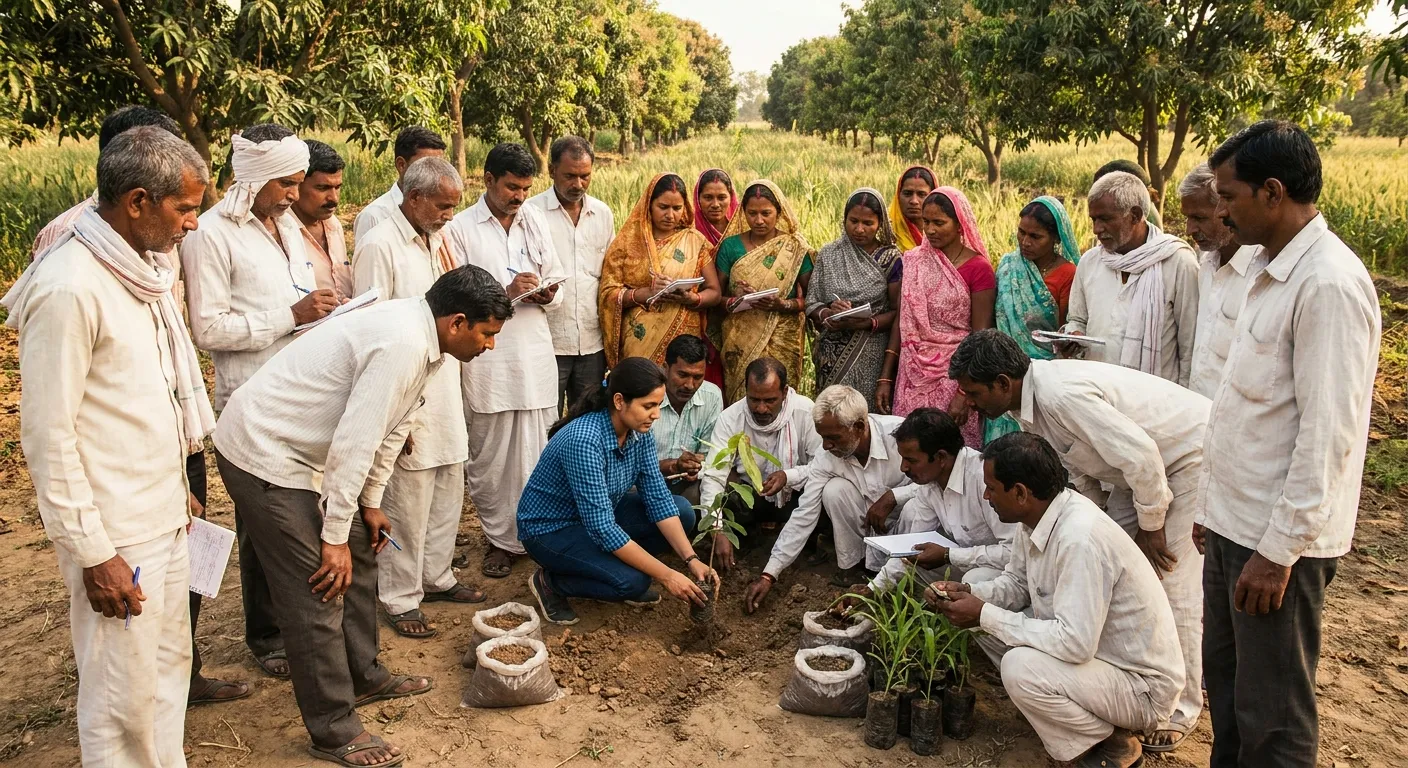
Successful implementation requires training farmers in tree management, pruning techniques, pest control, and system optimization. Collaborative training programs that bring together farmers, agricultural extension workers, and sustainability consultants create knowledge-sharing opportunities that accelerate adoption and improve outcomes.
Organizations like Beetle Regen Solutions provide hands-on capacity building that equips farmers with the skills needed to establish and manage agroforestry systems effectively. This collaborative approach ensures that farmers understand not just what to do, but why these practices work and how to adapt them to local conditions.
Monitoring and Measuring Success
Regular monitoring tracks system performance and guides management adjustments. Key metrics include tree survival and growth rates, crop yields, soil health indicators, pest and disease incidence, and economic returns. Photographic documentation and farmer observations complement quantitative measurements to build a comprehensive picture of system performance.
For businesses investing in agroforestry as part of carbon insetting or sustainable sourcing programs, robust monitoring provides the data needed for sustainability reporting and verification of environmental claims.
Agroforestry Systems in Textile Supply Chains
The textile and fashion industry faces intense pressure to reduce environmental impact and achieve carbon neutral goals. Agroforestry systems offer textile brands a powerful tool to transform their supply chains while creating measurable climate impact and supporting farmer livelihoods.

Integrating Agroforestry into Sourcing Strategies
Forward-thinking textile brands are incorporating agroforestry requirements into their sourcing criteria, prioritizing suppliers who grow cotton and other natural fibers using regenerative practices. This shift creates market demand that incentivizes farmer adoption of agroforestry systems. Brands benefit from differentiated, sustainable products while farmers gain access to premium markets and technical support.
Combining Regenerative Cotton with Agroforestry
Regenerative cotton grown in agroforestry systems represents the gold standard for sustainable textile materials. These systems produce high-quality cotton while sequestering carbon, improving soil health, enhancing biodiversity, and supporting farmer income. The combination addresses multiple sustainability objectives simultaneously, making it highly attractive for brands with comprehensive ESG commitments.
Cotton varieties suited to agroforestry systems maintain fiber quality while benefiting from the improved growing conditions created by trees. The reduced pest pressure and enhanced soil fertility often result in better fiber strength and length, meeting the quality requirements of premium textile applications.
Traceability and Blockchain Integration
Transparency is critical for textile brands making environmental claims. Blockchain traceability systems can track cotton from agroforestry farms through ginning, spinning, weaving, and garment production, providing verifiable proof of sustainable sourcing. This traceability builds consumer trust and protects brands from greenwashing accusations.
Digital platforms that integrate farm-level data with supply chain tracking enable real-time monitoring of regenerative practices and environmental outcomes. This data integration supports robust sustainability reporting and demonstrates genuine commitment to environmental responsibility.
Meeting ESG and Sustainability Reporting Requirements
Agroforestry programs provide quantifiable metrics for ESG reporting including carbon sequestered, soil health improvements, biodiversity enhancements, and farmer income increases. These metrics align with frameworks like GRI, SASB, and TCFD that investors and stakeholders use to evaluate corporate sustainability performance.
For brands navigating the complex landscape of sustainability terminology and reporting requirements, resources like comprehensive ESG guides provide clarity on key concepts and best practices.
Case Applications in India and Bangladesh
India and Bangladesh are major cotton-producing regions supplying global textile brands. Implementing agroforestry systems in these regions creates significant environmental and social impact at scale. Pilot projects have demonstrated that agroforestry can be successfully integrated into existing cotton production systems without disrupting supply chains or compromising quality.
These regional applications provide valuable lessons for scaling agroforestry across textile supply chains. Success factors include strong farmer training programs, market linkages that reward sustainable practices, technical support during establishment, and long-term partnerships between brands, farmers, and sustainability consultancies.
Partnership Models for Implementation
Effective agroforestry implementation in textile supply chains typically involves partnerships between multiple stakeholders:
- Textile brands: Provide market access, premium pricing, and financial support for establishment
- Farmers: Implement practices, manage systems, produce sustainable materials
- Sustainability consultancies: Provide technical expertise, training, monitoring, and verification
- Financial institutions: Offer credit and risk mitigation for establishment costs
- Government agencies: Support through policy, subsidies, and extension services
These collaborative partnerships distribute risks and benefits while leveraging the unique capabilities of each stakeholder. Sustainability consultancies like Beetle Regen Solutions play a crucial role in orchestrating these partnerships and ensuring successful implementation.
Overcoming Challenges in Agroforestry Adoption
Despite the compelling benefits of agroforestry systems, several challenges can slow adoption. Understanding and addressing these barriers is essential for scaling these regenerative approaches.
Initial Investment and Establishment Costs
Establishing agroforestry systems requires upfront investment in tree seedlings, planting labor, and establishment care. These costs can be prohibitive for smallholder farmers operating with limited capital. Solutions include:
- Subsidized seedling programs through government or NGO partnerships
- Phased implementation that spreads costs over multiple years
- Carbon credit advance payments that provide establishment funding
- Brand partnerships that cover establishment costs in exchange for long-term supply commitments
Knowledge Gaps and Technical Training Needs
Many farmers lack experience with tree management, pruning techniques, and system optimization. Comprehensive training programs address this challenge by providing hands-on learning opportunities and ongoing technical support. Farmer-to-farmer knowledge sharing accelerates learning and builds confidence in new practices.
Land Tenure and Policy Considerations
Farmers with insecure land tenure may be reluctant to invest in long-term tree planting. Policy reforms that strengthen land rights and provide incentives for agroforestry adoption can address this barrier. Government programs that recognize agroforestry as agriculture rather than forestry also remove regulatory obstacles that sometimes discourage tree planting on farmland.
Market Access for Agroforestry Products
Farmers need reliable markets for the diverse products generated by agroforestry systems. Developing value chains for timber, fruits, and other tree products ensures that farmers can monetize all system outputs. Partnerships with textile brands create guaranteed markets for regenerative cotton, reducing market risk.
Balancing Short-Term Income with Long-Term Benefits
The 2-3 year establishment period before trees provide significant benefits can be challenging for farmers who need immediate income. Selecting fast-growing species, maintaining crop production during establishment, and providing financial support during transition years help bridge this gap. Clear communication about the timeline of benefits and long-term economic returns helps farmers make informed decisions.
Solutions Through Collaborative Platforms
Addressing these challenges requires coordinated action across multiple stakeholders. Collaborative platforms like the Climate Action Textile Forum bring together brands, farmers, consultancies, and policymakers to share knowledge, coordinate investments, and develop solutions to common challenges. These platforms accelerate adoption by creating ecosystems of support around agroforestry implementation.
Measuring Impact: Monitoring and Verification
Robust monitoring and verification systems are essential for demonstrating the impact of agroforestry systems and supporting carbon credit programs, sustainability reporting, and continuous improvement.
Key Performance Indicators
Comprehensive monitoring tracks multiple dimensions of system performance:
- Environmental indicators: Carbon sequestration rates, soil organic matter, biodiversity indices, water quality
- Agronomic indicators: Crop yields, tree growth rates, pest and disease incidence, input use
- Economic indicators: Farm income, input costs, product prices, return on investment
- Social indicators: Farmer satisfaction, knowledge levels, community engagement, gender equity
Carbon Measurement and Verification Protocols
Accurate carbon accounting follows established protocols like Verra's VM0042 or Gold Standard's methodologies for agroforestry. These protocols specify sampling procedures, measurement techniques, and calculation methods that ensure credible carbon quantification. Third-party verification provides independent assurance that carbon claims are accurate and conservative.
Soil Health Testing and Monitoring
Regular soil testing tracks improvements in soil organic matter, nutrient levels, pH, and biological activity. Baseline testing before agroforestry establishment provides a reference point for measuring change. Follow-up testing every 2-3 years documents soil health improvements and guides management adjustments.
Biodiversity Assessments
Agroforestry systems typically support greater biodiversity than monoculture farms. Monitoring bird species, beneficial insects, and plant diversity documents these ecological benefits. Biodiversity assessments also identify opportunities to enhance habitat value through species selection and management practices.
ERP Integration for Data Management
Managing data from thousands of farms requires robust information systems. ERP integration connects farm-level monitoring data with supply chain tracking and corporate reporting systems. This integration enables real-time visibility into program performance and supports data-driven decision making.
Digital platforms that aggregate farm data, calculate carbon sequestration, and generate reports streamline the monitoring process and reduce administrative burden. These systems make it feasible to manage large-scale agroforestry programs across extensive supply chains.
Sustainability Reporting and Compliance Tracking
Agroforestry monitoring data feeds directly into corporate sustainability reporting frameworks. Automated reporting tools extract relevant metrics and format them according to GRI, SASB, CDP, or other reporting standards. This automation ensures consistency, reduces reporting costs, and improves data quality.
For textile brands with complex supply chains, API integration between farm monitoring systems and corporate sustainability platforms enables seamless data flow and real-time reporting.
Technology Solutions for Traceability
Emerging technologies including satellite imagery, drone monitoring, and IoT sensors enhance monitoring capabilities while reducing costs. Satellite-based tree cover monitoring provides independent verification of agroforestry establishment and growth. Mobile apps enable farmers to record observations and upload photos, creating rich datasets that document system development over time.
The Future of Agroforestry Systems in Climate Action
As the urgency of climate action intensifies, agroforestry systems are positioned to play an increasingly important role in achieving global climate goals while supporting sustainable development.
Alignment with Climate Policy and Government Initiatives
Agroforestry aligns perfectly with India's climate commitments under the Paris Agreement, including targets for land degradation neutrality and forest cover expansion. Government programs increasingly recognize agroforestry as a priority intervention for climate mitigation and adaptation. Understanding how regenerative practices align with policy frameworks helps businesses and farmers access government support and incentives.
Role in Achieving India's Climate Commitments
India has committed to creating an additional carbon sink of 2.5-3 billion tonnes of CO2 equivalent through additional forest and tree cover by 2030. Agroforestry on agricultural lands represents a major opportunity to achieve this target while maintaining food and fiber production. Scaling agroforestry across India's 140 million hectares of agricultural land could sequester hundreds of millions of tonnes of carbon annually while improving farmer livelihoods.
Scaling Through Corporate Partnerships
Corporate commitments to Net Zero and carbon neutral goals are driving unprecedented investment in nature-based solutions. Textile brands, food companies, and other businesses with agricultural supply chains are increasingly investing in agroforestry as part of their climate strategies. These corporate partnerships provide the capital, technical support, and market access needed to scale agroforestry from pilot projects to landscape-level transformation.
Integration with Other Regenerative Practices
Agroforestry systems work synergistically with other regenerative practices to maximize environmental and economic benefits:
- Biochar applications: Combining agroforestry with biochar production from pruned branches creates additional carbon sequestration and soil improvement
- Alternative Wetting and Drying (AWD): In rice-growing regions, integrating trees with AWD water management reduces methane reduction while sequestering carbon
- Cover crops: Planting cover crops between tree rows enhances soil health and provides additional biomass
- Integrated pest management: Trees support beneficial insects that control crop pests, reducing pesticide needs
This integration of multiple regenerative practices creates farming systems that are greater than the sum of their parts, delivering exceptional environmental and economic performance.
Innovation in Agroforestry Models and Technology
Ongoing innovation continues to improve agroforestry system design and management. Research on optimal species combinations, spacing configurations, and management practices refines recommendations for different contexts. Technology innovations including precision agriculture tools, remote sensing, and artificial intelligence enhance monitoring capabilities and support data-driven optimization.
Call to Action for Textile Brands, Farmers, and Policymakers
Realizing the full potential of agroforestry systems requires coordinated action across all stakeholders:
Textile brands and retailers can integrate agroforestry into their sourcing strategies, provide premium pricing for regenerative materials, and invest in farmer training and support programs. By committing to long-term partnerships with farming communities, brands create the stability needed for farmers to invest in these transformative practices.
Farmers and agricultural businesses can begin transitioning to agroforestry by starting with small pilot areas, seeking training and technical support, and connecting with brands and organizations that support regenerative agriculture. The journey to regenerative farming begins with a single tree planted alongside crops.
Policymakers and government agencies can accelerate adoption through supportive policies, subsidies for establishment costs, extension services that promote agroforestry, and recognition of agroforestry in climate mitigation strategies. Removing regulatory barriers and providing incentives creates an enabling environment for widespread adoption.
Sustainability consultancies and technical service providers play a crucial role in bridging knowledge gaps, facilitating partnerships, providing training, and ensuring robust monitoring and verification. Their expertise transforms good intentions into measurable impact.
The transformation of agricultural landscapes through agroforestry systems represents one of the most promising pathways to address climate change, restore soil health, and create sustainable livelihoods. For businesses committed to achieving carbon neutral and Net Zero goals while creating positive social impact, agroforestry offers a commercially viable, scientifically proven solution that delivers results for people and planet.
Whether you're a textile brand seeking to transform your supply chain, a farmer looking to improve soil health and income, or a sustainability professional developing climate strategies, agroforestry systems provide a regenerative solution that addresses multiple challenges simultaneously. The time to act is now—every tree planted today represents carbon sequestered, soil restored, and a more sustainable future for agriculture.
Ready to integrate agroforestry systems into your sustainability strategy? Beetle Regen Solutions partners with textile brands, farmers, and agricultural businesses to implement regenerative practices that achieve measurable climate impact while strengthening rural livelihoods. Contact us to explore how agroforestry can transform your supply chain and help you achieve your Net Zero commitments through farmer-first, nature-based solutions.