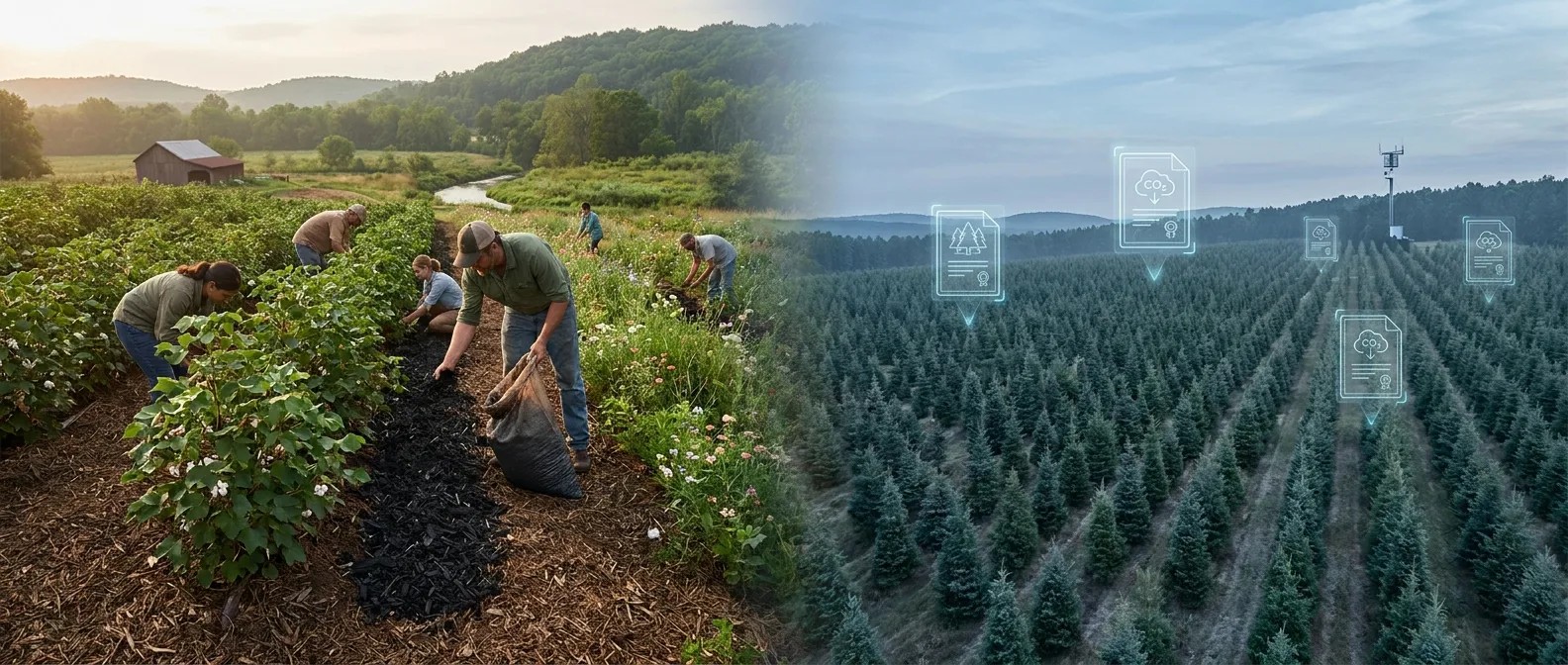
Carbon Insetting vs Carbon Offsetting: Real Climate Impact in 2026
The pressure on brands to act on climate change has never been greater. Sustainability teams across the textile, fashion, and agriculture sectors are navigating a crowded landscape of decarbonization strategies, and two terms keep rising to the top of every conversation: carbon insetting and carbon offsetting. Both promise a path toward carbon neutral and net zero goals. But they work in fundamentally different ways, deliver very different outcomes, and carry very different risks in 2026's tightening regulatory environment.
This guide breaks down the real differences between carbon insetting and carbon offsetting. We compare their climate impact, cost-effectiveness, supply chain benefits, and regulatory standing, so your sustainability team can make a confident, informed decision. Whether you are a textile brand sourcing cotton from India, a corporate ESG team building a net zero roadmap, or a supply chain manufacturer navigating scope 3 emissions, this comparison is built for you.
What Is Carbon Insetting? A Clear Definition for Sustainability Teams
Carbon insetting is the practice of investing in emission reduction or carbon sequestration projects within a company's own value chain. Instead of buying credits from unrelated third-party projects, a brand funds climate action directly in the supply chain it depends on. The result is a measurable reduction in the brand's own carbon footprint, particularly its scope 3 emissions.
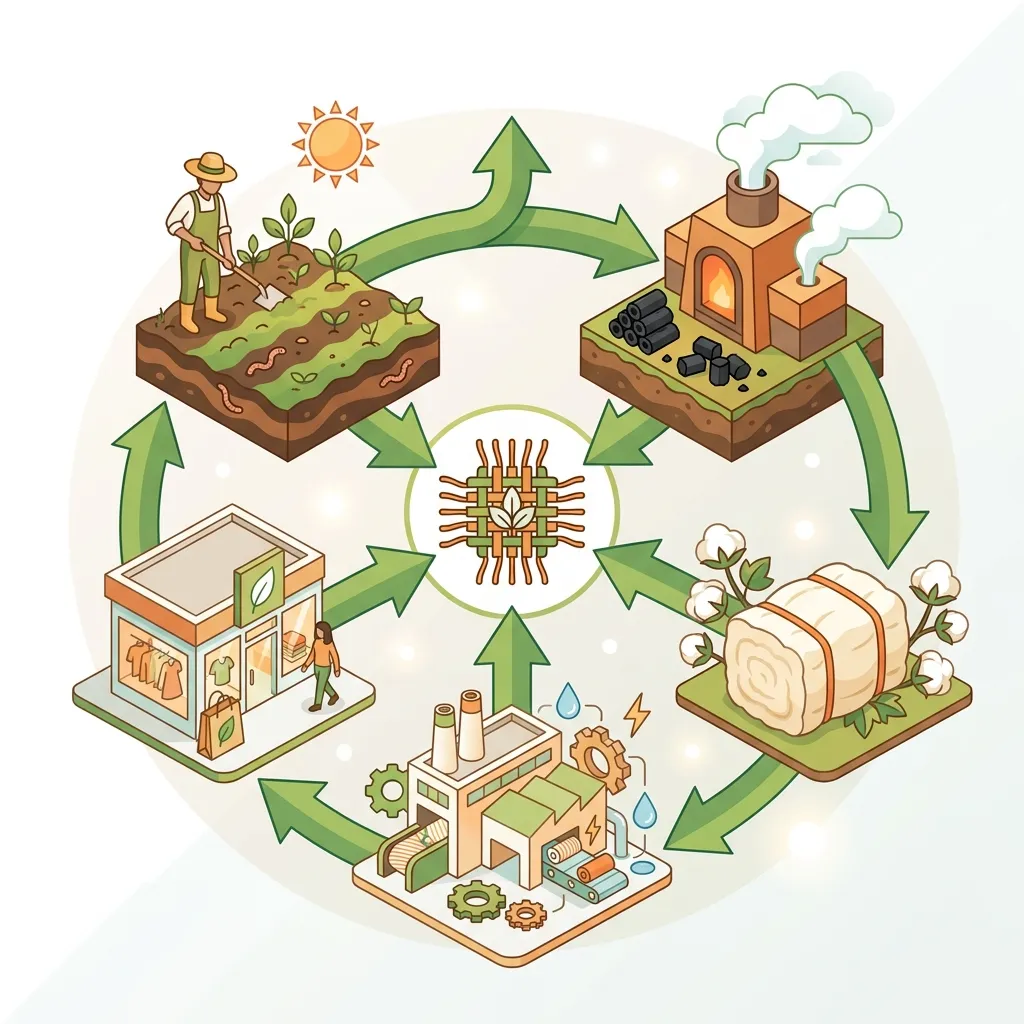
In the textile and fashion industry, carbon insetting typically involves partnering with farmers who grow the raw materials (like cotton) to adopt regenerative agriculture practices. These practices, including composting, cover cropping, biochar applications, and reduced tillage, restore soil health and sequester carbon directly in the fields that supply the brand. The climate benefit stays inside the value chain.
Common carbon insetting approaches in textile supply chains include:
- Regenerative agriculture programs that train farmers in soil-building practices
- Biochar production and application for long-term soil carbon sequestration
- Alternative Wetting and Drying (AWD) for rice and paddy farming to reduce methane reduction at source
- Agroforestry and cover cropping to increase biodiversity and soil organic matter
- Soil testing and MRV (Measurement, Reporting, Verification) to quantify sequestration
Carbon insetting is gaining significant traction in 2026 because it addresses a core weakness of traditional offsetting: it creates climate impact where the brand actually operates. For a deeper understanding of how these terms fit into the broader ESG landscape, the Modern ESG Dictionary is an excellent starting reference for sustainability teams.
What Is Carbon Offsetting? The Traditional Approach Explained
Carbon offsetting is the practice of compensating for a company's greenhouse gas emissions by purchasing carbon credits generated by projects elsewhere. Each credit typically represents one tonne of CO2 equivalent (CO2e) that has been reduced, avoided, or sequestered by a project outside the buyer's value chain.
Offset markets operate in two main forms. Voluntary carbon markets (VCMs) allow companies to purchase credits to meet self-declared sustainability goals. Compliance markets are regulated systems where companies must offset emissions to meet legal requirements. In India, the Carbon Credit Trading Scheme (CCTS) is evolving rapidly, and globally, Article 6 of the Paris Agreement is reshaping how international offset credits are recognized.
Common offset project types include:
- Avoided deforestation (REDD+ projects)
- Renewable energy installations (wind, solar)
- Improved cookstoves in developing communities
- Methane capture from landfills or livestock
- Afforestation and reforestation projects
However, carbon offsetting has faced growing scrutiny. High-profile investigations in 2023 and 2024 revealed that many REDD+ forest credits delivered far fewer climate benefits than claimed. Questions around additionality (would the project have happened anyway?), permanence (will the carbon stay sequestered?), and leakage (do emissions simply shift elsewhere?) have eroded confidence in offset markets. Regulators in the EU, UK, and India are tightening rules on what brands can claim when using offsets.
Carbon Insetting vs Carbon Offsetting: Head-to-Head Comparison
To help sustainability teams evaluate both strategies clearly, here is a direct comparison across the dimensions that matter most for textile and fashion brands in 2026.
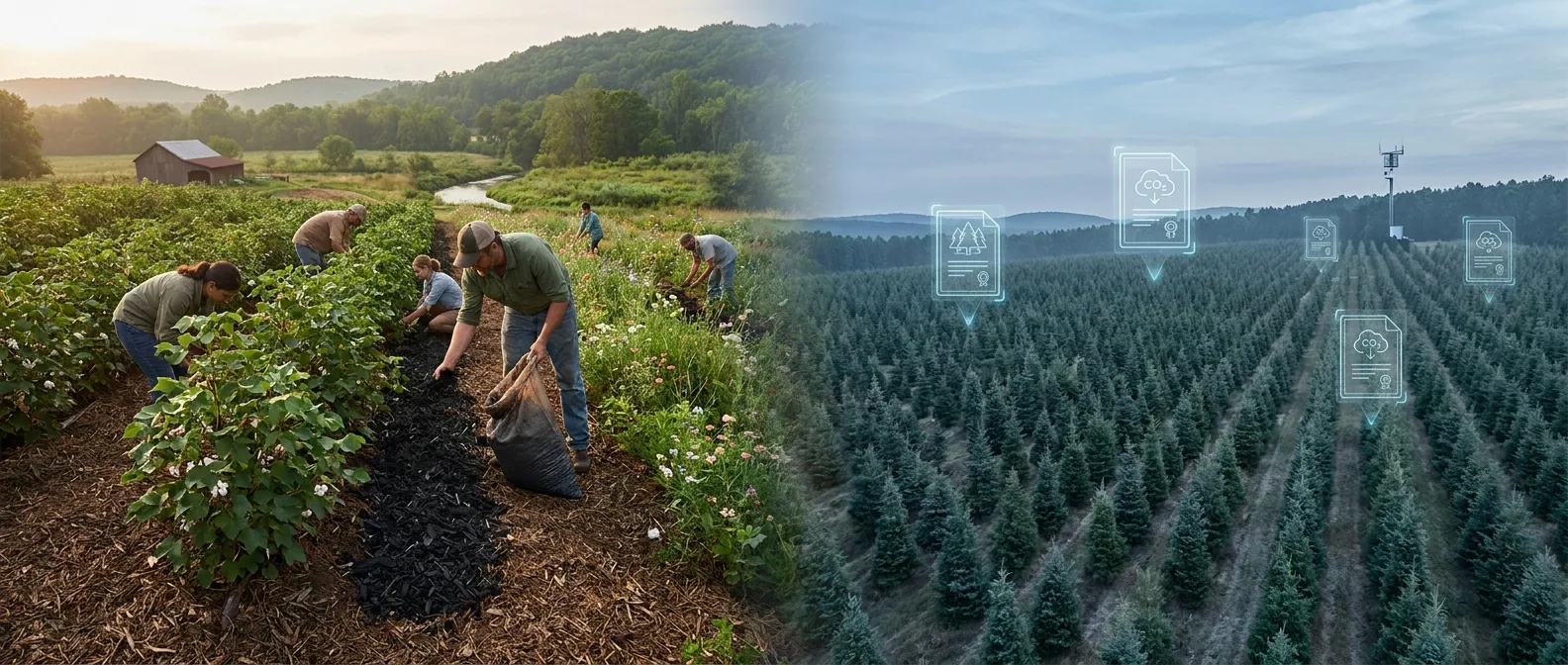
| Dimension | Carbon Insetting | Carbon Offsetting |
|---|---|---|
| Where impact occurs | Within the brand's own value chain | Outside the brand's value chain |
| Scope 3 emissions | Directly reduces scope 3 at source | Does not reduce scope 3 emissions |
| Supply chain benefit | Strengthens supply chain resilience | No direct supply chain benefit |
| Farmer income | Improves farmer livelihoods directly | No direct farmer income benefit |
| Traceability | High — blockchain traceability possible | Limited — third-party registry only |
| Greenwashing risk | Low — verifiable, supply chain-linked | High, under regulatory scrutiny |
| Implementation speed | Slower, requires program setup | Fast, credits available immediately |
| ESG reporting alignment | Strong, aligns with GHG Protocol, SBTi | Weakening, SBTi limits offset use |
| Soil health co-benefit | Yes, core outcome | No |
| Regulatory standing (2026) | Increasingly preferred by regulators | Under increasing restriction |
The comparison makes one thing clear: carbon insetting delivers a fundamentally richer set of outcomes for brands that are serious about long-term sustainability. But the right choice depends on your brand's current supply chain maturity, timeline, and strategic goals.
Pros and Cons of Carbon Insetting for Textile Brands
Carbon insetting is not a simple plug-and-play solution. Understanding its full picture helps sustainability teams plan realistically and set the right expectations with leadership.
The Advantages of Carbon Insetting
- Direct scope 3 emissions reduction: Insetting addresses emissions at their source in the supply chain, which is where most textile brands carry 70, 90% of their total carbon footprint. This is the kind of reduction that the Science Based Targets initiative (SBTi) and GHG Protocol actually reward.
- Stronger ESG narrative: Brands can tell a credible, traceable story about where their climate investment goes. Blockchain traceability systems can verify every step from farm to fashion, making sustainability reporting far more robust.
- Farmer income and rural livelihoods: Insetting programs that train farmers in regenerative practices directly improve farmer income through better yields, lower input costs, and access to carbon credit revenues. This aligns with social sustainability goals alongside environmental ones.
- Soil health restoration: Regenerative practices rebuild soil organic matter, improve water retention, and restore biodiversity. Given that 33% of global soils are degraded according to the UN FAO, this is a critical co-benefit.
- Supply chain resilience: Brands that invest in their farming communities build more stable, loyal, and productive supply chains. This reduces sourcing risk over the long term.
- Carbon credit monetization: Well-designed insetting programs can generate verified carbon credits that brands can use internally or sell on voluntary carbon markets, creating a potential revenue stream.
The Challenges of Carbon Insetting
- Implementation complexity: Setting up a carbon insetting program requires supply chain mapping, farmer engagement, MRV system design, and ongoing program management. This is not a one-click purchase.
- Longer timelines: Soil carbon sequestration takes time. Brands should expect 12, 36 months before significant, verifiable carbon sequestration is achieved at scale.
- Upfront investment: Capacity building, soil testing, biochar production infrastructure, and traceability systems require meaningful upfront commitment.
- Measurement challenges: Quantifying soil carbon accurately requires rigorous soil testing protocols and third-party verification, which adds cost and complexity.
This is precisely where a partner like Beetle Regen makes a decisive difference. Their Sustainability as a Service (SaaS) model handles the full complexity of carbon insetting program design, farmer training, MRV, and sustainability reporting, so brands can focus on their core business while their supply chain decarbonizes. Learn more about how carbon sequestration in agriculture works as a foundational framework for insetting programs.
Pros and Cons of Carbon Offsetting for Brands
Carbon offsetting still has a role to play in 2026, but brands need to use it with clear eyes about its limitations and the regulatory headwinds it faces.
The Advantages of Carbon Offsetting
- Speed and simplicity: Brands can purchase verified carbon credits within days and immediately claim carbon neutral status for specific products or operations. This is useful for short-term compliance needs or bridging gaps while longer-term insetting programs are built.
- Scalability: Offset markets offer large volumes of credits across diverse project types, making it easy to match the scale of a brand's emissions quickly.
- Established infrastructure: Standards like Verra's VCS, Gold Standard, and the American Carbon Registry provide third-party verification frameworks that are widely recognized.
- Flexibility: Brands can choose offset project types that align with their values, such as community-based projects in their sourcing regions.
The Disadvantages of Carbon Offsetting
- Greenwashing scrutiny: Regulators and NGOs are increasingly challenging offset-based carbon neutral claims. The EU Green Claims Directive, effective from 2026, restricts claims based solely on offsetting. India's SEBI ESG disclosure norms are also tightening.
- No scope 3 benefit: Purchasing offsets does not reduce a brand's actual scope 3 emissions. Under SBTi's Net Zero Standard, offsets can only be used for residual emissions after deep decarbonization, not as a substitute for it.
- Additionality and permanence risks: Many offset projects, particularly forest-based ones, have faced credibility challenges. A 2023 investigation by The Guardian found that over 90% of Verra's rainforest offset credits may not represent real carbon reductions.
- No supply chain or farmer benefit: Offset purchases do nothing to improve the resilience, sustainability, or livelihoods of the farmers and communities in a brand's actual supply chain.
- Reputational risk: As consumer and investor awareness grows, brands relying heavily on offsets face increasing reputational exposure, particularly in markets like the EU and UK.
Cost-Effectiveness and ROI: Which Strategy Delivers More Value?
Cost is always a factor in sustainability decisions, and the comparison between carbon insetting and carbon offsetting is more nuanced than a simple price-per-tonne calculation.
The True Cost of Carbon Offsetting
On the surface, carbon offsets appear cheaper. Voluntary market credits in 2026 range from approximately $5 to $50 per tonne CO2e depending on project type and quality. However, this headline price does not capture the full picture. Brands must also account for verification and registry fees, the reputational cost of greenwashing exposure, the cost of re-purchasing credits as offset quality standards tighten, and the complete absence of any supply chain or business value beyond the credit itself.
As the Science Based Targets initiative's Net Zero Standard makes clear, offsets cannot substitute for actual emission reductions. Brands that rely heavily on offsetting today will face significant additional costs to decarbonize their supply chains later, often under greater regulatory pressure and at higher cost.
The Long-Term ROI of Carbon Insetting
Carbon insetting requires a higher upfront investment, but it generates multiple streams of value that offsetting simply cannot match:
- Supply chain cost reduction: Regenerative farming practices reduce input costs (fertilizers, pesticides, water) for farmers, which can translate into more stable and competitive raw material pricing for brands over time.
- Premium sourcing access: Brands with verified regenerative supply chains can access premium market segments and meet the growing demand for traceable, sustainable materials from retailers like H&M, Marks & Spencer, and Primark.
- Carbon credit revenue: Insetting programs that generate verified carbon credits can monetize those credits on voluntary markets, partially or fully offsetting program costs.
- ESG score improvement: Robust sustainability reporting backed by real supply chain data improves ESG ratings, which increasingly influences investor decisions and access to green finance.
- Regulatory future-proofing: Brands with established insetting programs are better positioned to meet tightening scope 3 disclosure requirements under frameworks like CSRD, BRSR, and the GHG Protocol.
For a detailed look at how regenerative agriculture investments compare in financial terms, the analysis in Regenerative Agriculture vs. Conventional Farming: ROI in 2026 provides a strong evidence base.
How Carbon Insetting Works in Textile Supply Chains: A Practical Guide
Understanding the mechanics of carbon insetting helps sustainability teams assess feasibility and build a realistic implementation roadmap. Here is how a well-designed carbon insetting program works in practice, using the textile supply chain as the model.
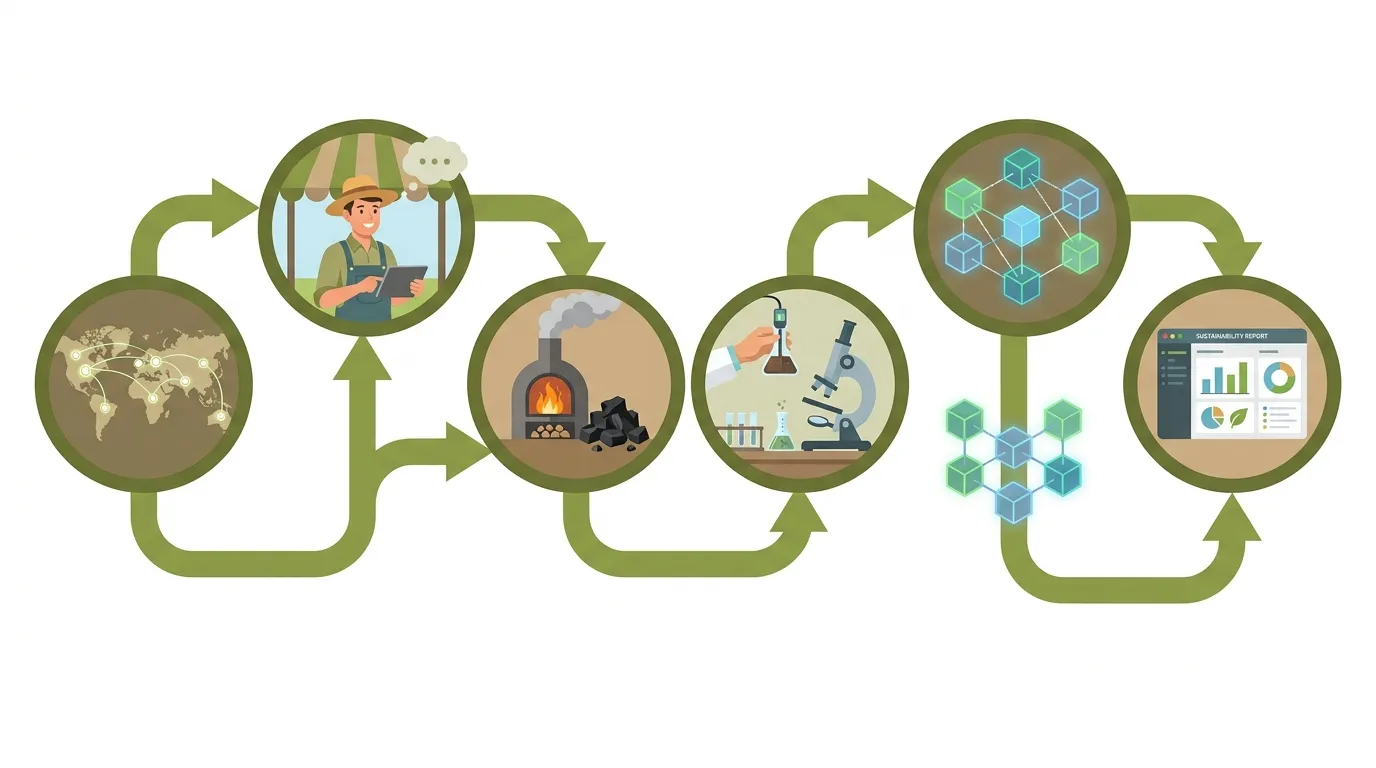
Step 1: Supply Chain Mapping and Hotspot Identification
The first step is understanding where your scope 3 emissions actually come from. A detailed supply chain map identifies which farming regions, raw material types, and production stages contribute most to your carbon footprint. This is the foundation of any credible carbon insetting strategy. Tools like regenerative agriculture data integration platforms make this process far more efficient.
Step 2: Farmer Engagement and Regenerative Agriculture Capacity Building
Carbon insetting only works if farmers adopt the practices that sequester carbon. This requires structured training programs, demonstration plots, and ongoing technical support. Beetle Regen's regenerative agriculture capacity building programs work directly with farming communities in India and Bangladesh, building the knowledge and trust needed for lasting change. Improved farmer income is a core outcome, not an afterthought.
Step 3: Biochar Production and Soil Carbon Sequestration
Biochar applications are one of the most durable forms of carbon sequestration available. When agricultural waste is converted into biochar and applied to soil, it locks carbon for hundreds to thousands of years while improving soil fertility and water retention. Beetle Regen's biochar-based carbon insetting programs integrate this technology directly into the farming systems that supply textile brands.
Step 4: Soil Testing and MRV
Rigorous soil testing before, during, and after program implementation is essential for quantifying carbon sequestration. A robust MRV (Measurement, Reporting, Verification) framework ensures that insetting claims are credible, auditable, and aligned with international standards. This is what separates genuine carbon insetting from greenwashing.
Step 5: Blockchain Traceability and Sustainability Reporting
Blockchain traceability systems create an immutable record of every step in the supply chain, from the farm where carbon was sequestered to the retail shelf where the product is sold. This level of farm-to-fashion supply chain transparency is increasingly demanded by major retailers and required by sustainability reporting frameworks. It also gives brands a powerful story to tell consumers and investors.
Step 6: Carbon Credit Monetization and Net Zero Goal Tracking
Once sequestration is verified, the carbon credits generated can be used to meet the brand's own net zero targets or sold on voluntary carbon markets. Progress is tracked against the brand's science-based targets, and sustainability reporting is updated accordingly. This closes the loop between climate investment and measurable climate impact.
To understand how carbon credits fit into the broader regenerative agriculture ecosystem, How Carbon Credits Transform Regenerative Agriculture offers a comprehensive perspective.
Which Carbon Strategy Is Right for Your Brand in 2026?
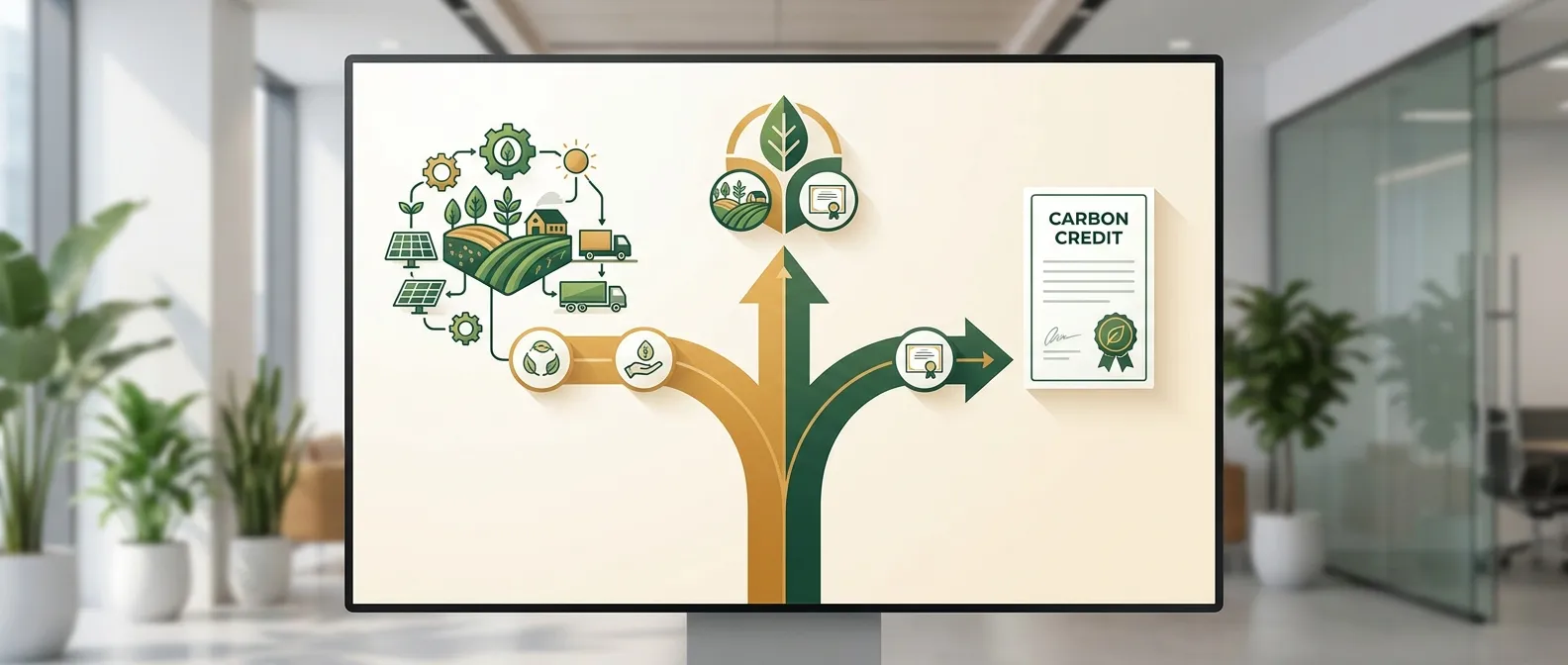
The honest answer is that most brands will benefit from a thoughtful combination of both strategies, but the balance should shift decisively toward carbon insetting over time. Here is a practical decision framework.
Choose Carbon Offsetting When:
- You need to bridge a short-term emissions gap while your insetting program is being built
- You have residual emissions that cannot be eliminated through operational changes
- You are making a specific product-level carbon neutral claim for a limited period
- You choose high-quality, co-benefit-rich credits (e.g., community-based projects in your sourcing regions)
Choose Carbon Insetting When:
- You are committed to a long-term net zero strategy aligned with SBTi or GHG Protocol
- Your scope 3 emissions are significant (as they are for virtually all textile and fashion brands)
- You want to build supply chain resilience and farmer loyalty alongside climate impact
- You need to meet tightening ESG disclosure requirements with credible, traceable data
- You want to generate a positive sustainability narrative that withstands regulatory and media scrutiny
The Hybrid Approach: Using Both Strategically
Many leading brands are adopting a hybrid model: using carbon insetting as the primary long-term decarbonization strategy while using high-quality offsets to address residual emissions and short-term compliance needs. The key is transparency. Brands must be clear in their sustainability reporting about what is being reduced through insetting and what is being compensated through offsetting. This aligns with the direction that frameworks like the GHG Protocol's Land Sector and Removals Guidance are moving.
The Regulatory Landscape in India and Globally
India's Carbon Credit Trading Scheme (CCTS) is creating new opportunities for agricultural carbon credits, and SEBI's Business Responsibility and Sustainability Reporting (BRSR) framework is raising the bar for ESG disclosure. Globally, the EU's Corporate Sustainability Reporting Directive (CSRD) and the Green Claims Directive are making it harder to rely on offsetting alone. Brands that build robust carbon insetting programs now will be ahead of the regulatory curve. For a deeper look at how regenerative agriculture aligns with these policy trends, How Regenerative Agriculture Aligns with Climate Policy is essential reading.
"Carbon insetting is not just a climate strategy. It is a supply chain strategy, a sourcing strategy, and a resilience strategy. Brands that understand this will build lasting competitive advantage while delivering real climate impact."
Beetle Regen's end-to-end carbon insetting programs are designed specifically for textile and fashion brands operating in India and Bangladesh. From regenerative cotton programs and biochar-based sequestration to blockchain traceability and sustainability reporting, every element is built to deliver verifiable, supply chain-linked climate impact. If your brand is ready to move beyond offsetting and build a credible carbon insetting strategy, connect with the Beetle Regen team to explore what a tailored insetting program could look like for your supply chain.
Frequently Asked Questions About Carbon Insetting
Is carbon insetting recognized by international standards?
Yes. Carbon insetting is increasingly recognized within frameworks like the GHG Protocol's Scope 3 Standard, the Science Based Targets initiative (SBTi), and the Taskforce on Nature-related Financial Disclosures (TNFD). While specific insetting standards are still evolving, the practice of reducing scope 3 emissions within the value chain is fully aligned with the direction of international climate accounting standards.
Can insetting count toward scope 3 emissions reduction?
Absolutely. This is one of the most important advantages of carbon insetting over offsetting. Because insetting occurs within the brand's own value chain, the emission reductions and carbon sequestration can be counted as genuine scope 3 reductions under the GHG Protocol. Offsetting, by contrast, does not reduce a brand's scope 3 inventory.
How long does it take to implement a carbon insetting program?
A well-structured carbon insetting program typically takes 6, 12 months to design and launch, with meaningful, verifiable carbon sequestration results emerging within 12, 36 months depending on the practices used. Biochar-based insetting can deliver faster results than soil organic carbon programs alone. Beetle Regen's SaaS model accelerates this timeline by providing ready-built frameworks for farmer training, MRV, and traceability.
What is the difference between insetting and nature-based solutions?
Nature-based solutions (NbS) is a broader term that includes any climate action that works with natural ecosystems, such as reforestation, wetland restoration, or regenerative agriculture. Carbon insetting is a specific application of nature-based solutions that is deliberately embedded within a company's own supply chain. All insetting programs are nature-based solutions, but not all nature-based solutions qualify as insetting.
Can small and mid-sized brands implement carbon insetting?
Yes, though the approach may differ from large-scale programs. Smaller brands can participate in shared or pooled insetting programs where multiple brands co-invest in a common farming region or cooperative. This spreads the cost of program setup and MRV across multiple participants while still delivering genuine supply chain-linked climate impact. Beetle Regen's collaborative platform model is designed to make carbon insetting accessible at multiple scales.
How does carbon insetting support sustainability reporting?
Carbon insetting generates rich, traceable data that strengthens sustainability reporting across frameworks including GRI, SASB, TCFD, BRSR, and CSRD. Because insetting is tied to specific supply chain activities with verifiable MRV data, it provides a much stronger evidence base for ESG disclosures than offset purchases. Blockchain traceability further enhances the credibility and auditability of insetting claims. For brands building their sustainability reporting capabilities, Supply Chain Transformation Through Regenerative Agriculture Consulting outlines how integrated approaches work in practice.
The Bottom Line: Carbon Insetting Is the Future of Brand Decarbonization
The comparison between carbon insetting and carbon offsetting ultimately comes down to a question of ambition. Offsetting is a short-term tool that compensates for emissions without changing the underlying system. Carbon insetting is a long-term strategy that transforms the supply chain, restores soil health, improves farmer income, and delivers verifiable climate impact where it matters most. In 2026, as regulators tighten rules on offset-based claims and investors demand credible scope 3 reduction strategies, the brands that have built robust carbon insetting programs will be the ones that lead on sustainability, not just report on it.
Beetle Regen exists to make carbon insetting practical, scalable, and commercially viable for textile and fashion brands operating in India and beyond. If you are ready to build a decarbonization strategy that delivers real climate impact within your own value chain, reach out to the Beetle Regen team today and take the first step toward a supply chain that is genuinely carbon neutral.