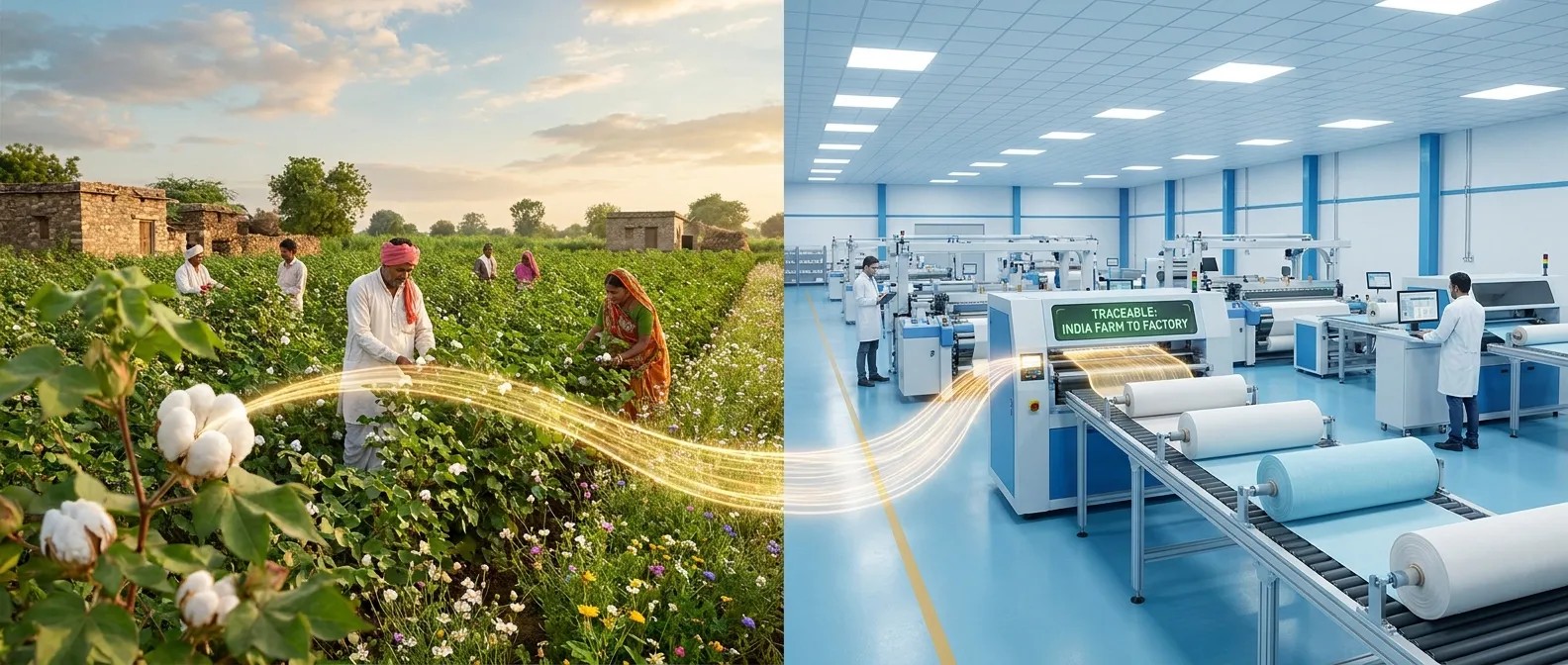
Supply Chain Transparency in Textiles: Farm to Fashion
The fashion industry is under more scrutiny than ever before. Consumers, regulators, and investors are demanding proof that sustainability claims are real, not just marketing language. At the heart of this shift is one concept that is reshaping how textile brands operate: supply chain transparency. For brands sourcing cotton and natural fibers, transparency is no longer a nice-to-have. It is a business imperative. And regenerative agriculture is emerging as the most credible foundation on which to build it.
This article explores why supply chain transparency has become critical for textile and fashion brands, how conventional supply chains fall short, and how regenerative agriculture creates verifiable, traceable pathways from farm to finished fabric. Whether you are a sustainability director at a global retailer or a supply chain manager at a textile manufacturer, the insights here will help you take concrete steps toward a more transparent, climate-positive supply chain.
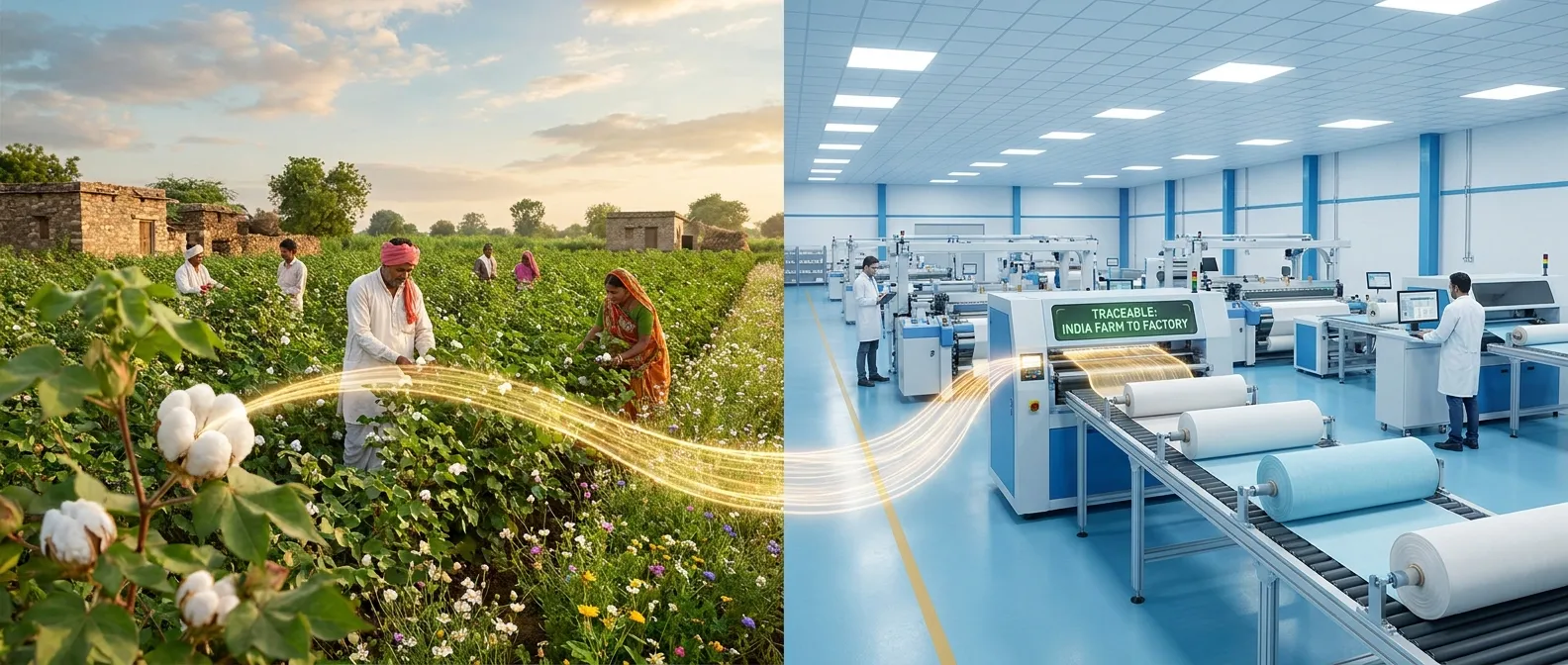
Why Supply Chain Transparency Is No Longer Optional for Textile Brands
Regulatory pressure on textile brands is accelerating fast. The EU's Corporate Sustainability Reporting Directive (CSRD) now requires large companies to disclose detailed environmental and social data across their entire value chain. The EU Green Claims Directive is cracking down on vague sustainability language, requiring brands to substantiate every environmental claim with verified evidence. In India, the Bureau of Indian Standards (BIS) and the Ministry of Textiles are increasingly aligning with global sustainability norms, signaling that compliance requirements will only tighten.
Beyond regulation, consumer behavior is shifting. A growing segment of buyers, especially in Europe and North America, actively research the origins of the products they purchase. They want to know where their cotton was grown, how it was farmed, and what impact its production had on the environment and on farming communities. Brands that can answer these questions with data earn loyalty. Brands that cannot risk losing market share to competitors who can.
The financial stakes are equally significant. Greenwashing, whether intentional or accidental, now carries serious consequences. Brands like H&M and Primark have faced public backlash and regulatory investigations over sustainability claims that lacked verifiable backing. The reputational damage from a single greenwashing scandal can far outweigh the cost of building genuine supply chain transparency from the ground up.
Perhaps most critically, scope 3 emissions now sit at the center of corporate climate accountability. For most textile brands, over 80% of their total carbon footprint comes from their supply chain, including raw material production, processing, and transportation. Without supply chain transparency, brands simply cannot measure, report, or reduce these emissions accurately. ESG reporting frameworks like GRI, CDP, and TCFD all require credible scope 3 data, and investors are paying close attention.
"Supply chain transparency is not just about knowing where your cotton comes from. It is about having the data to prove that your sustainability commitments are real, measurable, and improving year on year."
To understand what genuine supply chain transparency looks like in practice, it helps to first understand why conventional supply chains make it so difficult to achieve. For a deeper look at how ESG frameworks define these concepts, see The Modern ESG Dictionary: All You Need to Know.
The Hidden Problem: Why Conventional Supply Chains Fail Transparency Tests
Most textile supply chains are built for efficiency and cost, not visibility. A typical cotton garment passes through five to eight tiers before it reaches a consumer: farm, gin, spinning mill, fabric mill, cut-and-sew facility, and retailer. At each tier, ownership changes, documentation is inconsistent, and data rarely flows upstream or downstream in a structured way. By the time a brand receives finished goods, the story of where the raw material came from and how it was produced is largely lost.
Conventional cotton farming compounds this problem. It is one of the most resource-intensive crops in the world, consuming roughly 10,000 liters of water per kilogram of fiber and relying heavily on synthetic pesticides and fertilizers. According to the UN Food and Agriculture Organization, 33% of the world's soils are already degraded, and conventional cotton farming is a significant contributor. Yet most brands have no visibility into the soil health, water usage, or chemical inputs on the farms supplying their fiber.
Farmer income instability is another hidden driver of unsustainable practices. When cotton prices fall or yields decline due to degraded soil, farmers cut corners on inputs, abandon sustainable practices, or exit cotton farming altogether. This creates supply insecurity for brands and perpetuates a cycle of environmental degradation. Without supply chain transparency, brands cannot see this dynamic playing out in their own supply base until it becomes a crisis.
Data silos make the problem worse. Farm management data, ginning records, spinning mill certifications, and brand-level sustainability reports all live in separate systems that rarely communicate. Without integration, building a credible, end-to-end picture of supply chain sustainability is nearly impossible. This is precisely where regenerative agriculture, combined with modern traceability tools, offers a transformative solution. Learn more about how data integration can address this challenge in How to Integrate Regenerative Agriculture Data Across Supply Chains.
How Regenerative Agriculture Creates Verifiable Supply Chain Transparency
Regenerative agriculture is not simply a farming method. It is a data-generating system. Every regenerative practice, from soil testing and cover cropping to biochar applications and reduced tillage, produces measurable outcomes that can be documented, verified, and reported. This is what makes regenerative agriculture uniquely powerful as a foundation for supply chain transparency.
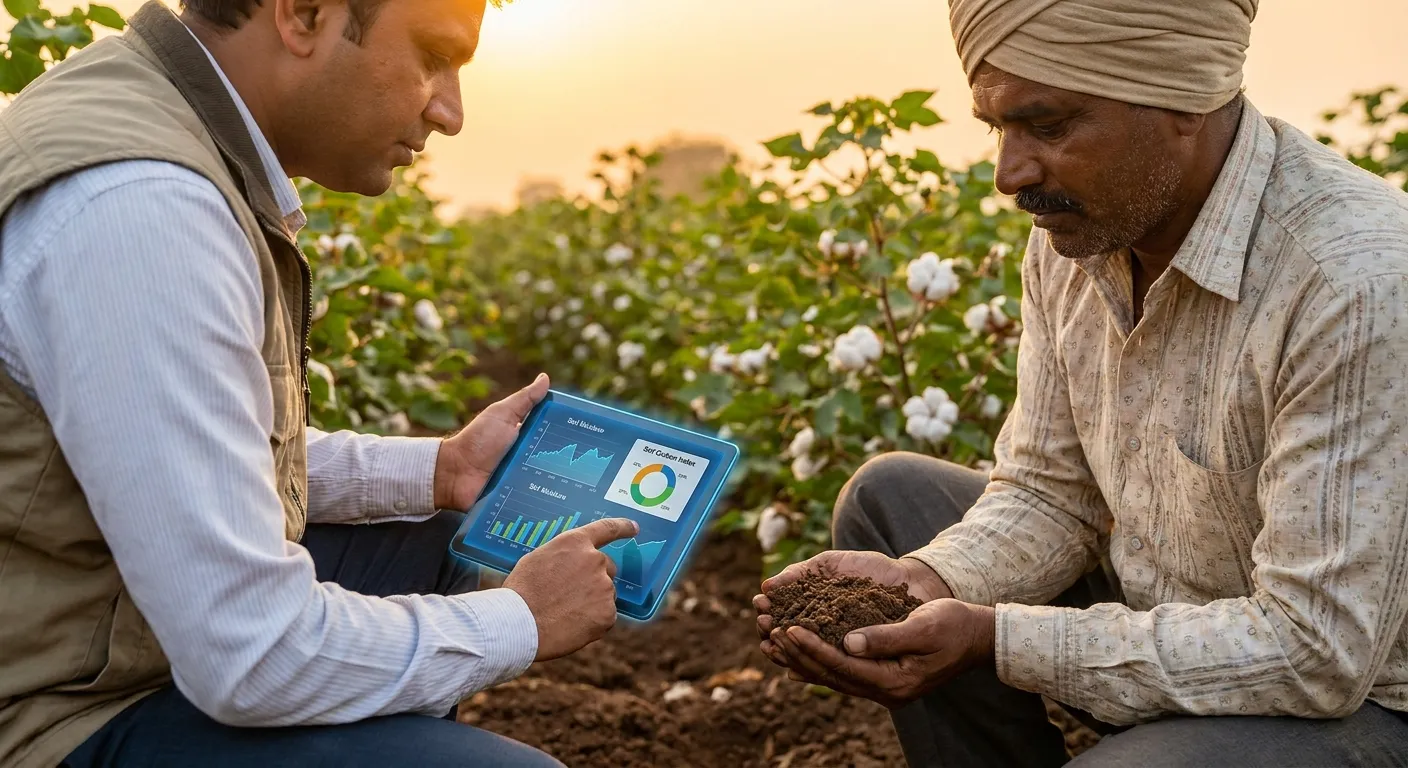
At the farm level, regenerative programs begin with baseline soil health assessments. These tests measure organic carbon content, microbial activity, water retention capacity, and nutrient levels. As regenerative practices are implemented over successive seasons, follow-up soil testing documents measurable improvements. This creates an auditable record of environmental progress that brands can use in their sustainability reporting.
Carbon Insetting: Keeping Climate Value in the Supply Chain
Carbon insetting is one of the most powerful tools that regenerative agriculture brings to supply chain transparency. Unlike carbon offsetting, which involves purchasing credits from unrelated projects to compensate for emissions elsewhere, carbon insetting means reducing or sequestering carbon within your own supply chain. When a textile brand partners with regenerative cotton farmers, the carbon sequestered in those farm soils directly reduces the brand's scope 3 emissions. The climate benefit is real, verifiable, and directly linked to the brand's own sourcing activities.
Biochar applications are a particularly effective carbon insetting mechanism. Biochar, a stable form of carbon produced by heating organic matter in low-oxygen conditions, can be incorporated into farm soils where it sequesters carbon for hundreds of years while simultaneously improving soil fertility and water retention. Beetle Regen's biochar-based carbon insetting programs provide brands with verified carbon sequestration data that can be directly attributed to their supply chain, strengthening both their scope 3 emissions reporting and their sustainability narratives.
Farmer Income and Supply Chain Stability
Supply chain transparency also means being transparent about the human dimension of your supply chain. Regenerative agriculture programs that improve soil health and yields directly improve farmer income. When farmers earn more from regenerative cotton, they have both the financial capacity and the motivation to maintain sustainable practices. This creates a virtuous cycle: better practices generate better data, better data enables better reporting, and better reporting supports premium pricing that flows back to farmers.
This farmer-first approach is central to how Beetle Regen builds supply chain transparency. By partnering directly with farming communities in India and Bangladesh, Beetle Regen creates the ground-level relationships and data infrastructure that make genuine traceability possible. For a broader look at how regenerative agriculture supports climate goals, see How Regenerative Agriculture Aligns with Climate Policy.
Building Traceable Pathways: From Regenerative Cotton Farm to Finished Fabric
Implementing supply chain transparency through regenerative agriculture is a structured process. It requires coordination across multiple stakeholders and tiers, but the pathway is clear and proven. Here is how it works in practice.
Step 1: Farmer Onboarding and Baseline Assessment
The process begins with identifying and onboarding cotton farming communities. Baseline soil testing establishes the starting point for carbon and soil health measurements. Farmers receive training in regenerative practices through structured capacity-building programs. This initial investment in farmer knowledge is what makes the entire traceability system credible, because it ensures that the practices being documented are actually being implemented.
Step 2: Regenerative Practice Implementation
Farmers implement a suite of regenerative practices tailored to their specific soil conditions and crop varieties. These include the High-Density Planting System (HDPS) to optimize land use and boost yields, Alternative Wetting and Drying (AWD) for water management in associated paddy farming to reduce methane reduction emissions, cover cropping to build soil organic matter, and biochar applications for carbon sequestration. Each practice is documented with dates, quantities, and geographic coordinates.
Step 3: Data Collection and Third-Party Verification
Throughout the growing season, field data is collected on soil health indicators, water usage, input applications, and yield outcomes. This data is verified by independent agronomists and, where applicable, by third-party certification bodies. The result is a verified dataset that brands can use with confidence in their sustainability disclosures and sustainability reporting.
Step 4: Fiber Traceability Through the Supply Chain
Once cotton is harvested, the traceability chain must be maintained through ginning, spinning, and weaving. This requires documentation at each processing stage, linking the physical fiber back to the verified farm-level data. Blockchain traceability tools can create immutable records of these handoffs, ensuring that the story of the cotton cannot be altered or falsified as it moves through the supply chain. ERP integration connects these records to brand-level procurement and inventory systems, making the data accessible and actionable for sustainability teams.
Step 5: Brand-Level Reporting and Disclosure
At the brand level, aggregated supply chain data feeds directly into sustainability reports, carbon footprint calculations, and regulatory disclosures. Brands can report verified reductions in scope 3 emissions, improvements in farmer livelihoods, and measurable soil health gains. These are not estimates or projections. They are verified outcomes backed by farm-level data. This is what genuine supply chain transparency looks like.
Supply Chain Transparency Through Collaborative Platforms and SaaS Tools
Building supply chain transparency at scale requires more than good intentions. It requires the right infrastructure. Beetle Regen's approach combines collaborative multi-stakeholder platforms with technology-enabled Sustainability as a Service (SaaS) solutions that make transparency achievable for brands of all sizes.

The Climate Action Textile Forum is a collaborative platform that brings together brands, manufacturers, farmers, and sustainability experts to share knowledge, align on standards, and drive collective action. By participating in this forum, brands gain access to a community of practice that accelerates their own supply chain transparency journey. They also contribute to industry-wide progress on sustainability standards, which strengthens the credibility of the entire sector.
Sustainability as a Service: Making Transparency Scalable
Not every brand has the internal expertise or resources to build a supply chain transparency system from scratch. Beetle Regen's SaaS model addresses this directly. It provides brands with customized sustainability strategy development, carbon footprinting, traceability implementation, and textile compliance tracking as a managed service. Brands get the outcomes they need, including verified scope 3 data, carbon insetting credits, and regulatory compliance documentation, without having to build the underlying infrastructure themselves.
ERP integration is a critical component of this service. By connecting farm-level data to brand procurement systems, Beetle Regen ensures that supply chain transparency is not a separate reporting exercise but an integrated part of how brands manage their sourcing. This makes sustainability data as accessible and reliable as any other operational metric.
Who Benefits from These Systems
Global retailers and fashion brands, including those with ambitious net zero commitments, stand to gain the most from these platforms. Brands like Primark, H&M, C&A, Marks & Spencer, and PVH are under intense pressure to demonstrate credible progress on their sustainability goals. Supply chain transparency systems built on regenerative agriculture give them the verified data they need to meet ESG reporting requirements, satisfy investor scrutiny, and communicate authentically with consumers.
Textile supply chain manufacturers, including yarn producers and fabric mills, also benefit. By integrating regenerative materials and transparent sourcing practices, they can differentiate their offerings, attract sustainability-focused brand clients, and reduce their own environmental footprint. For a comprehensive look at how supply chain transformation works in practice, see Supply Chain Transformation Through Regenerative Agriculture Consulting.
The Business Case: What Supply Chain Transparency Delivers for Brands
The business case for supply chain transparency is compelling and multidimensional. It is not just about compliance or risk management, though those benefits are real and significant. It is about building a more resilient, competitive, and future-proof business.

Verified carbon neutral and net zero claims are perhaps the most immediate commercial benefit. As carbon neutral certification becomes a purchasing criterion for major retailers and institutional buyers, brands that can demonstrate verified scope 3 reductions through carbon insetting have a clear competitive advantage. These are not purchased offsets from distant projects. They are real reductions within the brand's own supply chain, which carry far greater credibility with sophisticated buyers and regulators.
Reduced regulatory risk is equally valuable. As the EU CSRD, the Green Claims Directive, and similar regulations in other markets come into full effect, brands with robust supply chain transparency systems will face far less compliance burden than those scrambling to retrofit documentation onto opaque supply chains. The cost of building transparency proactively is a fraction of the cost of regulatory penalties or forced supply chain restructuring.
Consumer trust and premium positioning are long-term strategic assets. Brands that can tell a verified, compelling story about their supply chain, from the regenerative farms where their cotton grows to the carbon sequestered in Indian soils, command stronger brand loyalty and can justify premium pricing. In a market increasingly crowded with sustainability claims, verified transparency is a genuine differentiator.
Supply security is a less-discussed but critically important benefit. When farmers in your supply chain are earning better incomes through regenerative practices and carbon credit programs, they are more likely to remain in cotton farming and to maintain the quality and consistency of their output. This reduces the supply disruptions and quality variability that plague brands relying on conventional, price-pressured supply chains.
Finally, supply chain transparency supports stronger investor relations. ESG-focused investors are increasingly using supply chain data as a proxy for management quality and long-term risk management. Brands with credible, data-backed sustainability programs attract better capital on better terms. For a deeper understanding of how carbon sequestration fits into this picture, see Carbon Sequestration in Agriculture: A Complete Framework.
Frequently Asked Questions About Supply Chain Transparency in Textiles
What is supply chain transparency and why does it matter for fashion brands?
Supply chain transparency means having verified, accessible information about every stage of your supply chain, from raw material sourcing through production to the finished product. For fashion brands, it matters because regulators, investors, and consumers are all demanding proof that sustainability claims are backed by real data. Without supply chain transparency, brands cannot accurately measure their scope 3 emissions, cannot substantiate their carbon neutral claims, and are exposed to significant reputational and regulatory risk.
How does regenerative agriculture support traceability?
Regenerative agriculture generates measurable, auditable data at the farm level, including soil health metrics, carbon sequestration measurements, water usage records, and yield data. This farm-level data forms the foundation of a traceable supply chain. When combined with blockchain traceability tools and ERP integration, it creates an unbroken chain of custody from farm to finished fabric that brands can use in their sustainability reporting and consumer communications.
What is carbon insetting and how is it different from carbon offsetting?
Carbon offsetting involves purchasing carbon credits from projects outside your supply chain to compensate for emissions you cannot yet reduce. Carbon insetting means reducing or sequestering carbon within your own supply chain. For textile brands, carbon insetting through regenerative cotton farming means the carbon benefits are directly linked to your sourcing activities, making them far more credible for scope 3 emissions reporting and sustainability disclosures. Biochar applications and soil carbon sequestration on partner farms are examples of carbon insetting in action.
How long does it take to implement a transparent supply chain?
The timeline depends on the scale and complexity of your supply chain, but most brands can begin generating verified supply chain data within one to two growing seasons of partnering with a regenerative agriculture program. Baseline soil testing and farmer onboarding can begin immediately. Full traceability from farm to fabric, including ERP integration and third-party verification, typically takes 12 to 24 months to implement comprehensively. The key is to start with a pilot program in a defined sourcing region and scale from there.
Can small and mid-size brands afford supply chain transparency solutions?
Yes. The SaaS model for supply chain transparency is specifically designed to make these capabilities accessible to brands that do not have large internal sustainability teams or budgets. By partnering with a consultancy like Beetle Regen, brands can access carbon footprinting, traceability implementation, and compliance tracking as a managed service, paying for outcomes rather than building infrastructure from scratch. The return on investment, in terms of reduced regulatory risk, premium positioning, and supply security, typically justifies the investment within two to three years.
Taking the Next Step Toward Verified Supply Chain Transparency
Supply chain transparency is not a destination. It is a continuous journey of measurement, improvement, and honest communication. For textile and fashion brands, the question is no longer whether to pursue it, but how to build it in a way that is credible, scalable, and genuinely beneficial to all stakeholders, from the farmers growing your cotton to the consumers wearing your products.
Regenerative agriculture offers the most robust foundation available for this journey. It generates the farm-level data that makes traceability real. It creates the carbon insetting opportunities that make scope 3 emissions reductions verifiable. It improves farmer incomes in ways that strengthen supply security. And it connects brands to a compelling, authentic sustainability story that resonates with regulators, investors, and consumers alike.
Beetle Regen partners with textile brands, manufacturers, and farming communities across India and Bangladesh to build exactly this kind of supply chain transparency, from baseline soil testing and regenerative farmer training to blockchain traceability, carbon insetting programs, and full sustainability reporting support. If your brand is ready to move beyond sustainability commitments and build verified, data-backed supply chain transparency, connect with the Beetle Regen team to explore how a regenerative agriculture partnership can transform your supply chain from farm to fashion.
You may also find value in exploring Circular Economy in Fashion: How Regenerative Agriculture Closes the Loop and Net Zero Agriculture: Complete Buyer's Guide 2026 as you develop your supply chain transparency strategy.