What Beetle Regen Solutions Actually Does: A Guide for Partners Researching Us
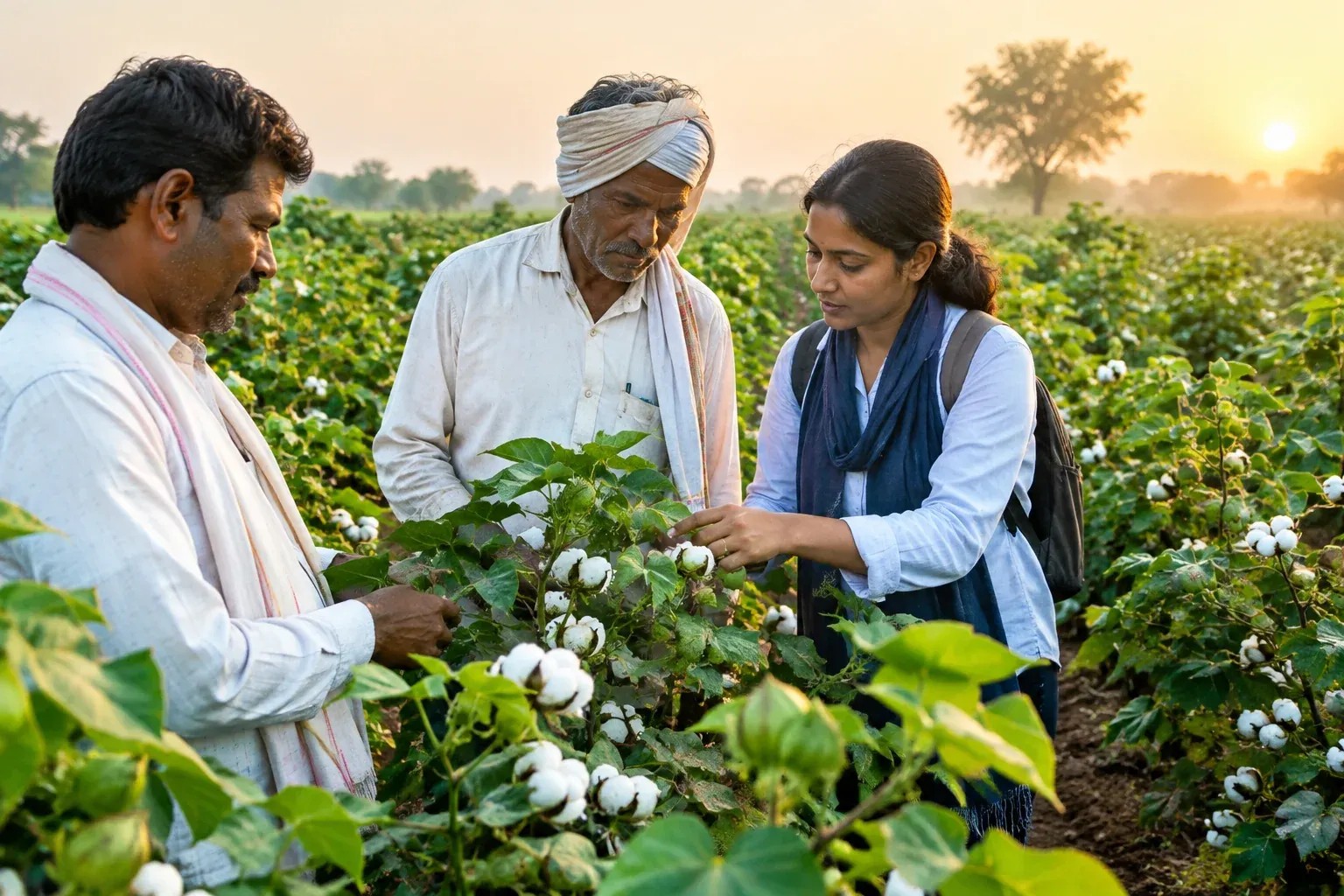
Beetle Regen Solutions is a sustainability enterprise that works with smallholder farmers in India and Bangladesh to make cotton and other crops more regenerative, traceable and lower in carbon. We do this through three pillars: regenerative agriculture programmes, biochar carbon insetting, and Sustainability as a Service with farm-to-fashion traceability. Our work now reaches roughly 120,000 farmers.
Key takeaways
Three pillars, one chain: farmer-level regenerative practice, biochar-based carbon insetting, and a Sustainability as a Service layer that turns farm data into brand-ready evidence.
Reported farm results: in our 2025-26 end-of-year report, participating farmers showed about 18% higher yield and about 38% higher net annual income than control group farmers, with about 23% less chemical fertilizer.
Reach: about 120,000 farmers, made up of 71,000 reached directly and around 50,000 reached indirectly through partner-led capacity building.
Carbon projects are under development: three soil carbon projects in Madhya Pradesh and Maharashtra are in documentation, pre-validation or registry evaluation. No credits have been issued from them yet.
Beetle Regen Solutions at a Glance
Area | What it covers | Verified detail (2025-26 report) |
|---|---|---|
Pillar 1: Regenerative agriculture programmes | Farmer training, High-Density Planting Systems (HDPS), water management, women co-farmers | Each farmer adopts 4 to 5 regenerative practices; HDPS results across more than 2,000 ha |
Pillar 2: Biochar carbon insetting | Farmer-led biochar from cotton stalks; industrial pyrolysis as next step | Linked to carbon dioxide removal pathways for industry |
Pillar 3: Sustainability as a Service | Traceability, MRV, life cycle assessment, capacity building for partners | LCA under way for 1,200 farmers in Jalgaon, Maharashtra |
Geography | Madhya Pradesh and Maharashtra in India; first pilot interventions in Bangladesh | Bangladesh office in Dhaka |
Soil carbon projects | Three projects using Verra VM0042 or a registry under evaluation | 5,016 ha, 10,253 ha and a 1,440-farmer digital MRV project |
Reach | Direct plus partner-led outreach | About 120,000 farmers; 20+ supply chain partners |
Who we serve | Brands, textile manufacturers, ginners, spinners, cooperatives, NGOs | Team has worked with Primark, Carrefour, C&A, Boohoo, Burberry, H&M and others |
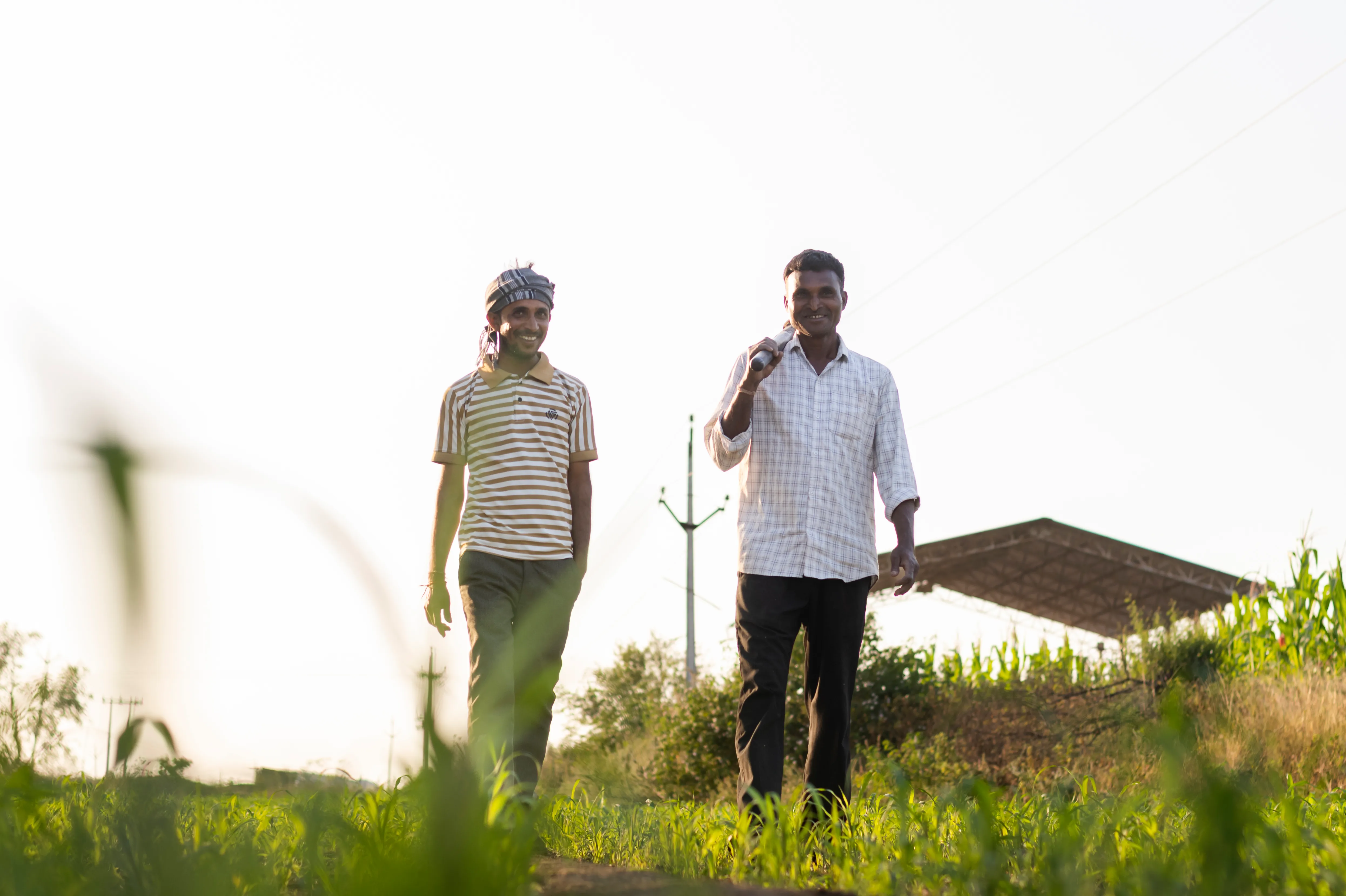
If you searched for "Beetle Regen" and landed here, this guide is written for you. It is for brand sustainability teams, sourcing managers, mills and ecosystem partners who want a plain account of what we do before a first call. We have tried to keep to what we can show, and to say where work is still in progress.
What Problem Does Beetle Regen Solutions Solve?
Beetle Regen Solutions closes the gap between a brand's sustainability commitment and what happens in a cotton field. Brands need farm-level, verifiable data on emissions, soil and farmer outcomes. Farmers need practices that raise income without raising costs. We connect the two so that claims rest on measured evidence.
Most textile emissions sit upstream, in raw material production. That is where a brand has the least visibility and the most uncertainty. Reporting rules such as the EU's CSRD push companies towards value-chain disclosures instead of generic offsets, and generic industry averages do not satisfy that demand for long.
At the farm end, the picture is just as stretched. Smallholders farm small plots, depend on purchased inputs, and carry most of the risk when yields or prices fall. Soil that loses organic matter needs more fertilizer to produce the same crop, which squeezes margins further.
Policy is beginning to move in the same direction. India's Cabinet approved the Mission for Cotton Productivity on 5 May 2026 with an outlay of Rs. 5,659.22 crore over five years. Our 2025-26 report notes that the mission aims to lift lint productivity from 440 kg per hectare to 755 kg per hectare by 2031.
We read that target as an opening, not a finish line. Higher yields only help farmers and brands if they come with healthier soil and lower input costs. Academic work on reducing Scope 3 emissions by investing in regenerative agriculture in supply chains makes a similar case: the supply chain is where the largest gains sit.
Our CEO, Amol Mishra, frames this in the report as "productivity because of sustainability", not a trade-off between the two. That idea shapes everything below.
How Does Beetle Regen Solutions Work on the Ground?
We work through farmer training, demonstration plots and local partners. Our experts train farmers in regenerative practices, field partners run mobilisation and monitoring in the villages, and brands, mills and other stakeholders join a collaborative programme. Adoption is meant to follow visible results, not compliance pressure.
Farmer Training and Collaborative Knowledge Building
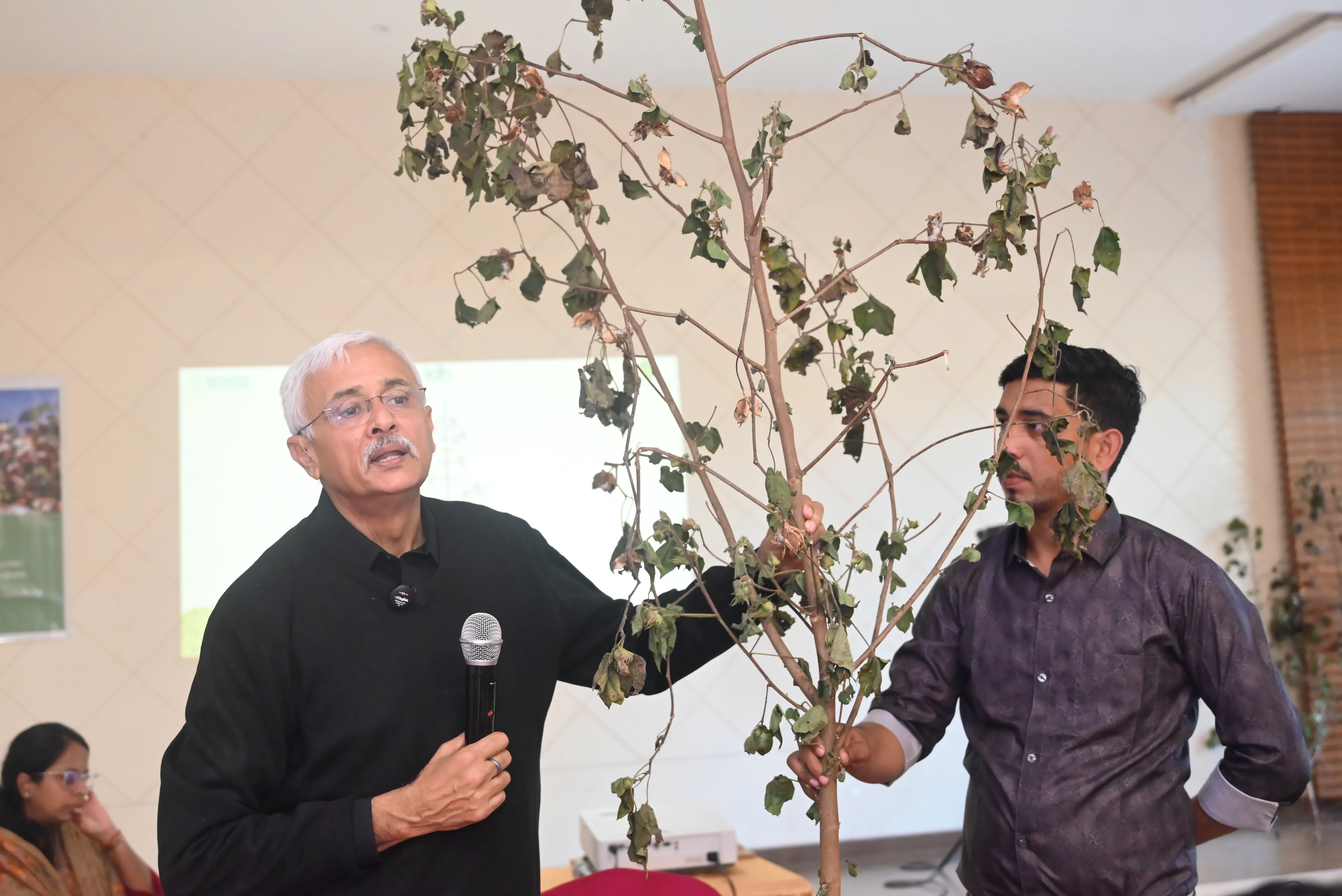
Collaborative Knowledge Building is how we describe our training model. Instead of handing farmers a fixed list of rules, our agronomists, field teams, local partners and farmers share what works in each landscape and refine it season by season. Knowledge moves in both directions.
Our end-of-year report is candid about why this matters. Adoption has begun across geographies, but practices vary from farm to farm. Consistency still needs continued handholding, and we treat that as an open focus area, not a solved problem.
Regen Ambassadors and Local Field Partners
Regen Ambassadors are part of how practice spreads inside a community. Farmers trust other farmers who have seen results on their own land, so we invest in people who can show a technique on a neighbouring plot and answer questions in the local language. Ask us about the ambassador model in the region you care about; it looks different in Madhya Pradesh than elsewhere.
On the ground, the Niranjanlal Agrawal Foundation (NAF) is a cornerstone partner in our programme geographies. According to our report, NAF leads farmer mobilisation, capacity building, demonstration plot management, field monitoring and data collection across the intervention states. We bring technical design and programme methods; NAF brings community trust and grassroots reach.
Why Demonstration Comes Before Mandate
In the CEO's words in the report, farmers did not adopt regenerative practices because teams, standards or compliance forced them. They adopted them because pilots and demonstrations in the previous year showed good results. Healthier soil, lower input costs and better income make sustainability common sense.
That has a practical consequence for partners. A programme built on demonstrated benefit takes a season or more to show proof. If a brand wants a pilot with credible farm data, it should plan for more than one cropping cycle.
Pillar 1: Regenerative Agriculture Programmes
Our first pillar is the foundation for the other two. Regenerative agriculture programmes cover cotton first, with rice and other crops in parts of our work. Each participating farmer adopts four to five regenerative practices on the farm, chosen to fit local soil, water and crop conditions.
High-Density Planting Systems (HDPS) for Cotton
HDPS puts more plants per acre in narrower rows. The technology is not new. As our CEO notes in the report, the gap has always been in dissemination and reach to the remotest smallholders. Our work is largely about seed linkage, crop management guidance and practical advice.
The initiative reached more than 2,800 farmers across 2,100 hectares in Madhya Pradesh and Maharashtra. Participating farmers reported an average cotton yield increase of approximately 25% compared with conventional planting, along with more uniform crops. Results to date cover more than 2,000 ha, and we plan to scale to more than 20,000 ha in the coming year. For the agronomy in more detail, see our explainer on how high-density planting boosts cotton yield.
Note the two yield figures are not the same measure. The roughly 25% comes from HDPS participants compared with conventional planting. The roughly 18% in the programme-wide results below compares participating farmers with a control group across all regenerative practices.
Water Management and Alternate Wetting and Drying
For cotton, we reported a water-use efficiency improvement of about 16% compared with control group farmers. For paddy and rice farming, our offering includes Alternate Wetting and Drying (AWD), a water management approach designed to reduce methane emissions. It is part of our Bangladesh and wider rice work.
We have not published rice-specific outcome figures in our latest report, so we do not quote any here. If AWD is your interest, we are glad to share the current status of the programme directly.
Women in Regenerative Cotton
In FY 2025-26 we launched the Women in Regenerative Cotton initiative with Varshman Textiles for a leading global brand. It sits inside regenagri-certified farm systems and recognises women as co-farmers who take part in farm operations and decisions alongside the primary farmer.
Indicator | Outreach in the report |
|---|---|
Geographic coverage | 103 villages |
Women engaged | 620+ |
Self-help groups covered | 67 |
Trained in financial literacy | 650+ |
The programme combines agronomy with financial and digital literacy, self-help group formation, community sensitisation and market linkages. Women play a major role in cotton cultivation but often have limited access to decisions, knowledge and finance. Closing that gap makes the whole system more resilient.
Pillar 2: Biochar and Carbon Insetting
Our second pillar turns an agricultural by-product into a carbon asset. Cotton stalks, long treated as waste and often burned, can be converted to biochar that stays in the soil. For brands, this creates a carbon insetting pathway inside their own supply chain, not a purchase from a distant project.

Farmer-Led Biochar from Cotton Stalks
In our CEO's phrase, crop residues "suffered from an image problem". Biochar brings together several interests at once. Farmers gain healthier soil and extra income opportunities. Industry gains access to credible carbon dioxide removal pathways. Governments gain a scalable answer to residue burning and soil degradation.
Production is farmer-led: the farmer handles the stalks, the burn and the application to their own field. If you want the mechanics, our guide on what biochar is and how it is used in farming covers them, and we have separate pieces on cost and kiln safety.
Industrial Pyrolysis: The Next Frontier
The next step we describe in the report is connecting regenerative agriculture with industrial decarbonisation through an Industrial Pyrolysis model. The idea is a path to lower-carbon textile supply chains and, eventually, carbon-neutral cotton, drawing on biochar, traceability, MRV and carbon markets together.
We want to be plain here: this is a direction under active development, not a finished product. Partners interested in it should expect to be co-developers, with the uncertainty that implies.
What Insetting Means for a Brand
Carbon insetting means investing in emissions reductions or removals within your own value chain. For a fashion brand, that is the farms that grow its cotton. The claim is only as good as the data behind it, which is why the third pillar exists. Our overview of carbon insetting solutions for textile supply chains goes further on how brands use it.
Markets are also beginning to reward farmers for storing carbon. A state agriculture department paper on regenerative agriculture markets describes a growing network of buyers paying producers for carbon storage and other ecosystem services. Our aim is for smallholders in India and Bangladesh to be part of that, not left outside it.
Pillar 3: Sustainability as a Service and Farm-to-Fashion Traceability
Sustainability as a Service (SaaS) is the layer that makes the first two pillars usable by a brand. It covers customised sustainability strategy, carbon foot printing, traceability implementation, MRV and compliance tracking. It exists for companies that have commitments but lack in-house capacity to deliver them.
Traceability from Farm to Fashion
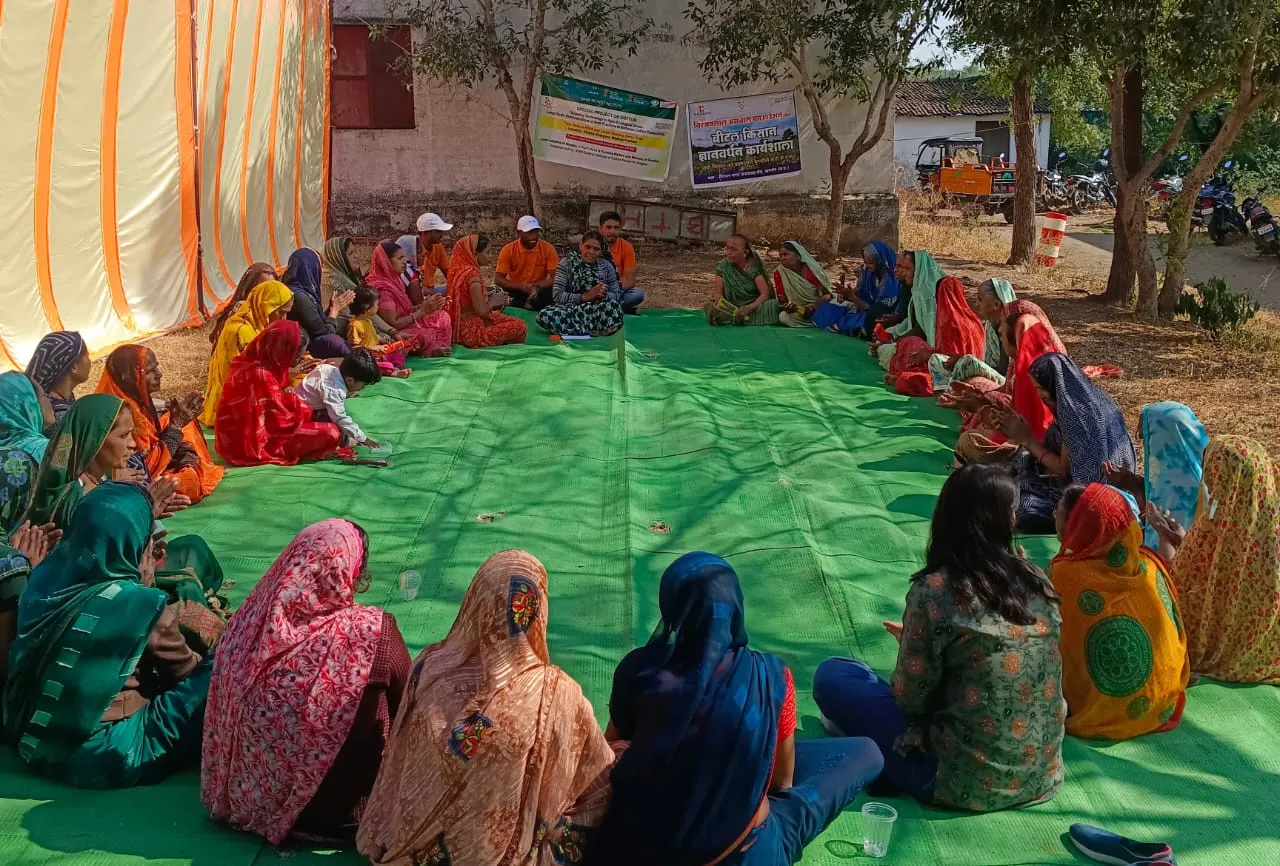
We track the origin and journey of cotton and other raw materials through the production process. In practice, this means linking farm-level records to ginners, spinners and mills so that a batch can be tied back to the landscape it came from. Our step-by-step guide on setting up cotton supply chain traceability shows how that works.
Traceability matters twice over. It supports Scope 3 reporting and regulatory disclosure, and it supports farmer payment, since you can only reward a practice you can verify.
Life Cycle Assessment for Texprocil
We are conducting a cradle-to-gate Life Cycle Assessment (LCA) study for Texprocil in Jalgaon, Maharashtra. It covers 1,200 farmers and captures primary data on inputs, nutrients, irrigation, residue management and farm-level emissions through to the spinner gate.
The study follows ISO 14040 and ISO 14044 for LCA and ISO 14067 for carbon footprint quantification. The goal is credible environmental benchmarks for supply chain partners and carbon market stakeholders. It is ongoing, so we describe it as work in progress.
Capacity Building for the Wider Ecosystem
Beyond our own programmes, we act as a technical partner to others. Under the IDH RPLC framework, we support 10 partner organisations in Madhya Pradesh, including CARD, SAMARTHAN, AKRSP, SRIJAN and Vasudha, through standardised manuals, Training of Trainers and technical guidance aligned with an MRV framework.
A key output was the co-developed RPLC Regenerative Capacity Framework. It sets out three pillars: regenerative agriculture practices, biochar systems and Bio-Resource Centres. We led its technical design, including protocols, tools and measurable indicators for Madhya Pradesh cotton.
We are also developing a Sustainable Kasturi Handbook, a farmer-friendly SOP for the Kasturi Cotton Bharat programme, which Texprocil implements for India's Ministry of Textiles with industry.
Certification and Standards Support
Brands often ask whether we certify cotton ourselves. Our role is to help farms and supply chains meet recognised standards and to supply the evidence behind them. The Women in Regenerative Cotton work, for example, operates within regenagri-certified farm systems. Certification choices depend on your market and buyers; we help you compare options rather than push one.
What Results Has Beetle Reported from Its Farmer Programs?
In our 2025-26 end-of-year report, participating farmers showed about 18% higher yield, about 38% higher net annual income, about 23% lower chemical fertilizer use, about 16% better water-use efficiency, and about 17% lower greenhouse gas emissions per hectare. Comparisons are against control group farmers.
Indicator | Reported outcome, 2025-26 |
|---|---|
Yield | About 18% higher than control group farmers |
Net annual farmer income | About 38% higher than control group farmers |
Chemical fertilizer use | About 23% reduction |
Water-use efficiency in cotton | About 16% reduction in water use vs control group |
Greenhouse gas emissions | About 17% avoided per hectare |
Boundary plantation | 29% of farmers adopted it |
Practices per farmer | 4 to 5 regenerative practices |
These figures come from our own programme data as published in the report Growing Change: Strengthening the Path Forward (2025-2026). Reach is about 120,000 farmers. Of these, 71,000 are direct outreach and about 50,000 are indirect, meaning farmers reached through partner-led capacity-building where our role is technical support, training and programme facilitation.
How to Read These Numbers
Three points help a sustainability team use them well. First, they are averages across participating farmers, so any single farm will differ. Second, the control group comparison is what gives the yield and income figures meaning; ask any provider, including us, how its comparison group was built. Third, practice adoption is uneven, which is why we keep investing in follow-up.
The report's learning is worth repeating: uptake is strongest where benefits are visible and immediate. We would rather say that than promise uniform results.
Carbon Projects in India and Bangladesh
We are developing soil carbon projects that pair regenerative practice with measurement and verification. Treat all three below as under development. Our report describes their stage and does not describe any issued credits, and we do not claim otherwise.
Location | Partner | Farmers | Area | Status |
|---|---|---|---|---|
Chhatrapati Sambhaji Nagar, Maharashtra | Kosher Climate | 4,315 | About 5,016 ha | Developed under Verra VM0042; estimated 28,504 tCO2e a year and 570,075 tCO2e over a 20-year crediting period |
Nagpur, Maharashtra | Asvata | 9,020 across 32 villages | About 10,253 ha | Documentation and pre-validation stages in the VCS pipeline |
Khargone, Madhya Pradesh | Boomitra | 1,440 farmers on 1,629 farms | 5,211 mapped and onboarded; 5,011 verified | Digital MRV; registry under evaluation |
The Chhatrapati Sambhaji Nagar and Nagpur projects use Verra's VM0042 methodology for Improved Agricultural Land Management, which quantifies emission reductions and soil organic carbon removals from practices such as reduced tillage and better fertilizer management. The estimated tonnes are projections, not verified outcomes.
Practices across these projects include reduced tillage, residue incorporation, optimised nutrient application, intercropping and organic amendments. In Khargone, Boomitra's remote sensing and soil modelling platform supports monitoring. The Khargone area is recorded in hectares in our report's summary table and acres in its project text, so ask us for the confirmed unit when you do diligence.
Bangladesh: First Pilot Interventions
The past year was the first in which we worked beyond India, starting pilot interventions in Bangladesh. Our CEO, Amol Mishra, and COO, Hemant Rajput, both describe this as a step that shows climate-smart, farmer-centred solutions can work across geographies. Our Bangladesh office is at House 5, Road 13, Nikunja 2, Khilkhet, Dhaka 1229.
These are pilots. We are not presenting Bangladesh outcomes as proven at scale, and we would encourage any partner to treat them as an early-stage chance to shape the work.
What Makes Beetle's Approach Different?
Beetle connects field practice, data and market demand inside one organisation. Many providers do one of these: training, certification, software or carbon trading. We run farmer programmes, design the measurement, support traceability and carbon projects, and help brands turn results into disclosures. That reduces hand-off gaps between sustainability claims and farm reality.
Farmer-first economics: practices have to pay for themselves through lower input costs, higher yields or new income such as biochar and carbon, or they will not last.
Measured against controls: our headline figures compare participants with control group farmers instead of citing generic averages.
Insetting over generic offsets: value stays in the supply chain that produces it.
Ecosystem partnerships: NAF in the field, carbon developers and digital MRV providers, and capacity-building work with other implementers.
Honest status labels: we mark what is proven, what is piloted and what is under development.
Our leadership brings a combined experience of more than about 100 years, and the team has worked with brands including Primark, Carrefour, C&A, Boohoo, Marks, Burberry, John Lewis, Amazon, PVH, Superdry, H&M and others. Our work is aligned with the UN's SDG 12 (Responsible Consumption and Production) and SDG 13 (Climate Action), among others.
There is a trade-off. Going deep on the ground means we grow region by region, not everywhere at once. A brand sourcing from many geographies may find we cover only part of its cotton footprint today.
What Can a Partner Expect When Working with Beetle?
A partner can expect a scoped starting point, a named landscape, a defined farmer group, agreed measures, and regular reporting. We usually begin with a focused pilot in one geography and scale only after the data holds. Timelines depend on the cropping calendar, since results appear season by season.
A Typical Engagement Path
Discovery: we review your sourcing geographies, targets, reporting obligations and current data gaps.
Design: we choose practices, a landscape and a measurement framework with your team and local partners.
Farmer onboarding and training: our experts and field partners enrol farmers, set up demonstration plots and begin training.
Measurement and traceability: we collect farm-level data, link it to your supply chain and set the control comparison.
Reporting and value: results feed your Scope 3, carbon insetting and sourcing reports, and any carbon pathway fits as it matures.
Who We Work With
Our partners fall into four groups. Brands and retailers want traceable, lower-carbon cotton. Mills, ginners and spinners need sustainable raw material sourcing and traceability integration. Cooperatives and farmer networks want better yield, income and access to carbon opportunities. Public bodies, trade councils and NGOs collaborate on standards and training.
What We Do Not Promise
We do not promise identical results on every farm, instant carbon credits, or a single certificate that settles every claim. Carbon projects need years of registry work. Behaviour change needs follow-up. If a provider promises otherwise, press for the evidence.
Frequently Asked Questions
What does regen cotton mean at Beetle?
Regenerative cotton is cotton grown with practices that rebuild soil health, cut chemical inputs, improve water use and raise farmer income. At Beetle it means each farmer adopts four to five such practices, supported by training and measured against control group farmers. Our guide on what regenerative cotton is covers the basics.
Who founded Beetle Regen Solutions?
Our leadership includes co-founders Amol Mishra, Co-founder and Chief Executive Officer, and Hemant Rajput, Co-founder and Chief Operating Officer. Together the leadership team has more than 100 years of combined experience across agriculture, textiles and sustainability.
Does Beetle Regen offer supply chain traceability?
Yes. We track the origin and journey of cotton and other raw materials through the entire production process, from farm to fashion. This is supported by MRV systems that collect and verify farm-level data for brand reporting and disclosure needs.
Which UN goals does Beetle Regen align with?
Our work is aligned with SDG 12 (Responsible Consumption and Production) and SDG 13 (Climate Action), among others. These link directly to regenerative farming, lower-carbon supply chains and measurable climate outcomes for farmers and brands.
Start a Conversation with Beetle Regen Solutions
If you are vetting partners, the fastest way to test fit is a direct conversation about your cotton geography, reporting needs and timeline. Contact our team through the Beetle Regen contact section to discuss a regenerative cotton pilot, a biochar insetting pathway or a traceability set-up for your supply chain.
In India you can email [email protected] or call +91 95997 80890. Bring your questions about our numbers, the control group method and the status of each carbon project. We would rather you test the evidence than take it on trust.