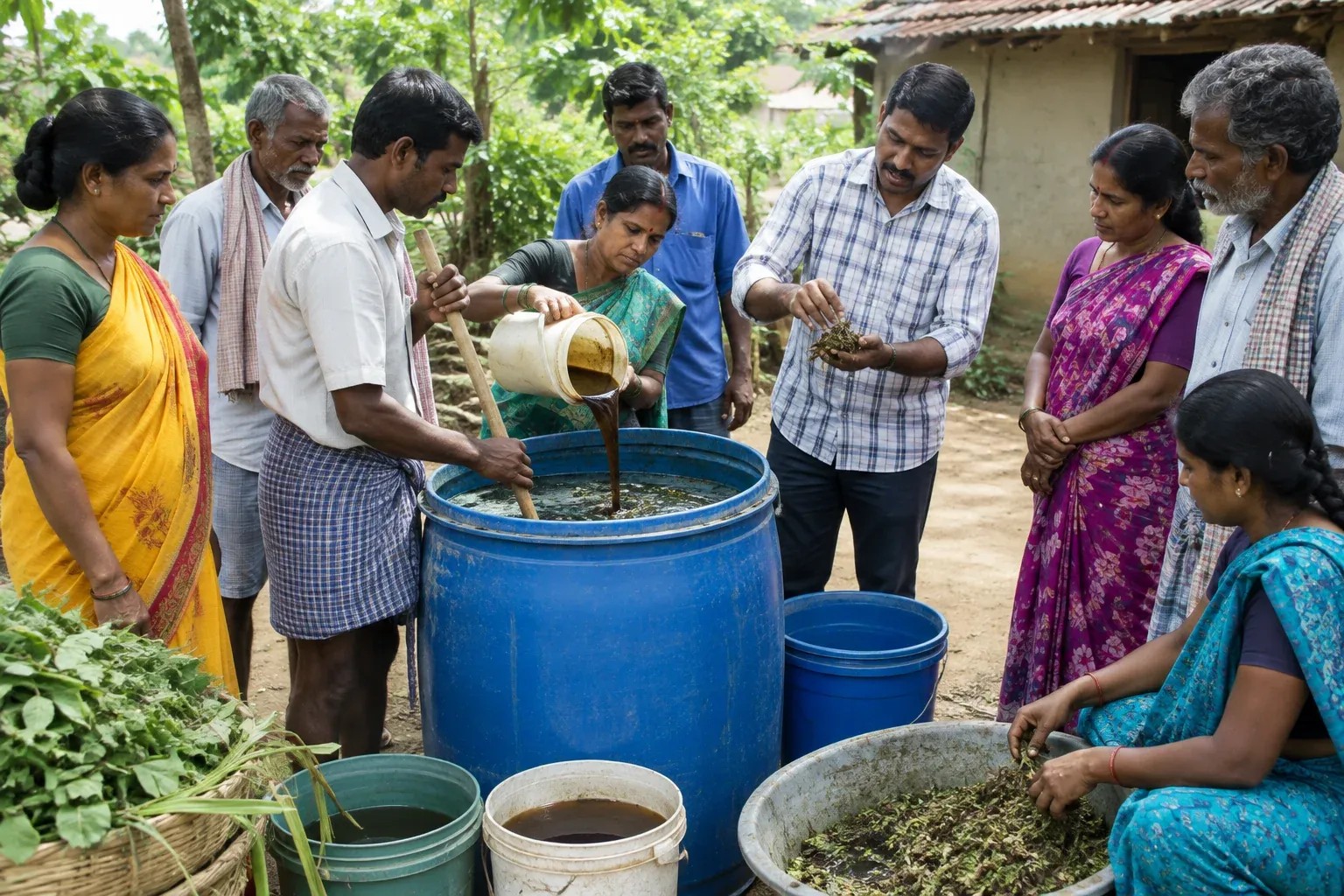
Building Stronger Bio-input Resource Centres Through Farmer Capacity Building
A bio-input resource centre (BRC) is a village-level unit where trained farmers prepare natural farming inputs from local resources and make them available to other farmers. BRCs work when the people running them can make the inputs themselves.
Under the RPLC programme in India, Beetle Regen Solutions is setting up six BRCs and training members through a two-day course that pairs classroom learning with hands-on field demonstrations, so farmers can produce affordable inputs from local resources.
Key takeaways
Six centres: Beetle is establishing 6 bio-input resource centres under the RPLC programme to improve local access to affordable, sustainable farm inputs.
Learning by doing: The two-day training mixed classroom sessions with live preparation demos, and members asked questions as they worked.
Local raw materials: Inputs are made from farm and livestock resources already available in the village.
Wider role: Each centre is meant to cut dependence on external chemical inputs and act as a hub for knowledge sharing and farmer support.
At a glance: the BRC training
Item | Detail |
|---|---|
Number of centres | 6 BRCs under the RPLC programme |
Training length | Two days |
Format | Classroom learning plus field demonstrations |
Soil and compost inputs | CPP, BD Compost, Liquid Manure, Rice Tonic |
Botanical extracts | Neem Ark, Dashparni Ark |
Demo leads | Supa Biotech experts |
Agronomy guidance | KVK scientists on HDPS and bio-pesticide use |
Why do bio-input resource centres need trained farmers?
A bio-input resource centre only helps if someone local can prepare consistent, usable inputs. Trained members turn village-level farm and livestock resources into affordable alternatives to bought chemicals. That keeps know-how, income and supply inside the community instead of depending on outside suppliers.
Access is the problem these centres address. State programmes are moving the same way: Telangana plans 326 bio-input resource centres under the National Mission on Natural Farming. In that plan, the Society for Elimination of Rural Poverty (SERP) works with the Agriculture Department. Buildings alone do not deliver results, though. Skills do.
We have written more on designing farmer training that lasts beyond the workshop, and the BRC course follows the same logic.
How was the two-day training structured?
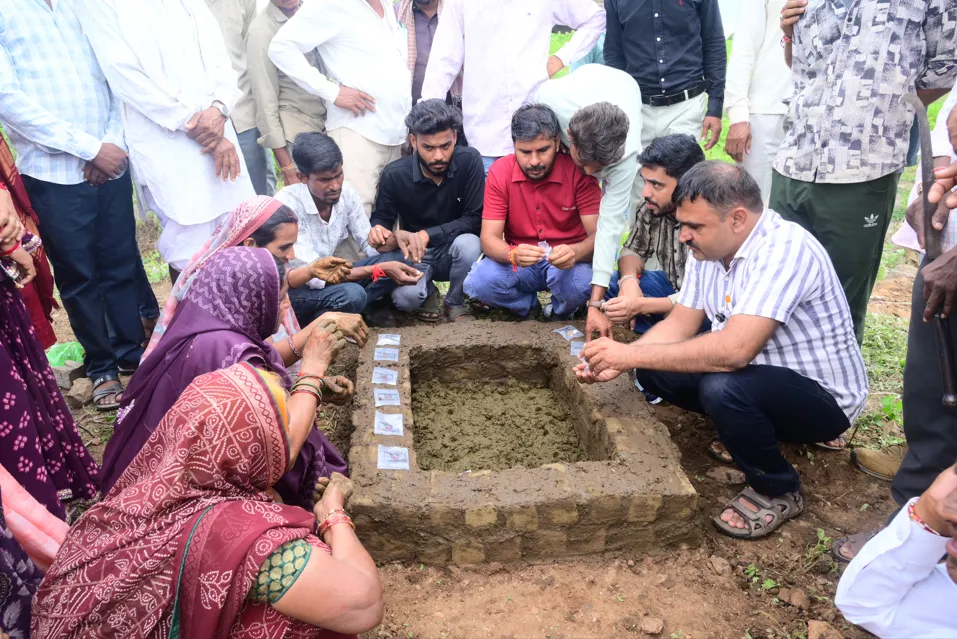
The training combined short classroom sessions with practical demonstrations on the field. Supa Biotech experts led the input preparation demos. Scientists from Krishi Vigyan Kendras (KVKs) covered High Density Planting System (HDPS) practice and effective bio-pesticide use. Members prepared inputs themselves rather than only watching.
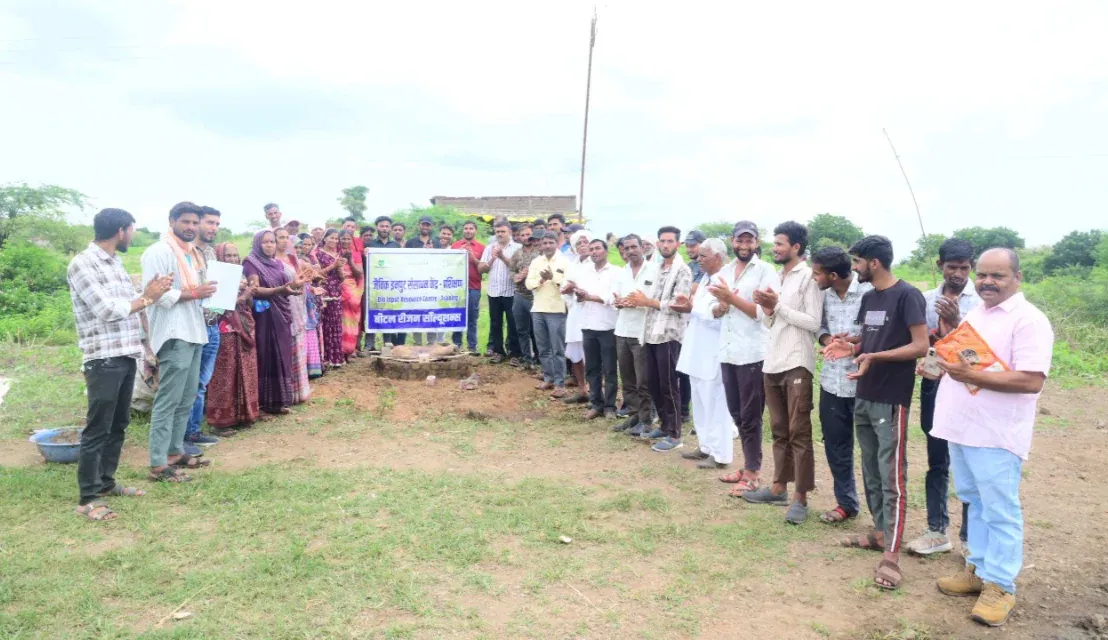
Participation was active. Members asked questions throughout and learned by doing. That matters because mixing ratios, timing and handling are hard to absorb from slides alone. The HDPS session also tied the centres to the wider cotton work; see how high-density planting boosts cotton yield.
What inputs did members learn to make?
Members learned to prepare CPP, BD Compost, Liquid Manure and Rice Tonic, plus botanical extracts such as Neem Ark and Dashparni Ark. All of them are made from local farm and livestock resources. A centre can therefore produce them without buying specialised ingredients from outside the village.
The split is practical. Compost and liquid inputs feed soil and crops, while the Arks act as plant-protection options. Together they give a farmer a local alternative for several jobs a chemical shop would otherwise cover.
We have not published exact recipes here. Ingredient quantities, fermentation times and application rates should come from the demo leads and the local KVK, and each member should write them down at the demo. Do not rely on a figure from a different region.
How do you set up and run a BRC?
Programmes differ by state, so confirm the current guidelines with your State Agriculture Department or the National Mission on Natural Farming (NMNF) office before you start. The sequence below reflects how the programmes we have seen work.
Identify the operators. Programmes have used trained farmers, farmer master trainers and women's self-help groups. Meghalaya's Bio Resources Development Centre, for example, identifies farmers as Master Trainers. A BRC in Jhanda Tola village is managed by twelve women from the Shakti Self-Help Group.
Train the members. Use classroom learning plus hands-on preparation, as in our two-day course.
Arrange the site and equipment. Ask the sponsoring department what infrastructure it requires and supports.
Make inputs from local materials. Start with the inputs the members practised in training.
Supply farmers and keep records. Offer inputs to nearby farmers and note what was made, when and for whom.
Funding and pricing depend on the sponsoring programme. Check with that programme how the centre is funded and what price it may charge farmers. We have not set a price here.
What quality and record-keeping habits should a centre keep?
Label every batch with the input name and preparation date.
Record the raw materials used and who prepared the batch.
Note each farmer who receives an input and the crop it is used on.
Record farmer feedback after use, including problems.
These records show whether an input performs and let a centre trace any problem back to a batch.
What happens next for the centres?
The centres are meant to reduce dependence on external chemical inputs and serve as local hubs for knowledge sharing, farmer support and regenerative practices. Whether each one becomes self-sustaining will depend on steady demand and follow-up, which we will keep tracking season by season. We have no performance results for the inputs yet.
That follow-up is the open question. A two-day course starts the skill; repeat handholding builds it. Our work on farmer collaboration in regenerative agriculture shows why peer support matters here.
If your organisation wants to build farmer-run input centres in a cotton or rice landscape, talk to our team about setting up bio-input resource centres with hands-on farmer training.