
How to Set Up a Farm-to-Fashion Traceability System
You set up a farm-to-fashion traceability system by anchoring every farm, plot and lot to a shared ID. Carry that ID through aggregation, ginning, spinning and fabric production instead of relying on paper invoices. Done properly, this connects regenerative cotton production to verified brand claims and ESG reporting.
Key Takeaways
- Start at the farm, not the warehouse: A working system needs a named farmer ID and plot ID before it needs any software. Everything downstream inherits from that first record.
- Ginning is where chains break: Cotton from dozens of farms mixes at the gin. You either segregate lots physically or accept a mass-balance claim. You must disclose which one you used.
- Cotton supply chains are not linear: Multiple gins, spinners and mills often touch a single garment. Full farm-to-garment tracing at scale means risk-weighted mapping, not a single clean thread, as described in guidance on multi-tier supply chain mapping.
- Traceability feeds compliance, not the other way round: Scope 3 disclosures and emerging digital product passport rules depend on the primary data your traceability system captures at each tier.
- Visibility creates value, not just proof: Farm-level data that shows practices and outcomes, not just origin, lets a brand justify a premium or build a defensible carbon insetting claim.
At a Glance: Building a Farm-to-Fashion Traceability System
| Stage | What You Capture | Main Risk if Skipped |
|---|---|---|
| Farm level | Farmer ID, plot ID, practices used (HDPS, AWD, biochar), yield | No baseline to measure impact against |
| Aggregation | Batch/lot number, volume received per farmer group | Farmer identity lost before it reaches the gin |
| Ginning | Lot segregation or mass-balance ratio, gin-floor logs | Verified cotton mixes with conventional stock |
| Spinning | Yarn lot tagging, blend ratio disclosure | Claims can't be traced past the yarn stage |
| Fabric/CMT | Tier 2/3 disclosure, facility identifiers | Brand can't name its own sub-suppliers |
| Reporting | Primary data feeding Scope 3 and ESG dashboards | Disclosures default to industry averages |
Why You Cannot Transform What You Cannot See
A traceability system is working infrastructure. It connects a regenerative practice on a farm to a claim your brand makes in a store, not a diagram filed away after launch.
Without it, you are managing a supply chain you can't actually see. You can't transform what you can't see.

Most brands start traceability projects assuming a clean, linear sequence: farm, gin, spinner, mill, brand. Real cotton supply chains rarely behave that way, as one industry guide notes when it warns against treating global textile supply chains as if they were a simple, linear handoff from farm to gin to spinner to mill to brand.
Cotton from different farms and even different regions mixes at multiple points. A single garment can carry fiber from dozens of source lots.
That messiness is exactly why traceability infrastructure matters more than a simple sourcing map. You need a system built to hold identity through mixing points, not one that assumes mixing never happens.
This is also where regenerative sourcing and traceability start to overlap. You can't credibly claim a cotton t-shirt came from regenerative cotton unless the system survives contact with a real gin floor.
1. Start With Farm-Level Data Collection
Every traceable claim begins with a record at the farm: a named farmer, a mapped plot, and the practices used on that plot during the season.
Skip this step and every later claim rests on nothing.
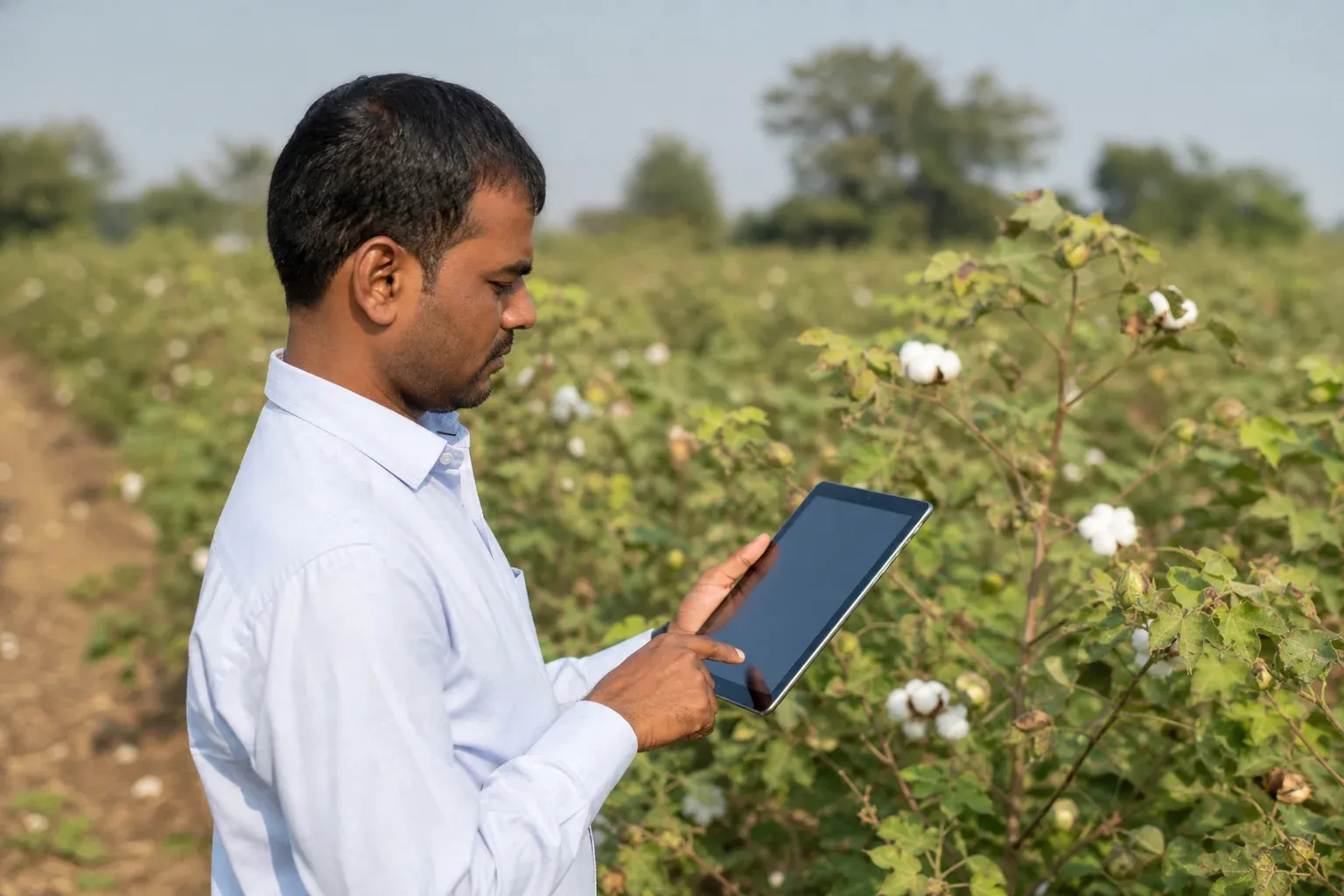
Capture at minimum: farmer name and cooperative affiliation, plot boundaries or acreage, the season's practices, input use, and yield at harvest.
A workable schema for this farm record needs a small, consistent set of fields. Use something like: Farmer_ID (cooperative code + sequential number, e.g. COOP01-0042), Plot_ID (Farmer_ID + plot letter, e.g. COOP01-0042-A), Season, Practices (a controlled list such as HDPS, AWD, biochar), Acreage, and Yield_kg.
Those practices might include alternate wetting and drying, high-density planting, or biochar application.
Digital forms beat paper here. Paper records get re-entered by hand three or four times before reaching a brand dashboard. Each re-entry gives the farmer's original record another chance to drift.
One detail brands often overlook is farmer data consent. Suppose a cooperative in a cotton-growing region agrees to share plot-level yield and practice data with a brand's MRV platform without first walking farmers through what is collected, how long it is retained, and who can view it downstream.
If that omission surfaces later, during a buyer audit or a media inquiry, the brand has no record that farmers agreed to the sharing terms, and the entire data set becomes contestable. A traceability system built on data farmers didn't agree to share is a liability, not an asset.
2. Document Chain of Custody at Aggregation and Ginning
Aggregation is where individual farmer lots combine into a batch large enough to move to a gin. It is also the first point where a farmer's individual identity can quietly disappear into a generic "cooperative volume" number.
Assign every batch a lot number that still references the individual farmer records feeding it, not just a cooperative total. A workable format is Lot_ID = Aggregation_Site_Code + Date + Sequential_Number (e.g. AGG04-20250312-017), with a linked field listing every Farmer_ID that contributed volume to that lot.
Ginning is the highest-risk mixing point in the whole chain. A single gin often processes cotton from many farms, some regenerative and some not, in the same run.
At this stage you make a real choice. You can physically segregate your traceable lots through the gin, which costs more in scheduling and cleaning between runs.
Or you can accept a mass-balance claim. This verifies that a certified volume entered the system without proving which specific bale ended up in which specific garment.
Both approaches are legitimate. What isn't legitimate is blurring the two in your disclosures.
Suppose a brand sources cotton through mass balance at the gin but markets the resulting garment as if every bale were physically segregated and traceable to a single farm.
If an auditor later asks for bale-level chain of custody and the brand can only produce a volume-in, volume-out mass-balance ledger, the marketing claim doesn't match the documentation, and the brand has to walk the claim back publicly. If you're running mass balance, say so, and describe it as a verified volume claim rather than a single-bale trace.
3. Carry Traceability Through Spinning and Fabric Stages
Spinning mills blend cotton lots to hit consistent yarn specifications. That means your traceable fiber almost never stays in a pure, single-source stream past this point.
What you can control is disclosure. Request the blend ratio for every yarn lot that includes your traceable cotton. Tag that yarn lot with a reference back to the fiber batches it drew from, using a Yarn_Lot_ID field that lists the contributing Lot_IDs from the ginning stage.
From there, request Tier 2 disclosure from every Tier 1 supplier you work with directly. One roadmap for this stage recommends that brands first complete a Tier 1 supplier registry, ensuring every CMT factory is documented with a consistent name, full address, country and, where available, a standardized facility identifier, before requesting Tier 2 disclosure from those same suppliers.
Each layer you document without a consistent facility identifier is a layer an auditor will flag as a gap.
Building this registry properly is slow, deliberate work, but it is what separates a system that holds up under buyer scrutiny from one that only holds up in a slide deck.
If your brand is still building this registry, our guide on setting up cotton supply chain traceability walks through the registry-building process in more depth.
4. Choose and Integrate the Right Technology
The right traceability tool anchors your data; it doesn't replace the fieldwork above. Whatever platform you choose, insist on one requirement.
Every record needs to link back to a shared farmer and plot ID. That way, a query at the brand level can trace back to a specific field, not just a regional average.

Integration usually happens one of three ways: a direct API feed into your procurement or ERP system, a scheduled file sync, commonly a structured CSV export, or middleware that translates between the traceability platform's schema and your internal systems.
Whichever route you pick, give a named brand admin dashboard access, and set a fixed verification cadence. A quarterly cadence commonly means reconciling new Lot_IDs and Yarn_Lot_IDs against supplier submissions, spot-checking a sample of farmer and facility records for consistency, and flagging any lot missing a linked upstream ID, rather than waiting for a single annual data pull.
Resist the temptation to run this on dozens of disconnected spreadsheets across different teams. This is tool-neutral advice, not a pitch for any specific software.
The steps matter more than the platform, but the platform needs to be one system, not many.
For a first pilot, keep the scope narrow: one supplier relationship, one product line, traced from farm record through to finished fabric. A single-mill pilot built around the schema above is meant to surface where your own data breaks, such as missing facility identifiers or inconsistent lot numbering, before you commit budget to scaling across twenty suppliers at once.
Expect the pilot to run through at least one full sourcing cycle, since gin, spinning and fabric stages each need at least one real batch to pass through before you can confirm the IDs actually hold.
On budget: this article does not have pricing data for traceability platforms, farmer-ID field tools, or gin-floor segregation costs, and we won't guess a figure here.
Before committing spend, ask each prospective platform vendor for a quote scoped specifically to your pilot — one supplier, one product line, one sourcing cycle — rather than their full multi-tier package, and ask your candidate gin whether segregated runs carry a scheduling or cleaning surcharge over standard mixed runs. Those two numbers, gathered directly from the vendors you're already talking to, will tell you more than any industry-wide average would.
5. Connect Traceability Outputs to ESG and Compliance Reporting
How Do You Handle Non-Linear Supply Chains?
You handle non-linear cotton supply chains by mapping risk rather than chasing a single clean thread from farm to garment.
Because cotton mixes across multiple gins and spinners, most brands trace a percentage of verified volume through the chain rather than every individual fiber.
This is standard practice, not a shortcut. A brand with no leverage upstream of Tier 1, which is the realistic position for most small and mid-sized brands, can still build a credible system.
Document Tier 1 fully first. Then work backward to request Tier 2 and Tier 3 disclosure as relationships allow.
What Should You Do Before Committing to a Traceability Platform?
Build your Tier 1 supplier registry before you evaluate any software. Every CMT factory needs a consistent name, a full address, and a country listed.
A platform can't organize data you haven't standardized yourself.
Run a single-mill pilot before a full rollout, using the schema and scope described above. Pick one supplier relationship and trace one product line end to end.
Use what breaks in that pilot to fix your data schema before you scale to many suppliers at once.
Full farm-to-garment mapping at Tier 4 remains genuinely rare across the industry, as multi-tier mapping guidance points out when it notes that mapping every sub-supplier at once isn't realistic, which is why a staged plan that focuses effort where exposure is highest works better. Treat full Tier 4 mapping as an honest long-term goal rather than a first-year deliverable.
Traceability outputs feed reporting, not the other way round. Scope 3 emissions disclosures built on generic industry averages carry less weight with auditors and regulators than numbers drawn from your own farms, mills and spinners.
Primary data, gathered through farmer records, mill process logs and direct metering, replaces those averages with figures a buyer can actually verify.
This matters for more than internal reporting. Frameworks like the EU's Corporate Sustainability Reporting Directive expect disclosure grounded in the value chain, and manufacturers exporting into major markets increasingly have to provide exact data regarding the origin of fibers, dyes and labor conditions to global regulatory bodies.
Digital product passport requirements are expected to demand farm-to-garment data as a baseline rather than a bonus; check the current status and scope of these requirements directly with the relevant regulator before setting an internal deadline. Our ESG supply chain compliance guide covers how these regulatory threads connect to the traceability groundwork described here.
Turning Visibility Into Value Across the Chain
Traceability that only tells you where cotton came from is doing half the job. A stronger system also captures how it was grown, what practices the farmer used, and what outcomes resulted.
Those outcomes might include soil carbon gains, water savings, or yield improvement. Together, they turn a compliance record into something a brand can actually build a strategy on.
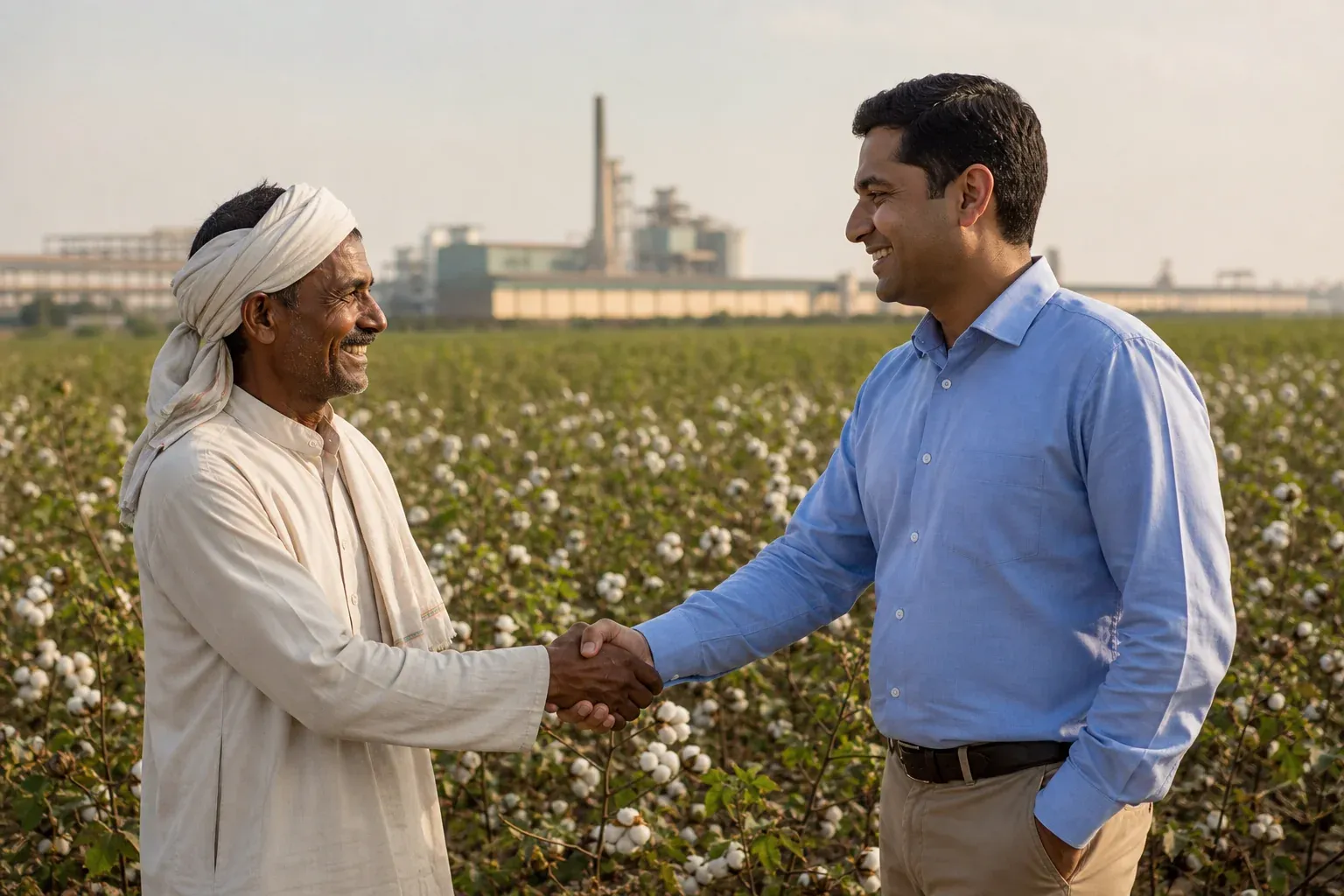
The shift that matters is moving from tracing a fiber's origin to tracing the outcome a specific plot produced.
Once you can show a buyer that a specific plot used biochar or high-density planting, you can also show what it produced in measurable terms.
That opens the door to carbon insetting claims, defensible price premiums, and better farmer income, not just a cleaner audit file.
That's a much stronger foundation than a certification logo on its own. It's the difference between a brand that can say "this is regenerative cotton" and one that can say exactly which farm, which season, and which measured result stands behind that sentence.
You cannot transform what you cannot see, and you cannot credibly connect farm-level impact to the fashion value chain without traceability.
Ready to build greater visibility from farm to fashion? At Beetle Regen Solutions, we work across the value chain to connect regenerative production, traceability, data and measurable outcomes.
We help brands move from sustainability commitments to sourcing systems that hold up under scrutiny. If you're ready to start mapping your own farm-to-fashion system, contact us to talk through where your supply chain stands today.